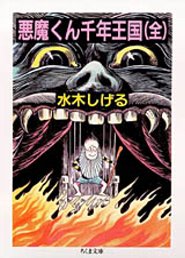
Akuma-kun Review: Shigeru Mizuki's Boy Genius Who Summons a Demon to Build a Perfect World
by Shigeru Mizuki
Read the first volume. If it doesn't hook you, put it down. It'll hook you.
Buy Akuma-kun on Amazon →*Affiliate link — I earn a small commission at no extra cost to you.
Everyone in the West knows Shigeru Mizuki for GeGeGe no Kitaro — the gentle, eerie yokai boy who became Mizuki's signature. Fewer know that before and alongside Kitaro, Mizuki was drawing a very different supernatural story: a boy genius who summons a demon to remake the world. Akuma-kun is darker, stranger, and more ambitious than its obscurity suggests.
I came to it through my love of Mizuki's yokai work, and found something with a colder heart.
Quick Take
- An early, foundational supernatural work from Shigeru Mizuki, the master of Japanese yokai manga
- A child prodigy who summons the demon Mephisto in pursuit of a utopian world that keeps colliding with human nature
- Rated T (Teen); currently unlicensed in English — the Japanese editions are the way to read it
Who Is This Manga For?
- Fans of Shigeru Mizuki who want to go beyond Kitaro into his occult work
- Readers interested in Western occultism (Solomon's demons, grimoires) filtered through Japanese manga
- Manga historians and collectors of classic supernatural work
- Anyone who enjoyed GeGeGe no Kitaro and wants something with a sharper edge
Content Warnings & Age Rating
Age Rating: T (Teen) Content Warnings: Demonic and occult imagery; magic-circle and grimoire content drawn from real occult traditions; period-typical violence
A T rating appropriate for older readers. The horror is atmospheric and occult rather than graphic.
Story Overview
Akuma-kun is the title given to a once-in-a-generation child prodigy — a genius so rare that the world produces one only at long intervals. Across Mizuki's various versions of the story (he returned to and reworked the concept several times over decades, with the protagonist's name and details shifting between iterations), the core remains constant: a brilliant boy believes humanity can be guided to a perfect, utopian world, and to achieve it he summons supernatural power.
His key ally is Mephisto, a demon bound to serve him. Together they navigate a world of occult forces, yokai, supernatural threats, and — crucially — ordinary human greed, fear, and shortsightedness, which prove as much an obstacle to utopia as any monster. The series blends Mizuki's signature yokai aesthetic with Western occult tradition: Solomonic demonology, magic circles, alchemical and esoteric symbolism, ancient grimoires.
The throughline of Mizuki's work is here in early form: the supernatural as a mirror for human folly, and the recurring suspicion that the real obstacle to a better world is not the demons but the people. Akuma-kun's utopian project keeps running aground on exactly that.
Characters
Akuma-kun — The boy genius at the center, convinced that intelligence and supernatural power can be marshaled to build a perfect world. His idealism is the engine of the story and, repeatedly, the source of its tragedy — the world he wants keeps proving incompatible with the world that exists.
Mephisto — The demon summoned to serve Akuma-kun, drawn from the Faustian tradition but rendered in Mizuki's distinctive style. The relationship between a child's idealism and a demon's nature is the series' most interesting dynamic.
The world itself — As in much of Mizuki's work, the human society around the protagonist functions almost as a character: greedy, fearful, and resistant to the very improvement Akuma-kun is trying to impose. Mizuki's skepticism about human nature is the story's quiet center.
Art Style
Mizuki's art is unmistakable: meticulously detailed, atmospheric backgrounds — landscapes and interiors rendered with near-photographic density — set against cartoonishly simple, expressive human figures. His demons and supernatural beings are drawn with loving, eerie specificity. The contrast between the realistic worlds and the comic characters is the visual signature that makes a Mizuki page recognizable at a glance.
Cultural Context
Akuma-kun is one of Mizuki's foundational supernatural works, predating or running alongside his rise to fame with Kitaro. It reflects his lifelong fascination with the supernatural, the clash between tradition and modernity, and human folly — themes he would explore across his entire career, including in his later autobiographical and historical work. Its specific contribution is the marriage of Japanese yokai sensibility with Western ceremonial occultism, an unusual synthesis for its era.
The manga was popular enough to spawn multiple adaptations across decades, including anime — a sign that the demon-summoning prodigy struck a lasting chord in Japan even as the work stayed obscure abroad.
What I Love About It
The pessimism underneath the premise. Akuma-kun summons a demon to build a utopia — and the recurring lesson is that the demon is the easy part. Human nature is the hard part. There is something bracing about a children's-adjacent supernatural manga whose actual thesis is that people, not monsters, are what stand between us and a better world. That is pure Mizuki, and it is here in early, undiluted form.
Memorable Scene ⚠️ Spoiler Warning
The summoning of Mephisto itself — the moment a child completes an occult ritual drawn with Mizuki's characteristic density of esoteric detail and actually calls a demon into his service — is the series' defining image. Mizuki renders the magic circle and the demon's arrival with the same realistic care he gives his landscapes, so the supernatural feels grounded in something almost documentary. A boy standing at the center of a working summoning, certain he can use it for good, is the whole story in a single panel.
Similar Manga
| Title | Its Approach | How Akuma-kun Differs |
|---|---|---|
| GeGeGe no Kitaro | Mizuki's gentle yokai adventures | Akuma-kun is darker and more occult, with a colder thesis about humanity |
| Devilman | Demon power as human tragedy | Devilman is apocalyptic and violent; Akuma-kun is occult and idealistic |
| The Drifting Classroom | Children confronting a hostile world | Akuma-kun's threat is human folly via the supernatural rather than survival horror |
Reading Order / Where to Start
Because Mizuki produced multiple versions across decades, there is no single canonical volume run. For English readers, the practical reality is that Akuma-kun is unlicensed — the way in is the Japanese editions or Mizuki's broader catalog. Start with any collected Japanese edition of the original 1960s run if you can find it.
Official English Translation Status
There is no licensed English edition of Akuma-kun. While Drawn & Quarterly has translated much of Mizuki's catalog (Kitaro, his Showa history, autobiographical work), Akuma-kun has not received an official English release. The Japanese print editions are the only legitimate way to read it.
Pros & Cons
Pros
- Foundational Mizuki — essential for understanding his supernatural work
- A rare, well-realized fusion of yokai aesthetics and Western occultism
- Mizuki's signature realistic-background/cartoon-character art at work
- A genuinely pessimistic thesis that gives the supernatural real thematic weight
Cons
- Unlicensed in English — a real barrier for most Western readers
- The multiple-version history makes the canon confusing
- Period-typical pacing and structure feel dated next to modern horror manga
Where to Buy
There's no licensed English edition yet — the Japanese release is the only legitimate way to read it.
This post contains affiliate links. If you purchase through these links, I may earn a small commission at no extra cost to you. As an Amazon Associate, I earn from qualifying purchases.
*Affiliate link — I earn a small commission at no extra cost to you.
Reading Guides
More Manga You Might Like
Horror / Historical Fantasy
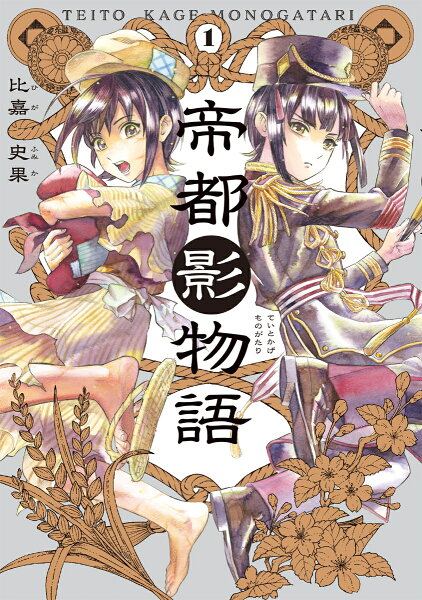
Teito Monogatari (Babylon Tokyo)
Yu's review of Kamui Fujiwara's manga adaptation of Teito Monogatari (Doomed Megalopolis) — an immortal sorcerer tries to destroy Tokyo by waking the curse of Taira no Masakado, and the 1923 earthquake is the result.
Horror / Supernatural
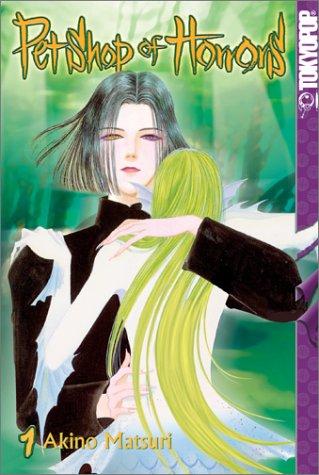
Petshop of Horrors
Count D sells exotic pets in Chinatown — each one perfect, each one with a contract that the buyer always breaks.
Horror / Supernatural
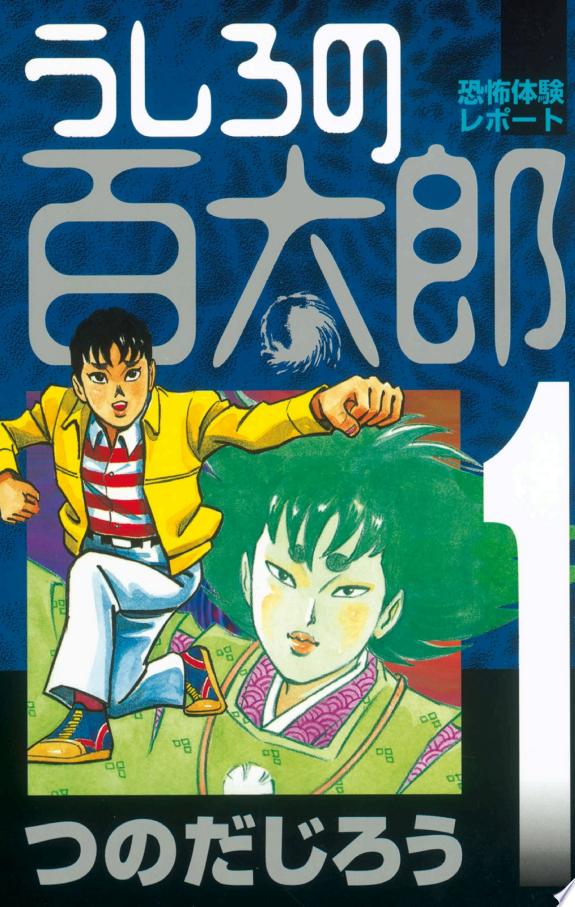
Ushiro no Hyakutarou
A boy whose protective spirit is named Hyakutaro fights ghosts and curses across postwar Japan — the foundational paranormal horror manga.
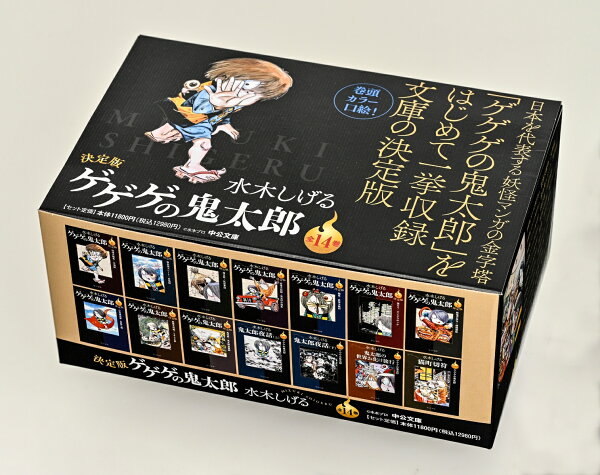
Horror / Fantasy
GeGeGe no Kitaro
A review of GeGeGe no Kitaro, Shigeru Mizuki's foundational yokai manga that defined how modern Japan thinks about supernatural creatures.
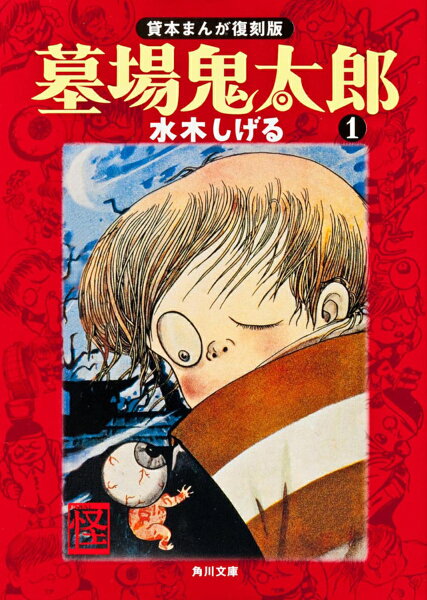
Horror
Kitaro of the Graveyard
A review of Kitaro of the Graveyard, the darker original version of Mizuki's yokai character — before Kitaro became a defender of humanity and was simply something risen from a grave.
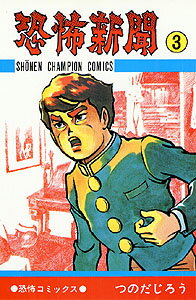
Horror / Thriller
Kyofu Shinbun
Kyofu Shinbun follows Kichi Taira, a middle school student who begins receiving a supernatural newspaper delivered only to him — a newspaper that reports events before they happen, including deaths, and whose receipt shaves years from his own lifespan with each issue.
Written by
Yu
Manga Enthusiast from Japan
I grew up in Japan and manga literally saved me during a tough time in elementary school. My English isn't perfect, but my love for manga is real — and I want to share it with you.
Disclosure: This post contains affiliate links. As an Amazon Associate, I earn from qualifying purchases at no extra cost to you.