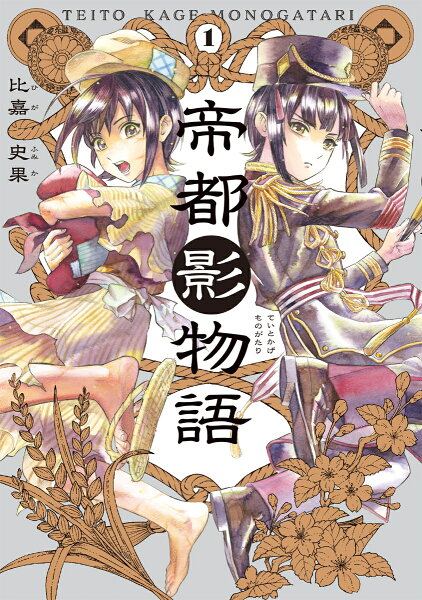
Teito Monogatari (Doomed Megalopolis) Review: A Demon Wants to Level Tokyo, and the Earthquake Was His Plan
by Kamui Fujiwara (manga), based on the novel by Hiroshi Aramata
Read the first volume. If it doesn't hook you, put it down. It'll hook you.
Buy Teito Monogatari (Babylon Tokyo) on Amazon →*Affiliate link — I earn a small commission at no extra cost to you.
I read this one in a used bookstore in Jimbocho, sitting on a little stool the owner keeps for people who can't wait to get home. It was raining. I had come in for something else, and I left with Kamui Fujiwara's Teito Monogatari, the cover yellowed at the edges. I want to be honest with you, because the name confuses a lot of English readers: the thing most people in the West know as "Doomed Megalopolis" is the old anime. What I'm writing about here is the manga — Fujiwara's comic version of Hiroshi Aramata's huge novel. It has never been officially translated into English. But it lived in my head for weeks after, and I think you should know it exists.
What got me was that it's a horror story built on top of real Tokyo history. The man who wants to burn the city down isn't making it up. He knows something true about this place, and he's just deciding to use it.
Quick Take
- A historical occult horror manga set in early-1900s Tokyo, adapting the first arc of Aramata's landmark novel.
- The villain, Yasunori Kato, is one of the most quietly terrifying figures I've met in any manga — patient, immortal, and almost calm.
- Rated M (Mature) — supernatural violence, disturbing imagery, and implied magical sexual assault. Not for younger readers.
Story Overview
The story begins in Taisho-era Tokyo, a city racing to become modern while old gods sleep under its streets. Yasunori Kato, an army officer who is something far older and worse than a man, has a plan. Tokyo, he believes, is cursed ground — the burial place of Taira no Masakado, a tenth-century warrior who rose against the imperial court and whose spirit still lies beneath the capital. Kato wants to wake that curse and let it tear the city apart.
The turning point is what he does to get there. He targets the Tatsumiya family because their bloodline carries spiritual power and a link to Masakado. He kidnaps Yukari Tatsumiya, a young woman with psychic gifts, intending to use her as a vessel — and forcibly impregnates her by magic, so that the child she carries can become the medium for Masakado's spirit. That child is Yukiko. From there the book becomes a long, slow tug-of-war over a bloodline, with Kato on one side and a small group of defenders on the other.
The ending of this arc is where the manga's whole premise pays off in a way I didn't see coming the first time: the supernatural war over Tokyo culminates in the Great Kanto Earthquake of 1923. The disaster that actually flattened the city in real life is, in this story, the result of the occult struggle. History becomes the body count. That reframing is the thing the book is really about.
Characters
Yasunori Kato is the center of gravity. He is written as an oni — a vengeful spirit carrying the grudge of everyone Japan's imperial history crushed and forgot. That's what makes him different from a normal villain: he isn't evil for fun, he's an old wound that learned to walk and put on a uniform. Fujiwara draws him in that military coat with a kind of cold beauty, and his eyes are hungry. (Funny detail I love: this was drawn before the famous 1988 live-action film, yet the manga's Kato looks almost exactly like the actor they later cast.)
Yukari Tatsumiya is the woman whose body and bloodline Kato treats as a tool. She's a victim, but the manga doesn't reduce her to one — her psychic sensitivity is real power, and the horror of the story runs through what's done to her without her consent.
Yukiko is the daughter born from that violation, raised in the shadow of being "useful" to a monster who sees her as a key. Watching a child grow up as a target rather than a person is its own slow dread.
Keiko Mekata is the one who fights back directly. She's a priestess — Fujiwara draws her as beautiful and upright, a woman who banishes evil — and she's the human counterweight to Kato. She's the reason the family isn't simply prey.
What I Love About It
There's a quality to Fujiwara's Tokyo that I haven't shaken. He draws the city as both pop-bright and rotting at the same time — there's a "speed" and a brightness to his line, and underneath it this strange Showa-era ugliness-as-beauty. The Tatsumiya household is drawn with a decadent, almost suffocating air, like the family is already half-spoiled before Kato ever touches them. That contrast is the whole mood of the book: a country sprinting toward the future while something ancient breathes under the floorboards.
What hit me hardest, though, is the central idea — that the worst villain in the story isn't lying. Kato keeps insisting Tokyo is built on a grave and a grudge, and the book agrees with him. He's a monster, but he's a monster telling the truth about the place I live in. The first time I closed the volume, I sat in that Jimbocho shop and thought about how the 1923 earthquake is a real thing my great-grandparents' generation lived through, and how Fujiwara had taken a national tragedy and made it the climax of a curse. That's a heavy, almost disrespectful idea — and the manga earns it by treating the city itself as the real main character. I've never read another horror story that used my own history against me quite like that.
Memorable Scene ⚠️ Spoiler Warning
The scene burned into me is Keiko Mekata's confrontation with Kato, where she sets his head on fire. You'd expect a villain to scream, to recoil. Kato doesn't. In Fujiwara's "Babylon Tokyo" version he reacts with a sickening, aroused calm — the flames are on him and he's drawn leaning toward her, wanting to lick her ear, as if her power is something he finds delicious rather than dangerous. It's one of the most unsettling beats in the whole book, because it tells you in one panel that you cannot hurt this thing the normal way. Pain doesn't deter him. He enjoys the contact with a real adversary.
And then the small, almost petty detail that stuck with me: by the very end, his eyebrows are burned off. After all that menace, Fujiwara leaves him slightly ruined, slightly absurd — a demon with no eyebrows. It shouldn't land, but it does. It's the only "win" the heroes really get against him in this stretch, and it's tiny, and that tininess is the point. You don't defeat Kato. You inconvenience him.
Pros & Cons
Pros:
- A genuinely original premise — real Tokyo history rewritten as occult horror.
- Yasunori Kato is an all-time great villain: calm, ancient, and impossible to truly beat.
- Fujiwara's art fuses pop energy with a rotting, decadent atmosphere that fits the story perfectly.
Cons:
- It only adapts the early arc of a much larger novel, so the story feels like a door opening rather than a door closing.
- The subject matter — magical sexual assault, a child bred as a weapon — is genuinely disturbing.
- There is no official English edition, so most readers will hit a wall finding it. This one won't work for everyone.
Is Teito Monogatari Worth Reading?
If you want occult horror with real weight — a villain who isn't wrong, a city that's the true protagonist, and art that makes Taisho Tokyo feel cursed — then yes. Just know going in that it's a Japanese-only manga adapting one slice of a giant novel, and that the darkness here is real darkness, not jump scares.
Where to Buy
No English release yet. That just means you find it before everyone else does.
There's no licensed English edition of the manga — the Japanese print release from Kadokawa is the only legitimate way to read Fujiwara's version. If you read Japanese, or you just want it on your shelf, you can find it on Amazon Japan.
This post contains affiliate links. If you purchase through these links, I may earn a small commission at no extra cost to you. As an Amazon Associate, I earn from qualifying purchases.
*Affiliate link — I earn a small commission at no extra cost to you.
Reading Guides
More Manga You Might Like
Horror / Supernatural
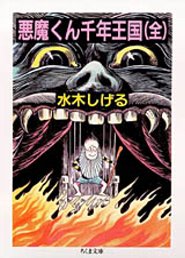
Akuma-kun
Yu's review of Akuma-kun — Shigeru Mizuki's early supernatural manga about a child prodigy who summons the demon Mephisto in his attempt to build a perfect world. A foundational occult work from the master of yokai manga, currently unlicensed in English.
Horror / Supernatural
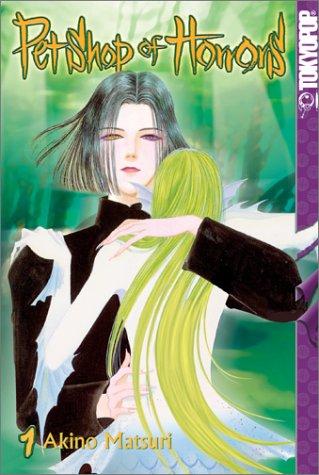
Petshop of Horrors
Count D sells exotic pets in Chinatown — each one perfect, each one with a contract that the buyer always breaks.
Horror / Supernatural
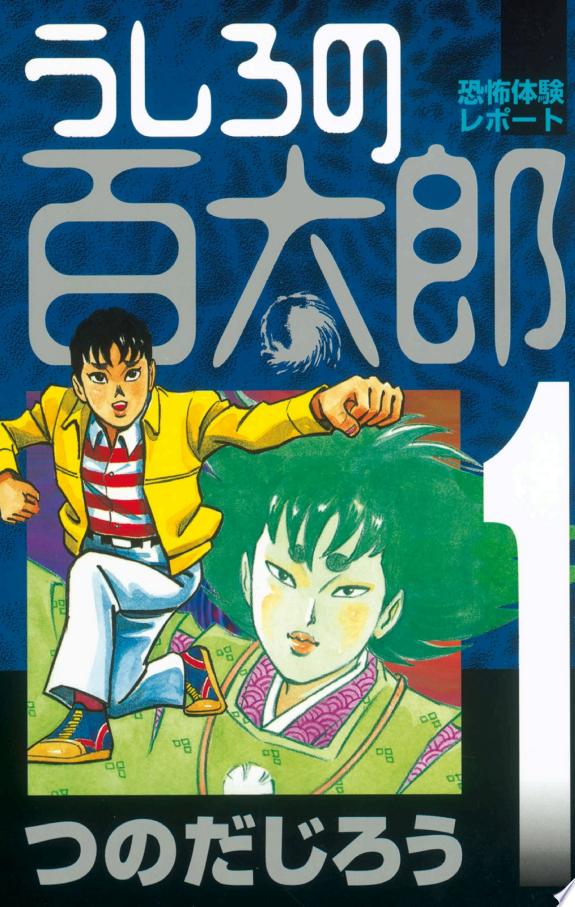
Ushiro no Hyakutarou
A boy whose protective spirit is named Hyakutaro fights ghosts and curses across postwar Japan — the foundational paranormal horror manga.
Horror / Thriller
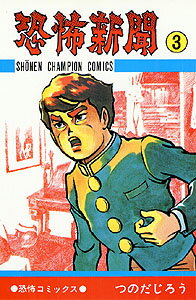
Kyofu Shinbun
Kyofu Shinbun follows Kichi Taira, a middle school student who begins receiving a supernatural newspaper delivered only to him — a newspaper that reports events before they happen, including deaths, and whose receipt shaves years from his own lifespan with each issue.
Horror / Historical
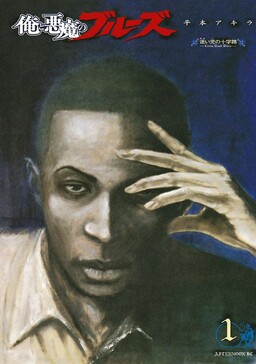
Me & The Devil Blues
Yu's review of Me & The Devil Blues — Robert Johnson, the legendary blues musician, makes a deal at the crossroads and suddenly can play the blues like nobody alive; the manga follows his rise alongside RJ, a friend trying to understand what Johnson has become; a horror manga set in the 1930s American South that takes its historical setting seriously.
Horror / Drama
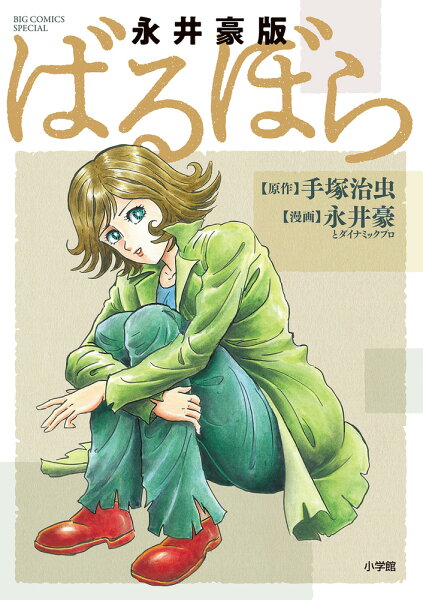
Barbara
Yu's review of Barbara — Osamu Tezuka's adult psychological horror about Yosuke Mikura, a celebrated novelist who takes in a filthy, drunken muse named Barbara and descends through black masses, perversion, and madness as he loses the ability to tell art from destruction.
Written by
Yu
Manga Enthusiast from Japan
I grew up in Japan and manga literally saved me during a tough time in elementary school. My English isn't perfect, but my love for manga is real — and I want to share it with you.
Disclosure: This post contains affiliate links. As an Amazon Associate, I earn from qualifying purchases at no extra cost to you.