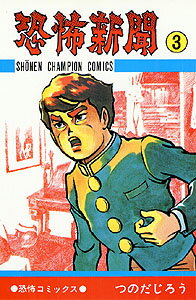
Kyofu Shinbun Review: The Newspaper That Tells You When You're Going to Die
by Hideo Uchida
Read the first volume. If it doesn't hook you, put it down. It'll hook you.
Buy Kyofu Shinbun on Amazon →*Affiliate link — I earn a small commission at no extra cost to you.
What if the news arrived before it happened — and knowing it cost you years of your life?
Quick Take
- Hideo Uchida's 1973 horror manga — the supernatural newspaper is one of the great horror premises of the decade
- The cost mechanic (each newspaper received shortens Kichi's lifespan by 100 days) creates genuine tension with every delivery
- 11 volumes of escalating supernatural horror with the specific dread of knowing what's coming
Who Is This Manga For?
- Horror manga fans who want a supernatural premise with genuine internal logic
- Readers of classic shonen horror — this is one of Weekly Shonen Champion's defining horror works
- Anyone who finds the "knowledge as curse" premise compelling — knowing the future is not protection
- Readers who want horror that earns its scares through accumulation rather than shock
Content Warnings & Age Rating
Age Rating: T (Teen) Content Warnings: Horror themes throughout. Death predictions — the newspaper reports deaths before they occur. Supernatural threat. Psychological horror as Kichi lives with the cost of the information.
Suitable for teen readers who can handle horror content.
Yu's Rating
| Category | Score |
|---|---|
| Story Depth | ★★★★☆ |
| Art Style | ★★★★☆ |
| Character Development | ★★★★☆ |
| Accessibility for Non-Japanese Readers | ★★★★☆ |
| Reread Value | ★★★★☆ |
Story Overview
A newspaper begins appearing at Kichi Taira's door — not a normal newspaper but one that reports things that haven't happened yet. Deaths. Disasters. Crimes. The newspaper is delivered by a supernatural entity, received only by Kichi, and with each delivery it takes 100 days from Kichi's lifespan.
He can stop receiving it. He can throw it away. But the things it reports will still happen — and if he knows what's coming, he might be able to prevent some of it.
The horror is the trap: the information is useful, but using it costs him his life. Each issue becomes a calculation. Do the people he can save justify the days he loses? Does it matter that he didn't choose this?
Uchida uses this premise not just for supernatural horror but for genuine moral weight — Kichi's situation is a version of the question everyone faces in smaller ways, about the cost of taking responsibility for knowledge you didn't ask for.
Characters
Kichi Taira: A protagonist whose courage is not physical but moral. He keeps accepting the newspaper not because he isn't afraid but because he has decided that the cost of not accepting it is worse than the cost of accepting.
The supernatural entity: Defined by its rules rather than its nature — the newspaper arrives, the cost is paid, and the mechanism operates with the impartiality that makes horror genuinely frightening.
Art Style
Hideo Uchida's art has the expressive clarity the horror genre requires — the newspaper itself is drawn as an ordinary object that the context makes monstrous, and the death scenes and supernatural elements are rendered with enough detail to be effective without being gratuitous.
Cultural Context
Kyofu Shinbun ran in Weekly Shonen Champion from 1973 to 1975. It appeared during a particularly strong period for shonen horror — the same magazine was running GeGeGe no Kitaro and other supernatural manga — and helped establish Weekly Shonen Champion's identity as a venue for supernatural horror alongside its sports and action titles.
What I Love About It
I love the cost mechanic.
Horror manga often puts protagonists in danger — the monster threatens, the curse approaches, the deadline arrives. Kyofu Shinbun puts Kichi in danger through the act of helping. Every time he reads the newspaper and uses what he knows to prevent a death, he loses 100 days of his own life. The heroism costs him in the most literal way possible.
This is the rare horror premise that is both frightening and philosophically interesting. What does it mean to sacrifice your time — not in a single dramatic moment but in accumulating days, over weeks, across a lifespan — for people you don't know?
What English-Speaking Fans Say
Not known in English-speaking markets. Among readers of classic shonen horror and horror manga history, Kyofu Shinbun is recognized as one of the genre's most clever and emotionally resonant premises — and the execution is worthy of the premise.
Memorable Scene ⚠️ Spoiler Warning
A moment when Kichi receives a newspaper reporting the death of someone he knows personally — someone whose death he could prevent, at the usual cost — and sits with the newspaper before making his decision. The scene doesn't dramatize the decision. It shows him sitting with it. The weight of that sitting is the scene's entire content.
Similar Manga
| Title | Its Approach | How Kyofu Shinbun Differs |
|---|---|---|
| Death Note | Supernatural notebook with power over death | Knowledge as cost vs. knowledge as power |
| GeGeGe no Kitaro | Ghost defending humans from supernatural threats | Ordinary boy trapped in supernatural responsibility rather than hero by choice |
| Ushiro no Hyakutarou | Protective spirit attached to a boy | Supernatural entity imposing cost rather than offering protection |
Reading Order / Where to Start
Volume 1. The premise is established in the first chapter and the accumulation of cost creates the story's emotional arc.
Official English Translation Status
Kyofu Shinbun has no official English translation.
Pros & Cons
Pros
- The cost mechanic is a genuinely original horror premise
- Kichi's moral position is more complex than a typical horror protagonist
- The accumulation of issues creates sustained dread
- Complete — 11 volumes
Cons
- No English translation
- The premise requires full commitment — partial reading doesn't convey the accumulation
- The 1970s art style may feel dated to modern readers
- Some episodes are stronger than others — the episodic format creates uneven pacing
Is Kyofu Shinbun Worth Reading?
For horror manga fans and readers interested in supernatural premises with moral weight, yes — the cost mechanic is genuinely clever, and the execution gives it emotional substance. For readers who want horror focused on atmosphere or violence, this is more concerned with dread and moral complexity. But as classic shonen horror at its most intellectually interesting, it rewards reading.
Format Comparison
| Format | Notes |
|---|---|
| Physical | Japanese editions available |
| Digital | Limited availability in Japanese |
| Omnibus | Collected editions available |
Where to Buy
No English release yet. That just means you find it before everyone else does.
*Affiliate link — I earn a small commission at no extra cost to you.
Reading Guides
More Manga You Might Like
Horror
MW
Yu's review of MW — Yuki Michio is a beautiful, charming, amoral man who survived exposure to a chemical weapon as a child; the event destroyed his conscience; he works toward mass destruction while maintaining the appearance of a successful society member; a priest who loves him tries to hold him back; Osamu Tezuka's 1976 thriller about a man without conscience.
Horror / Supernatural
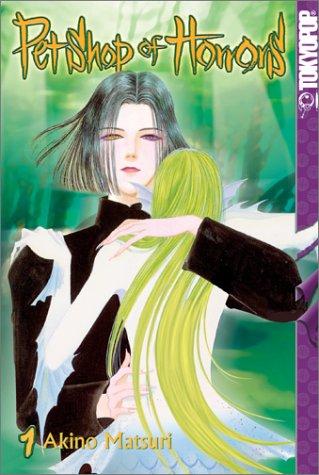
Petshop of Horrors
Count D sells exotic pets in Chinatown — each one perfect, each one with a contract that the buyer always breaks.
Horror / Survival
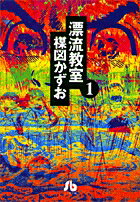
The Drifting Classroom
Yu's review of The Drifting Classroom — a Japanese elementary school and all its students and teachers are suddenly transported to a desolate future Earth; the children must survive without adult leadership as food runs out and monsters appear.

Horror / Supernatural
Shiki
Yu's review of Shiki — people begin dying mysteriously in a rural Japanese village during summer, and the doctors, priests, and survivors must confront what is happening and what they are willing to do in response.
Horror
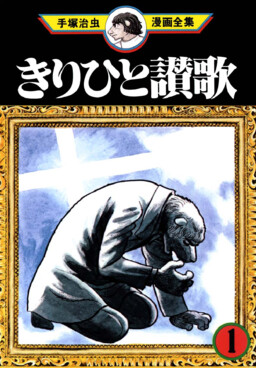
Ode to Kirihito
Yu's review of Ode to Kirihito — Dr. Osanai Kirihito investigates Monmow disease, a mysterious illness that transforms its victims into dog-like creatures; the medical establishment suppresses his findings; Osamu Tezuka's 1970 medical horror manga about a doctor reduced to subhuman status while searching for a scientific truth powerful people want hidden.
Horror / Psychological Thriller
Monster
Yu's review of Monster — a brilliant surgeon saves a boy's life over a hospital director's, ruins his career, and ten years later discovers the boy he saved has become a serial killer who is now hunting him.
Written by
Yu
Manga Enthusiast from Japan
I grew up in Japan and manga literally saved me during a tough time in elementary school. My English isn't perfect, but my love for manga is real — and I want to share it with you.