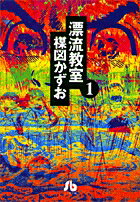
The Drifting Classroom Review: An Entire Elementary School Is Transported to a Post-Apocalyptic Wasteland
by Kazuo Umezu
Read the first volume. If it doesn't hook you, put it down. It'll hook you.
Buy The Drifting Classroom on Amazon →*Affiliate link — I earn a small commission at no extra cost to you.
Quick Take
- An elementary school teleports to the future and the children must survive with no adults and no way back
- Kazuo Umezu's masterwork — the survival horror manga that influenced every children-in-danger story that followed
- 11 volumes, complete; one of manga's foundational horror texts
Who Is This Manga For?
- Readers who want classic horror manga with genuine dread
- Fans of survival fiction where the protagonists are children
- Anyone studying manga's history who wants to understand where modern survival horror began
- Readers who can handle death and danger involving child characters
Content Warnings & Age Rating
Age Rating: T (Teen) Content Warnings: Children die throughout the series, extreme survival situations, psychological horror, the rating underrepresents the intensity
The T rating reflects its 1970s publication context. Contemporary readers should treat it as M-adjacent.
Yu's Rating
| Category | Score |
|---|---|
| Story Depth | ★★★★★ |
| Art Style | ★★★★☆ |
| Character Development | ★★★★☆ |
| Accessibility for Non-Japanese Readers | ★★★★☆ |
| Reread Value | ★★★★★ |
Story Overview
Sho Takamatsu argued with his mother before school. The school vanishes. When it reappears, it is on a blasted, yellow wasteland — a future Earth where human civilization collapsed long ago.
The teachers panic and several die in the first days. The surviving children, led by Sho, must organize, find food and water, deal with monsters that emerge from the wasteland, and find some way to survive. Back in the present, Sho's mother refuses to stop looking for her son.
The parallel structure — children trying to survive in the future while a mother refuses to give up in the present — is Umezu's structural genius. The two timelines are emotionally connected even when they cannot communicate.
Characters
Sho Takamatsu — A sixth-grader who becomes the group's leader because someone has to. His guilt about the argument with his mother before school — left unresolved — drives him across all 11 volumes.
Sho's Mother — One of manga's great parental characters; her unwillingness to accept that her child is gone, and what she does with that refusal, is the series' emotional spine.
Otcho — Sho's closest friend in the wasteland; his arc provides the series' most emotionally devastating moments.
Art Style
Umezu's art is vintage 1970s but still effective — his character expressions during horror and grief convey the appropriate emotional weight, and the wasteland environments establish a consistent desolation. The monsters are genuinely strange rather than generic.
Cultural Context
The Drifting Classroom was published from 1972-1974 — a period when Japan was processing rapid modernization, environmental anxiety, and the end of the postwar boom. The desolate future Earth reflects those anxieties. The children-as-society-rebuild premise explores Japanese cultural ideas about youth, resilience, and collective responsibility.
What I Love About It
The mother. While Sho fights monsters in the future, his mother in the present refuses to accept the school's disappearance as permanent. Her section of the narrative — the obsession, the investigation, the specific connections she eventually makes — is handled with the same intensity as the survival horror. Umezu understood that a child's survival story requires a parent who will not stop.
What English-Speaking Fans Say
The Drifting Classroom is cited as a foundational influence by horror manga creators across three generations. Western readers who discovered it through VIZ's recent publication consistently report it as more effective than expected given its age. The child-danger content surprises readers coming from contemporary publishing standards.
Memorable Scene ⚠️ Spoiler Warning
The chapter where Sho and his mother communicate across time — what each says to the other through a channel that should be impossible — is the series' emotional peak and the moment Umezu justifies the parallel structure he maintained across the full run.
Similar Manga
- The Promised Neverland — Children discovering their true situation and surviving
- Battle Royale — Children in survival scenarios
- 20th Century Boys — Long-scale survival and resistance
- Berserk — Foundational survival horror
Reading Order / Where to Start
Volume 1 — the disappearance is the starting event.
Official English Translation Status
VIZ Media published the complete 11-volume series. All volumes available.
Pros & Cons
Pros
- 11 volumes, complete
- The parallel mother/child structure is a masterpiece of construction
- Children dying creates genuine stakes that later series often avoid
- Historically foundational — essential manga literacy
Cons
- 1970s art style is an adjustment
- Child death content is significant
- The pace in middle volumes can feel uneven before the final arc
Format Comparison
| Format | Notes |
|---|---|
| Individual Volumes | VIZ Media; standard |
| Digital | Available |
Where to Buy
Read the first volume. If it doesn't hook you, put it down. It'll hook you.
This post contains affiliate links. If you purchase through these links, I may earn a small commission at no extra cost to you. As an Amazon Associate, I earn from qualifying purchases.
*Affiliate link — I earn a small commission at no extra cost to you.
Reading Guides
More Manga You Might Like
Horror
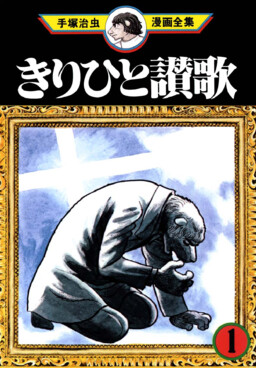
Ode to Kirihito
Yu's review of Ode to Kirihito — Dr. Osanai Kirihito investigates Monmow disease, a mysterious illness that transforms its victims into dog-like creatures; the medical establishment suppresses his findings; Osamu Tezuka's 1970 medical horror manga about a doctor reduced to subhuman status while searching for a scientific truth powerful people want hidden.

Horror
MW
Yu's review of MW — Yuki Michio is a beautiful, charming, amoral man who survived exposure to a chemical weapon as a child; the event destroyed his conscience; he works toward mass destruction while maintaining the appearance of a successful society member; a priest who loves him tries to hold him back; Osamu Tezuka's 1976 thriller about a man without conscience.
Horror / Thriller
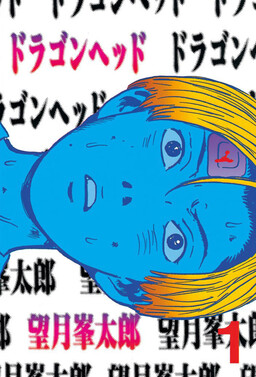
Dragon Head
Yu's review of Dragon Head — a school-trip train derails inside a mountain tunnel and three classmates crawl out into a Japan destroyed by an unexplained cataclysm. Minetaro Mochizuki's 10-volume survival horror about fear itself, the thing that breaks people faster than the disaster does.
Horror / Dark Fantasy
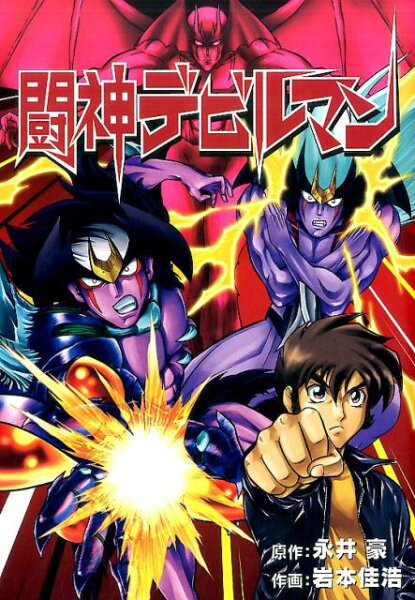
Devilman
Yu's review of Devilman — a gentle boy merges with the demon Amon, becomes Devilman to protect the people he loves, and then watches those same people tear the world apart from the inside.
Horror / Comedy
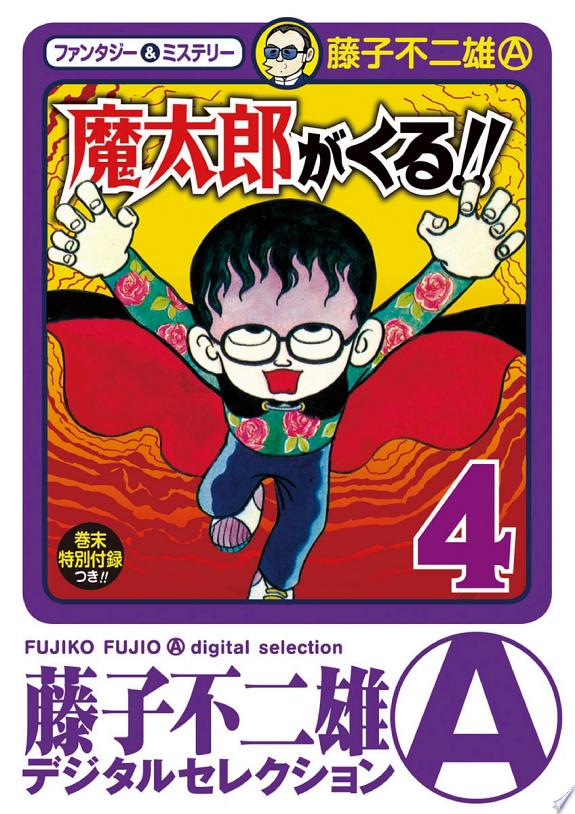
Matarou ga Kuru!!
Matarou ga Kuru!! follows Matarou Fudou, a timid boy who is constantly bullied — until he invokes a terrifying curse that punishes anyone who harms him, transforming his mild exterior into something that everyone who crosses him will come to deeply regret.
Horror / Thriller
Kyofu Shinbun
Kyofu Shinbun follows Kichi Taira, a middle school student who begins receiving a supernatural newspaper delivered only to him — a newspaper that reports events before they happen, including deaths, and whose receipt shaves years from his own lifespan with each issue.
Written by
Yu
Manga Enthusiast from Japan
I grew up in Japan and manga literally saved me during a tough time in elementary school. My English isn't perfect, but my love for manga is real — and I want to share it with you.
Disclosure: This post contains affiliate links. As an Amazon Associate, I earn from qualifying purchases at no extra cost to you.