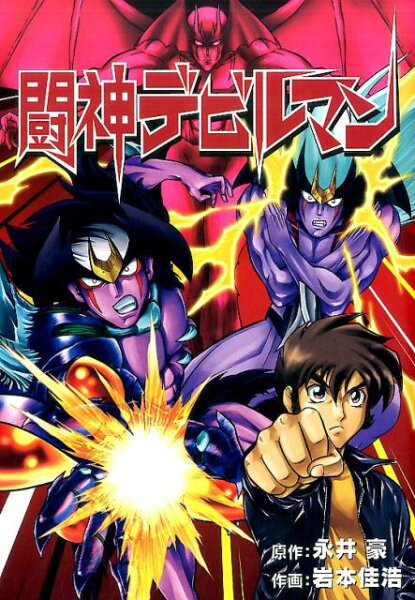
Devilman Review: A Hero Who Wins Every Fight and Loses the Only One That Matters
by Go Nagai
Read the first volume. If it doesn't hook you, put it down. It'll hook you.
Buy Devilman on Amazon →*Affiliate link — I earn a small commission at no extra cost to you.
I read a lot of newer dark manga before I ever got to Devilman, and I kept hearing the same thing from older readers in Japan: "you don't understand any of it until you read Nagai." I thought that was just nostalgia talking. People always say the old stuff is the real stuff. So I picked up the Seven Seas Classic Collection mostly to check a box, expecting a creaky 1972 relic I'd respect from a distance.
I was wrong, and I'm a little embarrassed about how wrong. This manga came out before my parents were teenagers, and it still left me sitting on my floor at 2am not really able to move. It is not polished. The art is rough in places, the pacing jumps like 1970s manga always does. But underneath all of that is the bravest ending I have ever read in this medium, and I think every dark manga I love is just trying to be as honest as this one already was.
Quick Take
- A kind boy named Akira Fudo merges with the demon Amon, keeps his human heart, and becomes Devilman to fight the demon invasion — only to learn the real enemy was never the demons
- The 1972 original by Go Nagai that basically invented dark, tragic shonen — you can trace Berserk, Evangelion, and Chainsaw Man straight back to it
- 5 volumes, complete in English as two hardcover omnibus books, rated M (Mature) for heavy gore, body horror, and one of the bleakest endings in manga
Story Overview
Akira Fudo is a gentle, almost timid teenager. His sharp, intense childhood friend Ryo Asuka comes to him with an impossible truth: demons are real, they are ancient, and they are coming back to take the Earth. The only way to fight a demon, Ryo says, is to become one. So at a wild gathering called the Black Sabbath, Akira fuses with Amon, one of the most powerful demons of all — but his human soul wins control of the demon's body. He becomes Devilman: a demon's strength, a human's heart.
The turning point is when the world finds out. For a long stretch Akira is fighting demons in secret, protecting the people around him. Then Ryo goes on television and tells the entire human race that demons walk among them — and crucially, he does not tell them how to tell a Devilman from a true demon. Humanity does the rest. Fear turns neighbor against neighbor. People start hunting each other.
And then Ryo's real identity comes out. He is Satan — a fallen angel who erased his own memories to live as a human, the better to understand and destroy the species he came to end. The ending is total. Twenty years pass, humanity is all but extinct, and Akira and Satan have their last battle. When it's over, Satan looks at the body of the only being he ever loved and finally understands what he became. Nagai does not give you a way out. There is no save.
Characters
Akira Fudo / Devilman — He starts as the softest person in the cast, the boy who cries for other people. Becoming Devilman doesn't harden him; it gives a gentle soul the power to actually protect what it loves. His whole arc is the slow, agonizing discovery that the humanity he chose to fight for is capable of horrors no demon ever showed him. By the end his gentleness has curdled into grief and rage, and that transformation is the real tragedy — not the demon body, but what humans did to the boy inside it.
Ryo Asuka / Satan — The friend who pulls Akira into all of this. For most of the manga he reads as a cold, brilliant, devoted ally. The reveal that he is Satan, that he erased his own memories and orchestrated everything, recontextualizes the entire story. The gut-punch is that his love for Akira was real — he just realized it too late, standing over the consequences of his own war.
Miki Makimura — Akira's classmate and the girl he loves, the warm human anchor of his life. She isn't a fighter; she's the thing he's fighting to keep. Her fate is the emotional hinge the whole ending swings on, the moment Akira loses his last reason to believe humanity is worth saving.
Sirene — A winged demon woman, the first enemy who genuinely matches Devilman in single combat. She is proud, obsessed with killing Akira, and her storyline carries one of the manga's most striking ideas about what demons actually feel.
What I Love About It
The Sirene fight is the moment Devilman stopped being a curiosity to me and became something I couldn't put down. Sirene is the first demon who is actually better than Akira in a fight. She drives her talons into his flesh so he can't transform fully, lifts him into the air, and smashes him through everything in reach. Devilman only survives because Ryo puts a rifle round into her. Even hurt, she nearly finishes him — he grabs her with his antennae and turns her own severed flying-talon back on her, impaling her with it.
But the part that wrecked me is what happens next. Another demon, Kaim, arrives to help her. And instead of fighting, he tells Sirene he has loved her since the beginning of time — then tears his own head off so she can fuse with his body and keep going. Her consciousness stays dominant after the merge. For a moment her strength comes roaring back, but his wounds are now her wounds, and they're dying together. She lands one last attack she's sure has killed Devilman, and she dies believing she won. I went into this expecting demons to be monsters. Nagai shows you a demon dying happy because she got to win for the creature that loved her. That's when I understood the manga isn't about good versus evil at all. It never was.
Memorable Scene ⚠️ Spoiler Warning
The lynching of the Makimura house is the scene I cannot get out of my head. After Ryo tells the world that demons hide among them, a terrified mob decides the Makimura family must be demons. They've already tortured and killed Miki's parents. Then the crowd storms the house for Miki and her little brother Tare. Miki and a thug who's thrown in with her try to fight back. It doesn't matter. All of them are killed.
What makes it unbearable is what comes after. When Akira returns, he finds Miki's body dismembered and mounted outside the house on pikes, displayed by the mob as a warning. Nagai draws the crowd as warped, erratic, almost more monstrous than any actual demon in the book — that's the whole point. The demons never did anything this cruel. People did. Standing over what's left of the girl he loved, Akira loses every reason he had to keep fighting for humanity. That single image is the engine of the apocalyptic ending, and fifty years later it still hits harder than almost anything being drawn today.
Pros & Cons
Pros
- The foundational text of dark manga — reading it makes a dozen modern series suddenly make sense
- Only 5 volumes, fully complete, with an ending Nagai refused to soften
- The Sirene arc and the final volume are genuinely some of the most powerful pages in the medium
- Seven Seas' hardcover omnibus is a beautiful, definitive way to own it
Cons
- 1972 art takes adjustment if you're used to modern linework
- The gore and the ending are brutal — not "edgy," genuinely upsetting
- The pacing lurches the way old serialized manga does, and Miki's romance is underdeveloped before her death, which blunts that gut-punch a little
This is bleak, ugly, fifty-year-old horror that ends with humanity losing — it won't work for everyone, and it isn't trying to.
Is Devilman Worth Reading?
Yes — if you want to understand where the entire tradition of tragic, apocalyptic manga came from, and you can handle real horror and a hopeless ending. It's short, it's complete, and it's braver about its own premise than almost anything that came after it. If you only read manga for comfort and clean victories, skip it.
Where to Buy
Read the first volume. If it doesn't hook you, put it down. It'll hook you.
This post contains affiliate links. If you purchase through these links, I may earn a small commission at no extra cost to you. As an Amazon Associate, I earn from qualifying purchases.
*Affiliate link — I earn a small commission at no extra cost to you.
Reading Guides
More Manga You Might Like

Dark Fantasy / Horror
Berserk
Yu's review of Berserk — the story of Guts, a mercenary born from a hanged corpse, who fights demons and corrupted gods with a sword the size of a door in a world where the divine is real and malevolent. The most influential dark fantasy manga ever made.
Horror / Survival
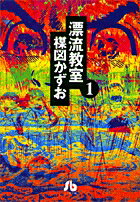
The Drifting Classroom
Yu's review of The Drifting Classroom — a Japanese elementary school and all its students and teachers are suddenly transported to a desolate future Earth; the children must survive without adult leadership as food runs out and monsters appear.
Horror
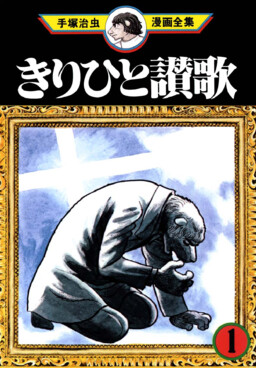
Ode to Kirihito
Yu's review of Ode to Kirihito — Dr. Osanai Kirihito investigates Monmow disease, a mysterious illness that transforms its victims into dog-like creatures; the medical establishment suppresses his findings; Osamu Tezuka's 1970 medical horror manga about a doctor reduced to subhuman status while searching for a scientific truth powerful people want hidden.

Horror
MW
Yu's review of MW — Yuki Michio is a beautiful, charming, amoral man who survived exposure to a chemical weapon as a child; the event destroyed his conscience; he works toward mass destruction while maintaining the appearance of a successful society member; a priest who loves him tries to hold him back; Osamu Tezuka's 1976 thriller about a man without conscience.
Horror
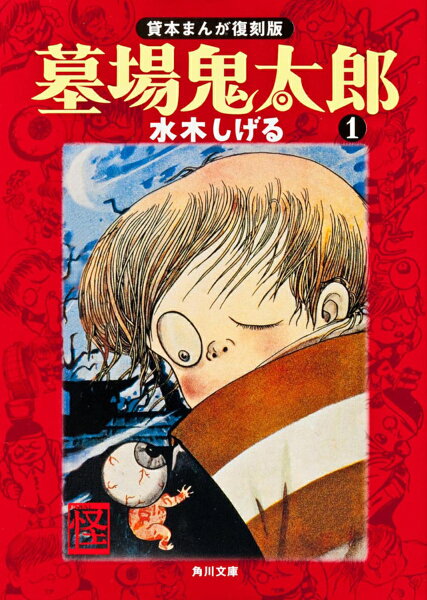
Kitaro of the Graveyard
A review of Kitaro of the Graveyard, the darker original version of Mizuki's yokai character — before Kitaro became a defender of humanity and was simply something risen from a grave.
Horror / Comedy
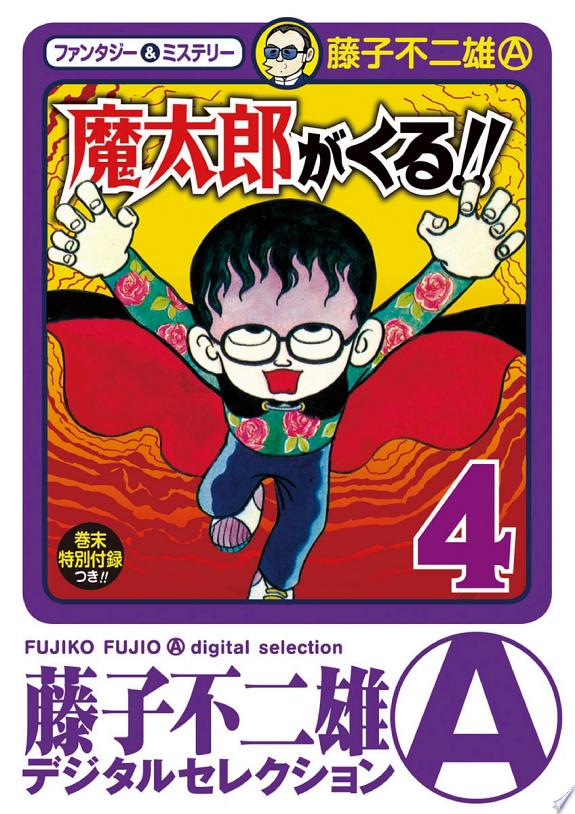
Matarou ga Kuru!!
Matarou ga Kuru!! follows Matarou Fudou, a timid boy who is constantly bullied — until he invokes a terrifying curse that punishes anyone who harms him, transforming his mild exterior into something that everyone who crosses him will come to deeply regret.
Written by
Yu
Manga Enthusiast from Japan
I grew up in Japan and manga literally saved me during a tough time in elementary school. My English isn't perfect, but my love for manga is real — and I want to share it with you.
Disclosure: This post contains affiliate links. As an Amazon Associate, I earn from qualifying purchases at no extra cost to you.