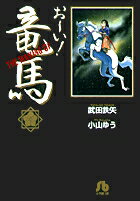
Ooi! Ryoma Review: The Bakumatsu Manga That Made Sakamoto Ryoma's Youth the Whole Story
by Tetsuya Takeda (writer), Yu Koyama (art)
Read the first volume. If it doesn't hook you, put it down. It'll hook you.
Buy Ooi! Ryoma on Amazon →*Affiliate link — I earn a small commission at no extra cost to you.
He became a name. Before that he was a boy. The manga lived in the before.
Quick Take
- Tetsuya Takeda and Yu Koyama's 14-volume Big Comic Spirits drama — Sakamoto Ryoma's youth and formation
- Focuses on the period before Ryoma became the iconic Bakumatsu revolutionary
- A character study that uses one of Japan's most famous historical figures to examine how character forms
Who Is This Manga For?
- Bakumatsu/Meiji-Restoration history enthusiasts who want Ryoma's specifically formative years
- Character drama readers who appreciate when biography focuses on becoming rather than achievement
- Period drama fans who want one of the era's most respected manga adaptations
- Anyone interested in what made Ryoma the person who could do what he did
Content Warnings & Age Rating
Age Rating: T (Teen) Content Warnings: Bakumatsu-era violence, period political intrigue, occasional dramatic intensity.
Suitable for most readers.
Yu's Rating
| Category | Score |
|---|---|
| Story Depth | ★★★★☆ |
| Art Style | ★★★★☆ |
| Character Development | ★★★★★ |
| Accessibility for Non-Japanese Readers | ★★★☆☆ |
| Reread Value | ★★★★☆ |
Story Overview
The series follows Sakamoto Ryoma from his childhood in Tosa through his young adulthood, ending before the famous achievements that made him Japan's most beloved historical figure of the Bakumatsu period. Most Ryoma fiction concentrates on the political-revolutionary period; Ooi! Ryoma deliberately focuses on the formation that produced the political revolutionary.
The structure is biographical drama: the family situation, the early education, the swordsmanship training in Edo, the experiences that opened Ryoma's perspective beyond his domain. Each phase contributes specific elements to who he becomes — the family love, the encounter with classmates from other domains, the broader Japan he travels through, the foreign threats that reshape his sense of what Japan needs.
What distinguishes the series is its commitment to character formation as subject. Ryoma in the early volumes is a kid. Ryoma in the late volumes is recognizably the figure who would change Japan, but the gap is bridged through depicted experience rather than through narrative declaration. The work shows how a person becomes what they become.
Characters
Sakamoto Ryoma: The protagonist drawn with patience — the work doesn't rush toward his historical achievements but lets the character form.
Family members: Older sister Otome and others who shaped his early development, rendered with the specificity that biography requires.
The classmates and contemporaries: Future figures of the Restoration appear as the young people they were — depicted before their historical significance.
Art Style
Koyama's art has the clean, somewhat sentimental quality appropriate to the focus on formation — character expressions emphasize feeling, period settings are rendered with care, action sequences (the swordsmanship training in particular) are well-handled when they occur.
Cultural Context
Ooi! Ryoma ran from 1986 to 1996 in Big Comic Spirits. Sakamoto Ryoma is among the most beloved figures in Japanese popular history — multiple novels, films, and dramas have engaged with his story. The manga's particular contribution is its focus on formation rather than achievement, which most other treatments cover.
The author Tetsuya Takeda, also known as a beloved actor, brought genuine engagement with the historical material to the project.
What I Love About It
I love that the work ends before the famous achievements.
A different version of this manga would push toward the famous Sakamoto Ryoma — the marriages of Satsuma and Choshu, the Senchu Hassaku, the eventual assassination. Ooi! Ryoma stops before all that. The work's argument is that the formation matters as much as the achievement, and that without depicting the formation we lose the human reality of the figure. The choice to stop before the iconic events is the work's intellectual courage.
What English-Speaking Fans Say
Limited international awareness without translation. Among Bakumatsu enthusiasts familiar with various Ryoma adaptations, regarded as among the more thoughtful manga treatments precisely because it focuses on formation.
Memorable Scene ⚠️ Spoiler Warning
A late-series moment where Ryoma encounters a perspective that completes his sense of what Japan is — not the political revelation of his later career but the personal one that makes the political revelation possible. The scene shows the series' method clearly.
Similar Manga
| Title | Its Approach | How Ooi! Ryoma Differs |
|---|---|---|
| Vagabond | Inoue's Musashi biography from young adulthood | Similar formation focus but different historical figure |
| Hidamari no Ki | Tezuka's Bakumatsu medical-political drama | Different angle on the same era |
| Hi Izuru Tokoro no Tenshi | Asuka-period biographical drama | Same biography-of-formation approach to a different era |
Reading Order / Where to Start
Volume 1. The biographical progression depends on the foundation.
Official English Translation Status
Ooi! Ryoma has no official English translation.
Pros & Cons
Pros
- Focuses on formation rather than achievement
- Character development across 14 volumes feels genuinely earned
- Beloved historical figure treated with depth
- Complete with a satisfying conclusion
Cons
- No English translation
- Bakumatsu/Meiji historical context requires familiarity
- The deliberate stop-before-fame may frustrate readers wanting the famous events
- Slow pacing reflects the formation focus
Is Ooi! Ryoma Worth Reading?
For Bakumatsu enthusiasts and biographical-drama fans, yes — this is one of the most thoughtful Ryoma adaptations in any medium. For readers wanting the famous Bakumatsu events or unfamiliar with the period, the focus on formation may feel slow. As biography of becoming, it's exceptional.
Format Comparison
| Format | Notes |
|---|---|
| Physical | Japanese editions available |
| Digital | Available in Japanese |
| Omnibus | Collected editions available |
Where to Buy
No English release yet. That just means you find it before everyone else does.
*Affiliate link — I earn a small commission at no extra cost to you.
More Manga You Might Like
Historical / Drama
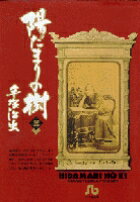
Hidamari no Ki
Hidamari no Ki follows two real figures from the late Edo period — one a samurai, one a doctor — as Japan's encounter with Western medicine and Western power forces both of them to decide what they believe in and what they are willing to lose.
Historical / Drama
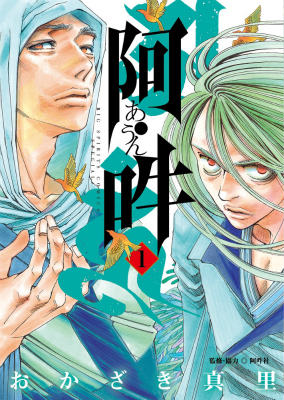
Aun
Aun follows the historical Buddhist monks Kukai and Saicho as they travel to Tang Dynasty China to learn from Chinese Buddhism — and compete, cooperate, and argue their way toward becoming the two most important religious figures in Japanese history.
Historical / Drama
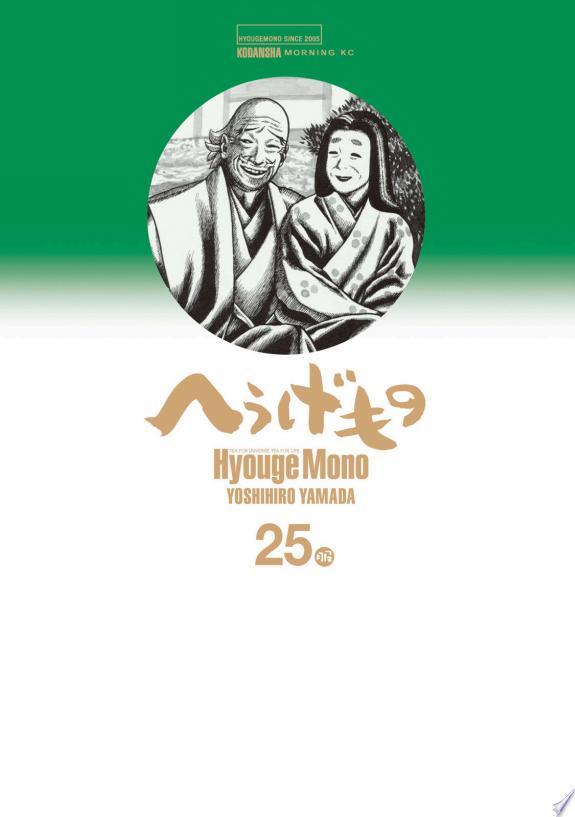
Hyouge Mono
Hyouge Mono follows Sasuke Furuta, a samurai retainer to Oda Nobunaga whose secret passion is aesthetic objects — tea bowls, garden arrangements, calligraphy — and whose pursuit of beautiful things in a world of political violence creates the manga's central comedy and drama.
Historical / Drama
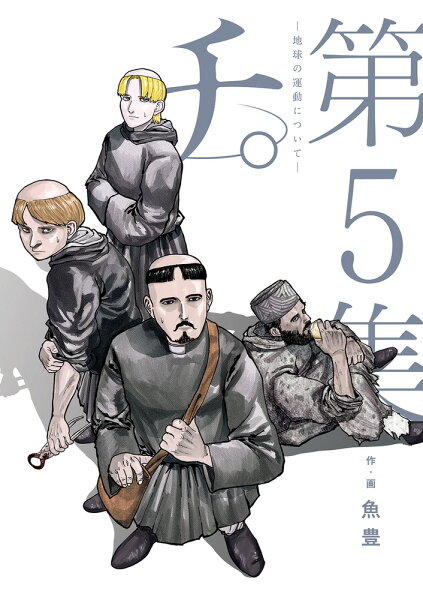
Chi. About the Movement of the Earth
Chi. About the Movement of the Earth follows multiple generations of scholars in medieval Europe who secretly pursue the heliocentric model of the solar system — Paru Itagaki's historical manga about the cost of knowing something that the world refuses to accept.
Historical / Drama
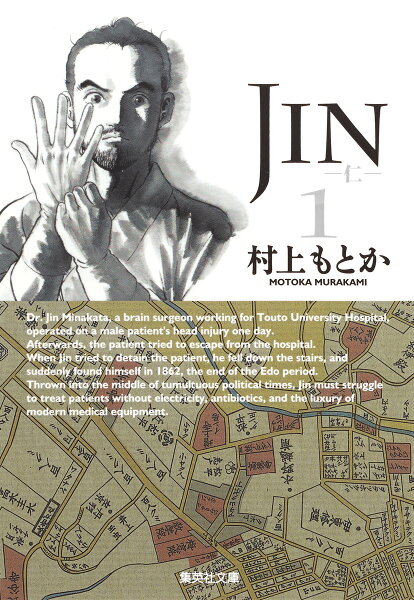
Jin
Jin follows Jin Minakata, a modern brain surgeon time-slipped to Bakumatsu Edo where his medical knowledge could save thousands but might rewrite history — a 20-volume Super Jump epic that combined medical drama with serious historical engagement.
Historical / Drama
Mibugishiden
Mibugishiden follows Yoshichiro Kanichiro Yoshimura, a Shinsengumi samurai from a farming family who joined the corps to send money home — a man who killed for practical reasons and whose death was heroic for reasons he would not have understood.
Written by
Yu
Manga Enthusiast from Japan
I grew up in Japan and manga literally saved me during a tough time in elementary school. My English isn't perfect, but my love for manga is real — and I want to share it with you.