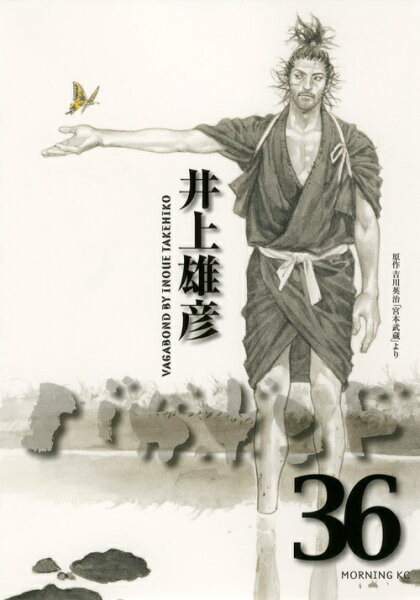
Vagabond Review: The Greatest Swordsman Who Ever Lived, Searching for What Strength Means
by Takehiko Inoue
Read the first volume. If it doesn't hook you, put it down. It'll hook you.
Buy Vagabond on Amazon →*Affiliate link — I earn a small commission at no extra cost to you.
Quick Take
- The most visually beautiful manga ever published — Inoue's brushwork has no peer in the medium
- A meditation on what strength actually means, told through the life of Japan's most famous swordsman
- Currently on indefinite hiatus — go in knowing this, and read it anyway
Who Is This Manga For?
Vagabond is for you if:
- You want the most visually extraordinary manga in existence — this is it
- You love historical fiction that takes its subject and its questions seriously
- You can accept an unfinished story — the hiatus may never end
- You want a manga that asks what it means to be strong, and keeps refusing the easy answer
Content Warnings & Age Rating
Age Rating: M (Mature) Content Warnings: Extreme violence (swordplay depicted with physical realism); historical warfare; significant character death; philosophical content about killing and meaning; some nudity in certain volumes
This is adult content. The violence is not gratuitous, but it is real.
Yu's Rating
| Category | Score |
|---|---|
| Story Depth | ★★★★★ |
| Art Style | ★★★★★ |
| Character Development | ★★★★★ |
| Accessibility for Non-Japanese Readers | ★★★★☆ |
| Reread Value | ★★★★★ |
Story Overview
Shinmen Takezo is seventeen years old when he and his friend Matahachi survive the Battle of Sekigahara on the losing side. They walk away from a field of ten thousand corpses and begin separate journeys.
Takezo's journey becomes legendary. He names himself Miyamoto Musashi and spends the next decades becoming the most dangerous swordsman in Japan — winning duel after duel, defeating school after school, accumulating a reputation that precedes him everywhere he goes.
The question Vagabond asks — and keeps asking, volume after volume — is: then what? If you become the best at something, if you defeat everyone who challenges you, if your strength is beyond anyone's ability to contest — what does that get you? What does it mean?
Musashi's journey is the search for an answer that he suspects might not exist.
Characters
Miyamoto Musashi — One of manga's most complex protagonists. His early violence is genuinely disturbing — he kills without much hesitation and the bodies accumulate. What the series tracks is the gradual, painful dawning of understanding: that what he has been pursuing is not the right thing, and that he doesn't know yet what the right thing is.
Sasaki Kojiro — Musashi's greatest rival, and one of manga's most extraordinary secondary characters. Kojiro in Vagabond is deaf — he has never heard the world — and his understanding of swordsmanship comes entirely from watching and feeling. His sections of the manga are among the most beautiful things Inoue has created.
Takuan Soho — The Zen monk who understands Musashi's journey better than Musashi does, and who refuses to guide him directly. His presence and occasional interventions represent the philosophical pole the series is moving toward.
Hon'ami Koetsu — An artist whose approach to creation and to living provides Musashi with a different model of mastery — one that doesn't require defeating anyone.
Art Style
There is nothing in manga that looks like Vagabond.
Inoue works in brush and ink, using techniques borrowed from traditional Japanese painting. The result is not manga in the conventional sense — it is sequential art that could individually be exhibited as paintings. The nature scenes — bamboo forests, rice paddies, mountain paths — are composed and rendered with a painter's eye.
The combat sequences are kinetic and real: the physics of sword fighting, the spatial logic of a duel, the horrifying speed of lethal violence. Inoue has studied kenjutsu and it shows.
The portraits — particularly Kojiro's — are among the most beautiful things ever put into manga panels.
Cultural Context
Miyamoto Musashi — A real historical figure, considered Japan's greatest swordsman, who lived from 1584 to 1645 and was undefeated in over 60 duels. His philosophical text, The Book of Five Rings, is still read as a martial and business strategy guide worldwide. Vagabond is an adaptation of Eiji Yoshikawa's novel Musashi, fictionalized from the historical record.
The aftermath of Sekigahara — The Battle of Sekigahara (1600) unified Japan under the Tokugawa shogunate and ended the Sengoku period. Vagabond is set in the immediate aftermath — a moment when Japan was transitioning from a society organized around warfare to one where the sword had no clear purpose. Musashi's search for meaning happens in this specific historical context.
Zen Buddhism and the sword — The philosophical tradition of Zen was deeply intertwined with samurai culture. The concept of mushin (no-mind) — acting without deliberation, purely in the moment — is central to both Zen practice and the highest levels of kenjutsu. Musashi's journey is toward this state, and away from it simultaneously.
What I Love About It
There is a sequence in Vagabond where Musashi, having just survived another impossible duel, sits alone in a field.
He has won. Again. He is the best. Again. And he feels nothing except tired.
Inoue doesn't put words to this. He just shows Musashi sitting, and the empty field, and the light.
I have thought about that sequence many times since reading it — about what we pursue and why we pursue it, and what happens when we get it. Vagabond is the best version of that question I have found in fiction.
What English-Speaking Fans Say
Vagabond is considered one of the greatest manga ever created by both Japanese and Western readers. Its hiatus — which began in 2015 without any announced completion date — is one of manga's great unresolved situations.
Common sentiment: the 37 volumes that exist are worth reading even knowing they are incomplete. The journey, not the destination.
Common praise: The art is universally acknowledged as the finest in the medium. Kojiro's sections are cited as among the most affecting sequences in manga history. The philosophical depth is genuine.
Memorable Scene ⚠️ Spoiler Warning
Kojiro and the sword master.
In an extended sequence, Kojiro encounters an old sword master and they duel — wordlessly, because Kojiro cannot hear, with a depth of mutual understanding that transcends ordinary communication. What passes between them is not violence. It is recognition.
The sequence says more about mastery, understanding, and the things that words cannot communicate than any page of dialogue could.
Similar Manga
If you liked Vagabond, try:
- Vinland Saga — Similar historical seriousness, different setting
- Berserk — Similar visual ambition and philosophical weight, darker
- Dororo — Historical setting with similar questions about violence's cost
- Rurouni Kenshin — A more accessible samurai manga with similar themes
Reading Order / Where to Start
Start from Volume 1. The VIZBIG omnibus editions reduce 37 volumes to about 12, and the larger format suits Inoue's art better than the standard volume.
Official English Translation Status
Status: Ongoing (hiatus) English Volumes: 37 Translator: VIZ Media Translation Quality: Excellent — the VIZBIG editions are particularly recommended
Pros & Cons
Pros
- The most visually beautiful manga ever published
- Musashi and Kojiro are both extraordinary characters
- The philosophical depth is genuine and rewarding
- Even incomplete, 37 volumes is a rich, complete-feeling journey
Cons
- On indefinite hiatus — may never be completed
- The mature content limits accessibility
- The slowness of some arcs tests patience that the art requires
Format Comparison
| Format | Volumes | Price per vol. (approx.) | Best for |
|---|---|---|---|
| Paperback (individual) | 37 vols | ~$9–11 | Standard |
| VIZBIG Omnibus | ~12 vols | ~$17–19 | Strongly recommended — larger format suits the art |
| Kindle | 37 vols | ~$6–8 | Available but loses something at screen size |
Recommendation: VIZBIG omnibus editions. The art deserves the larger format.
Where to Buy
Read the first volume. If it doesn't hook you, put it down. It'll hook you.
This post contains affiliate links. If you purchase through these links, I may earn a small commission at no extra cost to you. As an Amazon Associate, I earn from qualifying purchases.
*Affiliate link — I earn a small commission at no extra cost to you.
More Manga You Might Like
Action / Historical
Lone Wolf and Cub
Yu's review of Lone Wolf and Cub — Ogami Ittō was the Shogunate's official executioner; framed for treason by the Yagyū clan, stripped of his position, his wife murdered; he chose the Meifumadō — the road to hell — placing his infant son Daigorō before a ball and a sword, and the child chose the sword; they travel as assassins for hire, seeking vengeance.
Action / Historical
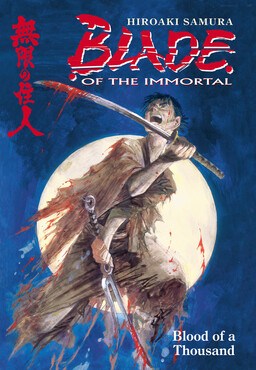
Blade of the Immortal
Yu's review of Blade of the Immortal — Manji is a ronin cursed with immortality by sacred bloodworms; to end the curse he must kill a thousand evil men, and he agrees to protect Rin Asano, a girl whose family was destroyed by the Itto-ryu sword school led by Anotsu Kagehisa. Hiroaki Samura's nineteen-year masterpiece, complete in 31 volumes from Dark Horse.
Action / Historical
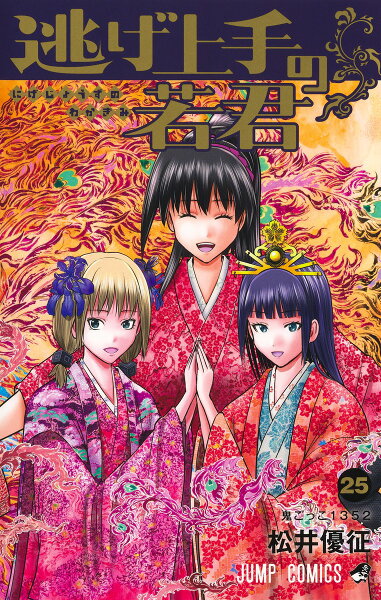
The Elusive Samurai
A review of The Elusive Samurai by Yusei Matsui, following a young noble who survives the fall of the Kamakura shogunate through unmatched evasion skills.
Action / Fantasy
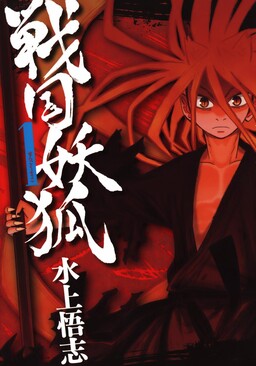
Sengoku Youko
Yu's review of Sengoku Youko — in Sengoku-era Japan, a powerful spirit girl travels with a timid human boy seeking to create a world where humans and youkai can live in peace.
Action / Historical
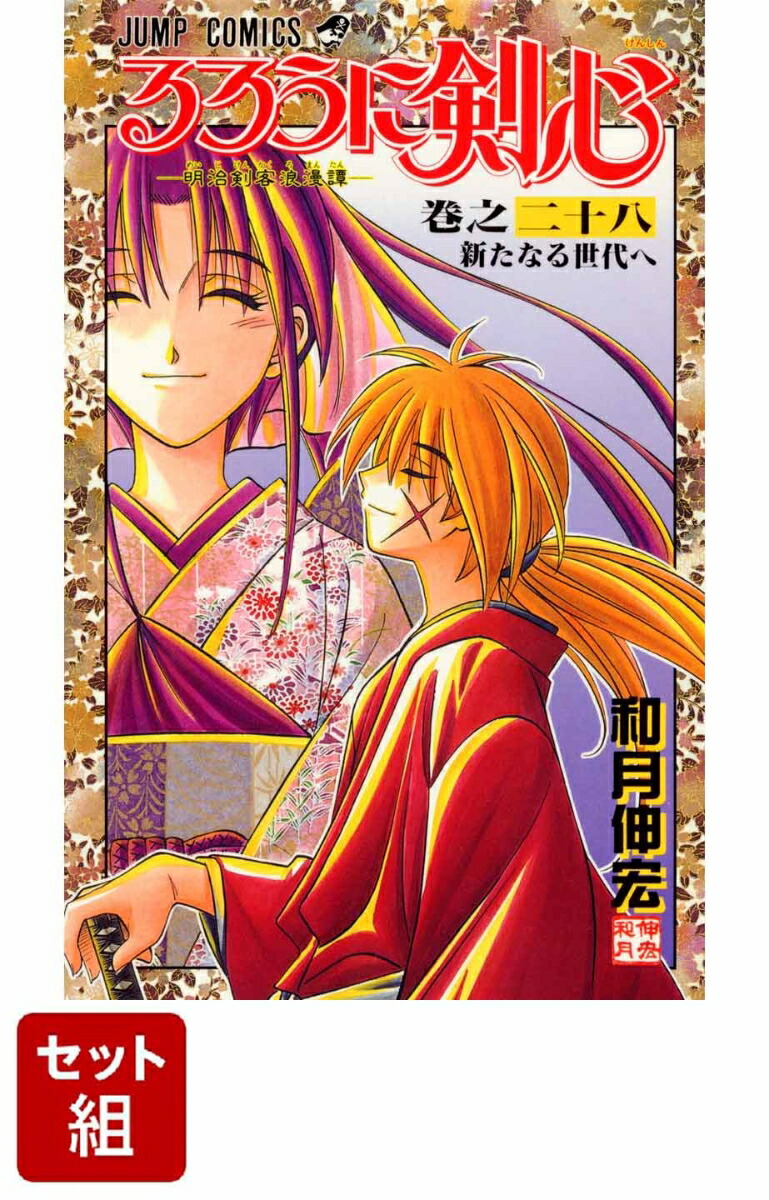
Rurouni Kenshin
A review of Rurouni Kenshin — 28 volumes in Weekly Shonen Jump. Himura Kenshin was Japan's most feared assassin of the Bakumatsu; he now wanders with a reverse-blade sword, trying to protect without killing. The Kyoto Arc is one of the greatest extended arcs in manga, and Shishio is the genre's finest villain. VIZ Media's English edition is complete.
Action / Samurai
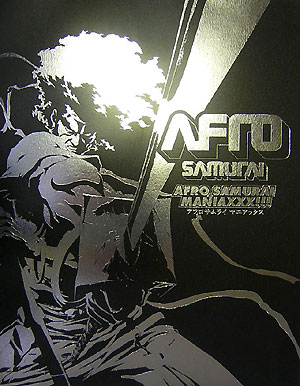
Afro Samurai
A review of Afro Samurai — Takashi Okazaki's hip-hop-soaked samurai revenge manga, where the final duel is the one Afro never gets to fight.
Written by
Yu
Manga Enthusiast from Japan
I grew up in Japan and manga literally saved me during a tough time in elementary school. My English isn't perfect, but my love for manga is real — and I want to share it with you.
Disclosure: This post contains affiliate links. As an Amazon Associate, I earn from qualifying purchases at no extra cost to you.