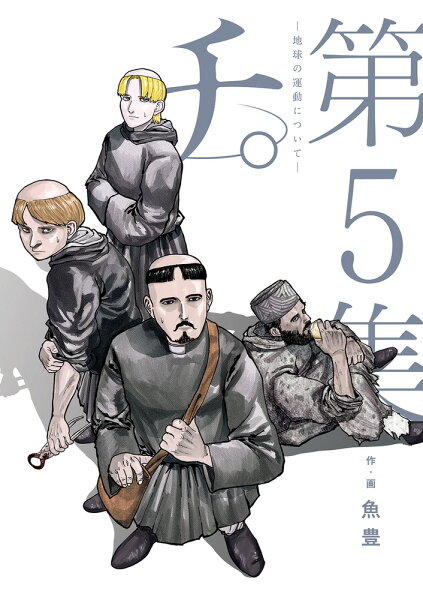
Chi. About the Movement of the Earth Review: The Historical Manga That Made Astronomy Into an Act of Courage
by Paru Itagaki
Read the first volume. If it doesn't hook you, put it down. It'll hook you.
Buy Chi. About the Movement of the Earth on Amazon →*Affiliate link — I earn a small commission at no extra cost to you.
They knew the Earth moved. They also knew what would happen if they said so.
Quick Take
- Paru Itagaki's 8-volume historical manga — multiple generations of astronomers in medieval Europe who secretly pursued heliocentrism at risk of their lives
- Winner of the Manga Taisho Award and multiple other prizes — one of the most acclaimed manga of the 2020s
- A historical drama that uses astronomy to ask what it means to pursue truth when truth is forbidden
Who Is This Manga For?
- History readers who want medieval European intellectual history through the lens of manga
- Drama manga readers who want emotional weight and genuine stakes
- Readers who want short, complete, powerful manga — 8 volumes that feel complete rather than condensed
- Anyone who has wanted to believe something true that the world refused to accept
Content Warnings & Age Rating
Age Rating: T (Teen) Content Warnings: Religious persecution, historical violence, themes of martyrdom and sacrifice, intellectual themes. Some intensity.
Suitable for most readers with awareness of the historical content.
Yu's Rating
| Category | Score |
|---|---|
| Story Depth | ★★★★★ |
| Art Style | ★★★★★ |
| Character Development | ★★★★★ |
| Accessibility for Non-Japanese Readers | ★★★★☆ |
| Reread Value | ★★★★★ |
Story Overview
Medieval Europe. The Church teaches that the Earth is the center of the universe. A mathematician discovers evidence that the Earth moves around the Sun. He knows what will happen if he publishes this. He publishes it anyway.
Chi. About the Movement of the Earth tells this story not once but multiple times — across generations, through different people, different choices, different costs. Each section follows a different character who encounters the heliocentric theory and must decide what to do with the knowledge. Some pursue it openly. Some destroy the evidence. Some pass it forward at the cost of their lives.
Itagaki's structural choice is the series' most powerful element: by telling the story across generations rather than following a single protagonist, the manga shows how knowledge survives — not through individual heroism but through the chain of people who chose to pass it forward even when doing so was dangerous. The "Chi" (blood, but also earth and wisdom in different characters) threads through each generation.
The art is extraordinary. Itagaki's character designs carry exceptional psychological weight, and the astronomical imagery — diagrams of orbital paths, the movement of stars across seasons — is rendered with beauty rather than technical dryness.
Characters
The chain of scholars: Each generation's character is fully realized within their section — their fears, their convictions, their specific relationship to the truth they're carrying. No single character is the protagonist; the truth itself is the protagonist.
The antagonists: The Church figures who enforce geocentrism are not simple villains — they believe what they enforce, which makes the conflict genuine rather than melodramatic.
Art Style
Itagaki's art combines her characteristic character design intensity with historical visual detail — the clothing, the architecture, the instruments of medieval astronomy all rendered with care. The pages where orbital paths are depicted have a visual elegance that makes abstract astronomical concepts emotionally resonant.
Cultural Context
Chi. ran in Big Comic Spirits from 2020 to 2022 and won the Manga Taisho Award (Grand Prize) and multiple other major manga prizes. It appeared during a period of significant international attention to manga, and its awards brought it to readers who might not have sought it otherwise.
The choice to set a manga about intellectual freedom in medieval Europe — rather than Japan — gives the series a universality that feels deliberate. The specific history is European; the questions are not.
What I Love About It
I love the structure.
Most manga about intellectual discovery follows a single genius against the world. Chi. follows a chain of ordinary people who each made a choice. The individual decisions are not extraordinary — they're terrifying and human. But together they form something extraordinary. The structure makes the point that knowledge is collective and fragile in ways that a single-genius narrative cannot.
What English-Speaking Fans Say
Highly acclaimed wherever it's encountered — the manga awards brought it attention, and readers who find it consistently describe it as one of the most emotionally powerful manga they've read. The multi-generational structure is consistently cited as the series' most remarkable achievement. Frequently recommended alongside Vinland Saga and other serious historical manga.
Memorable Scene ⚠️ Spoiler Warning
The moment when a character who has dedicated years to destroying evidence of heliocentrism encounters something he cannot explain without accepting the theory he has been suppressing — and what he chooses to do with that moment. The scene is the series' moral center: knowledge doesn't ask permission to be true.
Similar Manga
| Title | Its Approach | How Chi. Differs |
|---|---|---|
| Vinland Saga | Viking/medieval historical epic with violence and philosophical arc | Medieval Europe but intellectual stakes rather than physical — the battlefield is the mind |
| Holyland | Psychological intensity in contemporary setting | Chi. applies that intensity to historical intellectual pursuit |
| A Bride's Story | Central Asian historical manga with character focus and period detail | European rather than Asian setting — intellectual stakes rather than social/romantic |
Reading Order / Where to Start
Volume 1. The generational structure means each section begins fresh, but reading in order gives the full chain — which is the point.
Official English Translation Status
Chi. About the Movement of the Earth has no official English translation yet, though its award profile suggests it may be licensed.
Pros & Cons
Pros
- Multiple award winner — the acclaim is deserved
- The multi-generational structure is genuinely innovative
- Each 8 volumes feels complete without compression
- The astronomical imagery is visually extraordinary
Cons
- No English translation
- The historical/religious context requires some engagement
- Readers who want single-protagonist narrative may find the structural choice disorienting
- Intense — this is not comfortable reading, though it is rewarding
Is Chi. About the Movement of the Earth Worth Reading?
Yes. Without qualification. This is one of the finest manga of the 2020s — the structure is innovative, the emotion is real, the historical detail is meaningful rather than decorative. Whether you know nothing about medieval astronomy or know it well, this manga will change how you think about the cost of knowing something true.
Format Comparison
| Format | Notes |
|---|---|
| Physical | Japanese editions available |
| Digital | Available in Japanese |
| Omnibus | 8 volumes — complete set available |
Where to Buy
No English release yet. That just means you find it before everyone else does.
*Affiliate link — I earn a small commission at no extra cost to you.
More Manga You Might Like
Historical / Drama
Hidamari no Ki
Hidamari no Ki follows two real figures from the late Edo period — one a samurai, one a doctor — as Japan's encounter with Western medicine and Western power forces both of them to decide what they believe in and what they are willing to lose.
Historical / Drama
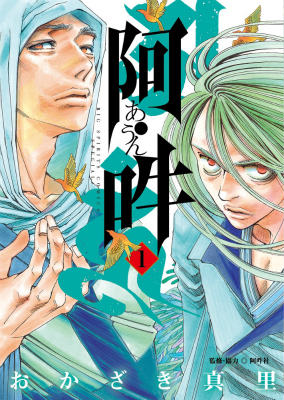
Aun
Aun follows the historical Buddhist monks Kukai and Saicho as they travel to Tang Dynasty China to learn from Chinese Buddhism — and compete, cooperate, and argue their way toward becoming the two most important religious figures in Japanese history.
Historical / Drama
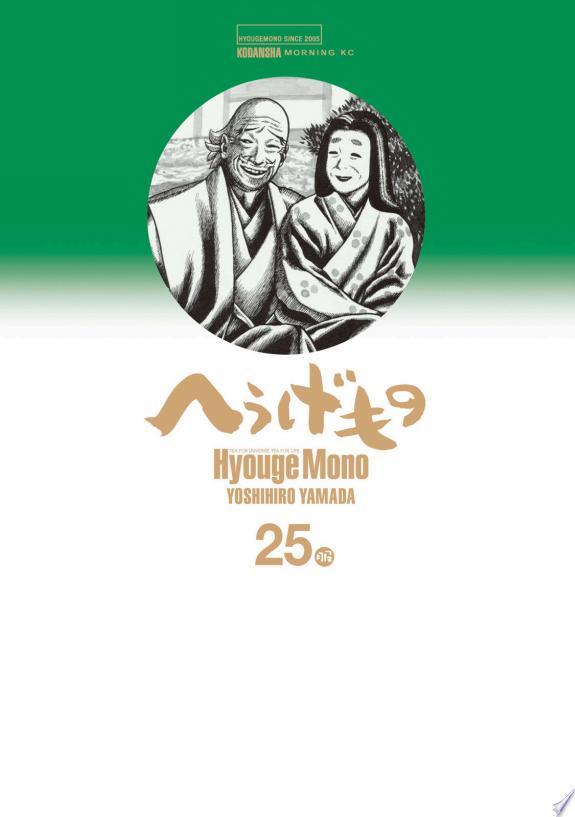
Hyouge Mono
Hyouge Mono follows Sasuke Furuta, a samurai retainer to Oda Nobunaga whose secret passion is aesthetic objects — tea bowls, garden arrangements, calligraphy — and whose pursuit of beautiful things in a world of political violence creates the manga's central comedy and drama.
Historical / Drama
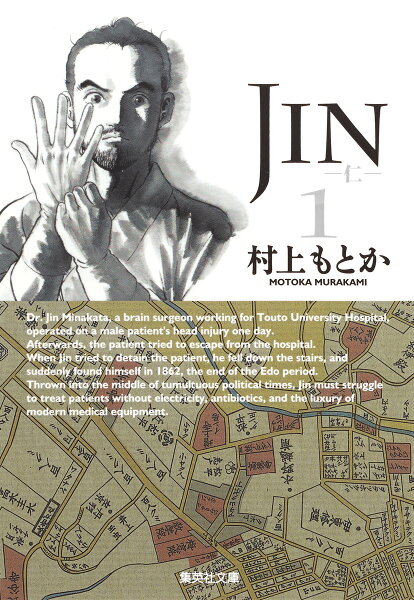
Jin
Jin follows Jin Minakata, a modern brain surgeon time-slipped to Bakumatsu Edo where his medical knowledge could save thousands but might rewrite history — a 20-volume Super Jump epic that combined medical drama with serious historical engagement.
Historical / Drama
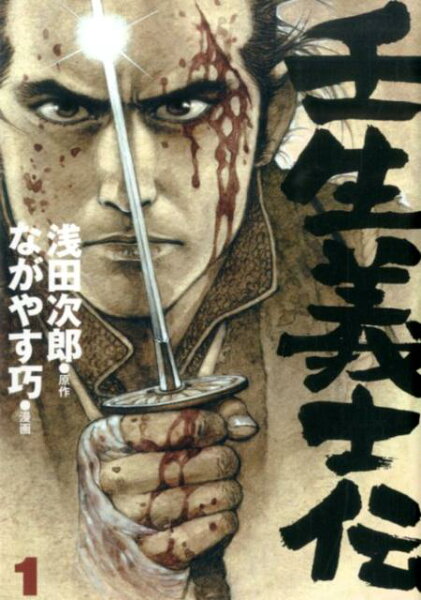
Mibugishiden
Mibugishiden follows Yoshichiro Kanichiro Yoshimura, a Shinsengumi samurai from a farming family who joined the corps to send money home — a man who killed for practical reasons and whose death was heroic for reasons he would not have understood.
Historical / Drama
Ooi! Ryoma
Ooi! Ryoma is the manga adaptation by Tetsuya Takeda and Yu Koyama of Sakamoto Ryoma's life from childhood through young adulthood — a 14-volume Big Comic Spirits drama about the future revolutionary's formation as a person before he became a historical figure.
Written by
Yu
Manga Enthusiast from Japan
I grew up in Japan and manga literally saved me during a tough time in elementary school. My English isn't perfect, but my love for manga is real — and I want to share it with you.