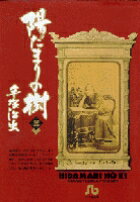
Hidamari no Ki Review: Tezuka's Most Personal Historical Manga
by Osamu Tezuka
Read the first volume. If it doesn't hook you, put it down. It'll hook you.
Buy Hidamari no Ki on Amazon →*Affiliate link — I earn a small commission at no extra cost to you.
What does it cost a society to modernize — and does anyone ever get to pay that cost on their own terms?
Quick Take
- One of Tezuka's most mature historical works — drawn from his own family history
- The medicine vs. tradition conflict is given full weight on both sides; no one in this story is simply wrong
- A more intimate and emotionally direct work than Tezuka's mythological epics
Who Is This Manga For?
- Readers of Fuunji-tachi or historical manga set in the late Edo / early Meiji transition
- Tezuka fans who want his most personal work rather than his most epic
- Anyone interested in the history of Japanese medicine and its encounter with Western practice
- Historical manga readers who want the period's cultural stakes dramatized through specific human lives
Content Warnings & Age Rating
Age Rating: T (Teen) Content Warnings: Historical violence consistent with the period. Medical content including surgery depicted with period accuracy. Themes of cultural upheaval and personal loss.
Appropriate for its rating.
Yu's Rating
| Category | Score |
|---|---|
| Story Depth | ★★★★★ |
| Art Style | ★★★★★ |
| Character Development | ★★★★★ |
| Accessibility for Non-Japanese Readers | ★★★☆☆ |
| Reread Value | ★★★★★ |
Story Overview
The two central figures are based on real people from Tezuka's family history. Manjiro Tezuka is a samurai of the old school — committed to Bushido, loyal to the feudal order that is visibly crumbling around him. Ryoan Manabe is a doctor pursuing the new Western medicine, trained under the Dutch physicians who represented Japan's one window on the outside world.
Their friendship — improbable given everything that divides them — is the series' emotional architecture. Around them, late Edo Japan is in crisis: Western ships, internal political conflict, the imminent end of the Tokugawa order. Both men are trying to do right in a situation where "right" is rapidly becoming impossible to define.
The medicine in the series is depicted with the genuine difficulty it had — surgery without anesthesia, treatments that worked for unknown reasons, the gap between what Western medicine claimed and what it could actually do. Manabe is not a hero of progress but a person trying to apply real knowledge in conditions that barely permit it.
Characters
Manjiro Tezuka: Tezuka's ancestor, depicted with full complexity — a man whose values are genuinely admirable and genuinely obsolete simultaneously. His commitment to the samurai code is not treated as stupidity; it's treated as tragedy.
Ryoan Manabe: The doctor whose embrace of Western medicine puts him permanently at odds with established authority. His intelligence and his certainty are both his greatest qualities and the source of his greatest failures.
Art Style
Tezuka's mature art in Hidamari no Ki is extraordinary — the historical period rendered with evident research, the medical sequences depicted with clinical precision, and the character work carrying the emotional weight of two men navigating an impossible historical moment. This is among the finest work of his late career.
Cultural Context
Tezuka drew Hidamari no Ki using documents from his own family history — the Tezuka family included both samurai and medical practitioners in the late Edo period, and the series is partly an act of ancestor recovery.
The late Edo medical world it depicts — specifically the rangaku (Dutch learning) tradition of studying Western science through the Dutch trading post at Dejima — is the same world depicted in Fuunji-tachi from a different perspective.
What I Love About It
I love that the series refuses to make modernization a simple good.
Manabe's medicine saves lives. It also participates in a broader process of Westernization that destroys things worth keeping. Tezuka doesn't resolve this — he holds both truths simultaneously and asks the reader to hold them too.
This is harder than it sounds. Most historical fiction set in the Meiji transition either celebrates modernization or mourns tradition. Hidamari no Ki does both, honestly, without resolution.
What English-Speaking Fans Say
Not known in English-speaking markets. Among Tezuka scholars and historical manga readers, Hidamari no Ki is recognized as his most personally rooted work and one of his finest achievements as a mature artist. It is less discussed than Phoenix or Black Jack but is considered equally significant by those who have read it.
Memorable Scene ⚠️ Spoiler Warning
A surgery performed without anesthesia, in conditions that make success nearly impossible, with both the doctor's technical knowledge and the patient's courage tested to their limits — a sequence that uses the specific demands of 19th-century medicine to say something about what human beings are capable of asking of each other.
Similar Manga
- Fuunji-tachi: Different perspective on the same historical transition
- Young Black Jack: Tezuka's other medicine-focused historical manga, different setting
- Vinland Saga: Different culture and period, similar commitment to historical seriousness
Reading Order / Where to Start
Volume 1. The series is complete at 8 volumes and can be read in a concentrated sitting.
Official English Translation Status
Hidamari no Ki has no official English translation.
Pros & Cons
Pros
- Tezuka's most personal historical work
- The medicine-and-tradition conflict is handled with full honesty
- Complete and satisfying at 8 volumes
- Tezuka's late-career art at its finest
Cons
- No English translation
- Requires some knowledge of the Edo-Meiji transition to fully appreciate
- The historical specificity may be less accessible than Tezuka's mythological works
Format Comparison
| Format | Notes |
|---|---|
| Physical | Japanese editions available |
| Digital | Available in Japanese |
| Omnibus | Complete collection editions available |
Where to Buy
No English release yet. That just means you find it before everyone else does.
*Affiliate link — I earn a small commission at no extra cost to you.
More Manga You Might Like
Historical / Drama
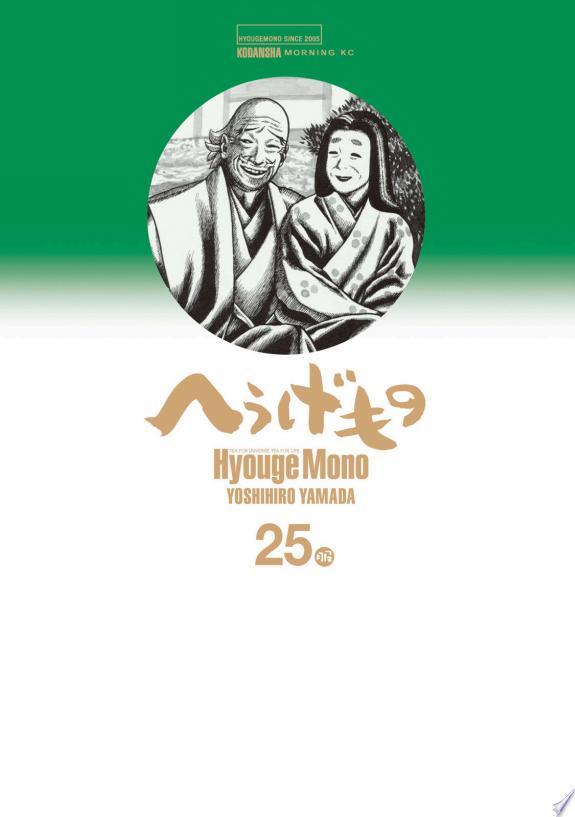
Hyouge Mono
Hyouge Mono follows Sasuke Furuta, a samurai retainer to Oda Nobunaga whose secret passion is aesthetic objects — tea bowls, garden arrangements, calligraphy — and whose pursuit of beautiful things in a world of political violence creates the manga's central comedy and drama.
Historical / Comedy
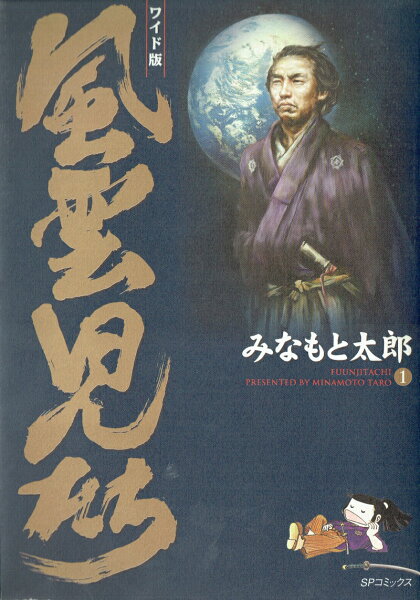
Fuunji-tachi
Fuunji-tachi is a long-running historical manga tracing Japan's turbulent transition from the Edo period through the encounters with Western ships, the collapse of sakoku (national isolation), and the remarkable individuals who shaped that transformation.
Historical / Romance
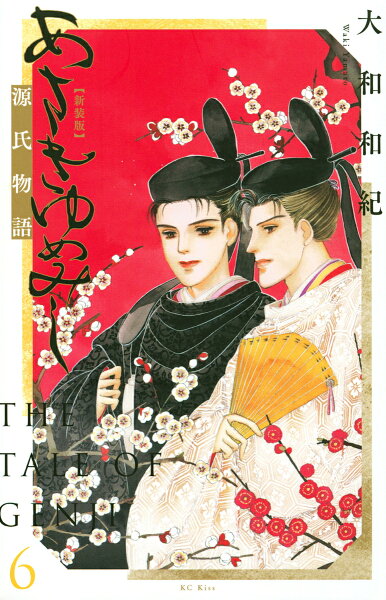
Asaki Yumemishi
A review of Waki Yamato's Asaki Yumemishi — 13 volumes in Kodansha's Mimi from 1979 to 1993. The landmark manga adaptation of The Tale of Genji, available in English from Kodansha USA in 10 digital volumes.
Historical / Action
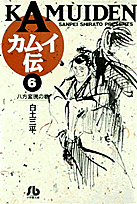
Kamui Den
Kamui Den follows Kamui, a ninja born into the lowest social caste of feudal Japan, whose pursuit of freedom through the shinobi arts becomes a lens on the systematic brutality of the Edo period class system — one of manga's great radical political works.
Historical / Action
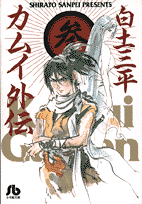
Kamui Gaiden
Kamui Gaiden follows the fugitive ninja Kamui after he abandons his clan — a man who fought for freedom and now runs to protect it, hunted by the people who want him dead and by a society that has no place for him.
Historical / Drama
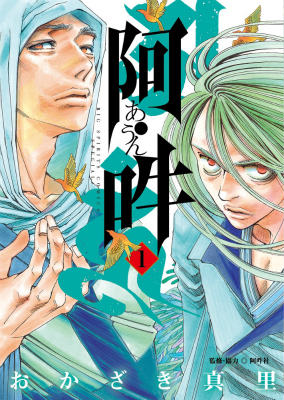
Aun
Aun follows the historical Buddhist monks Kukai and Saicho as they travel to Tang Dynasty China to learn from Chinese Buddhism — and compete, cooperate, and argue their way toward becoming the two most important religious figures in Japanese history.
Written by
Yu
Manga Enthusiast from Japan
I grew up in Japan and manga literally saved me during a tough time in elementary school. My English isn't perfect, but my love for manga is real — and I want to share it with you.