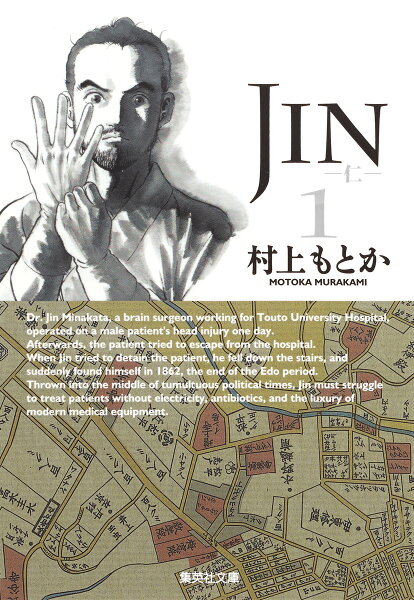
Jin Review: The Time-Travel Medical Manga That Asked What Doctors Owed History
by Motoka Murakami
Read the first volume. If it doesn't hook you, put it down. It'll hook you.
Buy Jin on Amazon →*Affiliate link — I earn a small commission at no extra cost to you.
He had the knowledge. The era didn't. What was the doctor supposed to do with that gap?
Quick Take
- Motoka Murakami's 20-volume Super Jump time-travel medical manga — Jin Minakata in Bakumatsu Edo
- Combines serious medical drama with engaged Bakumatsu historical fiction
- Among the most thoughtful time-travel medical narratives in any medium
Who Is This Manga For?
- Medical drama readers who want the time-travel angle done seriously
- Bakumatsu enthusiasts who want the era engaged with through medical perspective
- Historical fiction fans who appreciate when fictional protagonists meet historical figures with weight
- Anyone interested in the question of what knowledge owes history
Content Warnings & Age Rating
Age Rating: T (Teen) Content Warnings: Medical procedures depicted in detail, Bakumatsu-era violence and disease, occasional intensity.
Suitable for most readers comfortable with medical content.
Yu's Rating
| Category | Score |
|---|---|
| Story Depth | ★★★★★ |
| Art Style | ★★★★☆ |
| Character Development | ★★★★★ |
| Accessibility for Non-Japanese Readers | ★★★☆☆ |
| Reread Value | ★★★★☆ |
Story Overview
Jin Minakata is a modern Japanese brain surgeon who, through unexplained mechanism, finds himself in Bakumatsu-era Edo (the late 1860s, just before the Meiji Restoration). His medical knowledge is two centuries beyond what the era's medicine can provide. His instruments are crude or absent. His pharmacy doesn't exist. The diseases he can recognize and treat — many of them — are killing the people around him with regularity.
The series follows Jin's establishment in Edo: the relationships he builds with the era's medical practitioners, his improvised solutions to medical problems using what materials are available, his intersections with historical figures (Sakamoto Ryoma, others) whose lives his presence may affect. The central tension is the question of historical responsibility: should he save people whose deaths shaped subsequent history? What does each life he saves cost downstream?
What makes Jin exceptional is its unwillingness to dodge the question. Many time-travel narratives use the premise without seriously engaging the implications. Jin commits to the question. Each medical intervention has historical implications, and the series tracks these with the seriousness that the question deserves.
Characters
Jin Minakata: A protagonist whose medical competence is the series' procedural through-line and whose moral situation is its dramatic core.
The Bakumatsu cast: Both ordinary people and historical figures, each rendered with the specificity that the historical engagement requires.
Sakamoto Ryoma and others: Historical figures depicted with respect and complexity — engaged with rather than name-checked.
Art Style
Murakami's art handles both medical procedures and Bakumatsu-period settings with attention to detail — surgical sequences clear enough to follow, period costuming accurate, character designs distinctive across a large cast spanning modern and historical settings.
Cultural Context
Jin ran from 2000 to 2010 in Super Jump. The series became a cultural phenomenon through its TBS drama adaptation (2009-2011), starring Osamu Mukai as Jin, which brought the work to massive audiences and remains regarded as one of Japan's best historical-medical dramas.
The medical-time-travel concept has precedent (the works of various Western authors on similar themes), but Jin's specific Bakumatsu setting and its commitment to historical engagement give it distinctive depth.
What I Love About It
I love that the question stays open.
Most time-travel narratives resolve their historical-responsibility questions through plot mechanics — somehow it all works out, history is preserved, no real moral cost. Jin refuses. Across 20 volumes, the question of what Jin owes history and what he owes the people around him remains active. The series doesn't pretend the question is easier than it is. The honesty about moral difficulty is the work's intellectual integrity.
What English-Speaking Fans Say
The drama adaptation has reached international audiences. Among manga readers familiar with the source through fan translation, regarded as one of the strongest historical-medical works in the medium.
Memorable Scene ⚠️ Spoiler Warning
A medical intervention where Jin saves a life that, by historical record, should have ended at that moment — and the immediate aftermath where the implications of the choice begin to register. The scene captures the series' refusal to treat time-travel medicine as straightforward heroism.
Similar Manga
| Title | Its Approach | How Jin Differs |
|---|---|---|
| Black Jack | Medical drama with morally complex protagonist | Jin is historical and committed to time-travel implications |
| Nobunaga no Chef | Time-travel cooking with Sengoku setting | Same time-travel-into-Edo-period template, different profession |
| Hi Izuru Tokoro no Tenshi | Asuka-period biographical drama | Different era but shared serious historical engagement |
Reading Order / Where to Start
Volume 1. The premise and historical world establish across early volumes.
Official English Translation Status
Jin has no official English translation of the manga. The drama adaptation has been internationally distributed.
Pros & Cons
Pros
- Among the most thoughtful time-travel medical works in any medium
- Bakumatsu engagement is genuine and informed
- The moral question stays open across all 20 volumes
- Character work supports the procedural and historical content
Cons
- No English translation of the manga
- Bakumatsu-period familiarity enhances appreciation
- Medical content may discomfort some readers
- The drama adaptation is more accessible to international audiences
Is Jin Worth Reading?
For historical-medical drama readers and time-travel fiction enthusiasts, yes — this is among the strongest works in either category. For readers wanting fast pacing or unfamiliar with the period, the patient register may be a barrier. As serious historical-medical manga, it's exceptional.
Format Comparison
| Format | Notes |
|---|---|
| Physical | Japanese editions available |
| Digital | Available in Japanese |
| Omnibus | Collected editions available |
Where to Buy
No English release yet. That just means you find it before everyone else does.
*Affiliate link — I earn a small commission at no extra cost to you.
More Manga You Might Like
Historical / Drama
Hidamari no Ki
Hidamari no Ki follows two real figures from the late Edo period — one a samurai, one a doctor — as Japan's encounter with Western medicine and Western power forces both of them to decide what they believe in and what they are willing to lose.
Historical / Drama
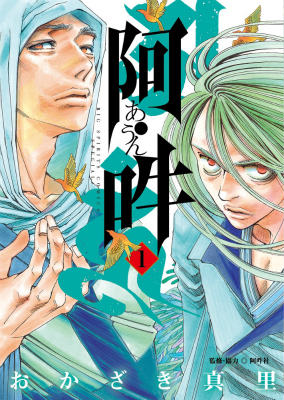
Aun
Aun follows the historical Buddhist monks Kukai and Saicho as they travel to Tang Dynasty China to learn from Chinese Buddhism — and compete, cooperate, and argue their way toward becoming the two most important religious figures in Japanese history.
Historical / Drama
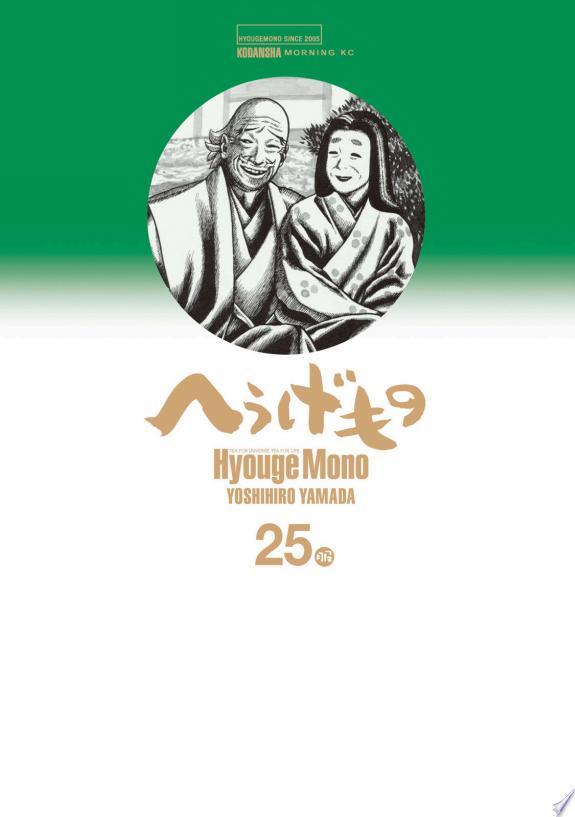
Hyouge Mono
Hyouge Mono follows Sasuke Furuta, a samurai retainer to Oda Nobunaga whose secret passion is aesthetic objects — tea bowls, garden arrangements, calligraphy — and whose pursuit of beautiful things in a world of political violence creates the manga's central comedy and drama.
Historical / Drama
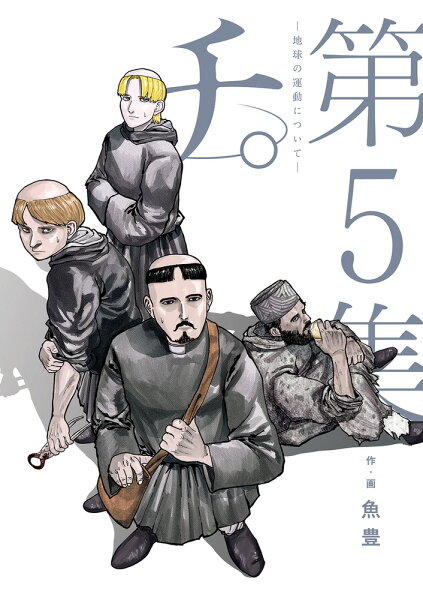
Chi. About the Movement of the Earth
Chi. About the Movement of the Earth follows multiple generations of scholars in medieval Europe who secretly pursue the heliocentric model of the solar system — Paru Itagaki's historical manga about the cost of knowing something that the world refuses to accept.
Historical / Drama
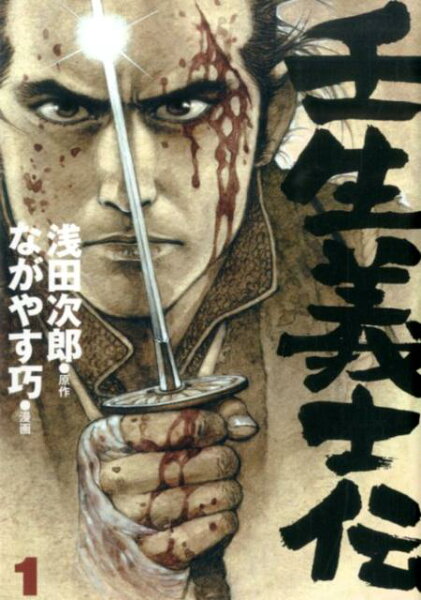
Mibugishiden
Mibugishiden follows Yoshichiro Kanichiro Yoshimura, a Shinsengumi samurai from a farming family who joined the corps to send money home — a man who killed for practical reasons and whose death was heroic for reasons he would not have understood.
Historical / Comedy
Nobunaga Concerto
Nobunaga Concerto follows Saburo, a modern high school student who travels back in time to the Sengoku period and — because he looks identical to Oda Nobunaga — is asked to take the warlord's place while the real Nobunaga escapes to live as a commoner.
Written by
Yu
Manga Enthusiast from Japan
I grew up in Japan and manga literally saved me during a tough time in elementary school. My English isn't perfect, but my love for manga is real — and I want to share it with you.