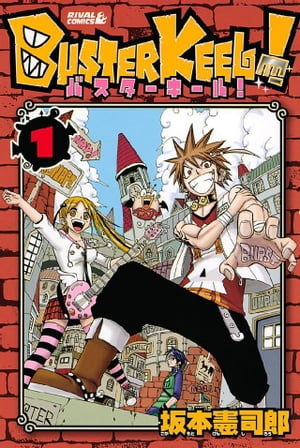
Buster Keel! Review: The Monthly Shonen Rival Gem That Never Crossed the Pacific
by Kenshirou Sakamoto
Read the first volume. If it doesn't hook you, put it down. It'll hook you.
Buy Buster Keel! on Amazon →*Affiliate link — I earn a small commission at no extra cost to you.
Some of my favorite manga are the ones almost nobody around me has read. When I was a kid hiding in the library at lunch, I used to feel like the more obscure a series was, the more it belonged to me. Buster Keel! is one of those for me. It ran in Monthly Shonen Rival — a magazine Kodansha launched to go head-to-head with Shonen Jump — and it never got an official English release. So when I tell English-speaking friends about it, I usually get a blank look. That blank look is exactly why I wanted to write this.
I went in expecting a generic Fairy Tail clone. What I found was a 12-volume adventure that knew exactly how long it wanted to be, built a guild-fantasy world with its own logic, and gave me an ending that genuinely surprised me. It's not a masterpiece. But it's honest, complete, and built with real care — and almost no one in the West has it. Let me fix a little of that.
Quick Take
- The hook is sharp: a hot-blooded martial-arts kid named Keel is secretly a cursed monster — the Dragon Ape — and travels to find the man who can turn him back.
- Twelve volumes, 47 chapters, a clean beginning-middle-end. No filler bloat, no abandoned plot threads.
- Age rating is T (Teen) — shonen-level battle violence, themes of revenge and loss, nothing graphic.
Story Overview
Keel looks like an ordinary brawler, but his true form is the Dragon Ape (龍猿) — a cursed S-rank beast. A legendary beast tamer named Shiba once used melody magic to lock Keel into human shape, and Keel sets out to find Shiba again, hoping to fully reclaim his humanity.
Early on he meets Lavie (ラヴィ), a young melody mage and Shiba's apprentice, who plays a guitar that empowers and tames beasts. Traveling with her is Mippi, a tiny pig-beast who looks harmless. They cross paths with Blue, a water-demon warrior and the last survivor of his clan, hunting the being who slaughtered his people. The four of them form the adventuring team that gives the series its name — "Buster Keel."
The world runs on an adventurers' guild system, with beasts ranked from S down to G, and the team takes on jobs while a larger threat sharpens behind them: the Four Calamities, ancient super-beings with world-ending power, and the looming resurrection of the Star Eater, a primordial deity that legendary heroes once sealed away. The back half escalates from monster-of-the-week guild work into that mythic confrontation — passing through set pieces like the Adventurer's tournament arc — and the final battle circles back, painfully, to Shiba himself.
Characters
Keel is the engine. He's loud, reckless, and allergic to giving up — the classic shonen temperament — but the curse underneath gives him a darker register. His signature move, the Fang Cannon (牙砲), channels explosive beast energy, and his arc is the slow question of whether he can stay human in spirit even when his body wants to be the monster.
Lavie is more than the standard heroine. She starts inexperienced and ends up the strategic core of the party — her melody magic doesn't just buff allies, it's the emotional throughline that keeps Keel anchored to his human self. By the end, it's literally her feelings that pull Keel back from the brink.
Blue carries the heaviest weight. As the last of the water-demon clan, he joins the group driven by revenge against the one who destroyed his people, and his arc is about whether that hatred eats him or whether the friendships he stumbles into give him something to live for instead of against.
Mippi is the series' best long con — a pocket-sized comic-relief pig who turns out to be a legendary Hell Fire Pig, capable of devastating power in the moments that matter most. Shiba, the man Keel is chasing the whole time, is the one I won't spoil here, because what he becomes is the spine of the finale.
What I Love About It
The thing I keep coming back to is how cleanly Sakamoto lands the central irony: Keel spends the entire series trying to stop being a monster, and the resolution turns on the idea that being human was never about the body. The whole arc is wired so that the climax pays off a question the very first chapter planted. That kind of structural discipline is rare in a long shonen, and rarer still in one that gets to actually finish.
I also love that this is a complete 12-volume story. No hiatus, no "the real ending is in the anime," no decade-long sag. The world — the guild ranks, the beast classifications, melody magic — is built with enough internal logic that the fights have rules, and rules are what make a battle manga's payoffs feel earned instead of arbitrary. When Keel powers up, you understand the cost. When Blue holds back his rage, you understand why. It's a series that respects its own premise all the way to the last page, and that respect is the thing I wish more famous, longer series had.
Memorable Scene ⚠️ Spoiler Warning
The ending floored me. The final antagonist is Shiba — the very man Keel spent the whole series searching for. Shiba succeeds in fusing with the core of a divine beast and becomes a monster himself, and the climax is a head-on collision between that transformed Shiba and Keel's Fang Cannon — except Keel only gets to throw that punch as a human because Lavie's feelings pull him back from the curse at the decisive moment.
What makes it stick is what happens after the win. Shiba, defeated, finally tells Keel his past, and Keel answers him with the thesis of the entire manga — that as long as you have people you care about, you won't betray your own humanity. Shiba accepts it. He decides to entrust the future of beasts and humans to Keel's group, uses the divine core's power to revive Lavie, and then his own body crumbles and vanishes as he does it. Years later, the dragon curse is gone, Keel has returned to the true form of his ape-tailed people, and the team reunites for more adventures. It's a finale that lets the villain be redeemed, the heroine be saved, and the hero be changed — all in one collapsing, self-sacrificing beat. For a series this under-the-radar, I did not expect to be sitting there quietly after the last page.
Pros & Cons
Pros:
- A genuinely complete story — 12 volumes, real ending, no loose threads.
- A central premise (human boy / cursed monster) that the finale actually pays off thematically.
- Clear power rules and a beast-guild world that make the fights feel earned.
Cons:
- The early arcs lean on familiar shonen structure before the story finds its identity.
- No official English release means you're reading Japanese or relying on fan work.
- It's earnest rather than groundbreaking — the comfort of a well-built genre piece, not a reinvention. That's either exactly what you want or not enough, depending on you.
Is Buster Keel! Worth Reading?
If you want a fantasy-adventure shonen that commits to a clean 12-volume arc and sticks the landing — and you don't mind a series almost no English reader has heard of — yes. It's not reinventing the genre, but it's an honest, well-finished take on it with an ending that punches above the series' reputation. Go in for the structure and the payoff, not for novelty.
Cultural Context
The premise openly nods to Journey to the West — a martial-arts hero with an ape lineage and a tail, on a long road quest — which is a deep, recurring well for Japanese shonen (it's the same root Dragon Ball drew from). Knowing that the ape-tailed "true form" Keel returns to at the end is a Monkey-King echo adds a nice layer to the finale. None of it is a barrier for English readers; it just makes the last chapter resonate a little more if you catch it.
Official English Translation Status
There is no official English edition of Buster Keel!. The series was serialized in Kodansha's Monthly Shonen Rival from 2008 to 2012 and collected in 12 Japanese volumes, with licensed releases in German, French, and Italian — but never English. The Japanese print and digital editions are the only legitimate way to read it, which is exactly why it stays a hidden corner of the genre.
Where to Buy
No English release yet. That just means you find it before everyone else does.
The Japanese edition is the only official way to read it. Volume 1 (Rival Comics) is here:
BUSTER KEEL! Vol. 1 on Amazon.co.jp →
Similar Manga
| Title | Its Approach | How Buster Keel! Differs |
|---|---|---|
| Fairy Tail | A long-running guild-fantasy epic that keeps expanding for years | Buster Keel! tells a tight, complete 12-volume arc with a definitive ending |
| Rave Master | Hiro Mashima's earlier quest-fantasy with a cursed weapon and a long journey | Buster Keel! centers the "human vs. inner monster" theme rather than a chosen-weapon quest |
| Dragon Ball | Journey to the West reimagined as a martial-arts tournament saga | Buster Keel! shares the ape-tailed, quest-driven DNA but stays grounded in a guild-and-beast-tamer fantasy world |
This post contains affiliate links. If you purchase through these links, I may earn a small commission at no extra cost to you. As an Amazon Associate, I earn from qualifying purchases.
*Affiliate link — I earn a small commission at no extra cost to you.
More Manga You Might Like
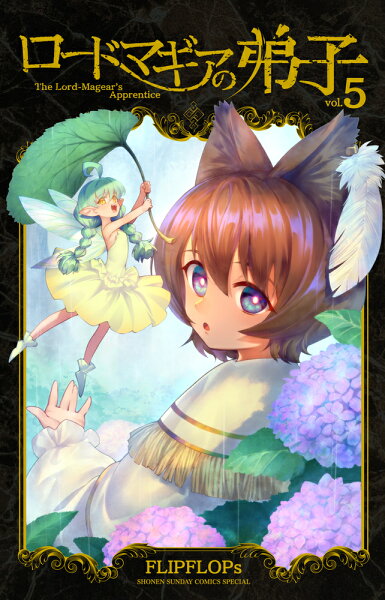
Fantasy / Adventure
Magi: The Labyrinth of Magic
A review of Shinobu Ohtaka's Magi — the 37-volume Weekly Shōnen Sunday adventure (2009–2017) that starts as an Arabian Nights riff and ends as one of the most politically serious long-form shōnen of its decade. Complete in English from VIZ.
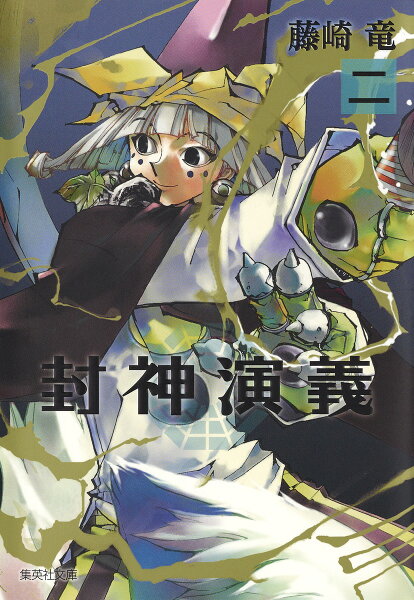
Fantasy / Action
Soul Hunter
Based on the Chinese classic 'Investiture of the Gods,' Soul Hunter follows Taikoubou — a lazy, brilliant immortal sent to overthrow a corrupt dynasty — and the impossible task he's been given by the heavens themselves.
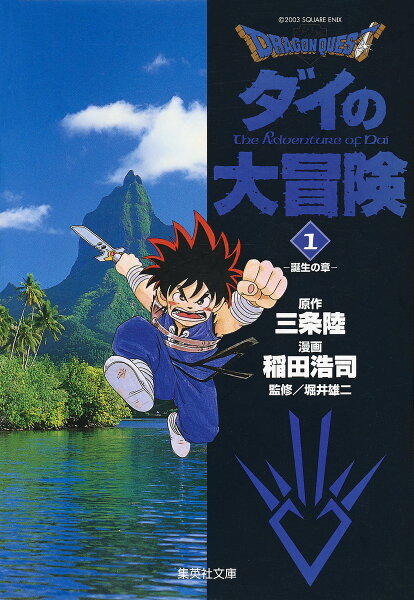
Fantasy / Adventure
Dragon Quest: The Adventure of Dai
Yu's review of Dragon Quest: The Adventure of Dai — a boy raised on a monster island who always dreamed of being a hero discovers he may be the descendant of a legendary warrior, and sets out to defeat the demon lord threatening the world.
Fantasy / Adventure
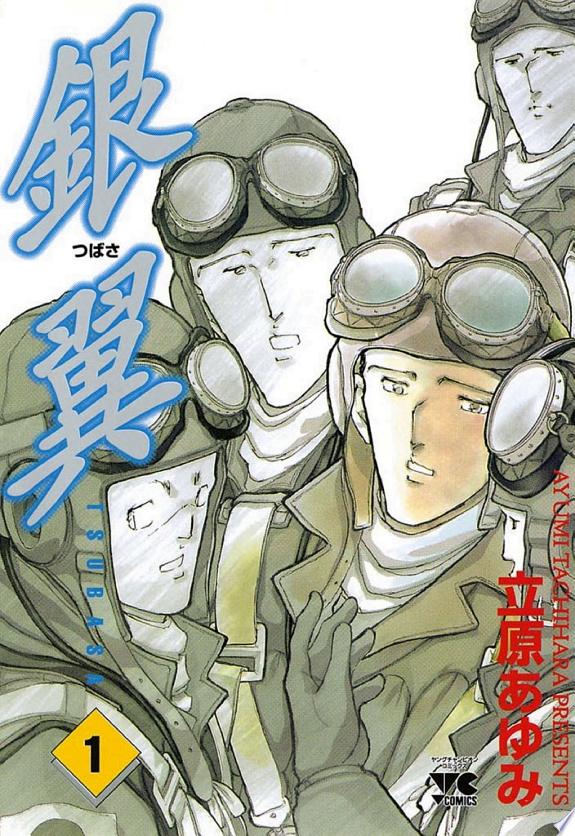
Tsubasa Reservoir Chronicle
Yu's review of Tsubasa Reservoir Chronicle — a young excavator must travel across parallel dimensions to recover the scattered feathers containing the memories of Princess Sakura, paying an impossible price to do so.
Fantasy / Action
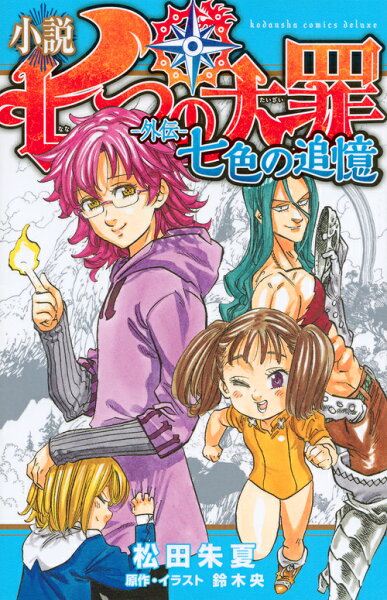
Seven Deadly Sins
Yu's review of Seven Deadly Sins — a princess secretly seeks the legendary Seven Deadly Sins, a group of powerful and disgraced knights, to save her kingdom from a corrupted Holy Knights order.
Fantasy
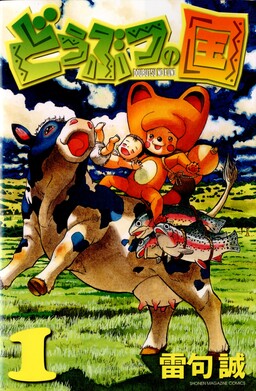
Animal Land
Yu's review of Animal Land — in a world where humans are extinct and animals communicate only within their own species, a tanuki named Monoko finds a human baby she cannot understand but raises anyway; as Taroza grows, he discovers he can speak to all animals, and begins to challenge the world's fundamental law that predators must eat prey.
Written by
Yu
Manga Enthusiast from Japan
I grew up in Japan and manga literally saved me during a tough time in elementary school. My English isn't perfect, but my love for manga is real — and I want to share it with you.
Disclosure: This post contains affiliate links. As an Amazon Associate, I earn from qualifying purchases at no extra cost to you.