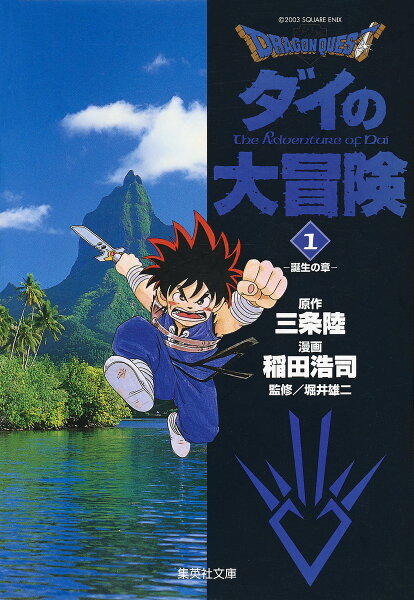
Dragon Quest: The Adventure of Dai Review: The Manga That Made a Generation Want to Be Heroes
by Riku Sanjo, Koji Inada
Read the first volume. If it doesn't hook you, put it down. It'll hook you.
Buy Dragon Quest: The Adventure of Dai on Amazon →*Affiliate link — I earn a small commission at no extra cost to you.
Quick Take
- A boy named Dai grew up on a monster island dreaming of being a hero — when the demon lord resurfaces and threatens the world, Dai discovers a power inside himself that he never expected
- The manga that defined what JRPG fantasy adventure could look like in manga form — Dragon Quest DNA in every chapter
- 25 volumes, complete, now available in English for the first time after decades of fan demand
Who Is This Manga For?
- Readers who grew up with Dragon Quest or classic JRPGs and want to see that world in manga
- Fans of classic shonen adventure with ensemble casts and genuine sacrifices
- Anyone who wants complete, finished fantasy adventure manga with satisfying conclusions
- Readers who appreciate early 1990s shonen at its most structurally clean
Content Warnings & Age Rating
Age Rating: T (Teen) Content Warnings: Fantasy violence, themes of self-sacrifice, battle deaths that carry emotional weight
Classic shonen adventure — the violence is battle-oriented and the deaths mean something.
Yu's Rating
| Category | Score |
|---|---|
| Story Depth | ★★★★☆ |
| Art Style | ★★★★☆ |
| Character Development | ★★★★★ |
| Accessibility for Non-Japanese Readers | ★★★★★ |
| Reread Value | ★★★★★ |
Story Overview
Dai is a boy who grew up on Dermline Island among monsters — his dream is to become a hero. When the demon lord Hadlar revives and the world falls into chaos again, Dai discovers he carries the mark of a legendary hero in his blood.
He sets out with his mentor Avan and a group of companions — including Popp, a cowardly mage who becomes one of manga's greatest examples of a character who grows, and Princess Leona, who is far more capable than her title suggests.
The adventure spans continents, escalates through demon generals who each have genuine motivations, and builds toward a final confrontation that pays off everything the series sets up.
Characters
Dai — The hero archetype, played completely straight but made to work through the support he gives everyone around him.
Popp — The character study at the heart of the manga. He starts as a coward who wants to run from every fight. His arc across 25 volumes is one of shonen's finest examples of what growth actually looks like.
Maam — A warrior/healer hybrid whose own origin story is the manga's most emotionally complex.
Crocodine — A demon general who becomes something else; his arc is where the manga first signals it will complicate its heroes and villains.
Baran — Dai's true origin and the manga's most tragic figure; his confrontation is the emotional midpoint of the series.
Art Style
Koji Inada's art captures the Dragon Quest visual design — Akira Toriyama's monster designs are recognizable throughout — while developing its own sense of battle choreography and character expressiveness. The emotional scenes, particularly Popp's breakdowns and recoveries, are handled with consistency.
Cultural Context
Dragon Quest: The Adventure of Dai ran in Weekly Shonen Jump from 1989 to 1996 — peak Jump era — alongside Dragon Ball Z. Its structure, character dynamics, and sense of escalating stakes were directly influential on Naruto, Bleach, and the generation of shonen that followed. Understanding it is understanding where modern shonen came from.
What I Love About It
Popp. He is afraid. He knows he is afraid. He runs when he should stay. And then — incrementally, without the manga ever pretending his fear has gone away — he finds reasons to stay anyway. His progression is not about overcoming cowardice; it is about acting despite it. That distinction is rare in shonen manga and it made me love this series completely.
What English-Speaking Fans Say
Western readers who grew up with Dragon Quest games waited decades for an English release. The 2020 VIZ Media release, timed with the new anime, was received as long overdue. Reader response emphasizes Popp's arc consistently as the series' key achievement. The series is now frequently cited alongside Dragon Ball and Naruto in discussions of foundational shonen manga.
Memorable Scene ⚠️ Spoiler Warning
Popp's final confrontation scene — where he faces something far beyond his power alone — and the choice he makes is the culmination of everything the manga built in his character. The line he says is the line the manga has been working toward since chapter one.
Similar Manga
- Dragon Ball — Same era, same Jump energy, Toriyama character designs
- Magi — Fantasy adventure with ensemble cast
- The Ancient Magus' Bride — Different tone, similar fantasy craft
- Berserk — Darker fantasy for readers who want the next step
Reading Order / Where to Start
Volume 1 — the series is structured classically and follows in order.
Official English Translation Status
VIZ Media published the complete 25-volume series in 2020-2021. All volumes now available.
Pros & Cons
Pros
- Complete at 25 volumes with a satisfying conclusion
- Popp's arc is one of shonen manga's finest character studies
- The Dragon Quest world is rendered with genuine love for the source
- Escalates correctly — each arc raises the stakes without abandoning what came before
Cons
- Art style is vintage 1990s — adjustment required for readers used to modern manga
- Dai himself is a fairly standard hero archetype
- Some early pacing is slow before the main cast assembles
Format Comparison
| Format | Notes |
|---|---|
| Individual Volumes | VIZ Media; English release |
| Digital | Available |
Where to Buy
Read the first volume. If it doesn't hook you, put it down. It'll hook you.
This post contains affiliate links. If you purchase through these links, I may earn a small commission at no extra cost to you. As an Amazon Associate, I earn from qualifying purchases.
*Affiliate link — I earn a small commission at no extra cost to you.
More Manga You Might Like
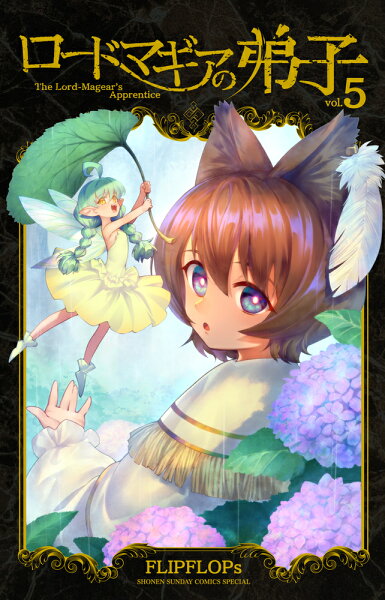
Fantasy / Adventure
Magi: The Labyrinth of Magic
A review of Shinobu Ohtaka's Magi — the 37-volume Weekly Shōnen Sunday adventure (2009–2017) that starts as an Arabian Nights riff and ends as one of the most politically serious long-form shōnen of its decade. Complete in English from VIZ.
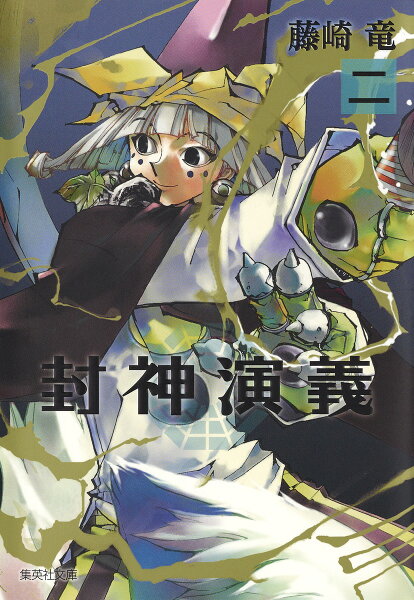
Fantasy / Action
Soul Hunter
Based on the Chinese classic 'Investiture of the Gods,' Soul Hunter follows Taikoubou — a lazy, brilliant immortal sent to overthrow a corrupt dynasty — and the impossible task he's been given by the heavens themselves.
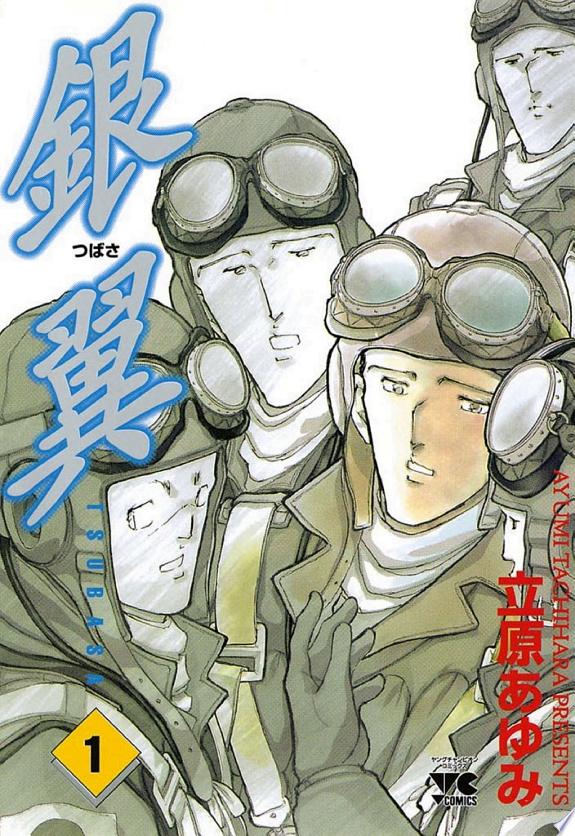
Fantasy / Adventure
Tsubasa Reservoir Chronicle
Yu's review of Tsubasa Reservoir Chronicle — a young excavator must travel across parallel dimensions to recover the scattered feathers containing the memories of Princess Sakura, paying an impossible price to do so.

Action / Fantasy
Buster Keel!
A review of Buster Keel!, Kenshirou Sakamoto's 12-volume Monthly Shonen Rival fantasy about a boy who is secretly a cursed Dragon Ape, the melody mage who travels with him, and the beast-taming guild world they fight through.
Fantasy
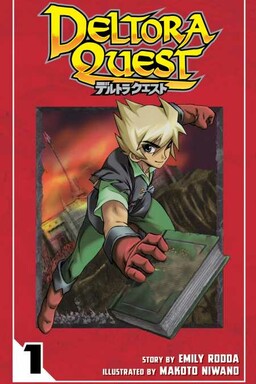
Deltora Quest
Yu's review of Deltora Quest — Makoto Niwano's manga adaptation of Emily Rodda's Australian fantasy novels. Lief, Barda, and the wild forest girl Jasmine cross the corrupted land of Deltora to reclaim the seven stolen gems of the Belt of Deltora from the guardians who hoard them, before the Shadow Lord's grip becomes permanent. A shonen battle-manga reading of a children's quest classic, complete in 10 volumes.

Fantasy
Unico
Unico is a small unicorn with the power to make anyone who meets him happy — which is why the gods condemn him to be carried across time by the West Wind, stripped of all memories and relationships, forbidden to stay anywhere long enough to be loved.
Written by
Yu
Manga Enthusiast from Japan
I grew up in Japan and manga literally saved me during a tough time in elementary school. My English isn't perfect, but my love for manga is real — and I want to share it with you.
Disclosure: This post contains affiliate links. As an Amazon Associate, I earn from qualifying purchases at no extra cost to you.