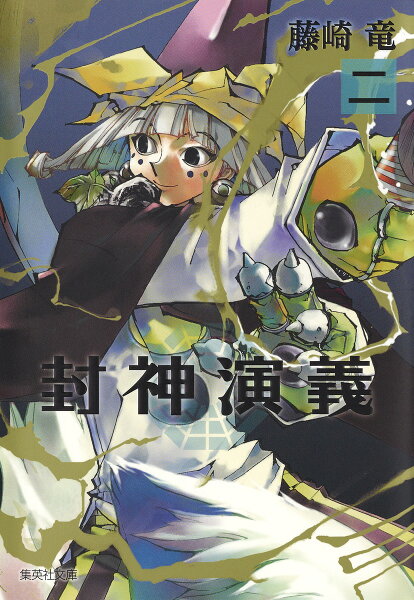
Soul Hunter Review: The Ancient Chinese Epic That Became One of Jump's Best Fantasy Manga
by Ryu Fujisaki
Read the first volume. If it doesn't hook you, put it down. It'll hook you.
Buy Soul Hunter on Amazon →*Affiliate link — I earn a small commission at no extra cost to you.
Quick Take
- Taikoubou's genius is in finding shortcuts, which makes him one of manga's most entertaining protagonists
- The Chinese mythological source material gives the series an epic scale that most fantasy manga never reaches
- VIZ's complete English release makes this foundational 90s fantasy accessible
Who Is This Manga For?
Soul Hunter is for readers who:
- Love mythology-based fantasy — the Chinese pantheon and folklore are the series' greatest resource
- Enjoy protagonists who win through cleverness rather than power — Taikoubou is the most strategically creative Jump hero I know
- Want a complete story — 23 volumes, fully finished, with a definitive ending
- Are interested in 90s Jump's golden age — this series ran alongside Dragon Ball and Slam Dunk
Content Warnings & Age Rating
Age Rating: T (Teen) Content Warnings: Battle violence, death of significant characters (handled with weight), themes of fate, obligation, and sacrifice
Not graphic by modern standards but genuinely intense at key moments.
Yu's Rating
| Category | Score |
|---|---|
| Story Depth | ★★★★★ |
| Art Style | ★★★★☆ |
| Character Development | ★★★★★ |
| Accessibility for Non-Japanese Readers | ★★★☆☆ |
| Reread Value | ★★★★★ |
Story Overview
Taikoubou is an immortal student at a sacred mountain — and the laziest, least impressive student there. His teacher gives him an impossible mission: use the Houshintai (a list of 365 immortals to be "sealed" into spiritual stasis) to overthrow King Chuuou, a corrupt ruler whose kingdom is crumbling under the influence of the Sennin Dakki.
Taikoubou sets out with his flying battle hippopotamus Sibuxiang. He is understaffed, underpowered, and completely outmatched by the divine forces aligned against him.
He wins anyway, and the "how" is the story.
The series expands enormously from this setup — the political machinations of the heavenly courts, the question of who actually wrote the Houshintai and why, and the revelation that the real game being played is bigger than anything Taikoubou was told about.
Characters
Taikoubou — the best "lazy genius" protagonist in Jump. He refuses direct combat whenever possible. He wins through preparation, trickery, misdirection, and occasionally making the enemy feel guilty enough to stop. His casual affect hides a depth that the later volumes reveal completely.
Dakki — the villain at the beginning, a supernatural beauty with reality-warping abilities who has corrupted the king. Her role in the larger story becomes considerably more complex.
Nataku — a young immortal with immense power and a tortured sense of identity. His arc is the series' emotional centerpiece — a character who exists in a category between human and weapon and has to decide which is true.
Ryugasa — a warrior woman who becomes one of the series' most important supporting characters. Her relationship with Taikoubou is professional but carries genuine warmth.
Art Style
Ryu Fujisaki's art is clean and dynamic, with impressive character design variety across the enormous cast of immortals and warriors. The battle sequences are well-choreographed — easier to follow than most combat-heavy manga.
The world design draws heavily on historical Chinese aesthetics, with palace architecture, costume design, and visual storytelling cues that feel genuinely researched rather than approximate.
Cultural Context
Soul Hunter (Houshin Engi) is based on Fengshen Yanyi, a 16th-century Chinese mythological novel that incorporates the real history of the Zhou dynasty's overthrow of the Shang dynasty. The source material is rich and detailed — Fujisaki worked from it while also making significant creative liberties.
For Japanese readers, the Chinese mythology has an air of ancient authority that functions differently from Western readers' reception. The series introduces Japanese audiences to a mythological tradition adjacent to but distinct from their own.
What I Love About It
I read Soul Hunter when I was fifteen and I was struck immediately by Taikoubou's refusal to follow the script. Every shonen hero I knew fought harder when they were losing. Taikoubou looked for the exit. He asked questions like "do I have to fight this person" and "what do they actually want" and "is there a way both of us walk away from this."
That pragmatism felt revolutionary. It still does.
The late volumes, when the full scope of what Taikoubou was actually working toward becomes clear, reframe everything that came before. I reread the first five volumes immediately after finishing the series. Everything Taikoubou says in volume 1 means something different in context.
What English-Speaking Fans Say
Soul Hunter has a passionate Western fanbase, particularly among readers who discovered it in the early days of manga import. The consensus is that it's significantly underappreciated outside Japan — the 90s animation adaptation is remembered fondly but the manga is considered the definitive version.
Readers frequently cite Taikoubou as their favorite shonen protagonist specifically because he doesn't conform to the "train harder / fight harder" template.
Memorable Scene ⚠️ Spoiler Warning
The revelation of what the Houshintai actually is — and what writing it cost — reframes the entire series in a single chapter. The reader understands retroactively that everything Taikoubou was doing was in service of something he was never entirely free to explain. The weight of that retroactive context is devastating and completely earned.
Similar Manga
- Fullmetal Alchemist — another manga where the protagonist gradually uncovers that the mission they were given is hiding a larger truth
- D.Gray-man — supernatural action with mythology and the protagonist navigating institutional authority
- Magi: The Labyrinth of Magic — mythology-based adventure with a similar political scope
- Vinland Saga — a protagonist who has to decide what he actually wants from all the power he was given
Reading Order / Where to Start
Volume 1. The setup is clear and the series rewards sustained reading — the callbacks and long-game reveals work because the foundation was laid carefully.
Official English Translation Status
VIZ Media published the complete 23-volume English run. Available in digital and physical formats. The translation handles the Chinese mythology terminology with helpful notes.
Pros & Cons
Pros
- Taikoubou is one of manga's finest protagonists
- Chinese mythology source material adds genuine depth
- The ending resolves everything and earns every sacrifice
- Complete 23-volume series
Cons
- Dense cast — 365 targets to seal means a lot of named characters
- Some Western readers find the Chinese mythology unfamiliar (this is also the appeal)
- 90s art style feels dated to some modern readers
Format Comparison
| Format | Pros | Cons |
|---|---|---|
| Digital | Complete series accessible | |
| Paperback | Best for a series this substantial | |
| Omnibus | N/A | Not available in English |
Recommendation: Paperback for the reading experience of a 23-volume series; digital if you want to start quickly.
Where to Buy
Read the first volume. If it doesn't hook you, put it down. It'll hook you.
This post contains affiliate links. If you purchase through these links, I may earn a small commission at no extra cost to you. As an Amazon Associate, I earn from qualifying purchases.
*Affiliate link — I earn a small commission at no extra cost to you.
More Manga You Might Like
Fantasy / Adventure
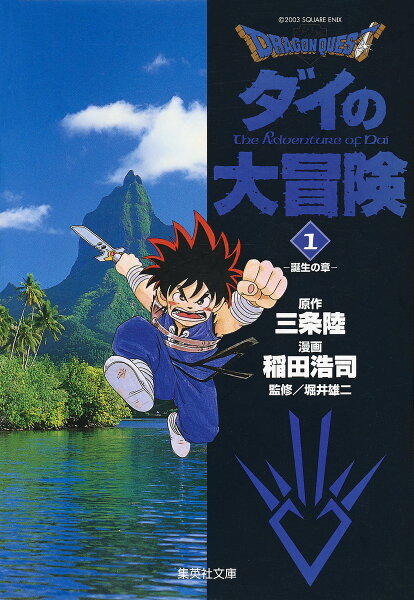
Dragon Quest: The Adventure of Dai
Yu's review of Dragon Quest: The Adventure of Dai — a boy raised on a monster island who always dreamed of being a hero discovers he may be the descendant of a legendary warrior, and sets out to defeat the demon lord threatening the world.
Fantasy
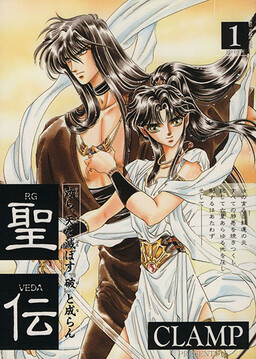
RG Veda
Yu's review of RG Veda — a prophecy states that six stars will gather to overthrow the god-king Taishakuten; Yasha-oh, a warrior king, discovers a child named Ashura who may be the catalyst; CLAMP's epic fantasy based on Hindu and Buddhist mythology about a destined tragedy that all six stars are walking toward.
Action / Fantasy
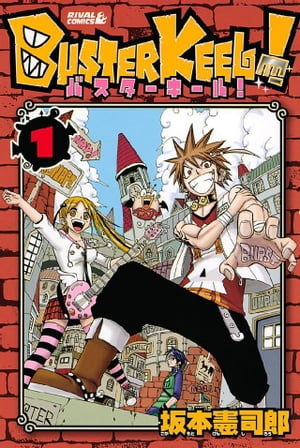
Buster Keel!
A review of Buster Keel!, Kenshirou Sakamoto's 12-volume Monthly Shonen Rival fantasy about a boy who is secretly a cursed Dragon Ape, the melody mage who travels with him, and the beast-taming guild world they fight through.
Fantasy / Adventure
Magi: The Labyrinth of Magic
A review of Shinobu Ohtaka's Magi — the 37-volume Weekly Shōnen Sunday adventure (2009–2017) that starts as an Arabian Nights riff and ends as one of the most politically serious long-form shōnen of its decade. Complete in English from VIZ.
Fantasy / Adventure
Dragon Knights
A review of Dragon Knights by Mineko Ohkami — a long-running 1990s fantasy manga about three knights serving a dragon lord, blending adventure with comedy and genuine emotional development.
Fantasy / Action
The Beginning After the End
A review of The Beginning After the End, TurtleMe and Fuyuki23's manhwa about a lonely, all-powerful king reborn as a child named Arthur Leywin — and the second life he uses to finally learn how to love people.
Written by
Yu
Manga Enthusiast from Japan
I grew up in Japan and manga literally saved me during a tough time in elementary school. My English isn't perfect, but my love for manga is real — and I want to share it with you.
Disclosure: This post contains affiliate links. As an Amazon Associate, I earn from qualifying purchases at no extra cost to you.