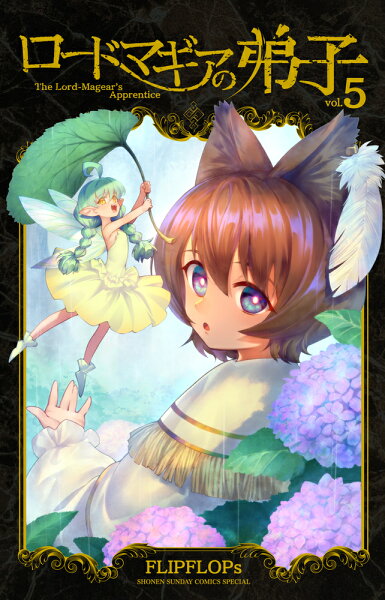
Magi: The Labyrinth of Magic Review: The Arabian Nights as an Imperial Politics Manga in Disguise
by Shinobu Ohtaka
Read the first volume. If it doesn't hook you, put it down. It'll hook you.
Buy Magi: The Labyrinth of Magic on Amazon →*Affiliate link — I earn a small commission at no extra cost to you.
I came to Magi late — the anime had already aired, the manga had already finished, and a friend who knew my taste said "give this one twenty volumes before you decide." That's a lot to ask of a person, but he was right. The first six volumes of Magi are bright adventure shōnen. By volume twenty, I was reading what I would now describe as the most carefully constructed examination of empire and revolution in a Weekly Sunday title I have read.
I'm Yu. I love a manga that hides its hand. Magi hides its hand for years.
Quick Take
- Shinobu Ohtaka's Magi: The Labyrinth of Magic ran in Weekly Shōnen Sunday from June 2009 to October 2017 — 37 tankōbon volumes, all of them released in English by VIZ Media.
- Starts as a One Thousand and One Nights riff. Ends as a meditation on whether the right person, given enough power, can in fact remake the world — and what that decision costs everyone they thought they were saving.
- Rated T (Teen) — slavery is central, on-page battle violence, political assassinations and a body count by the late arcs.
Story Overview
Aladdin is a small magic-saturated boy with a flute and no understanding of the world. He emerges from somewhere and immediately meets Alibaba Saluja, a young man trying to conquer a "dungeon" — one of the enormous magical labyrinths that have appeared across the world, each one ruled by the spirit of a long-dead king. To clear a dungeon is to take that king's djinn as a personal weapon and join the small set of people the world calls King Candidates.
Aladdin is a Magi: a rare, world-tier mage whose role is to choose which King Candidates the world's magical flow ("rukh") will support. He doesn't know this yet. He just wants friends.
The opening arc — Balbadd, a port city ruined by debt slavery — establishes what kind of book this actually is. The series widens out from there into a multi-continent political map: the Reim Empire (a Roman analog), the Kou Empire (a Tang Chinese analog), the trading nation Sindria built by the legendary Sinbad, the magical academy Magnostadt, and behind all of it a buried prehistory called Alma-Torran that the magic system is quietly inherited from. Revolutionary movements rise. Empires collapse. The final third of the manga is essentially a slow-motion question about whether one extraordinary man — Sinbad — should be allowed to do what he plans to do, and what the answer means for the friends who have to confront him.
The series ended in 2017 with a conclusion that pays off threads from volume 1. VIZ's English edition collects all 37 volumes.
Characters
Aladdin — Looks ten years old. Is the most powerful being on the page in most scenes. Ohtaka uses the gap between his small body and his vast role with real patience. His arc is learning that being able to nudge history is not the same as knowing where it should go.
Alibaba Saluja — A prince of Balbadd who renounced his throne, a man whose family history contains exactly the kind of dynastic cruelty he can't disown. His mid-series arc — failing to stop a revolution he supported, then having to live in the country that broke — is the most morally honest arc the manga has.
Morgiana — Introduced as a slave. The manga's most quietly devastating character. Her arc is not "ex-slave learns to fight"; it's "ex-slave figures out, slowly, what she actually wants to do with her freedom now that she has it." Her decision in the late arcs to return to her homeland on her own terms is the most personal payoff in the series.
Sinbad — A god-tier King Candidate, founder of Sindria, hero of his own prequel manga (Adventure of Sinbad). The manga loves him for most of its run. Then, with terrible patience, it doesn't anymore. Sinbad is not a villain; he is something stranger and more interesting — a man whose intentions are sincere and whose conclusion about what the world needs cannot coexist with the world having free will.
Judar — The rival Magi, twisted into a dark counterpart by people who got to him before Aladdin did. His arc is the smaller-scale version of the manga's argument: a child shaped by powerful adults can be unshaped, if someone bothers to try.
Hakuryuu Ren — Kou prince, second-half deuteragonist, the character who pays the highest visible price for the manga's "revolution has consequences" thesis. His relationship with Alibaba — friend, then enemy, then something more complicated than either — is the spine of the final arcs.
What I Love About It
There's a single line late in the manga where Aladdin says he understands, finally, why his decisions are not the same as the world's. The line is small, and it lands in the middle of an arc that has been quietly building for ten volumes about whether good intentions are sufficient for governing.
What I love about Magi is that it refuses to make either side of that question wrong. Alibaba's idealism is real and produces real good. Sinbad's pragmatism is also real and is rooted in real grief about how often the idealism fails. The manga does not award victory to one side; it lets both be tested and both be costly. Ohtaka resists the shōnen instinct to declare a winner at the level of philosophy. She lets her characters disagree at the end, having both grown into the people who would disagree this way.
That is rare. It is rarer in a Weekly Sunday manga aimed at thirteen-year-olds. The fact that Magi is also a fun adventure with funny djinns and clean fight choreography is, somehow, beside the point.
Memorable Scene ⚠️ Spoiler Warning
The final confrontation between Aladdin's group and Sinbad in the closing arcs — not a fight, although there are fights — but a long conversation Sinbad has across multiple chapters where he calmly explains what he's about to do to the world and why, with no apology and no malice. The manga has spent thirty-some volumes building Sinbad as a friend. The dialogue Ohtaka gives him here is the dialogue of a man saying goodbye to people he genuinely loves and proceeding anyway.
What stayed with me was Aladdin's face in those chapters. He's been right about a lot of things, and he knows he's right here, and he also knows that being right is going to cost a friendship he has carried since his earliest memory. Ohtaka draws him as a small boy, not a Magi, in the panels where Sinbad finishes speaking. It is the scene that justifies every page of the long, dense political middle of the series.
Pros & Cons
Pros:
- A 37-volume complete series with a real ending that earns its length.
- Engages seriously with slavery, empire, revolution, and the limits of good intentions in a way most shōnen don't attempt.
- Morgiana, Sinbad, and Hakuryuu are three of the best long-form character arcs in recent Sunday-line manga.
Cons:
- The early volumes are bright adventure with goofy djinn comedy; readers expecting that tone all the way through will be surprised.
- 37 volumes is genuinely long, and the mid-Magnostadt material can feel dense on a first read.
- Some readers find the late-game escalation into world-ending stakes too large for the human-scale story it grew from.
Is Magi Worth Reading?
Yes — if you have the patience for a shōnen that rewards staying with it. Skip it if you want self-contained adventure that doesn't ask you to read empires.
Who Is This Manga For?
- Fullmetal Alchemist readers who want a longer book with a similar appetite for ideology.
- Vinland Saga readers who want fantasy instead of historical.
- Anyone who liked the Adventure of Sinbad prequel and never read the parent series.
- Adventure-shōnen fans willing to be ambushed by political seriousness in volume 7.
Official English Translation Status
VIZ Media published all 37 volumes of Magi: The Labyrinth of Magic in English between 2013 and 2020. The series is complete in print and on the VIZ digital platforms. The 13-volume prequel Magi: Adventure of Sinbad is also published in English by VIZ.
Where to Buy
The VIZ English print run covers all 37 volumes; digital editions are available on VIZ's storefront and Kindle. Used physical sets are also widely available now that the series is complete.
This post contains affiliate links. If you purchase through these links, I may earn a small commission at no extra cost to you. As an Amazon Associate, I earn from qualifying purchases.
*Affiliate link — I earn a small commission at no extra cost to you.
More Manga You Might Like
Fantasy / Adventure
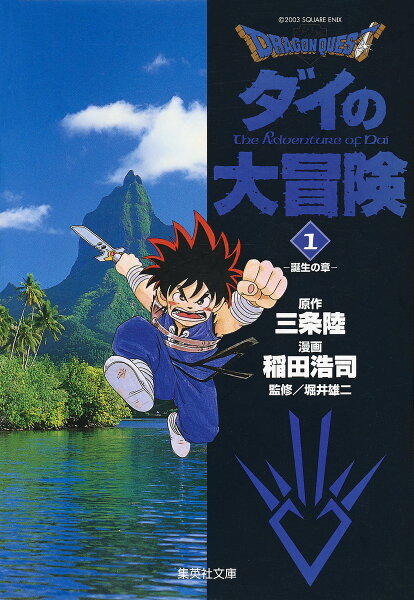
Dragon Quest: The Adventure of Dai
Yu's review of Dragon Quest: The Adventure of Dai — a boy raised on a monster island who always dreamed of being a hero discovers he may be the descendant of a legendary warrior, and sets out to defeat the demon lord threatening the world.
Fantasy / Adventure
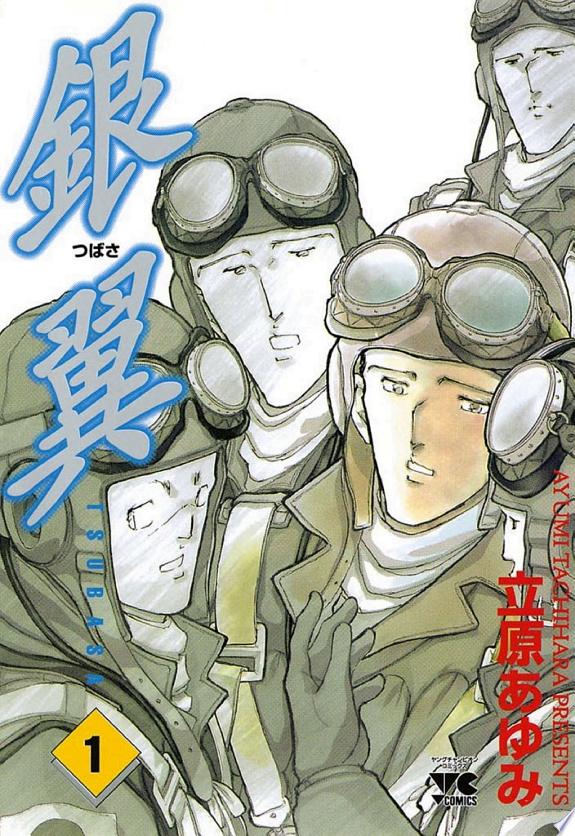
Tsubasa Reservoir Chronicle
Yu's review of Tsubasa Reservoir Chronicle — a young excavator must travel across parallel dimensions to recover the scattered feathers containing the memories of Princess Sakura, paying an impossible price to do so.
Action / Fantasy
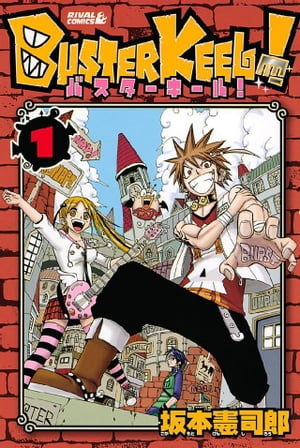
Buster Keel!
A review of Buster Keel!, Kenshirou Sakamoto's 12-volume Monthly Shonen Rival fantasy about a boy who is secretly a cursed Dragon Ape, the melody mage who travels with him, and the beast-taming guild world they fight through.

Fantasy / Shoujo
Revolutionary Girl Utena
Yu's review of Revolutionary Girl Utena — Utena Tenjou, who decided as a child to become a prince rather than a princess, attends Ohtori Academy and becomes drawn into its secret dueling system; the winner of the duels wins possession of Anthy Himemiya, the Rose Bride; a surrealist fairy tale manga about power, freedom, and who gets to be the subject of a story.
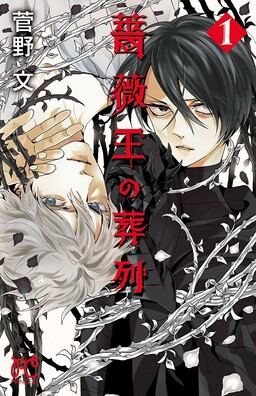
Fantasy / Historical
Requiem of the Rose King
Yu's review of Requiem of the Rose King — a dark manga adaptation of Shakespeare's Henry VI and Richard III set during the Wars of the Roses, reimagining Richard of Gloucester as intersex; ambitious historical dark fantasy that takes the psychological portrait of one of literature's great villains and asks what made him.
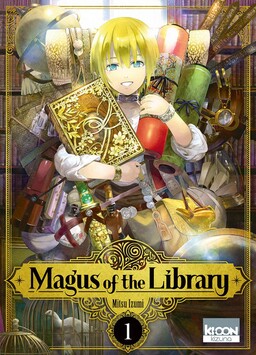
Fantasy / Adventure
Magus of the Library
Yu's review of Magus of the Library — Theo is a boy of mixed race in a world where the Great Library of the Central Archive controls all knowledge; he loves books but is barred from reading in his village's library because of his half-elf heritage; when a Kafna named Sedona arrives, she sees in him a potential that could change his path.
Written by
Yu
Manga Enthusiast from Japan
I grew up in Japan and manga literally saved me during a tough time in elementary school. My English isn't perfect, but my love for manga is real — and I want to share it with you.
Disclosure: This post contains affiliate links. As an Amazon Associate, I earn from qualifying purchases at no extra cost to you.