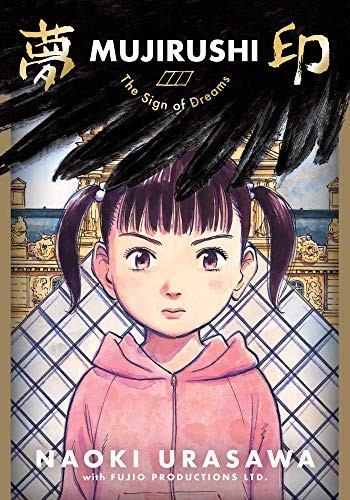
Mujirushi: The Sign of Dreams Review: Naoki Urasawa Got Permission to Wander the Louvre at Night, and This Is What He Brought Back
by Naoki Urasawa
Read the first volume. If it doesn't hook you, put it down. It'll hook you.
Buy Mujirushi: The Sign of Dreams on Amazon →*Affiliate link — I earn a small commission at no extra cost to you.
I bought Mujirushi the week the VIZ English edition dropped in 2020, in the middle of the long quiet of that summer when bookstores were just starting to reopen. It is short enough to read in an evening. I read it twice that night. Urasawa, for the first time in a long time, looked like he was having fun.
I'm Yu. I have read everything of Urasawa's that's been published in English, and Mujirushi is the one I recommend first to people who are intimidated by Monster's 18 volumes. It is also the one where his hand looks most relaxed.
Quick Take
- Naoki Urasawa's Mujirushi: The Sign of Dreams (夢印-MUJIRUSHI-) ran in Big Comic Original from October 20, 2017, to February 20, 2018 — a single volume, commissioned by the Louvre as part of its long-running "Louvre Collection" of manga collaborations.
- VIZ Media's English edition (Viz Signature imprint, with color pages preserved) came out July 21, 2020. Single volume; complete.
- Rated T (Teen) — a brief depiction of contemplated suicide in the early pages, otherwise comic crime tone, no graphic content.
Story Overview
Kamoda is a small rubber-factory owner who decided, one year, to cheat on his taxes so he could afford a luxury cruise with his wife. The tax audit found him; the factory went under; his wife won a single luxury cruise ticket in a lottery and used it to leave him. He is now broke, alone, and raising his small daughter Kasumi by himself.
The manga opens with Kamoda about to step off a building. A crow leads him and Kasumi instead to the "France Research Institute" — a small, weird building in Tokyo run by an enormous Francophile in a beret, calling himself the Director. He looks exactly like Iyami, the Francophile character from Fujio Akatsuka's Osomatsu-kun, drawn by Urasawa as a deliberate, affectionate homage. The Director has a proposal: he wants Kamoda to help him steal Vermeer's The Lacemaker from the Louvre.
The plan is not quite a theft. The Director has a perfect forgery of the painting. He intends to "lose" the real one inside the Louvre temporarily, swap it with the forgery, and sell the real painting on the black market — then quietly return the original later. He needs Kamoda and Kasumi for the substitution.
The volume covers the planning, the trip to Paris, the heist itself, and a third act where Urasawa quietly pulls the camera back from the comedy and reveals what the whole story has actually been about: a father trying to do something for his daughter that adult life has not yet allowed him to do well. Cameos from older Urasawa characters dot the background panels.
Characters
Kamoda — A small-time loser of the kind Urasawa specializes in. Not a smart man. Not a strong one. Pulled into a heist because he has nothing else, but the volume slowly reveals that what he wants isn't money — it's permission to be a father again. One of Urasawa's quieter protagonists; closer in temperament to the Master Keaton mode than the Monster one.
Kasumi — Kamoda's young daughter. The volume's emotional anchor and, in the late chapters, its smartest character. Urasawa draws her with the same attention he gives to children in 20th Century Boys; she's never cute-for-cute's-sake.
The Director — Drawn as Iyami from Osomatsu-kun, beret and overbite intact. Half loving tribute, half running joke. The volume cares about him more than the gag suggests; his late-volume scenes have more weight than the character's silhouette would predict.
The Louvre — Treated as a co-character. Urasawa was given private access to the museum's basements, attics, and night-time interiors; the architectural detail in the heist scenes is drawn from those visits and reads as love.
What I Love About It
What I love about Mujirushi is how relaxed Urasawa's hand looks.
His major works — Monster, 20th Century Boys, Pluto, Billy Bat — are tightly compressed thrillers about civilization-scale stakes. They are great. They are also, you can tell from the pages, hard work to make. Mujirushi is a one-volume commission about a small man and a forged Vermeer, and you can see in the panels that Urasawa is grinning the whole time. He's drawing the Louvre at night because someone gave him a key. He's drawing Iyami because he loves Akatsuka and was finally allowed to. The story he made within those toys is small, generous, and finished.
It is also — and this surprised me — genuinely moved. The last 20 pages stop joking and let the father-daughter material breathe. Urasawa is allowed to be sentimental in a way his bigger thrillers don't usually permit, and the volume earns it because everything before has been so light.
The whole book is what an author makes when they get a commission they wanted.
Memorable Scene ⚠️ Spoiler Warning
The third-act shift, after the heist has played out, when the volume stops joking and lets Kamoda and Kasumi actually look at each other. Urasawa could have drawn this scene as a big tearful father-daughter resolution. He draws it instead with restraint — minimal dialogue, plain panel composition, the comic register dialed all the way back.
What lands is the contrast. The book has spent its earlier chapters drawing Kamoda as a comic failure: a man who cheated on taxes for a cruise. The end of the volume lets him simply be a parent for a few quiet pages. Urasawa doesn't underline it. He just lets the panels sit.
It is the most quietly affecting closing stretch Urasawa has drawn since the final chapter of Pluto.
Pros & Cons
Pros:
- One volume, finished, English-licensed by VIZ Signature with full color pages preserved.
- The Louvre access is real and visible; the architectural drawing is some of Urasawa's most attentive.
- A great Urasawa entry point if you can't commit to Monster or 20th Century Boys.
Cons:
- The Iyami cameo requires Japanese pop-culture context to land fully; English readers may experience the Director as just a goofy character.
- Single volume — completists who want long Urasawa structures will find it slight.
- The tone shift in the final 20 pages catches some readers off guard; it works, but it's a different book than the first two thirds.
Is Mujirushi Worth Reading?
Yes — particularly if you've finished Urasawa's longer works and want to see his relaxed mode, or if you've never read him and want a one-volume entry. Skip only if you actively dislike heist-comedy framing.
Who Is This Manga For?
- Urasawa completists who missed this one.
- Readers curious about the Louvre Bande Dessinée collection (Rohan at the Louvre, Bastard Battle, etc.) and want the Urasawa entry.
- Fans of Osomatsu-kun / Akatsuka work who want to see Iyami drawn by Urasawa.
- One-volume manga lovers in general; this is a great single-sitting read.
Official English Translation Status
VIZ Media released Mujirushi: The Sign of Dreams on July 21, 2020 under the Viz Signature imprint. The English edition is a single volume, complete, with the color pages preserved from the Japanese release. In print and digital.
Where to Buy
The VIZ Signature single volume is the only English edition and the recommended way in. Available at major bookstores and online.
This post contains affiliate links. If you purchase through these links, I may earn a small commission at no extra cost to you. As an Amazon Associate, I earn from qualifying purchases.
*Affiliate link — I earn a small commission at no extra cost to you.
More Manga You Might Like
Drama / Slice of Life
Bakuman
Yu's review of Bakuman — ninth-graders Moritaka Mashiro and Akito Takagi form a manga duo and fight their way through Weekly Shonen Jump's serialization machine, driven by a promise: Mashiro will marry his crush Miho Azuki when she voices the heroine in their anime. From the Death Note team, the most honest manga ever made about making manga.
Drama / Romance
A Cruel God Reigns
Yu's review of A Cruel God Reigns by Moto Hagio — Jeremy's stepfather abuses him; Jeremy kills him; the next 16 volumes show what happens to a person after that. One of manga's most honest portraits of trauma and the possibility of recovery.

Drama / Medical
Say Hello to Black Jack
Eijiro Saito is a young medical resident who has just started at a Tokyo university hospital. He wants to help people. Across 13 volumes, Shuho Sato shows him what Japanese hospital medicine actually is — cancer wards, neonatal ICU, psychiatric care, organ transplantation, oncology — and what the system does to patients and doctors. The author released the work copyright-free in 2012. Cultural impact in Japan was significant; English licensing remains pending.

Drama
A Drifting Life
Yu's review of A Drifting Life — Yoshihiro Tatsumi's 800-page autobiographical epic about growing up obsessed with manga in postwar Japan and helping invent gekiga, the gritty, adult comics movement that changed the medium.
Historical / Drama
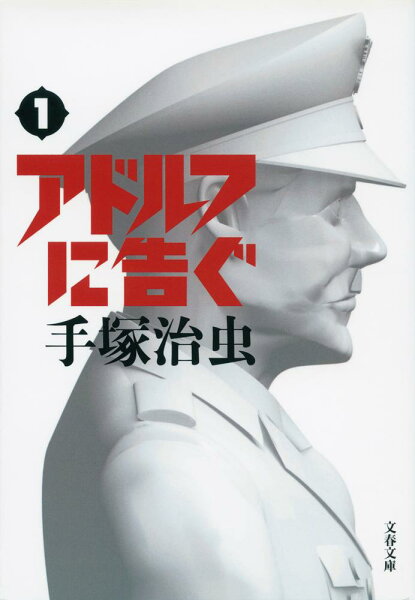
Message to Adolf
Yu's review of Message to Adolf (Adolf ni Tsugu) — Osamu Tezuka's historical epic following three men named Adolf through WWII and beyond, a devastating story of how war and ideology deform individual lives.
Drama
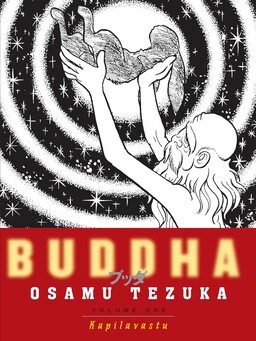
Buddha
Yu's review of Buddha — Osamu Tezuka's sweeping, fictionalized retelling of the life of Siddhartha Gautama, told through a huge cast of invented characters whose suffering makes the Buddha's questions feel like questions you actually have.
Written by
Yu
Manga Enthusiast from Japan
I grew up in Japan and manga literally saved me during a tough time in elementary school. My English isn't perfect, but my love for manga is real — and I want to share it with you.
Disclosure: This post contains affiliate links. As an Amazon Associate, I earn from qualifying purchases at no extra cost to you.