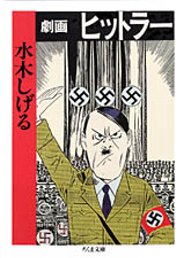
Hitler Review: The Kitaro Artist Draws a Dictator
by Shigeru Mizuki
Read the first volume. If it doesn't hook you, put it down. It'll hook you.
Buy Hitler on Amazon →*Affiliate link — I earn a small commission at no extra cost to you.
When I think of Shigeru Mizuki, I think of GeGeGe no Kitaro — friendly little yokai, a one-eyed boy, the kind of spooky-but-warm stories I read as a kid. So the first time I saw that the same hand drew a whole book about Adolf Hitler, I honestly didn't know what to do with it. How do you go from drawing ghosts that make children laugh to drawing the man who started the Second World War?
But then I remembered: Mizuki fought in that war. He served in the Imperial Japanese Army in the Pacific, and he lost his left arm there. He drew with his right hand for the rest of his life. So this book isn't a curiosity. It's a survivor trying to understand how a starving art student became a monster. That changed how I read every page.
Quick Take
- Shigeru Mizuki traces Hitler's whole life — from failed Vienna painter to the Berlin bunker — in one restrained volume
- It is a serious anti-war biography, not a gag manga: cool, careful, and quietly horrifying
- Rated M (Mature) for Nazism, war, antisemitism, and violence — read it as history, not entertainment
Story Overview
Hitler (劇画ヒットラー, Gekiga Hitler) follows Adolf Hitler across his entire life. It opens with him as a struggling, rejected art student in Austria, drifting and bitter, and it ends with Germany in ruins.
In between, Mizuki walks through the real historical arc: Hitler's entry into politics after the First World War, the failed 1923 Munich Beer Hall Putsch that lands him in prison, his slow and calculated climb to Chancellor, the death of his half-niece Geli Raubal, his relationship with Eva Braun, the catastrophe at Stalingrad, and finally the marriage and double suicide in the bunker as the Allies close in. The Holocaust frames the book at the beginning and the end, even if it isn't the center of the narrative.
What makes the structure work is that Mizuki refuses to make the rise feel inevitable or mystical. He shows the luck, the timing, the political maneuvering, and the people who helped — and the horror is exactly how plausible the whole thing looks step by step.
Characters
Adolf Hitler is the center, and Mizuki's choice is the bravest part of the book: he draws Hitler as small, often pathetic, sometimes almost comic — a man who can never quite be happy. Mizuki examines his charisma and his cold political calculation without ever making him cool. The pettiness is the point.
Geli Raubal, Hitler's half-niece, is the figure whose death cracks the book open. Her sudden, mysterious death sends Hitler into a breakdown that, in Mizuki's telling, even briefly stalls his rise to power. It's one of the few moments the book lets you see something raw under the ideology.
Eva Braun appears as the woman who stays with him to the end, sharing his final marriage and death in the bunker.
Hermann Göring and the other Nazi figures move through the political scenes — Mizuki even uses Göring's changing expression before and after the Munich Putsch to show how the men around Hitler shift with the wind. These are historical people, drawn from research, not invented characters.
What I Love About It
The thing I can't get out of my head is Mizuki's drawing style, and what it does to this subject. He draws the people cartoonish — round, simple, sometimes goofy faces — and then sets them against backgrounds that are almost photographically real. Streets, buildings, crowds, rubble: rendered with obsessive, realistic detail. The first time you notice the gap, it's strange. The second time, it's unbearable, because that gap is the whole argument of the book.
These cartoon men, with their silly little faces, are standing in real history and doing real, monstrous things. Mizuki refuses to give Hitler a grand, demonic design. He won't let you off the hook by making the villain look like a villain. The man is dopey, sad, small — and he still happened. For me that's far scarier than any dramatic, shadowed portrait would have been, because it says the catastrophe didn't need a supernatural monster. It just needed a bitter, ordinary man and the right circumstances.
I also love how much homework is in here. Mizuki worked with a researcher who supplied hundreds of historical documents, and the English Drawn & Quarterly edition carries that seriousness through with a long block of footnotes and a cast list. It reads like a survivor doing his honest best to get the facts right, not to entertain.
Memorable Scene ⚠️ Spoiler Warning
The death of Geli Raubal is the moment that stayed with me. In the book, Hitler's half-niece dies suddenly and mysteriously, and the man who is otherwise drawn as cold and calculating completely breaks down. Mizuki lets the rise of the dictator actually stall here — the unstoppable political machine pauses because of private grief.
It's chilling precisely because it humanizes him for a few pages. You don't want to feel anything for this person, and Mizuki makes you sit in the discomfort of seeing him grieve. Then the book moves on, the machine restarts, and the rest of history grinds forward into the bunker. That refusal to flatten Hitler into pure cartoon evil — while never excusing a single thing — is the book at its most honest and its most disturbing.
Pros & Cons
Pros:
- A serious, research-backed anti-war biography by a man who survived the war he's writing about
- Mizuki's signature contrast — cartoon faces, photoreal backgrounds — turns the art itself into commentary
- Complete in one volume, with a strong English edition (Drawn & Quarterly, 2015) including notes and a cast list
Cons:
- The Holocaust is mostly a framing device rather than a sustained focus, which some readers will find inadequate to the subject
- The cool, documentary tone keeps you at a deliberate distance — there's no catharsis here
- This is heavy historical material handled soberly, and it won't work for everyone
Is Hitler Worth Reading?
Yes — if you come to it as history rather than entertainment. It's a serious, single-volume biography from a war survivor whose cartoonish-yet-photoreal style makes its anti-war point in a way prose can't. If you want a dramatic thriller or a comfortable villain, this isn't that, and it shouldn't be.
Content Warnings & Age Rating
Age Rating: M (Mature) Content Warnings: Nazism, war, antisemitism, violence
This is a historical biography of Adolf Hitler. It depicts war, Nazi ideology, and atrocity. Mizuki presents the material as an anti-war study, but the subject matter is serious throughout.
Similar Manga
| Title | Its Approach | How Hitler Differs |
|---|---|---|
| Onward Towards Our Noble Deaths (Shigeru Mizuki) | Mizuki's autobiographical anti-war account of his own army unit | Hitler turns the same anti-war eye outward, onto the man who started the war |
| Showa: A History of Japan (Shigeru Mizuki) | A sweeping documentary history of Japan through the war years | Hitler narrows that documentary method down to a single biography |
| Maus (Art Spiegelman) | A Holocaust memoir told through animal allegory | Hitler steps back to study the perpetrator's whole life, with realistic backgrounds instead of allegory |
Where to Buy
Read the first volume. If it doesn't hook you, put it down. It'll hook you.
This post contains affiliate links. If you purchase through these links, I may earn a small commission at no extra cost to you. As an Amazon Associate, I earn from qualifying purchases.
*Affiliate link — I earn a small commission at no extra cost to you.
More Manga You Might Like
Historical / Drama
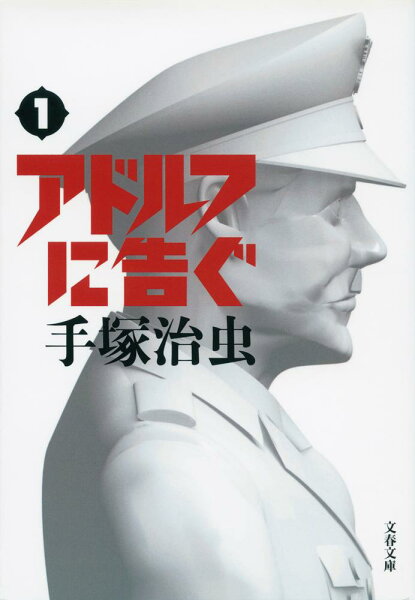
Message to Adolf
Yu's review of Message to Adolf (Adolf ni Tsugu) — Osamu Tezuka's historical epic following three men named Adolf through WWII and beyond, a devastating story of how war and ideology deform individual lives.

Drama
A Drifting Life
Yu's review of A Drifting Life — Yoshihiro Tatsumi's 800-page autobiographical epic about growing up obsessed with manga in postwar Japan and helping invent gekiga, the gritty, adult comics movement that changed the medium.
Drama
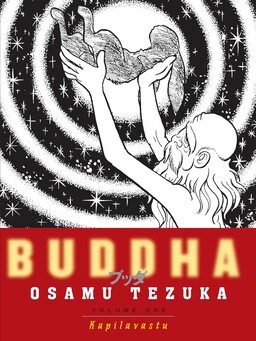
Buddha
Yu's review of Buddha — Osamu Tezuka's sweeping, fictionalized retelling of the life of Siddhartha Gautama, told through a huge cast of invented characters whose suffering makes the Buddha's questions feel like questions you actually have.
Drama
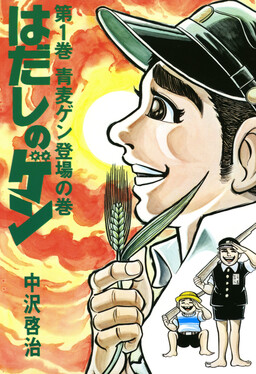
Barefoot Gen
Yu's review of Barefoot Gen (はだしのゲン) — Keiji Nakazawa's semi-autobiographical manga about a six-year-old boy who survives the Hiroshima atomic bombing on August 6, 1945, watches his father and two siblings burn under their collapsed house, and tries to keep what's left of his family alive. Drawn by a man who was actually there.
Drama
Ayako
Yu's review of Ayako — a few years after the war, the Tenge landlord family locks their youngest daughter Ayako in a storehouse to silence what she saw; she grows up underground for over twenty years; when she finally comes out, the country has moved on but the family's rot hasn't. Osamu Tezuka's darkest postwar thriller about the secrets Japan buried instead of facing.
Drama / Historical
Dotsuitare
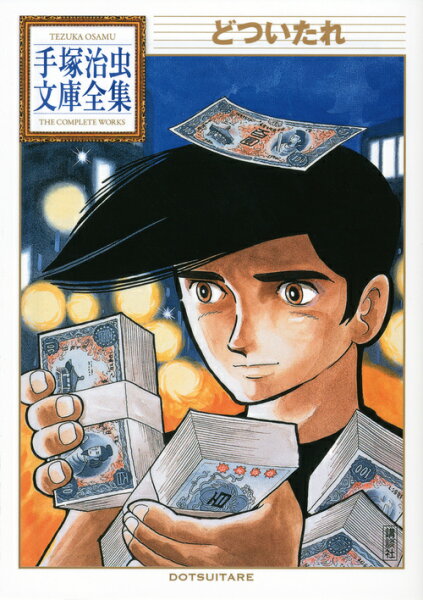
Dotsuitare is Osamu Tezuka's semi-autobiographical drama about young men scraping a life out of the burnt-out ruins of postwar Osaka — an unfinished, rarely discussed work where Tetsu, a war orphan turned shoeshine-boy boss, nurses a private rage against General MacArthur.
Written by
Yu
Manga Enthusiast from Japan
I grew up in Japan and manga literally saved me during a tough time in elementary school. My English isn't perfect, but my love for manga is real — and I want to share it with you.
Disclosure: This post contains affiliate links. As an Amazon Associate, I earn from qualifying purchases at no extra cost to you.