
Act-Age Review: The Manga That Got Erased — And Why I Can't Forget It
by Tatsuya Matsuki (story) / Shiro Usazaki (art)
Read the first volume. If it doesn't hook you, put it down. It'll hook you.
Buy Act-Age on Amazon →*Affiliate link — I earn a small commission at no extra cost to you.
I almost didn't write this one, because I wasn't sure I could buy you a copy at the end of it. Most of the time when I love a manga, I get to say "go read it." With Act-Age I can't honestly say that. The series was pulled off every shelf and every app — Japanese print, Japanese digital, VIZ's English edition, all of it — in the space of a few days in August 2020. I read most of it while it was still running in Shonen Jump's app, and then one week it was simply gone. Not finished. Gone.
So this is a strange review for me: a love letter to something you may never be able to legally read. But I keep coming back to it, because Act-Age did one thing better than almost any manga I know — it made me believe a drawn girl was actually acting. And it broke my heart for reasons that have nothing to do with the scandal.
Quick Take
- A method-acting manga where the heroine's gift and her damage are literally the same thing — she acts by reliving her own grief
- Shiro Usazaki's art makes stage and screen performance legible on a silent page, which is much harder than it sounds
- Rated T (Teen); the content is fine for teens, but know going in: the story is unfinished and out of print after the writer's 2020 arrest
Story Overview
Act-Age opens at an audition. The Stars talent agency runs a massive annual recruitment contest — tens of thousands of applicants — and we drop in during the fifth round of the actress category, twelve hopefuls left. The theme of the round is sadness. Most of the contestants perform sadness. One of the judges, director Sumiji Kuroyama, is bored stiff by all of them except one: Kei Yonagi, a high schooler with zero acting training who isn't performing sadness — she's inside it. When Kuroyama needles her to show him a grief "even an idiot could understand," she simply starts crying, real tears, on command. That's the hook of the whole series in a single scene: Kei doesn't act emotions, she resurrects them.
The reason she can is also the wound at the center of the book. Her mother is dead, her father walked out, and Kei is raising two younger siblings alone. When she performs grief, she's reaching straight into the worst day of her own life. Kuroyama sees both the talent and the danger and recruits her, eventually bringing her to his studio.
From there the manga moves through professional gigs that double as escalating tests of how far she can go. The early Death Island arc is a survival film shoot. The centerpiece is the Night of the Galactic Railroad arc, her first real stage play, where she's cast as Campanella — a boy who is, the audience slowly realizes, already dead. Then the Cinema Club arc, and finally the Princess Iron Fan arc, where Kei takes a lead and channels long-buried rage toward her absent father. That last arc is where the series stops mid-flight. There is no ending. In Japan it ran twelve volumes; the story was clearly built for far more.
Characters
Kei Yonagi — The whole series is the question of what her gift costs her. She acts by dissolving the line between herself and the role, which makes her electric on stage and fragile off it. Her arc is less "can she win" and more "can she learn to dive into a character and surface again as herself." She's a shonen protagonist whose superpower is grief, and the manga never lets her forget the bill comes due.
Sumiji Kuroyama — The director who finds her. He's the morally complicated adult at the center: is he developing Kei or exploiting the exact instability that makes her brilliant? He pushes her toward roles that force her to reopen her own wounds, and the manga keeps that tension live rather than resolving it into easy mentorship.
Araya Myojin — A skilled stage actor who plays Giovanni opposite Kei's Campanella in the Galactic Railroad play. He gives her the line I think about most: that her acting is like diving — a normal actor dives a couple of meters, but Kei plunges a couple hundred, so deep her co-stars can't follow her down. It reframes her "too real" acting as a problem for everyone around her, not just a triumph.
Yuki Hiiragi — Kuroyama's longtime assistant director, who becomes something like Kei's manager. She's the practical, grounded presence orbiting two people (Kei and Kuroyama) who are both a little reckless about the human cost of great acting.
What I Love About It
It's the diving metaphor, and how the art actually earns it. Araya tells Kei that she dives too deep, and in a lesser manga that would just be dialogue. But Usazaki draws it true. When Kei is fully inside Campanella, the linework on her face changes — she stops looking like the harried teenager raising her siblings and becomes a quiet, otherworldly boy who knows he's dead. You can see the depth he's talking about. The page genuinely shifts registers between Kei-as-Kei and Kei-as-role, and that's the thing most performance manga can't pull off. Drawing "good acting" on a static page is brutally hard — there's no voice, no movement — so most acting manga tell you a performance was great and show you the crowd crying. Act-Age shows you the performance and makes the crowd's reaction feel earned.
What got under my skin is that the manga is honest about the price. Kei's talent isn't a clean gift she levels up. To play a dead boy at peace with dying, she has to walk back into her own mother's death and stay there. The series treats that as genuinely dangerous — not inspiring, dangerous — and that refusal to make trauma cute is rare in a Jump series. I came in expecting a feel-good "follow your dreams" manga and got something with real teeth.
Memorable Scene ⚠️ Spoiler Warning
The Galactic Railroad arc has a gut-punch I didn't see coming. The play's director, an older man named Iwao, privately tells Kei that he's dying — and that the role she's playing, Campanella, is a boy who is dead and quietly aware of it. He makes her the keeper of that secret while she builds the performance. So Kei walks onto that stage carrying two deaths at once: her mother's, which she always carries, and now Iwao's, which she's been told and can't share.
Then the show goes up, the cast plays it through to a warm house — and Iwao dies without ever getting to watch the performance he shaped. Kei gave the role everything precisely because a dying man asked her to understand death, and he never saw what she made of it. The cruelty of that timing is what stays with me: the manga lets the triumph and the loss land in the same breath, and refuses to soften either. It's the clearest example of what Act-Age does at its best — using the craft of acting to say something real about grief.
Pros & Cons
Pros
- Usazaki's art makes performance genuinely legible — a rare technical feat
- Kei is a distinctive protagonist whose gift is inseparable from her wound
- Psychological honesty about grief and cost, unusual for a Jump title
- The Galactic Railroad arc is a complete, devastating story-within-the-story
Cons
- The series is unfinished and stops mid-arc — there is no ending
- It's out of print in both English and Japanese, so legally reading it is nearly impossible
- The real-world context of the writer's arrest hangs over the whole thing
- An incomplete, hard-to-find manga about a creator who did something awful won't sit right with everyone — and that's a fair reason to skip it.
Is Act-Age Worth Reading?
As a piece of craft, yes — what survives is some of the best performance-arts manga ever drawn, and the Galactic Railroad arc alone justifies the series' reputation. But "worth reading" runs into a wall: it's unfinished, and it was pulled from every legitimate store in 2020. So this is a recommendation with an asterisk. If you ever come across the early VIZ volumes secondhand and you're curious how a comic can make you believe in acting, it's worth your time. Just go in knowing the story doesn't end and the path to it is genuinely hard.
Official English Translation Status
This is the part people get wrong, so let me be exact. VIZ Media licensed Act-Age and released only the first two volumes in English — volumes 1 and 2 came out in mid-2020 (a third was scheduled for January 2021 but cancelled before release) — before the series was discontinued. There was never a complete 12-volume English edition. After writer Tatsuya Matsuki was arrested in August 2020, Shueisha ended the manga immediately, and VIZ announced it would stop publishing it and pull existing chapters from the Shonen Jump app. Matsuki later received a suspended sentence. Both companies removed the title from sale.
The practical result: there is no current, in-print English edition you can buy new, and the Japanese print and digital releases were suspended as well. The twelve Japanese volumes exist but are out of print. Any English copies in circulation are the early VIZ volumes on the secondhand market.
Where to Buy
I'll be straight with you: there's no clean way to buy this one new. VIZ pulled it, Shueisha pulled it, and no in-print edition exists in any language. The only copies floating around are the first few VIZ volumes on the secondhand market.
Search secondhand VIZ volumes →
This post contains affiliate links. If you purchase through these links, I may earn a small commission at no extra cost to you. As an Amazon Associate, I earn from qualifying purchases.
*Affiliate link — I earn a small commission at no extra cost to you.
More Manga You Might Like
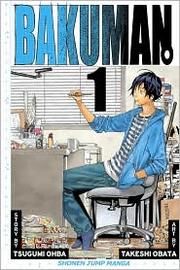
Drama / Slice of Life
Bakuman
Yu's review of Bakuman — ninth-graders Moritaka Mashiro and Akito Takagi form a manga duo and fight their way through Weekly Shonen Jump's serialization machine, driven by a promise: Mashiro will marry his crush Miho Azuki when she voices the heroine in their anime. From the Death Note team, the most honest manga ever made about making manga.

Action / Drama
Beck: Mongolian Chop Squad
Yu's review of Beck: Mongolian Chop Squad — Yukio 'Koyuki' Tanaka is a fourteen-year-old with nothing going for him until he rescues a strange dog and meets Ryusuke, a guitarist back from America with a bullet-scarred Les Paul named Lucille.
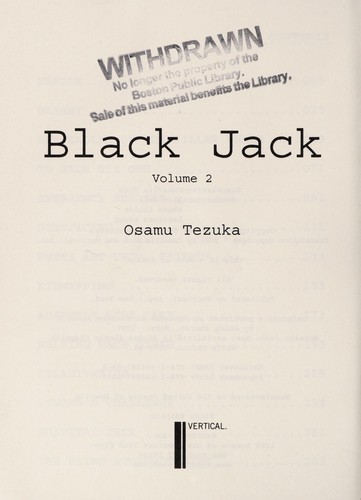
Drama
Ayako
Yu's review of Ayako — a few years after the war, the Tenge landlord family locks their youngest daughter Ayako in a storehouse to silence what she saw; she grows up underground for over twenty years; when she finally comes out, the country has moved on but the family's rot hasn't. Osamu Tezuka's darkest postwar thriller about the secrets Japan buried instead of facing.
Drama / Romance
A Cruel God Reigns
Yu's review of A Cruel God Reigns by Moto Hagio — Jeremy's stepfather abuses him; Jeremy kills him; the next 16 volumes show what happens to a person after that. One of manga's most honest portraits of trauma and the possibility of recovery.

Drama / Medical
Say Hello to Black Jack
Eijiro Saito is a young medical resident who has just started at a Tokyo university hospital. He wants to help people. Across 13 volumes, Shuho Sato shows him what Japanese hospital medicine actually is — cancer wards, neonatal ICU, psychiatric care, organ transplantation, oncology — and what the system does to patients and doctors. The author released the work copyright-free in 2012. Cultural impact in Japan was significant; English licensing remains pending.
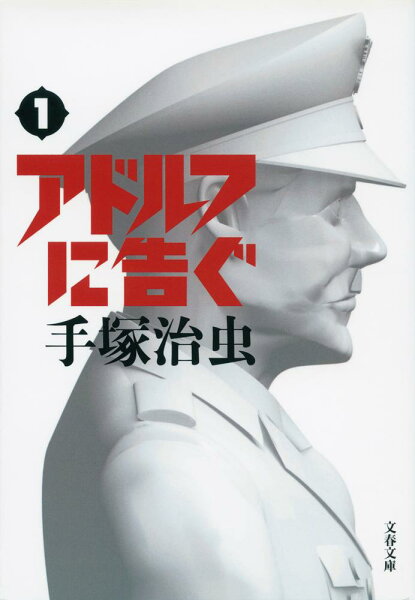
Historical / Drama
Message to Adolf
Yu's review of Message to Adolf (Adolf ni Tsugu) — Osamu Tezuka's historical epic following three men named Adolf through WWII and beyond, a devastating story of how war and ideology deform individual lives.
Written by
Yu
Manga Enthusiast from Japan
I grew up in Japan and manga literally saved me during a tough time in elementary school. My English isn't perfect, but my love for manga is real — and I want to share it with you.
Disclosure: This post contains affiliate links. As an Amazon Associate, I earn from qualifying purchases at no extra cost to you.