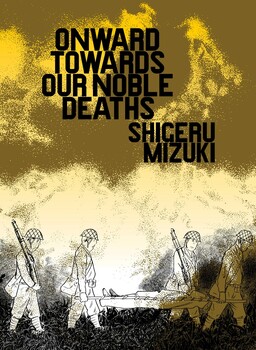
Onward Towards Our Noble Deaths Review: Shigeru Mizuki's Unflinching Account of a Suicidal Military Order
by Shigeru Mizuki
Read the first volume. If it doesn't hook you, put it down. It'll hook you.
Buy Onward Towards Our Noble Deaths on Amazon →*Affiliate link — I earn a small commission at no extra cost to you.
Quick Take
- The most direct war memoir in manga — Mizuki depicts the Japanese Imperial Army's culture of suicidal orders without sentimentality or excuse
- Based directly on Mizuki's own survival of a charge order, the manga carries autobiographical weight that changes how it reads
- Single volume; among the most important antiwar manga in any language
Who Is This Manga For?
- Readers who want to understand the human cost of Japan's Pacific War from the perspective of ordinary soldiers
- Anyone interested in war memoir that refuses to make heroism from mass death
- Fans of Shigeru Mizuki's historical work
- Adult readers who want serious graphic war content
Content Warnings & Age Rating
Age Rating: M (Mature) Content Warnings: War violence; mass death; explicit military culture; suicidal orders and their consequences; graphic wartime content
M rating — mature readers only; the war content is serious and the death toll is depicted honestly.
Yu's Rating
| Category | Score |
|---|---|
| Story Depth | ★★★★★ |
| Art Style | ★★★★★ |
| Character Development | ★★★★★ |
| Accessibility for Non-Japanese Readers | ★★★★☆ |
| Reread Value | ★★★★★ |
Story Overview
A Japanese Imperial Army unit in the Pacific receives a suicidal charge order — an attack that cannot succeed, structured to produce honorable death rather than military objective. The unit complies. Through a combination of circumstance, some soldiers survive.
The survivors are punished by their officers for failing to die.
Mizuki survived the war — losing his left arm in the process — and depicts these events with the specific authority of a witness who saw how the Japanese military's cult of honorable death worked in practice: not as individual sacrifice but as institutional waste.
The manga follows the soldiers from their ordinary lives through their deployment, the increasing pressure of military culture, the charge itself, and the aftermath.
Characters
The soldiers — ordinary young men from various parts of Japan, depicted with specific personalities and backgrounds before the military machine processes them into units and orders.
Art Style
Mizuki's war art is realistic and detailed — the Pacific settings are rendered with tropical specificity, and the violence is depicted honestly without being gratuitous. The ordinary faces of ordinary soldiers carry the memoir's anti-heroic argument.
Cultural Context
The Japanese Imperial Army's culture of honorable death — the expectation that soldiers would choose death over surrender or failure — is the specific historical context that makes this story possible. Mizuki depicts this culture from inside it: how it worked, what it demanded, and what it cost.
What I Love About It
The punishment of survivors. The moment where soldiers who survived by chance — not cowardice — are disciplined for failing to comply with their own deaths is the manga's most precise statement about what the military culture of "honorable death" actually meant in practice.
What English-Speaking Fans Say
Western readers describe Onward Towards Our Noble Deaths as one of the most important war manga in English translation — specifically noted for Mizuki's authority as a survivor giving the content specific weight, for the antiwar argument being made through events rather than rhetoric, and for the depiction of Japanese military culture being both specific and unflinching. Frequently cited alongside Barefoot Gen as essential Japanese war memoir.
Memorable Scene ⚠️ Spoiler Warning
The charge itself — and the specific chain of circumstance that allows some soldiers to survive what was designed to kill all of them — is rendered with documentary specificity rather than dramatic heightening.
Similar Manga
- Showa 1926-1939 — Mizuki's historical account of the period leading to this war
- Barefoot Gen — The most famous Japanese war memoir manga
- The Burma Chronicles — Different war perspective in graphic memoir
- In This Corner of the World — The home front during the same war
Reading Order / Where to Start
Single volume — Onward Towards Our Noble Deaths stands alone; reading Showa first adds historical context.
Official English Translation Status
Drawn & Quarterly published the English translation. Single volume, complete.
Pros & Cons
Pros
- Autobiographical authority gives unique weight
- Antiwar argument made through events, not rhetoric
- Art is exceptional
- Complete in single volume
Cons
- M-rated war content throughout
- Extremely heavy subject matter
- Not light or entertaining reading
Format Comparison
| Format | Notes |
|---|---|
| Single Volume | Drawn & Quarterly; complete |
| Digital | Available |
Where to Buy
Read the first volume. If it doesn't hook you, put it down. It'll hook you.
This post contains affiliate links. If you purchase through these links, I may earn a small commission at no extra cost to you. As an Amazon Associate, I earn from qualifying purchases.
*Affiliate link — I earn a small commission at no extra cost to you.
More Manga You Might Like
Slice of Life / Drama
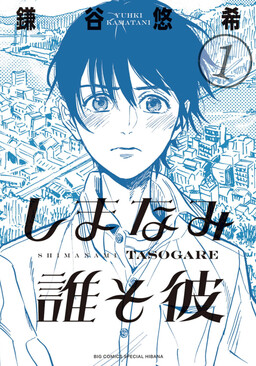
Our Dreams at Dusk: Shimanami Tasogare
Yu's review of Our Dreams at Dusk — Tasuku Kaname is outed to his classmates; he goes to a building to jump; a woman in white tells him to come to a drop-in center; the center is a community of people across the LGBTQ spectrum who have found a way to be in the world; Tasuku begins to find his own way through them.
Slice of Life / Romance
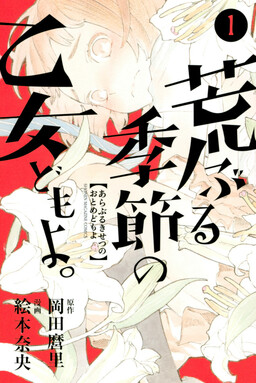
O Maidens in Your Savage Season
Yu's review of O Maidens in Your Savage Season — five high school girls in a literature club encounter adult themes through their reading and must suddenly reckon with their own desires, confusion, and the specific terror of not knowing what you want or whether what you feel is acceptable.
Slice of Life
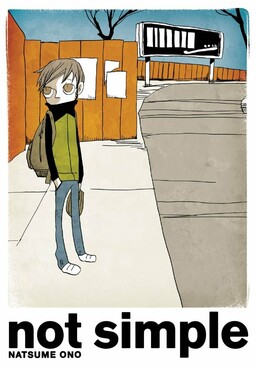
not simple
Yu's review of not simple — Ian is an English young man whose life has been defined by loss, abuse, neglect, and a desperate search for his sister; the manga tells his story in non-linear fragments, assembled by a journalist writing a novel about Ian's life, asking what it means to witness someone's suffering and what fiction can do with it.

Slice of Life / Memoir
My Lesbian Experience with Loneliness
Yu's review of My Lesbian Experience with Loneliness — Nagata Kabi's autobiographical manga about her experiences with depression, an eating disorder, her difficult relationship with her parents, and her gradual understanding of her own sexuality and loneliness; one of the most honest mental health memoirs in manga form.
Drama
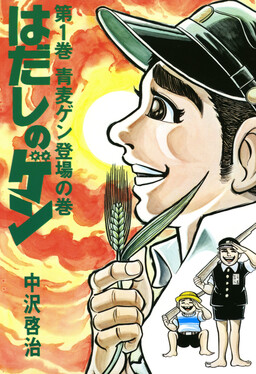
Barefoot Gen
Yu's review of Barefoot Gen (はだしのゲン) — Keiji Nakazawa's semi-autobiographical manga about a six-year-old boy who survives the Hiroshima atomic bombing on August 6, 1945, watches his father and two siblings burn under their collapsed house, and tries to keep what's left of his family alive. Drawn by a man who was actually there.
Slice of Life / Romance
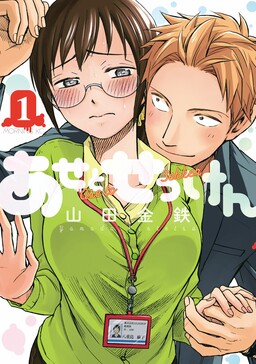
Sweat and Soap
Yu's review of Sweat and Soap — Asako Yaeshima sweats profusely and has always been ashamed of it; Kotaro Natori works in product development for a hygiene company and has an extremely sensitive nose; he encounters Asako and finds her natural scent extraordinary; what follows is an adult romance about two people whose specific qualities fit together in an unexpected way.
Written by
Yu
Manga Enthusiast from Japan
I grew up in Japan and manga literally saved me during a tough time in elementary school. My English isn't perfect, but my love for manga is real — and I want to share it with you.
Disclosure: This post contains affiliate links. As an Amazon Associate, I earn from qualifying purchases at no extra cost to you.