Riki-Oh Review — A Superhuman Prisoner, Four Wardens, and the Most Gleefully Brutal Manga of the Late 1980s
by Masahiko Takajo (story) / Tetsuya Saruwatari (art)
Read the first volume. If it doesn't hook you, put it down. It'll hook you.
Buy Riki-Oh on Amazon →*Affiliate link — I earn a small commission at no extra cost to you.
I first encountered Riki-Oh through the cult Hong Kong film in college. A friend's older brother had a bootleg VHS that everyone in the dorm had heard about. We watched it in a basement at 2 AM and laughed and screamed at the screen for ninety minutes. It was the most violent thing I had ever seen and it was, somehow, also the funniest.
When I learned it was based on a manga, I tracked the Japanese volumes down. The manga is — somehow — bloodier than the movie. It is also, when you actually read it, completely sincere. Takajo and Saruwatari are not joking. They have built a real story about a real man fighting a real corrupt system, and they have decided that the fight will be drawn the way a fight would actually be if both participants had no limits.
Quick Take
- A 12-volume late-1980s martial arts manga so committed to its violence that the violence becomes a stylistic position rather than a content warning
- Saiga Ricky is a superhuman prisoner who has five bullets buried in his abdomen, the result of an event before the manga begins. The story is what he does in the privatized hellscape of a near-future Japanese prison
- Age rating: M (Mature) — extreme graphic violence throughout. Eye-gouging, decapitation, dismemberment. If you cannot read past graphic content, this is not your manga
Who Is This Manga For?
- Martial arts manga readers who want the most extreme version of the form
- Cult film fans who know the 1991 Hong Kong adaptation and want the source
- 1980s manga readers comfortable with the era's specific approach to violence
- Genre archaeologists interested in the manga that influenced Street Fighter II's M. Bison design (via the manga's General Washizaki)
Content Warnings & Age Rating
Age Rating: M (Mature) — 18+ Content Warnings: Extreme graphic violence including but not limited to: eye gouging, decapitation, limb removal, disembowelment, characters being torn apart on-panel, blood as constant visual element. Implied torture. The violence is the manga's primary mode of communication.
This is genuinely one of the most violent mainstream manga ever serialized. The M rating is a floor, not a ceiling.
Story Overview
The year is 2002 — the near future from the manga's 1987 perspective. The Japanese government has privatized the prison system. Private corporations now run penitentiaries as for-profit operations. The prisoners are labor. The wardens are management. The system is, predictably, brutal.
Saiga Ricky is sent to one such prison after a confrontation with a yakuza-affiliated drug dealer that resulted in the dealer's death. Ricky is not an ordinary prisoner. He was trained from childhood by his uncle in a specific martial art that has remade his body — his bones are denser than human bones, his muscle fibers are reorganized, his pain tolerance approaches infinite. Five bullets are buried in his abdomen from the confrontation that put him in prison. He cannot remove them. He has decided to use them.
The prison is run by the Warden (a glass-eyed sadist) and his Four Heavenly Kings of Hell — the four chief wardens corresponding to the four directions:
- North — Hai (Oscar Yamane) — a former assassin whose specialty is concealed weapons
- South — Tarzan (Daniei) — a giant, the strongest of the four in raw physical terms
- East — Brandon (Yo) — a fortuneteller-warden with prosthetic claws
- West — Hayate (Zorro) — fast, blade-equipped
Each warden corresponds to a multi-chapter arc. Ricky fights through them one by one. Each one nearly kills him. Each one teaches him something about what the prison is actually for.
The manga's plot widens as Ricky progresses. The prison is not just a prison. There is a drug factory underneath it — the prison labor is being used to manufacture narcotics for the corporation that owns the facility. General Washizaki — the manga's final antagonist, a militaristic strongman with prosthetic limbs and an army of personal soldiers — is the actual operational head of what the prison really is.
Across 12 volumes, Ricky:
- Survives the initial entry sequence
- Defeats each of the four wardens
- Discovers the drug operation
- Confronts Washizaki
- Searches for his younger brother Nachi, the missing person whose disappearance is one of the manga's underlying threads
The story ends with Ricky outside the prison system entirely, having destroyed it from inside.
Characters
Saiga Ricky (Riki-Oh) — The protagonist. Trained by his uncle in Qigong-based martial arts. His body is dense enough to deflect bullets in some contexts. His pain tolerance is near-total. What makes him work as a protagonist is that Saruwatari draws him as gentle outside of combat — Ricky genuinely does not enjoy violence; he just is overwhelmingly good at it, and the prison forces him to use it constantly.
General Washizaki — The manga's final antagonist. Powerfully built, with chrome prosthetics replacing parts of his face and body. He runs the drug operation under the prison. His design — military uniform, prosthetic limbs, blonde hair, scarred face — was the visual basis for M. Bison in Street Fighter II. The Capcom designers have confirmed this lineage.
The Four Wardens (Hai, Tarzan, Brandon, Hayate) — Each gets a multi-chapter arc. Each is the antagonist of one major segment. Each is killed by Ricky in increasingly elaborate combat sequences. Saruwatari draws them as visually distinct enough that they don't blur together; each fight has its own specific texture.
Nachi — Ricky's younger brother. Missing for most of the series. The mystery of his fate is one of the manga's recurring undercurrents.
Art Style
Tetsuya Saruwatari's art is the manga's primary technology. He draws human bodies with anatomical accuracy and then draws what happens when those bodies meet impossible forces. The result is a visual style nobody else has quite matched: bodies as rendered solids that come apart in detailed, specific, individual ways.
Where Saruwatari excels:
- Faces under physical stress — the manga's expressions during combat are unforgettable
- Body damage — the specific way a punch makes a face fold, the specific way a limb breaks, the specific way blood travels
- Scale — Saruwatari draws large bodies (Tarzan, Washizaki) with weight that you can feel; the smaller, faster Ricky moves around them with believable kinetic difference
The 1980s art style takes adjustment for readers used to modern polished work. By volume 3 or 4, Saruwatari's style settles into its peak form. The Washizaki final volumes contain some of the most accomplished action-manga art of the era.
Cultural Context
Riki-Oh ran in Business Jump — Shueisha's seinen magazine — from 1987 to 1990, twelve volumes. The serialization was contemporary with Fist of the North Star (1983–1988) and the early Berserk (1989–), positioning Riki-Oh in the late-1980s violent seinen tradition.
The manga's specific cultural moment is the late-bubble Japanese anxiety about privatization, corporate power, and corrupt institutions. The privatized prison system Ricky enters is not a far-future dystopia; it is a 1987 fear about where institutional decay was heading. The drug factory under the prison is the corruption made literal.
The franchise's enduring footprint is through the 1991 Hong Kong film adaptation, Riki-Oh: The Story of Ricky (力王), directed by Ngai Choi Lam and starring Fan Siu-Wong as Ricky. The film became a cult classic in Western markets in the 1990s, particularly through pre-internet bootleg VHS circulation. It is one of the most quoted "extreme cinema" films among Western cult-film communities.
The manga also influenced 1990s game design — most notably Street Fighter II (1991, Capcom), whose villain M. Bison (Vega in Japanese) draws his visual design from General Washizaki. The military dress, prosthetics, and overall presence of Bison are direct visual references that Capcom designers have acknowledged.
What I Love About It
The opening sequence where Ricky walks into the prison.
The manga opens with Ricky being processed at the prison gate. The other prisoners notice him immediately — he is calm in a way nobody calm gets to be in a prison. The first cell-block confrontation comes within twenty pages. A larger prisoner approaches Ricky. The other prisoners watch. The new arrival is about to be tested.
What Saruwatari does in this scene is the manga's whole approach in microcosm. Ricky does not threaten. He does not posture. He does not even fully commit to the fight when it starts. He simply, with mechanical efficiency, lets the larger prisoner make contact and then breaks that prisoner's arm. The drawing of the break is anatomically specific. The prisoner's face during the break is a study. The other prisoners, watching, understand they have been wrong about who they are dealing with.
That sequence establishes the manga's contract with the reader. The violence will be detailed. The violence will not be celebrated, but it will not be sanitized either. The protagonist is not a hero in the conventional sense — he is a man who has been given enormous physical advantages and a moral framework requiring him to use them. The plot will unfold by giving him people to use them against.
What I love about Riki-Oh is that this sincerity persists across all twelve volumes. The manga believes in what it is doing. It is not winking. It is not ironic. It is drawing, with full commitment, what would happen if a man like Ricky existed in a prison like that and made the choices he makes. The cult film's reputation for unintentional comedy obscures what the manga actually is: a serious commitment to depicting violence as a moral and physical fact, drawn by an artist who knew exactly what bodies look like when they fail.
What English-Speaking Fans Say
The English-language Riki-Oh community is small but devoted, primarily centered around the 1991 film. The manga has never been officially translated, so English engagement happens through fan scanlations and import discussion.
The consensus is consistent: the manga is more extreme than the film in both content and emotional register. The Washizaki final arc, in particular, is described as the manga's peak — more violent than anything in the film, but also more morally serious. Readers who come to the manga expecting the film's tone are often surprised at how committed the source material is to its premise.
The General Washizaki / M. Bison connection is the most-discussed individual aspect in Western communities. Fighting game fans interested in Street Fighter's history often discover Riki-Oh through Bison's design lineage.
Memorable Scene ⚠️ Spoiler Warning
Ricky's fight with General Washizaki.
The final arc — across volumes 10 through 12 — is Ricky's confrontation with the man who has been running the prison from the inside. Washizaki is not like the four wardens. He is not a martial artist with one specialty. He is a former military commander with prosthetic enhancements, a personal army, and the institutional resources of the corporation that built the prison system.
The fight Saruwatari draws is the manga's structural endpoint. Washizaki's design — chrome plating, prosthetic eye, military insignia, scarred face — is presented as the opposite of Ricky: Ricky's body is natural enhancement through training; Washizaki's body is artificial enhancement through technology. The thematic argument the manga is making about the prison system — the corruption of institutions, the militarization of profit — finds its visual expression in this single character.
The combat sequences across these three volumes are some of the most ambitious in 1980s manga. Saruwatari draws scale, weight, prosthetic mechanism, blood, muscle, and the specific moments when each body fails. The drug factory burns. The personal army dies. Washizaki himself ends in a way that is graphic, conclusive, and morally clear — the manga is not subtle about who deserves what.
What makes this arc the manga's emotional peak is what Ricky does after he kills Washizaki. He does not celebrate. He does not stand over the corpse. He searches the wreckage for his brother. The final volume's emotional resolution is not "Ricky won the fight" but "Ricky found out what happened to Nachi." The manga has spent twelve volumes drawing the most extreme combat in seinen manga, and the resolution it wants is family.
That's the manga's actual project. The blood is the surface. The story is about a man who would not stop until he knew what had happened to his brother.
Similar Manga
| Title | Its Approach | How Riki-Oh Differs |
|---|---|---|
| Fist of the North Star | Post-apocalyptic martial arts, similar 1980s violence register | Hokuto no Ken is more mythic; Riki-Oh is more grounded in body anatomy |
| Berserk (early arcs) | Dark seinen with high violence | Berserk is fantasy-dark; Riki-Oh is near-future-dark |
| Baki the Grappler | Extreme martial arts focused on combat | Baki is tournament-fantasy; Riki-Oh is prison-political |
| Holyland | Street-fighting manga with serious tone | Holyland is psychological; Riki-Oh is physical |
Reading Order / Where to Start
Volume 1, if you can find it. The 12 volumes form a complete arc. Skipping is not possible — each arc builds on what came before.
For English readers: the manga is unlicensed. The practical reading path is fan scanlations or Japanese import. The 1991 Hong Kong film Riki-Oh: The Story of Ricky is the most accessible adaptation; it covers approximately the first few arcs of the manga.
Official English Translation Status
The Riki-Oh manga is unlicensed in English and has been since publication. No translation has been announced. Media Blasters announced licensing the related OVAs in 2006, but the release was cancelled due to rights issues.
The 1991 Hong Kong film is available on various physical media releases (DVD and Blu-ray) with English subtitles, primarily through cult cinema labels.
Pros & Cons
Pros
- The most committed violent manga of the 1980s
- General Washizaki is a foundational influence on game design (Street Fighter's M. Bison)
- The Washizaki final arc is genuinely accomplished action-manga craft
- Saruwatari's body-damage art remains visually distinctive
Cons
- Unlicensed in English; reading requires Japanese or scanlation
- The violence is sustained and graphic; not a casual read
- 1980s manga conventions show their age in places
- The combination of "extreme violence" and "sincere narrative" doesn't land for every reader — some will read the manga as the film's source for entertainment, others will engage with its political seriousness. Both readings are valid.
Is Riki-Oh Worth Reading?
If you have any interest in the 1980s violent-seinen tradition: yes. If you're a cult film fan who knows the 1991 movie and wants the source: absolutely. If you cannot read past graphic content: skip it.
Format Comparison
| Format | Notes |
|---|---|
| Japanese (Shueisha) | 12 original Business Jump volumes (1987–1990) |
| English | Unlicensed |
| Hong Kong film (1991) | Riki-Oh: The Story of Ricky; available via cult cinema labels with English subs |
| Anime | 2-part OVA (1989–1990); never officially released in English |
Where to Buy
Read the first volume. If it doesn't hook you, put it down. It'll hook you.
This post contains affiliate links. If you purchase through these links, I may earn a small commission at no extra cost to you. As an Amazon Associate, I earn from qualifying purchases.
*Affiliate link — I earn a small commission at no extra cost to you.
More Manga You Might Like
Action / Martial Arts
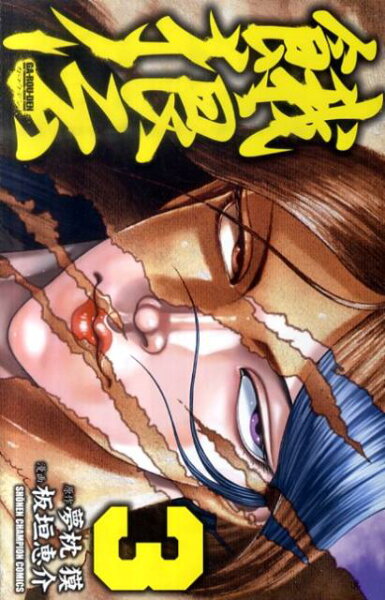
Garouden
Garouden follows Bunshichi Tanba, a former judoka who operates in the underground fighting world — a manga drawn by Jiro Taniguchi with psychological depth and physical authenticity rare in fighting manga.
Action / Comedy
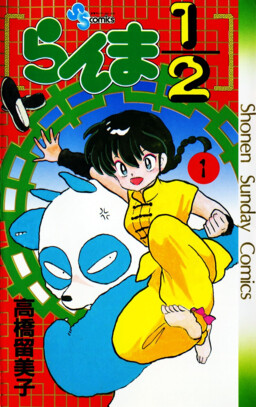
Ranma ½
A review of Ranma ½ — 38 volumes in Weekly Shonen Sunday. Ranma Saotome transforms into a girl when splashed with cold water; his father has arranged him to be engaged to Akane Tendo, who hates boys; the series follows their chaotic not-quite-relationship and increasingly bizarre martial arts challenges. Rumiko Takahashi's most kinetic work. VIZ Media's English edition is complete.
Action / Adventure
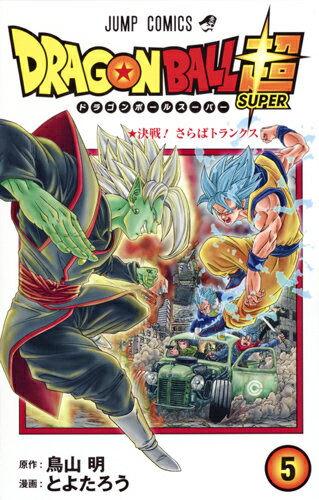
Dragon Ball
A review of Dragon Ball — 42 volumes in Weekly Shonen Jump. Son Goku's journey from a boy in the wilderness to the strongest being in the universe — the manga that defined what shonen action could be and that every battle manga since has owed something to. VIZ Media's English edition is complete.
Action / Martial Arts
Air Master
A review of Air Master, Yokusaru Shibata's seinen brawler about Maki Aikawa, a 184cm ex-gymnast who quit the sport for being too tall and found the only thing that makes her feel alive: street fighting, mid-air.
Action / Martial Arts
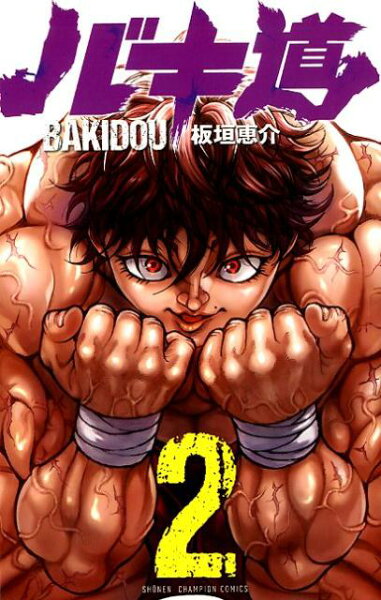
Baki-Dou
A review of Baki-Dou (刃牙道), the fourth Baki series, where a cloned Miyamoto Musashi is resurrected into the modern world and the strongest fighters alive learn that a real blade changes everything.
Action / Martial Arts
The God of High School
A review of The God of High School, the Korean webtoon about a martial arts tournament that spirals into a battle between gods.
Written by
Yu
Manga Enthusiast from Japan
I grew up in Japan and manga literally saved me during a tough time in elementary school. My English isn't perfect, but my love for manga is real — and I want to share it with you.
Disclosure: This post contains affiliate links. As an Amazon Associate, I earn from qualifying purchases at no extra cost to you.