
Holyland Review — A Bullied Boy Teaches Himself to Fight, and the Street Becomes the Only Place He Belongs
by Kouji Mori
Read the first volume. If it doesn't hook you, put it down. It'll hook you.
Buy Holyland on Amazon →*Affiliate link — I earn a small commission at no extra cost to you.
I was small in middle school. Not small in a sympathetic way — small in a way that made me a useful target for the boys who needed to feel large. The bullying was minor by any objective measure. It still rearranged the chemistry of my brain.
I read Holyland in my early twenties, long after I had grown big enough to be left alone. The manga reached back to the kid I'd been and explained him to me in a way I hadn't been able to explain to myself.
Quick Take
- The most psychologically honest fighting manga ever published in English: Yuu is bullied first, fighter second, and the manga never lets the order reverse
- Kouji Mori's technical martial arts knowledge is rare in the genre — every fight is built on real boxing, karate, judo, or wrestling mechanics
- Age rating: M (Mature) — street violence, bullying flashbacks, blood and injury
What Is Holyland About?
Yuu Kamishiro is in high school in a Tokyo suburb. He was bullied through middle school by classmates who used his shyness as permission. He stopped attending classes regularly. He has no friends. His mother is concerned but uncertain how to help.
One night, he can't sleep. He goes out into the streets — not to do anything in particular. To be somewhere that isn't his bedroom. He encounters a group of delinquents — furyō — who notice him and decide to make him their evening's entertainment.
Yuu has, over the previous months, been teaching himself boxing from a paperback textbook he found in a used bookstore. He has been shadow-boxing in his room. He has practiced one technique with anything close to consistency: the straight right.
He throws it.
It connects. The bully goes down. The bully doesn't get back up immediately. Yuu, who has spent years being the body that fell, watches someone else be the body that fell.
He goes home that night different from the person who left.
The next 18 volumes are what happens after that. Yuu keeps going out. Other delinquents notice him. Stronger fighters seek him out. A rumor builds about a "boxer kid" who roams the streets at night. Yuu — who has never been good at anything — discovers that he is good at this. The street, specifically the small park district that becomes his territory, becomes the first place in his life where his effort has visible, immediate effect.
He calls it his Holyland (聖地, seichi) — his sacred place. The manga is whether that place is what saves him or what destroys him, and whether those are the same thing.
Holyland's Plot Summary (Light Spoilers)
The major arcs:
Early streets (volumes 1–4) — Yuu's first encounters with the street culture. He develops a small reputation. He meets Masaki, a karate-trained delinquent who becomes one of the manga's most important characters — antagonist, mirror, and eventually friend. He meets Shougo, an older fighter who serves as a partial mentor. The technical foundation of the manga's fighting (boxing, karate, judo) gets established here.
The territory war (volumes 5–9) — Multiple delinquent factions become aware of Yuu. Various groups try to recruit him, control him, or remove him. The series widens its scope to include other neighborhoods, other fighters, and the specific social texture of Japanese youth-delinquent culture in the 2000s. Yuu's psychology shifts — he is no longer the boy who can't sleep; he is becoming someone who needs the street the way a previous version of him needed his bedroom.
The bigger fighters (volumes 10–14) — Adult fighters, MMA practitioners, and serious martial artists enter the story. Yuu has to confront opponents whose training he cannot match. The series introduces — slowly and honestly — the idea that there is a ceiling to what a self-taught street fighter can do. Yuu loses fights. The way he processes those losses is the series' most morally serious content.
The endgame (volumes 15–18) — Yuu's psychological reckoning with what he has become. Masaki's parallel arc. The question of whether the street can be a permanent home or whether everyone who lives there is eventually destroyed by it. The series ends with what I'd call a genuinely earned resolution — not optimistic, not nihilistic, just honest.
Holyland's Fighting Styles: Why the Martial Arts Are Real
Kouji Mori is a longtime amateur martial artist (he's been Kentaro Miura's [Berserk] best friend since both were young — Mori is credited as creative consultant on Berserk, and Miura was credited as consultant on Holyland). His martial arts knowledge is technical and accurate.
The manga depicts:
- Boxing — Yuu's self-taught base. Mori draws boxing footwork, jab mechanics, and the specific limitations of someone trained only in striking
- Karate (Kyokushin and traditional) — Masaki's discipline; the manga draws kata-based fighting with anatomical correctness
- Judo — One of the manga's running themes is that ground-grappling defeats striking-only fighters reliably
- Wrestling and submission grappling — Introduced via later opponents; the manga is honest about how grappling neutralizes a boxer
- Street fighting (no specific style) — Mori takes seriously that most street fighters have no formal training, and that their unpredictability is its own variable
Each chapter often includes a small text annotation explaining the specific technique being depicted — the angle of a hook, the leverage of a throw, the mechanics of a clinch. These annotations are written by Mori himself and are taken seriously by martial arts readers.
If you have trained in any combat sport, Holyland reads differently than other fighting manga. The fights are recognizable. The mistakes are recognizable. The cost of taking a punch — the specific way a person who is not used to being hit responds to being hit — is rendered with accuracy other manga don't bother with.
Who Is This Manga For?
- Anyone who was bullied and wants a manga that takes that experience seriously without redeeming or romanticizing it
- Martial arts practitioners who want fighting manga with real technique
- Seinen readers willing to sit with psychological complexity
- Readers who like Vagabond, Baki, or Tough — Holyland is more grounded than any of these
- People who are NOT looking for a power fantasy — Yuu's competence is hard-won and limited; the manga refuses to make him invincible
Content Warnings & Age Rating
Age Rating: M (Mature) — 18+ Content Warnings: Street violence depicted with accuracy and physical consequence; bullying flashbacks and PTSD imagery; blood and injury (broken noses, cuts, concussions); some sexual content in later volumes (consensual, not graphic); psychological themes around trauma, identity, and the appeal of violence to powerless people
The violence in Holyland is not stylized. People bleed. People go down and stay down. The bullying flashbacks are some of the more accurate depictions of psychological abuse in any manga. Readers with personal histories around bullying may find specific chapters difficult.
Story Overview
I've covered the arc structure above. What I want to add here is the psychological architecture of the series, because that's what makes Holyland different from other fighting manga.
Mori is not interested in Yuu becoming the strongest fighter. He's interested in what Yuu needs fighting to be. Across the series, the manga keeps re-asking the same question in different shapes:
- In volumes 1–4: Is fighting Yuu's escape from being a victim?
- In volumes 5–9: Is fighting Yuu's identity, or his addiction?
- In volumes 10–14: Is the street a community, or a substitute for community Yuu hasn't allowed himself to have?
- In volumes 15–18: Can Yuu put fighting down, and what happens to him if he does?
The answers are not clean. Mori refuses to make Yuu either a hero or a cautionary tale. He's a person — a specific person with a specific history — and the manga gives him the dignity of an unresolved life.
Characters
Yuu Kamishiro — One of the most psychologically specific protagonists in seinen. His combination of physical competence and emotional fragility is rendered without contradiction; Mori treats them as the same trait expressed in different contexts. Yuu is not a sociopath who happens to be sad. He is a person whose body learned to fight before his interior learned to be safe, and the manga shows the cost of that order.
Masaki — Karate-trained delinquent who is Yuu's primary rival and eventually his closest friend. Masaki's own family backstory (revealed in middle volumes) is one of the manga's most affecting subplots. He is the character who understands Yuu best because he is what Yuu could have become if the order had been reversed.
Shougo — Older fighter, professional MMA-adjacent. Functions as the partial mentor figure. His relationship to violence as profession rather than as identity contrasts with Yuu's. Shougo's perspective is the manga's primary adult counterweight.
Mai — A girl Yuu meets during his street period. The Mai-Yuu relationship is one of the manga's quieter threads; Mori writes their connection with care and refuses to use it as a redemption arc for Yuu. Mai is a person, not a plot device.
Iyo — Higher-level fighter introduced in the middle arcs. Iyo's fights with Yuu are the technical highlights of the manga.
The recurring street cast — Various delinquents who recur across volumes. The series is unusual in that minor characters get real development. The boy Yuu first knocked down in volume 1 returns later. The bullies from his middle school return later. The street remembers everyone, and so does the manga.
Art Style
Mori's art is dark, scratchy, and built for accuracy rather than dynamism. Fight choreography is unusually clear — readers can follow exactly which body is doing what, which technique is being applied, and what the result is. The character designs are realistic; nobody has cartoon-impossible proportions. The faces carry damage believably — split lips, swollen eyes, the specific dazed expression of someone who just got hit hard.
The visual style takes adjustment. Some readers find early volumes' linework rough. By volume 4 or 5, the style settles. By the late volumes, Mori is in full control of his approach and the art quality is consistently high.
Cultural Context
Holyland engages with 2000s Japanese delinquent culture — the furyō subcultures that occupied specific urban night spaces, the territorial divisions of neighborhoods, the hierarchical structure of street groups. The manga depicts a Tokyo that was real in the era it was written and is largely gone now (the specific delinquent culture Holyland documents has been replaced by other youth subcultures).
Yuu's situation — high school student detaching from mainstream education, finding an alternative social world on the street — is a recognizable Japanese cultural pattern. The manga treats it with care: not romanticizing the street, but also not condemning the people on it.
The manga ran in Young Animal from 2000 to 2008. Young Animal is also Berserk's serialization magazine; Mori's friendship with Kentaro Miura is part of the cross-pollination between the two works.
What I Love About It
The chapter where Yuu loses a fight he should have won.
I won't say which chapter. What I'll say: somewhere in the middle of the series, Yuu fights an opponent he has every reason to beat. The opponent is unimpressive. The opponent's technique is sloppy. The opponent's reputation is small. Yuu walks into the fight expecting a quick result, and instead he gets hit.
Hard.
The fight goes badly. Yuu does not have the answer his self-taught boxing provides. The opponent has a specific street trick — not a martial art, just a learned dirty habit — that Yuu's textbook never described. Yuu loses. Not metaphorically. Physically. He goes down. He stays down longer than he wants to. The opponent walks away.
The chapter after the fight is what makes Holyland Holyland. Yuu doesn't immediately train harder. He doesn't immediately study what beat him. He goes home. He sits in his room. He doesn't go out for several days. The bullied child who had been replaced by the street fighter comes back into the apartment, and we watch Yuu have to be him again. The flashbacks to middle school — which the series has been rationing — flood the panels.
What I love is what the manga refuses to do. It doesn't make Yuu's loss the setup for his next victory. The loss is the chapter. The processing is the chapter. The question of whether Yuu will choose to go out again at all — the question of whether the street has been his salvation or his addiction — is allowed to sit unresolved for a while.
That's why Holyland matters. Other fighting manga ask "how strong can the protagonist become." Holyland asks "what is the protagonist for." The questions are not the same. One is a power fantasy. The other is a novel about a person.
What English-Speaking Fans Say
Holyland has a small but committed English-language readership. The series is recommended in /r/manga threads about "fighting manga that takes its protagonist seriously" and in discussions of psychologically mature seinen. Martial arts practitioners cite the technical accuracy regularly.
The most common complaints: art quality in early volumes is rough; the pacing is slow; the M-rating limits the audience. The most common praise: that the manga is the rare fighting series that prioritizes character over spectacle.
The DMP (Digital Manga Publishing) English edition is widely considered out of print and prices for full sets have risen significantly. New readers often acquire the manga via secondhand markets or digital channels.
Memorable Scene ⚠️ Spoiler Warning
The conversation between Yuu and Masaki on the rooftop, midway through the series.
I'll keep it vague. Yuu and Masaki have been antagonists, then reluctant allies, then something more complicated. They've fought multiple times. They've helped each other multiple times. They've never said anything direct to each other about what they are to each other.
Mori puts them on a rooftop one night, after a fight that they fought together — not against each other — and lets them talk. Masaki, who has spent his life performing the karate-trained-delinquent role, says something quiet. Yuu, who has spent his life performing nothing because performing was never an option, says something back.
The conversation is short. Mori uses small panels. Neither character cries. Neither character makes a declaration. They just talk, the way two people who have decided they're friends finally talk after a long time of not knowing they were.
That scene is the manga's emotional center. Holyland is about a boy who learned to fight because he had no community. The moment Yuu has a person who knows him — really knows him — is the moment the manga's whole frame shifts. He still fights. He still goes out. But the loneliness that was the engine of the early volumes is no longer the only fuel he has.
Similar Manga
| Title | Its Approach | How Holyland Differs |
|---|---|---|
| Tough (Tough: Dark Fight) | Martial arts succession, technical content, lower psychology | Tough is more spectacle; Holyland is more interior |
| Baki the Grappler | Tournament-driven martial arts, extreme stylization | Baki is fantasy; Holyland is realism |
| Vagabond (Inoue) | Historical martial arts, deeply psychological | Vagabond is mythic; Holyland is street-level and contemporary |
| Real (Inoue) | Sports drama with psychological depth | Real focuses on disability; Holyland focuses on trauma. Same emotional register |
Reading Order / Where to Start
Volume 1. The bullying backstory and Yuu's psychology establish in the first three chapters. Do not skip.
Official English Translation Status
Digital Manga Publishing published all 18 volumes in English between 2006 and 2013. The license has since lapsed and the English edition is out of print. Physical volumes can be found on secondhand markets (eBay, AbeBooks) but full-set prices have risen significantly.
No digital English edition is currently available.
Pros & Cons
Pros
- The most psychologically serious fighting manga in English
- Genuine martial arts accuracy
- 18 volumes complete with a real ending
- Yuu is one of seinen's most carefully written protagonists
- Bullying is treated with rare honesty
Cons
- Art in early volumes is rough
- English release is out of print; finding volumes is harder than it should be
- The M rating is accurate; not for casual reading
- The slow psychological pace is an acquired taste. It won't land for everyone, especially readers used to faster fighting manga.
Is Holyland Worth Reading?
If you have any personal history with bullying or with the psychology of competence-as-survival: yes, unconditionally. If you came to manga for fighting that takes itself seriously: yes. If you want power fantasy or stylized violence: skip it. Holyland is not the manga you're looking for.
Format Comparison
| Format | Notes |
|---|---|
| Physical (DMP English) | All 18 volumes published; now out of print; available secondhand at rising prices |
| Digital (English) | Not currently available |
| Japanese | 18 volumes available physically in Japan; digital available via Japanese ebook services |
Where to Buy
Read the first volume. If it doesn't hook you, put it down. It'll hook you.
This post contains affiliate links. If you purchase through these links, I may earn a small commission at no extra cost to you. As an Amazon Associate, I earn from qualifying purchases.
*Affiliate link — I earn a small commission at no extra cost to you.
More Manga You Might Like
Sports / Drama
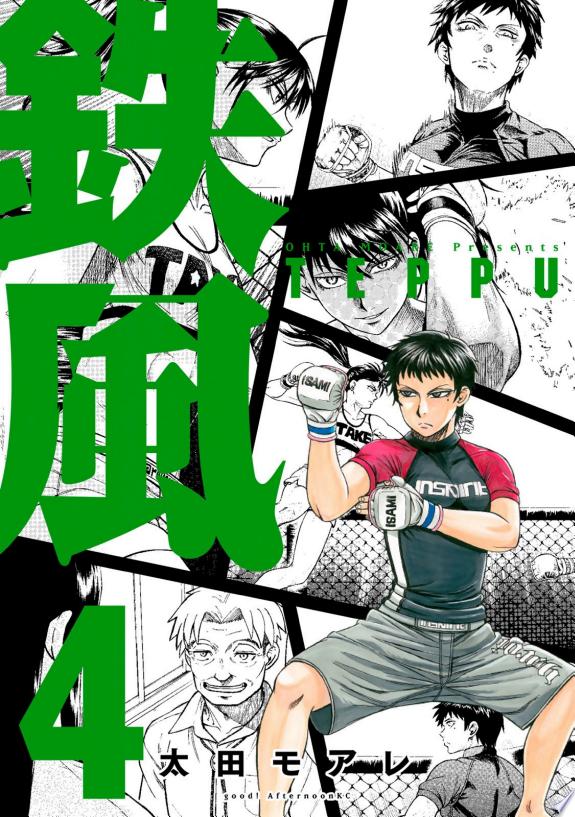
Teppu
Yu's review of Teppu — Natsuo Ishido is a natural athlete who has won everything she has tried without effort and resents every second of it; when she meets a girl who fights MMA with genuine passion despite not being naturally gifted, Natsuo joins an MMA gym to find out what it means to want something.
Sports / Drama
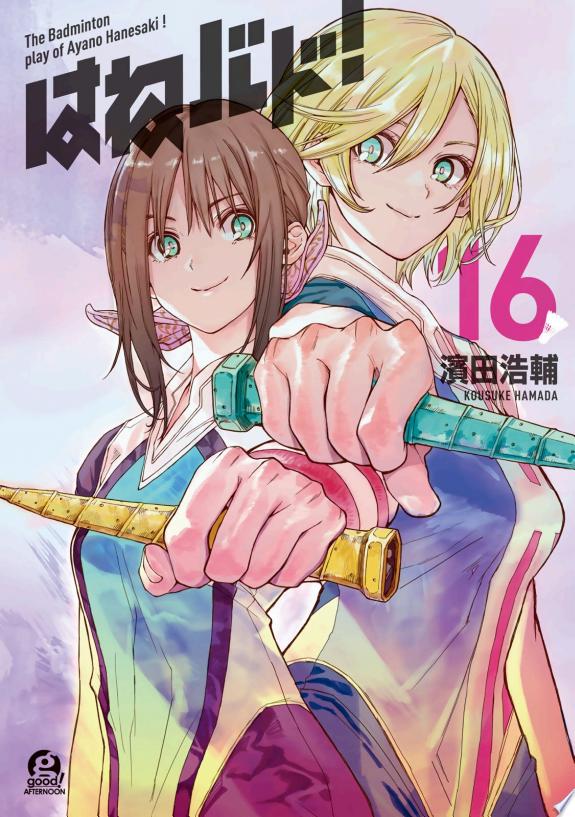
Hanebado!
Yu's review of Hanebado! — Ayano Hanesaki is a badminton prodigy whose mother abandoned her to pursue professional coaching; her rediscovery of badminton and her psychological transformation across the series makes this the most psychologically complex badminton manga ever published.

Sports
Ao Ashi
Yu's review of Ao Ashi — Ashito Aoi is recruited to the Tokyo City Esperion youth academy with a rare gift: he can see every player on the field simultaneously. But his coach already knows he is not a striker. The best soccer manga in English.

Sports / Drama
Ore wa Teppei
Ore wa Teppei follows Teppei, a wild boy raised in the mountains who comes to the city and discovers judo — a story about raw talent meeting structured discipline, and what happens when someone who has never been constrained learns to choose constraint.

Sports / Action
Ring ni Kakero
Ring ni Kakero follows Ryuji Takane and his sister Kiku through a boxing journey that begins in realism and evolves into one of manga's most spectacular supernatural combat series — the bridge between sports manga and the battle shonen that followed.
Sports / Action
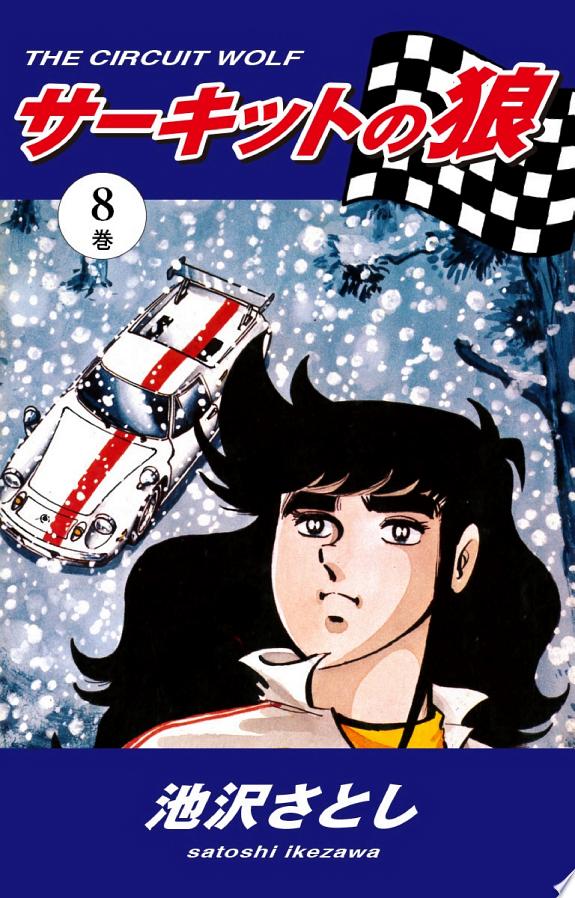
Circuit Wolf
Circuit Wolf follows Yuya Fubuki, a lone-wolf street racer in a white Lotus Europa who climbs from public-road duels all the way to Formula 1 — the 1970s Weekly Shonen Jump manga that personally lit the fuse on Japan's supercar boom.
Written by
Yu
Manga Enthusiast from Japan
I grew up in Japan and manga literally saved me during a tough time in elementary school. My English isn't perfect, but my love for manga is real — and I want to share it with you.
Disclosure: This post contains affiliate links. As an Amazon Associate, I earn from qualifying purchases at no extra cost to you.