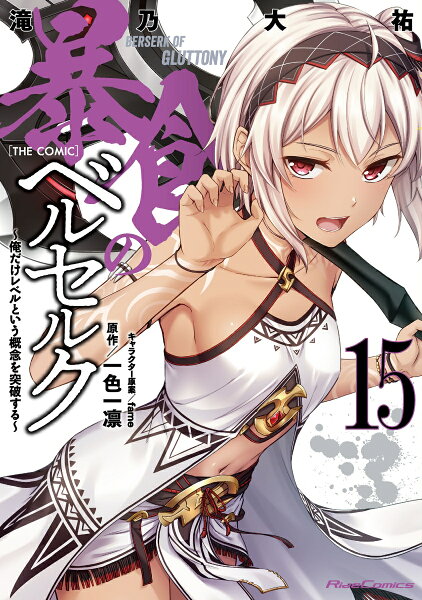
Berserk Review: The Manga That Showed Me What True Darkness — and True Endurance — Looks Like
by Kentaro Miura
Read the first volume. If it doesn't hook you, put it down. It'll hook you.
Buy Berserk on Amazon →*Affiliate link — I earn a small commission at no extra cost to you.
I started Berserk during one of the worst stretches of my life. I do not recommend it as comfort reading — it is not that. But I needed to watch someone refuse to stop. Guts has every reason to lie down and die, and he gets up, again and again, dragging a sword too heavy for any normal man through a world that has done nothing but hurt him. That stubbornness got into me.
This is the darkest manga I have ever read, and one of the greatest.
Quick Take
- A mercenary carrying the most traumatic backstory in manga fights through demons and corrupted gods with a massive sword and pure refusal to die
- The most influential dark fantasy manga ever made — its DNA runs through Dark Souls, Castlevania, and a hundred other works
- Rated M (Mature); 43 volumes in Japan and ongoing (continued after Miura's death by his studio and friend Kouji Mori)
Who Is This Manga For?
- Readers who want a dark fantasy epic with unmatched art and world-building
- Fans of brutal, emotionally complex stories where suffering is taken seriously
- Anyone who loved Dark Souls, Elden Ring, or Castlevania and wants to find the source
- Mature readers who can handle extreme content in service of a profound narrative
Content Warnings & Age Rating
Age Rating: M (Mature) Content Warnings: Extreme graphic violence and gore; sexual assault (especially the Eclipse arc); torture; trauma; psychological horror; dark religious themes
I'll be direct: Berserk contains some of the most disturbing content in mainstream manga. The Eclipse arc includes sexual violence that is deeply traumatic. Approach this knowing what it is.
Yu's Rating
| Category | Score |
|---|---|
| Story Depth | ★★★★★ |
| Art Style | ★★★★★ |
| Character Development | ★★★★★ |
| Accessibility for Non-Japanese Readers | ★★★★☆ |
| Reread Value | ★★★★★ |
Story Overview
Guts was born from the corpse of a hanged woman and raised among mercenaries who treated him as expendable. He has never known a day without violence. As a young swordsman he is recruited — by force, then by something like loyalty — into the Band of the Hawk, a mercenary company led by the brilliant, beautiful, ambitious Griffith. For the first time, Guts has something resembling a home, comrades, and in Griffith the closest thing to a friend he has ever had.
Then comes the Eclipse — a betrayal so total it splits the story into before and after. Afterward, Guts becomes the Black Swordsman: one-armed, a prosthetic cannon where his hand was, a sword barely classifiable as a sword, and a Brand of Sacrifice carved into his neck that draws evil spirits to him every night. He hunts the demonic Apostles and the God Hand that orchestrated his ruin.
Berserk runs on two timelines braided together: the Golden Age (Guts and Griffith's rise and fall) and the Black Swordsman's long, grinding journey afterward, as he slowly, painfully accumulates new companions and inches toward something that might be healing rather than only revenge. The world expands enormously — from medieval battlefields into seas, distant lands, and theologies of staggering depth, all built on the premise that the divine in this world is real and not benevolent.
Characters
Guts — One of the great protagonists in manga. Violence is the only language he was ever taught, and the long arc of the series is him painfully discovering that other languages exist — that he can be something other than a weapon. His development across 40+ volumes is extraordinary.
Griffith — Guts's greatest friend and ultimate betrayer. Understanding why Griffith does the unforgivable thing he does — and why it is both comprehensible and beyond forgiveness — is the moral center of the entire work.
Casca — A warrior whose arc is among the most painful in manga to witness, and whose slow journey toward recovery becomes one of the later story's most important threads.
Guts's companions — Puck, Isidro, Farnese, Serpico, Schierke, and others who gather around the Black Swordsman, each carrying their own wounds and growth, and each slowly teaching Guts that he doesn't have to be alone.
Art Style
Kentaro Miura's art is the standard against which detailed manga art is measured. His Apostles — demons born from human despair — are drawn with grotesque, singular creativity, each one unique and horrifying. His battle scenes carry a kinetic weight that makes every blow land. His quiet moments are rendered with the same obsessive care. Miura passed away in May 2021; the series is being continued by his close friend Kouji Mori and his studio (Studio Gaga), based on Miura's plans, and the continuation has been careful and respectful.
Cultural Context
Berserk draws on medieval European aesthetics filtered through a Japanese lens — its Holy See is a corrupt theocracy, its feudal order a machine for keeping the powerful in power. It also reaches into Nietzsche, Gnostic theology, and Jungian ideas about the shadow. Miura was famously well-read, and the depth of his world's mythology shows it. Its influence on global game and fantasy culture — especially the Soulsborne games — is almost impossible to overstate.
What I Love About It
The Golden Age arc, which tells the story of Guts and Griffith before everything collapsed, is one of the most purely beautiful things I have read in manga — a story of ambition, friendship, and the brief possibility of belonging. Knowing what's coming makes it almost unbearable to reread. I reread it anyway.
And underneath all the horror, the thing I keep coming back to is the manga's refusal to promise that things will be okay. Berserk takes suffering seriously. It does not offer cheap comfort or guaranteed redemption. It only shows someone choosing to keep moving forward anyway — and somehow that is more sustaining than any reassurance would be.
Memorable Scene ⚠️ Spoiler Warning
The Eclipse — the final pages of the Golden Age arc. I cannot describe it adequately and I won't try to spoil the specifics. Griffith's choice, the fate of the Band of the Hawk, and what is done to Guts and Casca, constitute one of the most devastating sequences in manga history. It is genuinely traumatic to read, and surviving it as a reader is, in a real sense, part of what earns you the rest of the story. Everything before it is recontextualized; everything after it is shaped by it. If you have read Berserk, you know. If you haven't, know that it is the hinge the entire epic turns on.
Similar Manga
| Title | Its Approach | How Berserk Differs |
|---|---|---|
| Vinland Saga | Historical dark epic with a complex protagonist's arc from revenge | Vinland Saga is grounded history; Berserk is supernatural dark fantasy |
| Vagabond | Equally detailed art, meditative tone, historical Japan | Vagabond is introspective and human; Berserk has demons and a malevolent cosmos |
| Claymore | Women warriors fighting demons, clear Berserk influence | Claymore is tighter and complete; Berserk is vaster and ongoing |
Reading Order / Where to Start
Start at Volume 1. The Black Swordsman arc (volumes 1–3) drops you into the middle of Guts's story deliberately; the Golden Age arc (roughly volumes 3–13) is the long flashback that explains everything. Some readers suggest starting with the Golden Age — but I recommend volume 1, because the disorientation is intentional and the Golden Age hits harder once you've seen who Guts became.
Official English Translation Status
Dark Horse Comics publishes the English editions — 42 volumes out so far, tracking the Japanese release (43 volumes in Japan). Deluxe hardcover editions collecting multiple volumes per book are also being released — for a work this visually dense, the large-format deluxe editions are the ideal way to read it.
Pros & Cons
Pros
- Arguably the greatest dark fantasy manga ever made
- Art that has never been surpassed for detail and power
- Characters with genuine depth across 40+ volumes
- Immensely influential on games, anime, and other manga
Cons
- Extremely dark — the Eclipse arc's sexual violence is very difficult for many readers
- Ongoing, and interrupted by Miura's death; the continuation proceeds slowly
- Early volumes have rougher art and more gratuitous content than the mature peak
- Its sheer length and darkness make it a serious commitment — that's either the appeal or the deterrent
Is Berserk Worth Reading?
Yes — it is one of the towering achievements in the medium, provided you can handle its content. It is not comfort reading and it is not finished, but for darkness rendered with this much artistry and humanity, there is nothing else quite like it.
Where to Buy
Read the first volume. If it doesn't hook you, put it down. It'll hook you.
This post contains affiliate links. If you purchase through these links, I may earn a small commission at no extra cost to you. As an Amazon Associate, I earn from qualifying purchases.
*Affiliate link — I earn a small commission at no extra cost to you.
Reading Guides
More Manga You Might Like
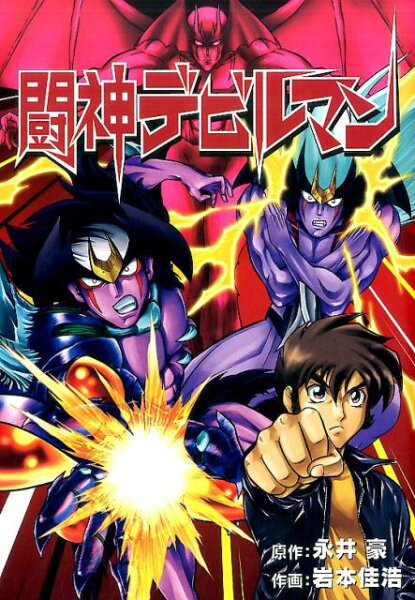
Horror / Dark Fantasy
Devilman
Yu's review of Devilman — a gentle boy merges with the demon Amon, becomes Devilman to protect the people he loves, and then watches those same people tear the world apart from the inside.
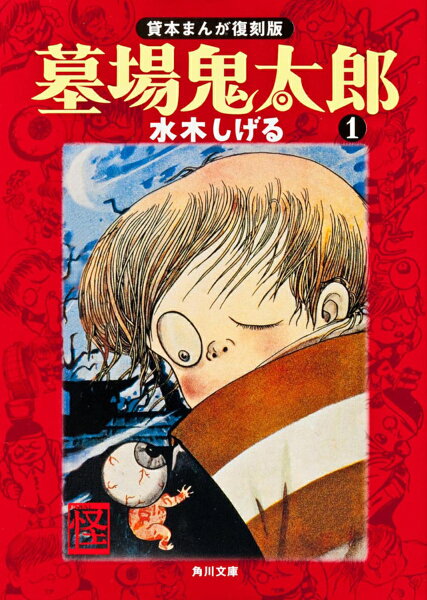
Horror
Kitaro of the Graveyard
A review of Kitaro of the Graveyard, the darker original version of Mizuki's yokai character — before Kitaro became a defender of humanity and was simply something risen from a grave.
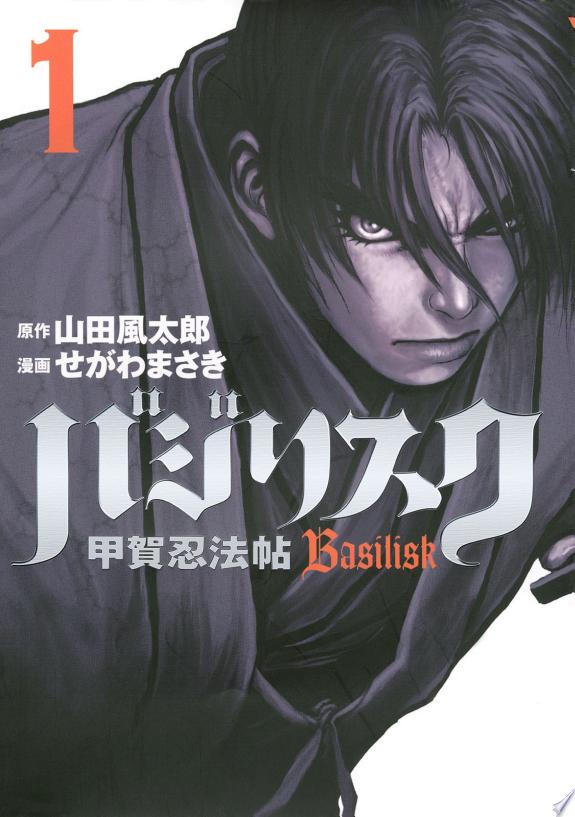
Horror / Action
Basilisk: The Kouga Ninja Scrolls
Yu's review of Basilisk — when a centuries-old truce between the Kouga and Iga ninja clans is dissolved to settle a shogunal succession, ten warriors from each clan must kill each other; at the center are Gennosuke and Oboro, the clan heirs who love each other and now must watch their families annihilate one another.
Horror / Action
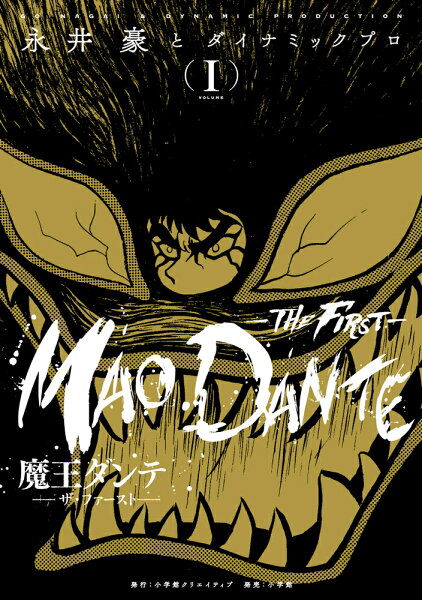
Mao Dante
The unfinished demon king manga that became Devilman — Go Nagai's first attempt at his lifetime obsession.
Horror / Action
Devilman Grimoire
A review of Devilman Grimoire — Go Nagai and Rui Takato's school-set retelling of the Devilman myth, the only version where the horror ends in survival.
Horror / Supernatural
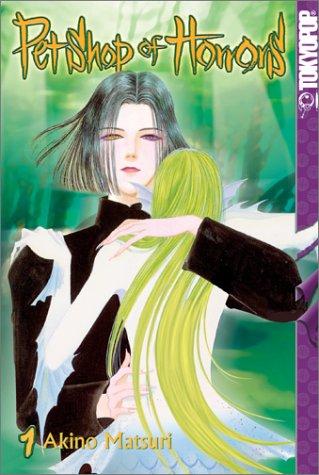
Petshop of Horrors
Count D sells exotic pets in Chinatown — each one perfect, each one with a contract that the buyer always breaks.
Written by
Yu
Manga Enthusiast from Japan
I grew up in Japan and manga literally saved me during a tough time in elementary school. My English isn't perfect, but my love for manga is real — and I want to share it with you.
Disclosure: This post contains affiliate links. As an Amazon Associate, I earn from qualifying purchases at no extra cost to you.