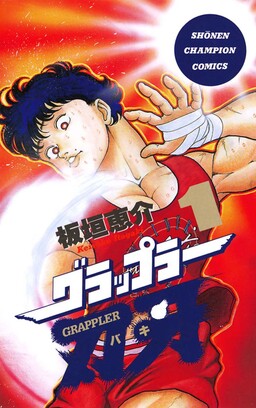
Baki the Grappler Review: A Fighting Manga Where the Final Boss Is Just Dad
by Keisuke Itagaki
Read the first volume. If it doesn't hook you, put it down. It'll hook you.
Buy Baki the Grappler on Amazon →*Affiliate link — I earn a small commission at no extra cost to you.
I came to martial arts manga late. As a kid I read Naruto and One Piece — the warmth of a found family, the dream of being acknowledged. Baki the Grappler is the opposite of that warmth, and that's exactly why it got under my skin as an adult. There's no village, no nakama, no speech about friendship. There is a teenager who has decided that the entire purpose of his life is to beat up his dad, and a father who treats his own son's ambition as a mildly entertaining hobby.
The first time I really understood the series was a single image: Yujiro Hanma flexes his back, and a demon's face rises out of his muscles. I laughed. Then I kept reading and stopped laughing. Itagaki means it. This is a manga that asks "what is the strongest creature on Earth?" with total sincerity and answers it with anatomy drawings that look like they were dreamed up by someone who thinks biology is a polite suggestion.
Quick Take
- Baki the Grappler is martial arts manga taken to its logical extreme — fighters reach levels that defy physics, and the violence is deliberately excessive in a way that becomes its own aesthetic
- The real engine isn't the tournaments; it's the father-son relationship, which is closer to horror than to any sports rivalry
- Mature rating is accurate and literal — graphic injuries, body horror, and combat that exceeds realism on purpose. This is for adults who want the most intense fighting manga around (M / Mature)
Story Overview
Baki Hanma is seventeen and already a champion of the underground arena, a no-rules fighting pit beneath Tokyo Dome. He has trained since he was a small child for one goal: to surpass his father, Yujiro Hanma — a man the series calls the Strongest Creature on Earth, who fights nations as a pastime and is depicted as standing outside any normal measure of human power. Crucially, Baki doesn't want to be the strongest in the world. He only wants to beat his dad. That distinction is the whole series.
The first series builds across two huge arcs. The Maximum Tournament, organized by arena promoter Mitsunari Tokugawa to find the strongest fighter alive, pits Baki against a gallery of specialists — Chinese kenpo, karate, aikido, raw yakuza strength — each one a different argument about what "strong" means. Then comes the arc everyone remembers: the Most Evil Death Row Convicts. Five condemned killers from around the world escape their executions and converge on Tokyo, not to survive, but because they have never known defeat and want to feel it. They tear through Baki and his allies, leaving bodies broken in ways the tournament never did.
The larger saga (across later series like Baki Hanma) eventually delivers the confrontation the whole thing was built toward: Baki and Yujiro finally fight at something close to parity. And the way Itagaki ends that fight — not with a knockout, but with a bowl of soup — is one of the strangest, most quietly devastating finales in all of fighting manga.
Characters
Baki Hanma — His defining quality is focus without introspection. Where most shonen heroes are driven by friendship or justice, Baki is driven by a single fixation on his father. He studies each opponent obsessively before fighting, absorbing whatever is useful. His arc is less "becoming a hero" and more "becoming someone his father is forced to acknowledge."
Yujiro Hanma — One of manga's most effective antagonists, and the reason the series works. The demon face (Oni no Se) that appears on his back — said to have emerged once he began fighting for pleasure rather than survival — turns him into something that reads more as a force of nature than a man. He killed Baki's mother, and his refusal to ever explain or apologize is the wound the entire story circles.
Kaoru Hanayama — A young yakuza boss with an X-shaped scar and grip strength powerful enough to rupture limbs. Bored by a world that can't challenge him, he eventually goes looking for Yujiro himself. In the Death Row arc he has a brutal fight with the convict Spec.
Biscuit Oliva — Nicknamed "Mr. Unchained," an American prisoner so dangerous and so strong that the prison serves him rather than confines him. His near-invulnerable body makes him a wall — and his loss to Baki is a pure brute-force showdown.
The Death Row Convicts — Yanagi the poisoner (Way of the Void), the blade-jointed Brit Doyle, the breath-holding American Spec, the finger-strength Russian Sikorsky, and the trap-using Dorian. Each is less a character than a nightmare given a fighting style.
What I Love About It
The fight I keep coming back to is Hanayama versus Spec in the Death Row arc. Spec gets a mouthful of bullets into Hanayama's mouth and clamps his jaw shut so they detonate, blowing two ragged holes through the yakuza's cheeks. And Hanayama — who has never cared about anything — just keeps coming. The horror isn't that he's hurt; it's that being hurt doesn't register as a reason to stop. Itagaki draws the holes in his face like they're a minor inconvenience, and that contrast between catastrophic injury and total indifference is the whole appeal of the series compressed into one fight.
What I love is that beneath the absurdist musculature and the impossible techniques, these fights have a chess-match logic. Itagaki knows exactly what each fighter can do — Yanagi's vacuum palms and poison, Oliva's iron body, Hanayama's grip — and the drama comes from how those defined capabilities collide. The excess isn't laziness. It's a guy who understands martial arts tropes so thoroughly that he can push every one of them off a cliff and still land on something internally consistent. You laugh, and then you respect it, often on the same page.
Memorable Scene ⚠️ Spoiler Warning
The ending of the father-son war. After a fight that nearly kills Baki, the two of them don't shake hands or declare a winner. Instead, Yujiro starts cooking — except there's no kitchen. He mimes slicing tofu, chopping vegetables, ladling out a bowl of miso soup that doesn't exist. Baki, barely able to sit up, plays along and accepts the imaginary bowl from his father.
Then Baki "tastes" it and says it's a little too salty. Yujiro, caught, admits the miso really was salty — he got so absorbed in his son's fantasy that he answered honestly. That's the moral victory: not a knockout, but pulling the Strongest Creature on Earth into a small, ordinary, human moment of father feeding son. The man who killed Baki's mother and never apologized finally sits and shares a meal he pretended to make. It's a fighting manga that spends a thousand pages escalating toward god-tier violence and then ends on a bowl of soup that isn't there. I did not expect to be moved by Baki the Grappler. I was.
Art Style
Itagaki's art is unlike anyone else's in the genre. The musculature is exaggerated into the absurd — fighters who look like anatomy charts redrawn by someone with a grudge against the human body. The combat poses are theatrical and hyper-specific. The effect isn't realism; it's opera. Yujiro's demon back is the thesis statement: the body itself becomes a stage for how strong a person can be.
Pros & Cons
Pros
- The most extreme fighting manga you can read in English
- Itagaki's art is genuinely one-of-a-kind
- The escalation is consistent and internally logical, even at its most ridiculous
- An enormous, varied gallery of fighters and styles
Cons
- The M rating is literal — graphic injuries and body horror throughout
- The power scaling eventually abandons realism entirely
- The English release of the first series is still ongoing, not yet complete
- The deliberate excess is either exactly what you want or completely not for you — there's no middle ground here
Is Baki the Grappler Worth Reading?
If you want the most heightened, operatic, gleefully excessive fighting manga available — and you're an adult who can handle graphic violence — yes, absolutely. If you need your martial arts grounded in physics or your stories warm and friendship-driven, this will alienate you fast. Baki knows exactly what it is, and it commits completely.
Content Warnings & Age Rating
Age Rating: M (Mature) Content Warnings: Extreme violence including graphic injuries depicted in detail; combat that deliberately exceeds realistic limits; body horror elements
This is a mature-rated series. Not appropriate for younger readers.
Yu's Rating
| Category | Score |
|---|---|
| Story Depth | ★★★☆☆ |
| Art Style | ★★★★★ |
| Character Development | ★★★☆☆ |
| Accessibility for Non-Japanese Readers | ★★★★☆ |
| Reread Value | ★★★★☆ |
Similar Manga
| Title | Its Approach | How Baki the Grappler Differs |
|---|---|---|
| Kengan Ashura | Corporate-backed no-rules tournament fighting | Baki is more anatomically absurdist and built around one father-son obsession |
| Holyland | Grounded, realistic street fighting | Baki abandons realism on purpose for operatic excess |
| Record of Ragnarok | Gods vs. humans, massive escalation | Baki stays (nominally) human and roots everything in martial arts styles |
Official English Translation Status
For years there was no clean English release of the original series. As of October 2025, Kodama Tales is publishing the first series worldwide in English as a deluxe "Perfect Edition," collecting the original 42 volumes into 24, both in print and digitally (translation by David Evelyn). The release is ongoing.
Where to Buy
Read the first volume. If it doesn't hook you, put it down. It'll hook you.
This post contains affiliate links. If you purchase through these links, I may earn a small commission at no extra cost to you. As an Amazon Associate, I earn from qualifying purchases.
*Affiliate link — I earn a small commission at no extra cost to you.
More Manga You Might Like
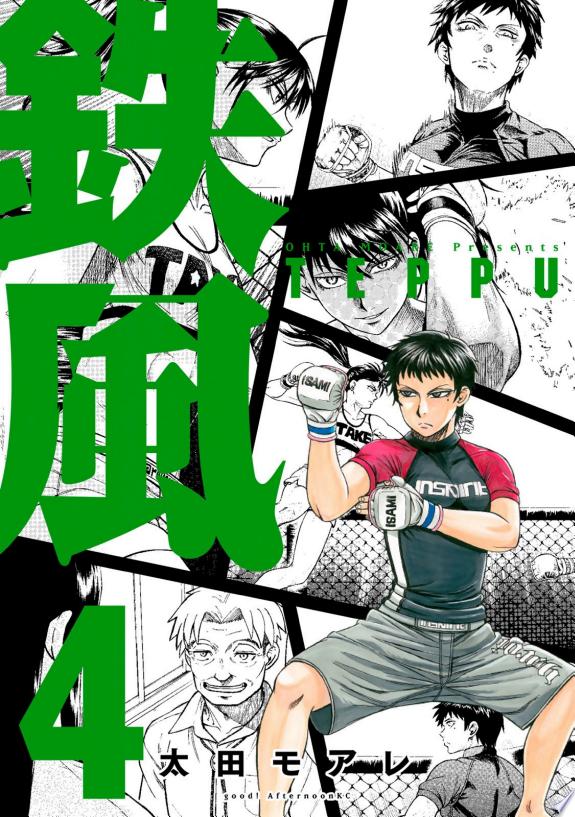
Sports / Drama
Teppu
Yu's review of Teppu — Natsuo Ishido is a natural athlete who has won everything she has tried without effort and resents every second of it; when she meets a girl who fights MMA with genuine passion despite not being naturally gifted, Natsuo joins an MMA gym to find out what it means to want something.
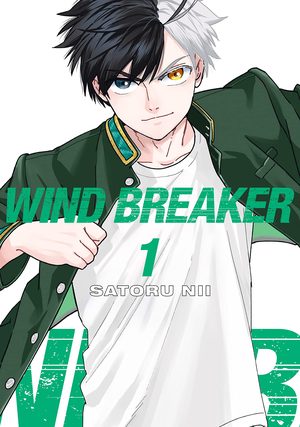
Sports / Action
Wind Breaker
Yu's review of Wind Breaker — Haruka Sakura transfers to Furin High School because of its reputation as the toughest school in the area; he discovers the students there protect their town, not terrorize it, and that strength has a different purpose than he thought.

Sports / Action
Wanna Be the Strongest in the World!
Yu's review of Wanna Be the Strongest in the World! — Sakura Hagiwara is a member of the idol group Sweet Diva; after an altercation with a professional wrestler, she decides to enter women's professional wrestling herself; the series follows her training and career through the sport she is entirely unprepared for.
Sports
Real
A review of Real — Takehiko Inoue's adult basketball manga about wheelchair basketball players and the full weight of living with disability, grief, and athletic ambition.
Sports / Drama
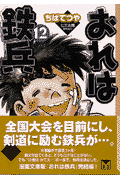
Ore wa Teppei
Ore wa Teppei follows Teppei, a wild boy raised in the mountains who comes to the city and discovers judo — a story about raw talent meeting structured discipline, and what happens when someone who has never been constrained learns to choose constraint.
Sports / Action
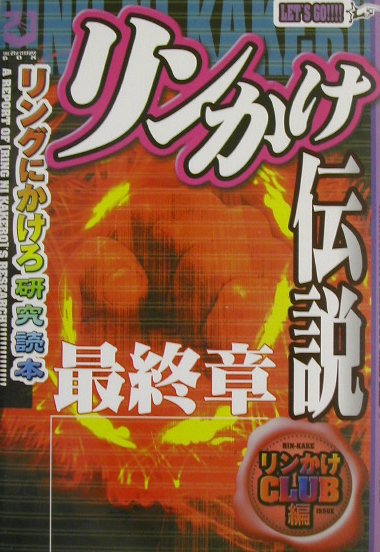
Ring ni Kakero
Ring ni Kakero follows Ryuji Takane and his sister Kiku through a boxing journey that begins in realism and evolves into one of manga's most spectacular supernatural combat series — the bridge between sports manga and the battle shonen that followed.
Written by
Yu
Manga Enthusiast from Japan
I grew up in Japan and manga literally saved me during a tough time in elementary school. My English isn't perfect, but my love for manga is real — and I want to share it with you.
Disclosure: This post contains affiliate links. As an Amazon Associate, I earn from qualifying purchases at no extra cost to you.