
H2 Review — Mitsuru Adachi's 34-Volume Baseball Manga About Two Friends, Two Pitchers, and the Girl Between Them
by Mitsuru Adachi
Read the first volume. If it doesn't hook you, put it down. It'll hook you.
Buy H2 on Amazon →*Affiliate link — I earn a small commission at no extra cost to you.
I have read Touch. I have read Cross Game. I read H2 last, in my twenties, and I think it is the Adachi work I think about most often. Touch hits harder. Cross Game is more delicate. H2 is the one that runs longest, has the most characters in genuine focus, and ends with a quietness I have not seen Adachi achieve elsewhere.
This is the Adachi for readers who already love Adachi. It is also a strong starting point for readers who do not yet know him, if you have the volume count's worth of time.
Quick Take
- Mitsuru Adachi's 34-volume baseball manga (1992–1999) — his longest work and one of his three peaks
- Title meaning: "2 Heroes, 2 Heroines" — pitchers Hiro and Hideo, manager Haruka and childhood friend Hikari
- Age rating: T (Teen) — mild romance, baseball-related minor injury, no graphic content
- Unlicensed in English; the 2005 TBS drama is the most accessible English-subtitled adaptation
What Does "H2" Mean? (Title Explanation)
The title is shorthand: H × 2 = "two H"s. Specifically:
- Two Heroes: pitchers Hiro Kunimi (国見 比呂) and Hideo Tachibana (橘 英雄)
- Two Heroines: Haruka Koga (古賀 春華) and Hikari Amamiya (雨宮 ひかり)
All four names start with H in romanization. The doubling is the title's whole structure: this is a manga about pairs, mirrors, and the symmetries between people who are linked across years of shared history.
What Is H2 About?
Hiro Kunimi is a high school freshman in suburban Tokyo. He was a star pitcher in middle school until a medical diagnosis told him his elbow could not handle further competitive baseball. He gave up the sport. He gave up the future he had been building. He enrolled at a high school without a baseball team — Senkawa High — to leave baseball behind entirely.
This was Hiro's mistake.
The diagnosis was, eventually, wrong. Hiro's arm is fine. By the time anyone realizes this, Hiro is at a school that doesn't field a baseball team while his lifelong rival Hideo Tachibana — a similarly gifted pitcher — has been recruited by the prestigious Eiko Academy down the road. Hideo and Hiro have known each other since they were small. They have been baseball-and-everything-else rivals their entire lives.
And Hikari Amamiya — the girl they both grew up with, the girl Hiro is in love with, the girl Hideo is dating — is at Eiko cheering for Hideo.
Across 34 volumes, the manga follows Hiro as he:
- Founds a baseball club at Senkawa High and assembles a team essentially from scratch
- Recruits Haruka Koga — a girl from his school with her own complicated baseball history — as the team's manager
- Discovers that Haruka becomes important to him in ways he did not expect
- Builds Senkawa into a Koshien-contending team across three high school years
- Confronts Hideo in a series of escalating matchups that culminate in genuinely affecting climactic baseball
- Sorts out his feelings about Hikari, who is sorting out her feelings about both boys, while Haruka is becoming someone Hiro might love differently
The series ends with both the baseball arc and the romantic arc resolved. The endings — both the final game and the final relationships — are emotionally specific in ways that have been discussed in Japanese manga discourse for decades.
H2 vs Touch vs Cross Game: Adachi's Three Baseball Manga
Mitsuru Adachi has written multiple baseball manga across his career. Three are considered his masterworks:
- Touch (1981–1986, 26 volumes) — His most famous work. Twin brothers and the girl who loves them. Famous for its mid-series tragedy and tighter emotional architecture
- H2 (1992–1999, 34 volumes) — His longest and most extensively developed work. Two non-related rivals, two female love interests, full Koshien arc across three high school years
- Cross Game (2005–2010, 17 volumes) — His most refined late-career work. Childhood friends, family loss, baseball as legacy
H2 is in many ways the most expansive of the three. Touch is more compressed. Cross Game is more elegiac. H2 has the room to fully develop four protagonists and an entire team of supporting characters, plus rival schools, plus parents and coaches. The 34-volume length is part of why H2 lands differently than its more famous sibling.
If you've read Touch and want more: H2 is the next Adachi. If you have not read any: Touch is the more compressed introduction, Cross Game is the gentler one, H2 is the deepest dive.
Who Is This Manga For?
- Adachi fans who have read Touch and want more
- Baseball manga readers who want the long-form Koshien arc done right
- Romance manga readers who can engage with Adachi's specific restraint
- Classic manga readers willing to commit to 34 volumes
- Japanese-language readers: the manga is unlicensed in English; access requires Japanese ability, fan translation, or the 2005 drama as substitute
Content Warnings & Age Rating
Age Rating: T (Teen) — 13+ Content Warnings: Baseball-related minor injuries (arm strain, sliding scrapes — depicted realistically but not graphically); mild romantic content; some early-1990s social attitudes appear briefly; no graphic violence; no sexual content
The T rating is generous; the manga is essentially All Ages with adult emotional depth.
Characters
Hiro Kunimi — The protagonist. Pitcher, smart, slightly reserved, carrying the specific complication of having given up baseball based on a wrong diagnosis. Hiro is Adachi's most internally rich male protagonist; he thinks more visibly across panels than Tatsuya (Touch) or Ko (Cross Game) do.
Hideo Tachibana — Hiro's rival. Also a pitcher. Also extremely talented. Adachi writes Hideo with care: he is not a villain, not a rival in the antagonistic sense. He is a friend who happens to be on the other side of the diamond and the other side of a love triangle. Their relationship is complicated by years of intimacy and the specific tension of caring about each other while needing to defeat each other.
Hikari Amamiya — The childhood friend. Currently Hideo's girlfriend. Adachi writes her with rare care for a female character in 1990s sports manga. She has her own arc, her own anxieties, her own decisions to make. The choice between Hiro and Hideo is hers; the manga gives her the agency to make it.
Haruka Koga — The Senkawa team manager. Has her own baseball history (her father is a former pro player). Initially functional rather than romantic in the plot, Haruka becomes one of the manga's most important characters across volumes. Hiro's relationship with Haruka is the manga's most carefully built arc; whether they are "just friends" or something more is a question the manga lets the reader live with for many volumes.
The Senkawa team — Each player is developed. Adachi takes time with the manager-coach Marubishi, the catcher Noda, the various position players. By the late volumes, the team feels lived-in.
Art Style
Adachi's signature: clean, economical, deeply restrained. Character designs are recognizable from his other works (Adachi has been accused of drawing the same faces for decades; the accusation is partly true and partly the point — his visual consistency is part of his craft).
The baseball sequences are clear. The romantic moments are quiet. The famous Adachi technique of using a single panel held longer than expected to communicate emotional weight is deployed throughout.
H2's art is more confident than Touch's (Adachi had been working for over a decade by H2's serialization). Some readers find H2's mature art the version of Adachi's style they prefer.
Cultural Context
Koshien — the National High School Baseball Championship — is central to H2's stakes (see the Touch review for fuller context on Koshien's cultural significance in Japan). H2's portrayal of Koshien is particularly extensive: the manga spends multiple volumes on the regional qualifiers, the Koshien tournament proper, and the specific texture of high school baseball in 1990s Japan.
The 2005 TBS drama adaptation starring Yamada Takayuki as Hiro ran 11 episodes. It is generally considered a faithful adaptation that compresses well. The drama is available with English subtitles in some regions and is the most accessible English-language entry point.
Mitsuru Adachi has been one of the most commercially successful manga creators in Japanese history. His combined sales across all works exceed 200 million copies. H2 alone has sold over 55 million copies, making it one of the best-selling sports manga ever.
What I Love About It
The final Koshien game.
Across 34 volumes, H2 has been building toward a final confrontation between Hiro and Hideo at Koshien. The fact that this game happens is itself an Adachi achievement — Touch and Cross Game both refused certain dramatic baseball confrontations, choosing quieter resolutions. H2 commits to the climactic match.
What I love is what Adachi does with the game's stakes. The boys are not playing for Hikari. They are not playing for the team. They are playing because they have been playing each other their entire lives and this is the first time it has counted for anything beyond practice. The emotional weight is in their shared history, not in external prizes.
Adachi draws the game across multiple volumes. The pacing is patient. Specific innings are given full attention. The reader knows both pitchers' specific repertoires by this point; we can read the chess match as it unfolds.
The result of the game I will not spoil. What I will say is that Adachi makes the result feel earned in a way that lesser sports manga rarely achieve. Neither boy is destroyed by the outcome. Both have lived inside the game fully. The manga's quiet ending after the game is what makes the game itself matter.
I read this ending years ago and I still think about it when I think about what sports manga can do. The game is the means. The relationships between people are what the game has been about all along. Adachi knows this. He has always known this. H2 is where he gave himself the space to show it across his longest book.
What English-Speaking Fans Say
H2 has a small English-speaking fan base, primarily readers who have accessed the manga via Japanese editions or fan scanlation. Among readers who have completed the series, H2 is consistently rated as one of Adachi's best — sometimes preferred to Touch, more often considered Touch's worthy companion.
The lack of English license is the primary frustration. The 2005 drama has a small following.
Memorable Scene ⚠️ Light Spoiler
The conversation between Hiro and Hideo at the end of the final game.
Without spoiling specifics: after the climactic Koshien match between Senkawa and Eiko, the two pitchers find themselves alone, briefly. Adachi gives them a short conversation. They do not say very much. What they do say is between two people who have known each other their whole lives and have just played the most important game of their lives against each other.
Adachi draws the scene small. No dramatic flourishes. The conversation is quiet enough that some readers report missing its weight on first reading. The weight is there for readers paying attention to what these characters have just experienced together.
The scene is the manga's whole project in two pages. Sports manga can become about who wins. H2 is about what is left between people after the winning has been decided. The answer the manga gives is: each other. The friendship is what survives the game.
Similar Manga
| Title | Its Approach | How H2 Differs |
|---|---|---|
| Touch (Adachi) | Tighter baseball-romance with central tragedy | Touch is more compressed; H2 has more room to develop secondary characters |
| Cross Game (Adachi) | Late-career baseball-romance with similar architecture | Cross Game is more elegiac; H2 is more sustained |
| Mix (Adachi) | Sequel to Touch | Mix continues Touch's family; H2 is a separate work |
| Slam Dunk | Sports manga from same era | Inoue's basketball masterwork; same Koshien-tier cultural status, very different register |
Reading Order / Where to Start
Volume 1. 34 volumes is a real commitment.
For Adachi-curious readers: read Touch first (26 volumes). Touch is the more compressed introduction. If Touch works for you, H2 will reward the longer investment.
Official English Translation Status
H2 has no official English manga release. Shogakukan has not licensed it to any English publisher. The Japanese editions are widely available.
The 2005 TBS drama adaptation is available with English subtitles in some regions and is the most accessible English-language entry point.
Pros & Cons
Pros
- One of Adachi's three masterworks
- 34 volumes of deeply developed character relationships
- The final Koshien arc is one of the great baseball manga climaxes
- Female characters get more agency than is typical for the era
- Adachi's restraint is at its peak
Cons
- No English manga license
- 34 volumes is a major commitment
- Adachi's slow pacing requires patience
- The 1990s manga style takes some adjustment for modern readers. It won't land for everyone, especially first-time classic-manga readers.
Is H2 Worth Reading?
For Adachi fans: unconditionally yes. For new Adachi readers: yes, but read Touch first to confirm you can engage with the author's specific register.
For English-only readers without Japanese: the 2005 drama is the most accessible alternative.
Format Comparison
| Format | Notes |
|---|---|
| Physical (Japanese) | All 34 volumes available in Japan |
| Digital (Japanese) | Available via Japanese ebook services |
| English Manga | None — unlicensed |
| Drama (TBS, 2005) | 11 episodes available with English subtitles in some regions |
Where to Buy
No English release yet. That just means you find it before everyone else does.
*Affiliate link — I earn a small commission at no extra cost to you.
More Manga You Might Like
Sports / Romance
Touch
Twin brothers Tatsuya and Kazuya Uesugi live next door to Minami Asakura. Kazuya is the baseball genius. Tatsuya is the slacker. Minami's dream is to see one of them pitch at Koshien. Then volume 6 happens, and Mitsuru Adachi's 1981 baseball manga becomes the work that defined Japanese sports manga forever.
Sports
Nine
A review of Nine by Mitsuru Adachi — the 1978 baseball manga that established his signature style of interweaving sports and romance, a precursor to Touch and H2.
Sports / Romance
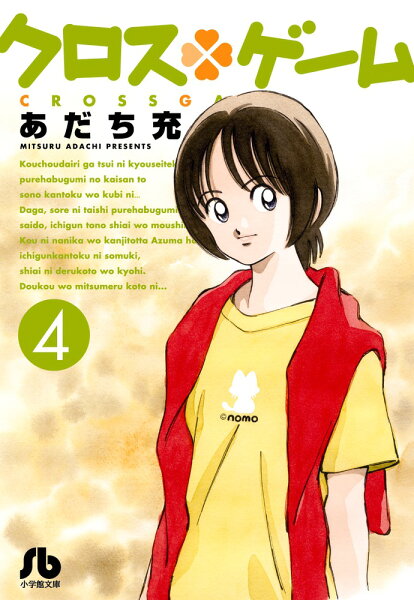
Cross Game
Yu's review of Cross Game — Ko grows up next to the four Tsukishima sisters, loses Wakaba in fifth grade, and spends seventeen volumes chasing the dream she left behind at Koshien.
Sports / Romance
Mix: Meisei Story
A review of Mix: Meisei Story, Mitsuru Adachi's return to baseball manga set in the same world as Touch — quiet, funny, and deeply good.
Sports / Romance
Katsu!
A comprehensive review of Katsu! — plot, characters, art style, and whether it's worth reading.
Sports / Romance
Yawara! A Fashionable Judo Girl
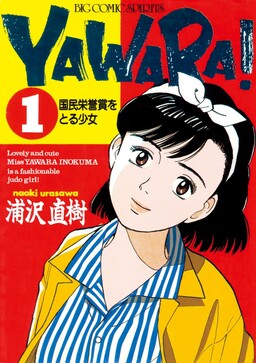
Yu's review of Yawara! — Yawara Inokuma is the granddaughter of a legendary judo master who has trained her since childhood to be a world champion; she has extraordinary talent and absolutely no desire to compete; what follows is her journey toward the Barcelona Olympics despite her own resistance.
Written by
Yu
Manga Enthusiast from Japan
I grew up in Japan and manga literally saved me during a tough time in elementary school. My English isn't perfect, but my love for manga is real — and I want to share it with you.