Touch Review — The Baseball Manga That Made an Entire Country Cry in 1981, and Still Does
by Mitsuru Adachi
Read the first volume. If it doesn't hook you, put it down. It'll hook you.
Buy Touch on Amazon →*Affiliate link — I earn a small commission at no extra cost to you.
My uncle was born in 1969. He played baseball in middle school, badly. He told me once that he stopped playing because he could never decide whether he wanted to be Tatsuya or Kazuya. The question made him quit.
I didn't understand what he meant until I read Touch in my twenties. Then I understood that nobody who reads this manga during the right years of their life gets out without that question being asked of them in some form.
Quick Take
- The baseball manga that defined the genre. Twin brothers, one girl, one dream of Koshien, and the death in volume 6 that changed Japanese sports manga
- Mitsuru Adachi at his most essential: understated, funny, devastating — sometimes in adjacent panels
- Age rating: T (Teen) — death of a major character; otherwise gentle. One of the warmest manga ever drawn
What Is Touch About? (Baseball, Twins, and the Famous Volume 6)
Tatsuya and Kazuya Uesugi are identical twins in their final year of middle school. They live next door to Minami Asakura, who has known both of them since infancy.
- Kazuya is the talented one. He's been playing baseball seriously since he could walk. He's the ace pitcher of his school. He gets up early, trains hard, is universally adored, is going to Koshien (Japan's national high school baseball championship), and is going to marry Minami. Everyone agrees on all of this. The town has him pre-elected.
- Tatsuya is the lazy one. He sleeps through class. He shows up to baseball practice only to mock his brother. He is funny, slightly handsome, completely directionless, and consistently underestimated. The townspeople treat him as Kazuya's lesser shadow. Tatsuya appears to accept this assessment.
- Minami is the girl next door. She has loved baseball since she was small. She has loved both brothers in different ways since she was smaller. Her own dream — quietly, never stated to anyone — is to watch one of the twins pitch at Koshien.
This is volumes 1–5.
Volume 6: Kazuya dies. A traffic accident. Sudden, off-page, complete. He is gone by the end of the volume and never returns.
Touch is what happens after that. Adachi spends the next 20 volumes on a single question: what does Tatsuya do with the gift he was always pretending not to have? The baseball, the Koshien dream, the girl, the brother's place in the world — Tatsuya inherits all of them. The series is whether he can become someone who deserves them, or whether he keeps being the brother who didn't.
The answer is more complicated than either yes or no.
Touch Baseball: Is It a Good Baseball Manga?
Yes — but not because the baseball is the point.
Touch's baseball is honest baseball. Adachi doesn't invent special techniques. There are no magic pitches. Tatsuya's fastball is a fastball. The opposing teams are realistically strong. Games are won by execution, not by miracle. The Koshien tournament structure is depicted accurately.
What makes the baseball matter is what it carries. Every pitch Tatsuya throws is a question about whether he is still pretending not to care or whether he has stopped pretending. Every batter he faces is a question about what he can do alone that his brother could have done easily. Every game's outcome is a question about whether the world tolerates a person who took someone else's path.
The baseball is exquisite. It's also a vehicle. Adachi knew which was which.
Who Is This Manga For?
- Sports manga readers who want the work that shaped the modern genre
- Romance readers who want their romance honest and slow
- Anyone in their twenties or thirties who can read about young people trying to become someone
- Classic manga readers willing to accept 1980s art conventions
- People who like funny, gentle work that turns serious without warning
Content Warnings & Age Rating
Age Rating: T (Teen) — 13+ Content Warnings: Death of a major character (sudden, off-page, processed across the series); grief depicted with realism; mild teenage romance; some 1980s social attitudes appear in passing
The death is handled with Adachi's restraint, but it is permanent and the series spends most of its length processing it. Readers who have recently lost someone may want to know that the manga is, underneath the comedy, a grief novel.
Story Overview
Volumes 1–5 — Pre-loss. Setup of the twins, Minami, school baseball, the world before. Adachi spends real time here. He's not rushing because what gets established in these volumes is what makes the rest of the series unbearable. Every scene of Kazuya being alive matters later. Every scene of Minami loving him without saying it matters later. Every scene of Tatsuya undercutting his brother — every joke at Kazuya's expense — becomes, in retrospect, the brothers' actual relationship being expressed in the only way Tatsuya knew how to express it.
Volume 6 — The accident. I won't describe the specific pages because the way Adachi structures the reveal is one of manga's most masterful sequences. What I'll say: the panel where Tatsuya hears the news, the panel where Minami hears, and the panel of the empty room afterward are studied in Japanese media criticism. Adachi shows almost nothing. The reader supplies everything.
Volumes 7–14 — Tatsuya picks up baseball. He's never trained seriously. He has, however, watched his brother train for his entire life. He turns out to have inherited the talent his brother spent years developing. The question of whether using that talent is honoring Kazuya or stealing from him is the manga's central tension.
Volumes 15–20 — The Koshien push. Tatsuya's high school baseball team. The rivals. The training. Adachi writes sports drama at a level few have matched — but he keeps Minami, the parents, the town, and the absence of Kazuya in every frame.
Volumes 21–26 — Koshien itself. The tournament. The final game. The last pitch. The conclusion of everything Touch has been building. The series ends in a way that pays off the 26-volume buildup with one of manga's most quietly perfect final scenes.
Characters
Tatsuya Uesugi — Adachi's finest protagonist. The combination of natural talent and chosen invisibility, of constant humor and visible grief, of being underestimated for years and gradually choosing to stop pretending — Tatsuya is one of the most fully realized characters in any manga. What makes him work is that Adachi never has him announce anything. He doesn't make speeches. He doesn't process aloud. We see him become someone through small choices and quieter moments. The reader does most of the emotional work, and Tatsuya allows it.
Kazuya Uesugi — Present for five volumes, present for the rest of the series in absence. What Adachi accomplishes with five volumes of Kazuya is impossible to overstate. We feel his presence — his specific way of caring for his brother, his way of looking at Minami, his discipline, his small kindnesses — clearly enough that the absence has weight for the next 20 volumes. The series mourns him because the series knew him.
Minami Asakura — One of manga's finest female leads. She loves both brothers, in different shapes. She processes her grief alongside Tatsuya without ever competing with him for it. Her Koshien dream is the manga's quiet engine — neither boy mentions it explicitly for most of the run, but everything they do is in service of it. Her own arc (a separate sport — rhythmic gymnastics — which becomes the parallel storyline to Tatsuya's baseball) is treated with the same seriousness as the baseball.
The Uesugi parents — The brothers' father, an architect, and their mother, both written with adult care. They lose a son too. Adachi writes their grief separately from the children's, in small ways across the volumes — a panel of the father at his desk, a panel of the mother in the kitchen. The whole family is in this manga.
Harada — Tatsuya's school baseball teammate and closest friend. Harada serves as the audience surrogate at times, but he's also a real character with his own arc. His friendship with Tatsuya is one of the manga's gentlest threads.
The Koshien rivals — Specific opposing pitchers get their own development. The Nishimura confrontation, the Sumida match, the final-game opponent — Adachi gives each rival enough texture that you feel the games as encounters, not as obstacles.
Art Style
Adachi's signature economy. Character designs are clean and consistent — the twins are distinguishable but identical, which sounds contradictory but is exactly the visual control the manga requires. Backgrounds are sparse. Action sequences are restrained — a single panel of a pitch, a single panel of a swing, then a panel of the result.
What Adachi does with this economy is communicate enormous emotional weight in very small visual moves. A character's face changing across two panels. A bedroom with one missing chair. The space between Minami and Tatsuya in a doorway. The reader fills in everything Adachi declines to draw. The collaboration between artist and reader is the manga's most distinctive quality.
The '80s shoujo-adjacent visual conventions are present — large eyes, soft lines, occasional flowery backgrounds for romantic moments. Some modern readers find these dated. Once you settle into the rhythm, they read as the manga's natural language.
Cultural Context
Koshien (the Japanese National High School Baseball Championship, held at Hanshin Koshien Stadium in Nishinomiya) is the most emotionally significant sporting event in Japan. Every prefecture sends a single team. Losing one game eliminates you. The tournament is broadcast nationally on NHK. Players become household names. Teams that reach Koshien — even ones that lose in the first round — are remembered in their hometowns for generations.
Touch is not a generic baseball manga. It is specifically about the Koshien dream and what it asks of teenagers in Japan. Minami's wish — to see one of the twins pitch at that specific stadium, in that specific tournament — is, in Japanese cultural terms, a coronation wish. Touch is a manga about whether the brothers can carry that wish for her.
The series ran in Weekly Shonen Sunday from 1981 to 1986. It was the best-selling manga in Japan for several years running. The 1985 anime adaptation became one of the most-watched anime in Japanese history. Touch is, alongside Slam Dunk and Captain Tsubasa, one of the works that defined Japanese sports manga as a category.
Mitsuru Adachi has been writing baseball romance manga for fifty years. Touch is his peak. The structurally similar later works — H2, Cross Game, Mix — are all good. None reach Touch's specific combination of comedy and devastation.
What I Love About It
The scene at the end of the funeral.
I'm going to be vague about which scene specifically, because Adachi's pacing of grief is one of the manga's lessons. Somewhere shortly after Kazuya's death, Tatsuya is alone for the first time since the accident. The town has been at the funeral. The relatives have left. The lights are off. Tatsuya is sitting somewhere — Adachi doesn't make a big deal about where — and the panel is mostly black space with one small figure in it.
There's no dialogue. There's no thought balloon. Adachi just gives the reader the panel and the silence. The reader supplies everything: the months of jokes Tatsuya made about his brother that have now lost their target; the years of pretending not to care that have lost their reason; the impossible mathematics of being the surviving twin of an identical pair. None of this is in the panel. All of it is in the panel.
That sequence is what taught me that manga can do what poetry does. The page is doing two-thirds of the work and the reader is doing one-third, and that ratio — Adachi's specific ratio — is the manga's craft. He never tells you what to feel. He builds a room and leaves the lights off and trusts you to know what kind of room you're in.
When my uncle told me he couldn't decide whether to be Tatsuya or Kazuya, I think this was the scene he meant. Not the joke version of Tatsuya. The version sitting in the dark room.
What English-Speaking Fans Say
Touch has a small but devoted English-language fan base. VIZ Media's English release (12 omnibus volumes, 2009–2012) brought the series to Western readers for the first time, and the consistent response from Anglophone Adachi readers is that Touch is the manga that converted them to the entire Adachi catalog.
The death in volume 6 is universally cited as one of the most emotionally affecting moments in any manga. The ending — the final game, the final panel — is universally cited as one of manga's best.
The most common criticism is the pacing. Adachi's restraint is not for readers who want event-density. The early volumes especially require patience. Readers who push through the first few volumes report being unable to put the manga down by the end.
Memorable Scene ⚠️ Spoiler Warning
The last pitch of the final game.
I won't describe what specifically happens — whether Tatsuya wins, whether Minami's wish is granted, what the final image is — because the resolution earns its weight from being read in sequence. What I'll say: the final game runs across the last two volumes. Adachi takes his time. The opponents are real. The pitches are real. Tatsuya is tired in ways the reader can see. Minami is in the stands. The Uesugi parents are in the stands. The empty seat where Kazuya would be is, somehow, also in the stands.
The final panel of the manga is small. It is not dramatic. Most series end with a big moment. Touch ends with a quiet one. Adachi knew that the reader would carry the weight he had earned for 26 volumes into a single small image. He trusted us to do that work.
We do.
Similar Manga
| Title | Its Approach | How Touch Differs |
|---|---|---|
| Cross Game (Adachi) | Baseball romance with similar emotional architecture | Adachi tried Touch's structure again; Cross Game is excellent but less foundational |
| H2 (Adachi) | Two pitchers, romance, baseball — Adachi returns to the form | H2 is funnier; Touch is heavier. Both worth reading |
| Slam Dunk | Defining sports manga of a different sport (basketball) | Slam Dunk is more dynamic and louder; Touch is quieter and more romantic |
| Mix (Adachi) | Sequel set in the same world, decades later | Mix is the continuation; read Touch first |
Reading Order / Where to Start
Volume 1. Do not read anything more about the plot before reading volume 6. The pacing of the early volumes is part of the series' design.
For Adachi-curious readers: Touch first, then either Cross Game or H2 depending on whether you want a similar structure (Cross Game) or a different one (H2). Mix last.
Official English Translation Status
VIZ Media published the complete series in English as 12 omnibus volumes (each collecting two Japanese tankōbon) from 2009 to 2012. The edition is available in print and digital. The series is complete.
Pros & Cons
Pros
- The defining work of one of the great manga careers
- One of the best-realized character studies in any manga (Tatsuya)
- The death in volume 6 is among manga's most affecting moments
- The Koshien arc and ending pay off everything
- All 26 Japanese volumes complete in English (12 omnibus) with no filler
Cons
- Adachi's slow pace is real; readers who want event-density will struggle with early volumes
- 1980s shoujo-adjacent art conventions take adjustment
- The death is permanent and the grief is the series — readers in active mourning may want to wait
- Adachi's specific restrained style is an acquired taste. It won't land for everyone, especially first-time classic-manga readers.
Is Touch Worth Reading?
Yes. If you have any interest in manga as a medium for emotional storytelling, Touch is one of the works you should read. The 26-volume commitment is real but rewarded.
Format Comparison
| Format | Notes |
|---|---|
| Physical (VIZ) | 12 omnibus volumes in English, collecting all 26 Japanese tankōbon |
| Digital | Available via VIZ digital, Kindle |
| Omnibus | Not available |
Where to Buy
Read the first volume. If it doesn't hook you, put it down. It'll hook you.
This post contains affiliate links. If you purchase through these links, I may earn a small commission at no extra cost to you. As an Amazon Associate, I earn from qualifying purchases.
*Affiliate link — I earn a small commission at no extra cost to you.
More Manga You Might Like
Sports
Nine
A review of Nine by Mitsuru Adachi — the 1978 baseball manga that established his signature style of interweaving sports and romance, a precursor to Touch and H2.
Sports / Romance
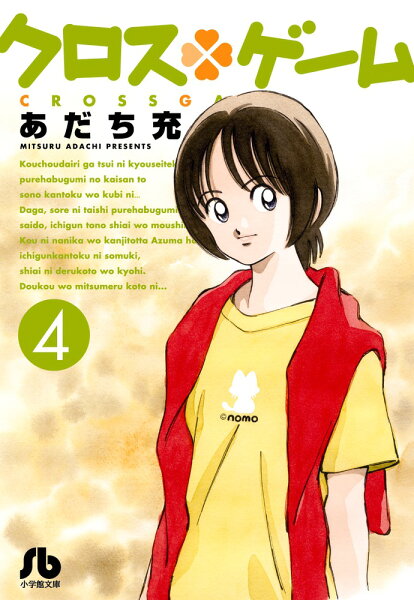
Cross Game
Yu's review of Cross Game — Ko grows up next to the four Tsukishima sisters, loses Wakaba in fifth grade, and spends seventeen volumes chasing the dream she left behind at Koshien.

Sports / Romance
H2
Mitsuru Adachi's longest baseball manga (1992–1999, 34 volumes). The title means '2 Heroes, 2 Heroines' — pitchers Hiro and Hideo, manager Haruka and childhood friend Hikari. After Touch's iconic tragedy, Adachi returned to baseball with a longer, lighter, but no less affecting story. Unlicensed in English; widely considered one of his three best works alongside Touch and Cross Game.
Sports / Romance
Mix: Meisei Story
A review of Mix: Meisei Story, Mitsuru Adachi's return to baseball manga set in the same world as Touch — quiet, funny, and deeply good.
Sports / Romance
Katsu!
A comprehensive review of Katsu! — plot, characters, art style, and whether it's worth reading.
Sports / Romance
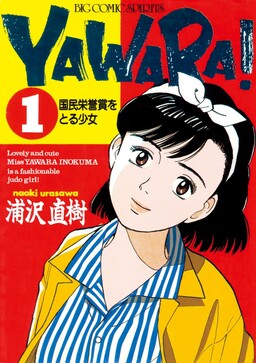
Yawara! A Fashionable Judo Girl
Yu's review of Yawara! — Yawara Inokuma is the granddaughter of a legendary judo master who has trained her since childhood to be a world champion; she has extraordinary talent and absolutely no desire to compete; what follows is her journey toward the Barcelona Olympics despite her own resistance.
Written by
Yu
Manga Enthusiast from Japan
I grew up in Japan and manga literally saved me during a tough time in elementary school. My English isn't perfect, but my love for manga is real — and I want to share it with you.
Disclosure: This post contains affiliate links. As an Amazon Associate, I earn from qualifying purchases at no extra cost to you.