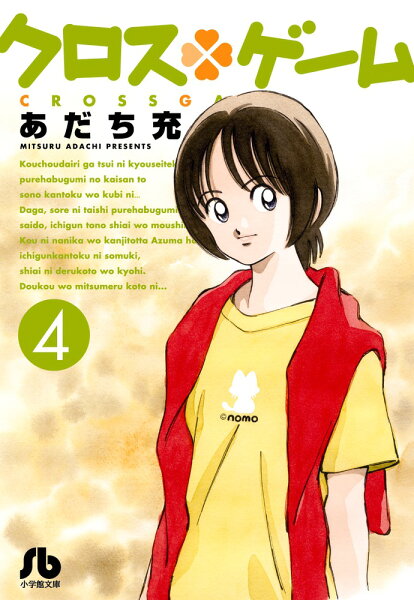
Cross Game Review: A Baseball Manga About the Girl Who Isn't There
by Mitsuru Adachi
Read the first volume. If it doesn't hook you, put it down. It'll hook you.
Buy Cross Game on Amazon →*Affiliate link — I earn a small commission at no extra cost to you.
I read the first volume of Cross Game on a slow train home, and I remember closing the book and just sitting there with it on my lap. I had picked it up thinking it was a baseball manga. It is. But by the end of that first volume I wasn't thinking about baseball at all. I was thinking about how Adachi can take something so heavy and write it so quietly that you don't even feel the weight until it's already on you. I have read a lot of manga in my life — manga was the thing that kept me company when I had no one. Very few of them have done to me what those first chapters did.
Quick Take
- Ko Kitamura grows up next to the four Tsukishima sisters; when one of them dies young, he spends his school years chasing the dream she left behind, all the way to Koshien
- This is Mitsuru Adachi at the height of everything he does — baseball, first love, and grief, told with almost no raised voices
- Seventeen volumes, complete in English, rated T (Teen) — gentle on the surface, but built on one early loss you should know about going in
Story Overview
Ko Kitamura lives right next to the Tsukishima family, who run a batting center. There are four sisters — Ichiyo the eldest, then Wakaba, then Aoba, then little Momiji. Ko and Wakaba were born the same day, June 10, in the same hospital, and have been practically inseparable their whole lives. Nobody ever officially says they are a couple, but everyone treats it that way. Aoba, one year younger, can't stand it — she hates how Ko seems to be taking her sister from her.
The turning point comes at the end of the first volume. Before leaving for summer swimming camp, Wakaba tells Aoba about a dream she had: she was sitting in the stands at Koshien, watching Ko pitch, Akaishi catching, and Aoba out in center field. Then she goes to camp, and she drowns — saving a younger girl. She is in fifth grade. That dream is the last thing she leaves behind.
From there the manga follows the long road to making that dream real. Ko, who was always a natural hitter, secretly takes up Aoba's pitching training. Aoba is a genuinely gifted pitcher, more talented than almost anyone, but as a girl she can't play in official school games. Akaishi switches from pitcher to catcher just to honor what Wakaba saw. They all end up at Seishu High, on a team that has never reached Koshien, and the back half of the series is the slow climb toward that stadium — and toward Ko and Aoba quietly becoming something neither of them will name out loud.
Characters
Ko Kitamura — Seishu's ace pitcher, and one of the most understated leads in any sports manga. His grief isn't loud; it lives in the fact that he picks up Aoba's exact training regimen, in private, because Wakaba once told him to watch how Aoba threw. Everything he chases on the mound traces back to a dream that isn't his — it's hers.
Aoba Tsukishima — The third sister and the most talented pitcher in the manga, who can never throw in an official game because the rules won't let her. She starts out openly disliking Ko, but the two of them are more alike than either will admit. Across seventeen volumes she moves from hostility, to believing in his ability to finish Wakaba's last dream, to — by the very end — simply holding his hand. That arc is the romance, and Adachi takes the whole series to earn it.
Wakaba Tsukishima — The second sister, gone by the end of volume one, and somehow the most present character in the entire manga. She is the one who saw the future first. Everyone else spends the series trying to catch up to a dream she had in her sleep.
Osamu Akaishi — Who loved Wakaba too. He switches from pitcher to catcher specifically so the dream — Ko on the mound, Akaishi behind the plate — can come true. His quiet loyalty is one of the manga's gentlest threads.
What I Love About It
What I love most is how Adachi handles Wakaba's dream — and the fact that he tells us about it before she dies. She comes back from a dream and describes it almost offhandedly: Koshien, Ko pitching, Akaishi catching, Aoba in center. It sounds like nothing. A kid talking about a silly dream before going off to camp. And then she's gone, and you realize you've just been handed the entire blueprint of the next sixteen volumes by a girl who didn't live to see any of it.
That choice wrecked me, honestly. Because the manga never has to make a big speech about why these characters keep playing. The reason is just always there, sitting under everything, never spoken. When Ko trains in secret, when Akaishi crouches behind the plate, when Aoba is out in the field — they are all standing inside someone else's dream and refusing to let it stay only a dream. Adachi never makes the grief bigger than it is in their daily lives. Wakaba is not melodrama. She is just someone they loved who is gone, and the manga understands that grief is not an event you get past — it's a permanent shape that everything afterward grows around. I have rarely seen a sports manga trust its readers this much.
Memorable Scene ⚠️ Spoiler Warning
The death itself. At the end of volume one, Wakaba drowns at swimming camp, saving a younger girl. Adachi doesn't draw it as spectacle — there's no dramatic struggle stretched across pages. It happens almost in the gaps between panels, the way real catastrophe does, where you keep expecting the story to take it back and it just doesn't. What makes it unforgettable is the timing: you have just spent a whole volume falling for this bright, teasing girl who treats Ko like he's already hers, and then the floor drops out. The fact that she'd told everyone her Koshien dream the day before turns the whole thing into a promise the survivors now have to keep. I've read a lot of shocking deaths in manga. Very few of them are this quiet, and almost none stay with you this long.
Pros & Cons
Pros
- Seventeen volumes, complete, with one of the most perfectly calibrated endings in sports manga
- The Ko/Aoba romance is patient and fully earned across the whole run
- Grief handled with rare subtlety — never milked, never forgotten
- Baseball sequences are clean and clear, always serving the people playing
Cons
- The early death needs a little emotional readiness before you start
- Adachi's restraint and slow rhythm can read as too quiet for some
- The art is classic 2000s Adachi — expressive faces, deliberately plain style — so if you want flashy, kinetic sports art, this won't work for everyone
Is Cross Game Worth Reading?
Yes — wholeheartedly. If you want a sports manga that's actually about people, about first love and loss and the long work of carrying someone with you, Cross Game is about as good as the form gets. Go in knowing the first volume will hurt, and let the rest of it heal that slowly. It's complete, it's affordable in VIZ's 3-in-1 omnibus editions, and it rewards every hour you give it.
Where to Buy
Read the first volume. If it doesn't hook you, put it down. It'll hook you.
This post contains affiliate links. If you purchase through these links, I may earn a small commission at no extra cost to you. As an Amazon Associate, I earn from qualifying purchases.
*Affiliate link — I earn a small commission at no extra cost to you.
More Manga You Might Like
Sports / Romance
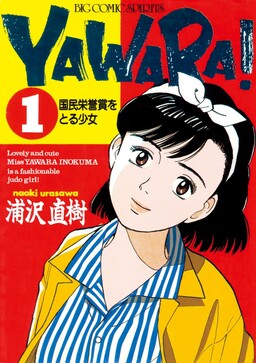
Yawara! A Fashionable Judo Girl
Yu's review of Yawara! — Yawara Inokuma is the granddaughter of a legendary judo master who has trained her since childhood to be a world champion; she has extraordinary talent and absolutely no desire to compete; what follows is her journey toward the Barcelona Olympics despite her own resistance.

Sports / Romance
Touch
Twin brothers Tatsuya and Kazuya Uesugi live next door to Minami Asakura. Kazuya is the baseball genius. Tatsuya is the slacker. Minami's dream is to see one of them pitch at Koshien. Then volume 6 happens, and Mitsuru Adachi's 1981 baseball manga becomes the work that defined Japanese sports manga forever.
Sports / Drama
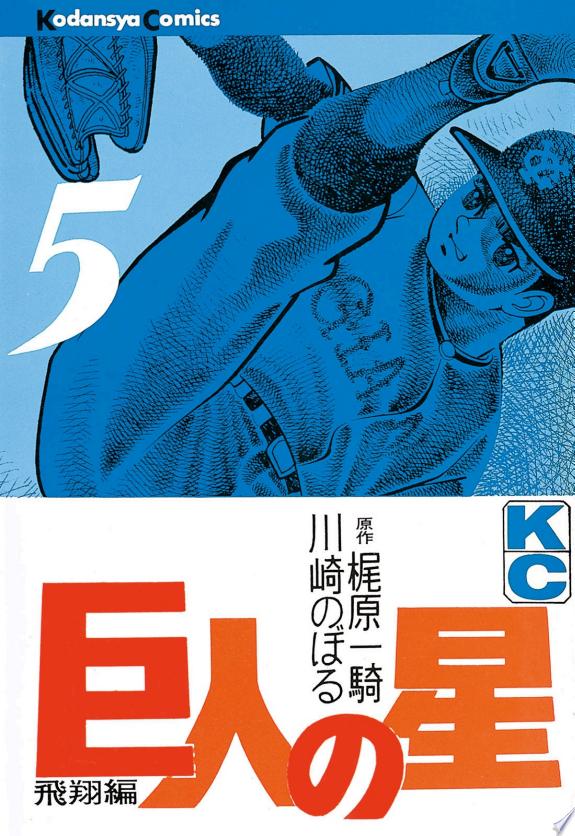
Kyojin no Hoshi
Kyojin no Hoshi follows Hyuma Hoshi, whose father — a former baseball player who never achieved his dream — has raised him from childhood to be a star pitcher for the Yomiuri Giants, through training that borders on abuse and produces a player who may be the greatest — at tremendous personal cost.
Sports / Drama
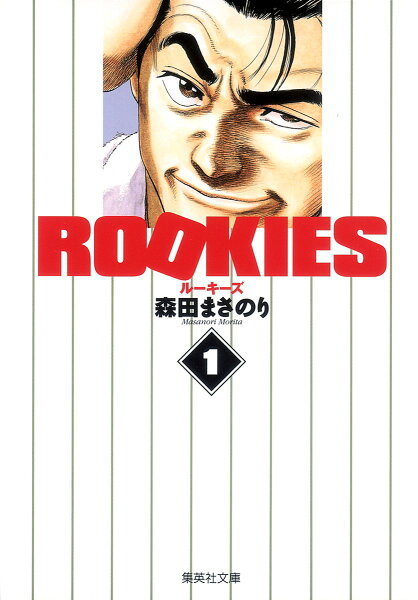
Rookies
Rookies follows Koichi Kawato, a young teacher transferred to Futakotamagawa High School who discovers a baseball club suspended after a violent incident — and decides, against all institutional advice, to coach them back to the Koshien.
Sports / Drama
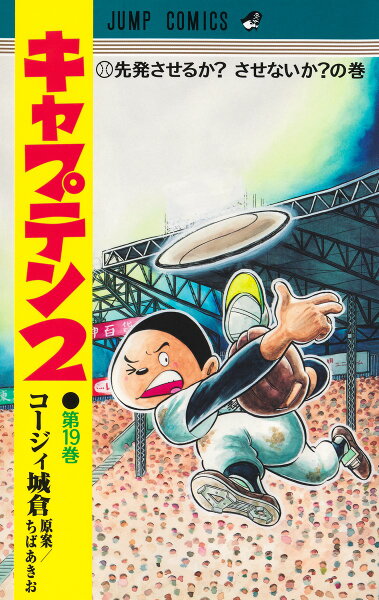
Captain
Captain follows four generations of captains at a weak downtown middle school baseball team — starting with Takao Taniguchi, a former bench player mistaken for a star, who trains himself half to death rather than admit the truth.
Sports / Drama
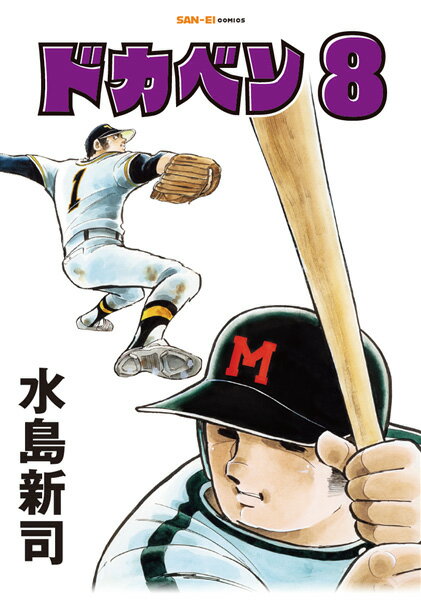
Dokaben
Dokaben follows Taro Yamada, a gentle giant who starts out in his middle school's judo club before becoming the catcher who carries Meikun High School to Koshien. Shinji Mizushima's classic ran in Weekly Shonen Champion from 1972 to 1981.
Written by
Yu
Manga Enthusiast from Japan
I grew up in Japan and manga literally saved me during a tough time in elementary school. My English isn't perfect, but my love for manga is real — and I want to share it with you.
Disclosure: This post contains affiliate links. As an Amazon Associate, I earn from qualifying purchases at no extra cost to you.