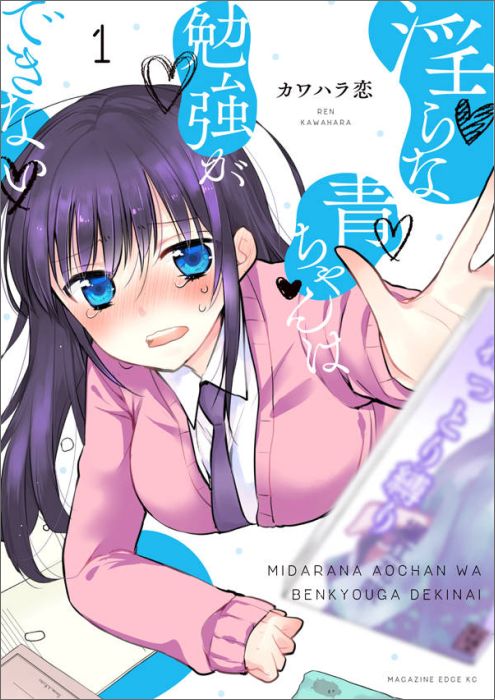
Ao-chan Can't Study! Review: Her Brain Is the Funniest Character in the Book
by Ren Kawahara
Read the first volume. If it doesn't hook you, put it down. It'll hook you.
Buy Ao-chan Can't Study! on Amazon →*Affiliate link — I earn a small commission at no extra cost to you.
I have a confession that fits this manga perfectly: as a kid, I was the quiet one who tried to control everything by being "serious." If I just studied hard enough, kept my head down, didn't let anyone close, nothing embarrassing could happen to me. That was the plan. The plan never works. Something always slips out — a face you didn't mean to make, a thought that shows on your skin before you can stop it.
That's why Ao Horie felt like a mirror the first time I read Ao-chan Can't Study!. Here's a girl who has built her entire life around being above all of it — boys, distraction, embarrassment — and the joke of the whole series is that her own mind is the one thing she can't outrun. Her father writes erotica for a living, and against her will, his influence lives in her head. She wants to be an ice queen. Her brain keeps handing her the wrong subtitles.
I went in expecting cheap fan service. I came out having laughed harder at a romance comedy than I had in a long time — because the humor isn't really about the body. It's about the gap between who Ao wants to be and what's actually going on behind her eyes.
Quick Take
- The comedy engine is Ao's internal monologue — her mind constantly mistranslating innocent moments into something mortifying, thanks to her father.
- It's a complete 8-volume series you can read in a weekend, with no endless dragging or sequel-bait.
- Age rating is M (Mature) — the humor is built on sexual innuendo and suggestive situations, even though it's played for laughs, not titillation.
Story Overview
When Ao Horie was in kindergarten, she proudly told her classmates how her father chose her name: "A as in apple, and O as in orgy." She didn't understand what she was saying. Everyone else did. Ten years later, that memory still haunts her, because her father, Hanasaki Horie, is a bestselling erotica novelist — author of titles like Promiscuous Lament — and his world has soaked into hers whether she likes it or not.
So Ao builds a fortress. She studies relentlessly, aiming for the most elite university in Japan, because getting in means independence, distance, escape from her father's shadow. No boys. No distractions. No youth to misspend. Then Takumi Kijima — a friendly, popular, completely sincere classmate she privately nicknames "King Normie" — walks up and confesses he likes her.
Ao is certain it's a prank, or a mistake, or some shallow boy thing she has no time for. She tries to scare him off, push him away, out-cold-shoulder him. It doesn't work, because Takumi genuinely means it and simply won't take the hint. The series is the slow demolition of Ao's defenses — not by Takumi forcing anything, but by Ao discovering that she can't think about him the way a "serious" person is supposed to. Her own dirty-minded reflexes betray her at every turn, and she has to confront that the thing she's been running from has always been inside her.
Across the eight volumes they edge from rejection to awkward dating to a confirmed, openly acknowledged relationship. If you come looking for a steamy payoff to match all the innuendo, fair warning: the series stays a comedy about anticipation and embarrassment more than consummation, and some readers find the ending leaves the tension deliberately unresolved. The point was never the deed. The point was Ao learning to stop being ashamed of having a heartbeat.
Characters
Ao Horie — The straight-A "ice queen" whose arc is the whole book. She starts the series convinced that being smart means being above romance, and that her father's profession has made her contaminated by association. Her growth is learning that the embarrassing, flustered, very-much-attracted girl in her own head is not a flaw to be studied away — she's just a person. Watching her drop the armor one crack at a time is the emotional spine under all the gags.
Takumi Kijima — The "King Normie." Popular, easygoing, and disarmingly honest. What makes him work as a love interest is that he isn't deterred by Ao being called weird or cold; he liked her and decided he didn't care about the rest. He's patient without being passive, and his sincerity is the constant that lets Ao's chaos have something to push against.
Hanasaki Horie — Ao's father, the erotica novelist who accidentally built the entire conflict by raising her. He's the comedic high point of the series for a lot of readers — his cheerful obliviousness and his misguided attempts to "help" his daughter's love life are mortifying and weirdly loving at once. He's the source of Ao's wound and, in his own clumsy way, part of her healing.
Miyabi Takaoka & Takumi's friends (Masaki Uehara, Shuhei Yonezuka) — The supporting cast that keeps the school world turning. Miyabi, a kindergarten classmate of Ao's, carries her own crush on Takumi and adds romantic friction; Uehara also has feelings for Ao, while Yonezuka rounds out Takumi's friend group. They keep the story from being two people in a vacuum.
What I Love About It
The internal monologue. That's the whole magic trick, and Kawahara executes it relentlessly. A normal romance comedy would mine humor from misunderstandings between characters. Ao-chan Can't Study! mines it from the misunderstanding inside one character — the gap between what Ao perceives and how her brain, trained by years of proximity to her father's work, immediately reframes it into something filthy.
What I love is that it's never mean about it. The joke is always on the distance between Ao's self-image and her reality, and that distance is something I think a lot of us recognize. We all want to be the calm, composed version of ourselves, and we all have a private narrator that won't cooperate. Kawahara draws Ao's flustered horror at her own thoughts with so much commitment — the wide eyes, the internal screaming — that the comedy lands as empathy. I wasn't laughing at her. I was laughing because I'd been her, sitting in a classroom trying to look unbothered while my insides did somersaults.
Memorable Scene ⚠️ Spoiler Warning
The kindergarten flashback is the one that stays with me, because it's the origin of everything. Tiny Ao, beaming with pride, explaining to her whole class exactly how her father derived her name — "A as in apple, O as in orgy" — without the faintest idea what the word means. The other kids' reactions, the slow-dawning horror that will only make sense to her years later, the way that single innocent moment becomes the foundation of her entire defensive personality.
What makes it unforgettable isn't that it's crude — it's that it's the source code for the joke the series runs for eight volumes. Every time adult-ish Ao's mind leaps to the wrong interpretation, you remember that little girl who didn't do anything wrong and got branded anyway. The whole story is her trying to outrun a sentence she said before she could understand it. That's a genuinely good comedic premise, and the manga earns it by planting the seed so cleanly at the start.
Pros & Cons
Pros:
- A complete 8-volume story — no waiting, no dangling sequel hooks.
- The internal-monologue comedy is genuinely fresh and consistently funny.
- Ao's arc from armored "ice queen" to someone who accepts her own feelings has real warmth under the gags.
Cons:
- The premise is essentially one joke (Ao's dirty-minded reflexes) repeated with variations — your mileage depends on how long that joke holds up.
- The father's running bits can wear thin.
- The ending leaves the central tension deliberately unresolved, which frustrated some readers expecting a bigger payoff.
- It's built on sexual humor from cover to cover — that's either the charm or a dealbreaker depending on you.
Is Ao-chan Can't Study! Worth Reading?
Yes, if you want a short, complete romantic comedy whose engine is a heroine constantly betrayed by her own brain — and you're comfortable with humor built entirely on innuendo. It's funny, it's brisk, and Ao is more relatable than the premise suggests. Skip it if you need a steamy or fully resolved romantic conclusion, or if sexual comedy isn't your thing.
Content Warnings & Age Rating
Age Rating: M (Mature) Content Warnings: Suggestive content, persistent sexual humor and innuendo
The entire comedic premise revolves around sexual interpretation and embarrassment. It's played for laughs rather than fan service, but the innuendo is constant. Not for younger readers.
Yu's Rating
| Category | Score |
|---|---|
| Story Depth | ★★★☆☆ |
| Art Style | ★★★★☆ |
| Character Development | ★★★★☆ |
| Accessibility for Non-Japanese Readers | ★★★★☆ |
| Reread Value | ★★★☆☆ |
Overall: 4/5 — A tight, genuinely funny one-joke comedy that gets more mileage out of that joke than it has any right to.
Similar Manga
| Title | Its Approach | How Ao-chan Can't Study! Differs |
|---|---|---|
| Teasing Master Takagi-san | Gentle, wholesome back-and-forth teasing between two classmates | Ao-chan's comedy comes from the heroine teasing herself through her own runaway thoughts, and leans far more adult |
| Shikimori's Not Just a Cutie | Sweet, low-conflict school romance with an already-together couple | Ao-chan is built on the heroine resisting a relationship she secretly wants, with innuendo as the engine |
| Komi Can't Communicate | A heroine whose internal struggle (social anxiety) drives the comedy | Ao-chan swaps anxiety for an over-active dirty mind, and stays a focused 8-volume story instead of a long-runner |
Where to Buy
Read the first volume. If it doesn't hook you, put it down. It'll hook you.
This post contains affiliate links. If you purchase through these links, I may earn a small commission at no extra cost to you. As an Amazon Associate, I earn from qualifying purchases.
*Affiliate link — I earn a small commission at no extra cost to you.
More Manga You Might Like

Romance / Comedy
Why the Hell Are You Here, Teacher!?
A review of Why the Hell Are You Here, Teacher!?, the comedy manga about a student who keeps ending up in compromising situations with his teacher — explicit, absurd, and surprisingly sweet.
Romance / Comedy
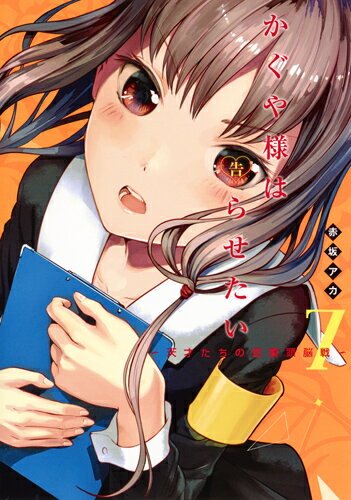
Kaguya-sama: Love Is War
Aka Akasaka's 28-volume romantic comedy (2015–2022) about Miyuki Shirogane and Kaguya Shinomiya, two student council officers at Japan's most elite high school who are both in love and both certain that whoever confesses first loses. Complete in English from VIZ Media.
Romance / Comedy
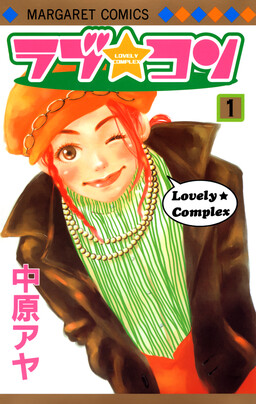
Love★Com
Love★Com follows tall girl Risa and short boy Otani, always mistaken for a comedy duo, as they help each other with their love lives and slowly realize their feelings for each other.
Romance / Comedy
Toradora!
Yu's review of Toradora! — a delinquent-looking boy and a tiny, terrifying girl make a deal to help each other confess to the other's best friend, and discover they had the wrong target all along.
Romantic Comedy
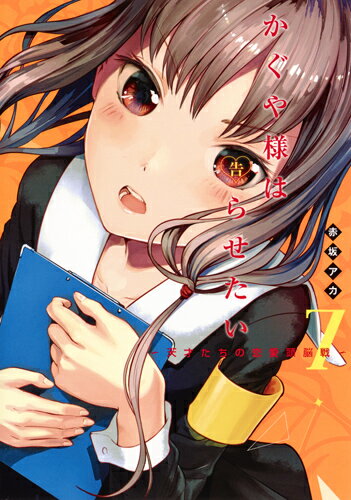
Kaguya-sama: Love Is War
Yu's review of Kaguya-sama: Love Is War — 28 volumes about two geniuses who are in love but won't admit it. Funnier than it has any right to be, smarter than it looks, and one of the most satisfying romance arcs in manga history.

Romance / Comedy
Midori Days
A review of Midori Days — Kazuro Inoue's eight-volume romantic comedy about high school delinquent Seiji Sawamura who wakes up one morning to find a miniature girl named Midori has replaced his right hand.
Written by
Yu
Manga Enthusiast from Japan
I grew up in Japan and manga literally saved me during a tough time in elementary school. My English isn't perfect, but my love for manga is real — and I want to share it with you.
Disclosure: This post contains affiliate links. As an Amazon Associate, I earn from qualifying purchases at no extra cost to you.