Toradora! Review: The Tiger and the Dragon Who Were Looking for the Wrong Thing
by Yuyuko Takemiya (story) / Zekkyou (art)
Read the first volume. If it doesn't hook you, put it down. It'll hook you.
Buy Toradora! on Amazon →*Affiliate link — I earn a small commission at no extra cost to you.
Quick Take
- A boy who looks like a delinquent and a girl who looks like a doll (but fights like a disaster) agree to help each other confess to their respective crushes — who happen to be each other's best friend
- One of the best romantic comedies in manga, adapted from a beloved light novel
- Eight volumes, complete, with an ending that fully earns the journey
Who Is This Manga For?
- Readers who love romantic comedies with genuine emotional depth
- Anyone who has ever been in love with someone while insisting they definitely were not
- Fans of ensemble casts where every character matters
- Readers who want a complete romance that actually delivers a satisfying conclusion
Content Warnings & Age Rating
Age Rating: T (Teen) Content Warnings: Family dysfunction (particularly around Taiga's father and Ryuuji's absent father), brief themes around eating habits and Taiga's chaotic domestic situation, emotional outbursts
Broadly accessible. The family themes are handled with honesty rather than darkness.
Yu's Rating
| Category | Score |
|---|---|
| Story Depth | ★★★★★ |
| Art Style | ★★★★☆ |
| Character Development | ★★★★★ |
| Accessibility for Non-Japanese Readers | ★★★★★ |
| Reread Value | ★★★★★ |
Story Overview
Ryuuji Takasu is a second-year high school student with a face that looks threatening regardless of expression. He is actually gentle, domestic, and excellent at cleaning. He has a crush on Minori Kushieda, his cheerful, energetic classmate.
Taiga Aisaka is tiny, beautiful, and capable of violence when annoyed. She has a crush on Yuusaku Kitamura, Ryuuji's best friend.
They discover each other's secrets by accident and make a deal: Ryuuji will help Taiga get closer to Kitamura, Taiga will help Ryuuji get closer to Minori. This is a reasonable arrangement. It is going to go completely wrong.
Toradora is a manga about what happens when you spend enough time genuinely caring for another person that you stop noticing you have fallen in love with them. The comedy is about misunderstanding and miscommunication. The drama is about two people from broken homes learning, slowly, that another person can be a home.
Characters
Ryuuji Takasu — A genuinely good person in a face that makes people afraid of him. His kindness toward Taiga — making her meals, cleaning her disastrous apartment, showing up when she needs someone — is the emotional center of the manga.
Taiga Aisaka — The "Palmtop Tiger" — tiny, fierce, and hiding a loneliness so complete she had stopped expecting it to change. Her relationship with Ryuuji is built from dependence to genuine partnership.
Minori Kushieda — Ryuuji's crush; smarter and more perceptive about her own feelings than she appears, and one of the most interesting third-point-of-a-triangle characters in romance manga.
Yuusaku Kitamura — Taiga's crush; idealistic, occasionally dramatic, and carrying his own complications.
Ami Kawashima — The model who transfers in midway through; her function in the story is to say the true things that no one else will say, including things about Ryuuji and Taiga that they are not ready to hear.
Art Style
Zekkyou's art adaptation of the light novel is strong — the character designs are faithful to the original illustrations while being functional for manga. Taiga's expressions in particular are excellent: her fury, her softness, her rare moments of pure vulnerability are all drawn with care. The comedy beats land visually.
Cultural Context
The "delinquent face" (menacing appearance from family resemblance) is a specific Japanese comedy archetype that Ryuuji plays straight while inverting — he looks like a delinquent and is the most domestic person in the cast. This inversion works fully in the Japanese cultural context and translates cleanly.
What I Love About It
The scene where Taiga runs through the snow — the thing she does at the end, the choice she makes, what she is running toward — is one of the most emotionally overwhelming moments I have experienced in romance manga. The manga built toward it carefully for eight volumes. When it arrives, it is completely earned.
I love that Ryuuji's love language is acts of service. He does not say things dramatically. He cooks for Taiga. He cleans her apartment. He shows up. The manga understands that love is not always declared — sometimes it is demonstrated quietly, daily, in the form of a lunch box.
What English-Speaking Fans Say
Toradora is one of the most beloved romance manga/light novels in Western fandom, with a fanbase that has been passionate for over fifteen years. Western readers consistently cite the ending as one of the best in the genre. The ensemble cast is praised, particularly Minori and Ami as more complex than their apparent roles suggest. The anime adaptation is also beloved and covers essentially the same story; most readers who know both find them roughly equivalent.
Memorable Scene ⚠️ Spoiler Warning
The school festival arc — the thing Taiga does on stage, what she says, and what Ryuuji understands from it — is the turning point of the entire manga. Everything before it is buildup. Everything after it is consequence. It is perfectly placed and perfectly executed.
Similar Manga
- Horimiya — Warmer, gentler; similar dynamic of people showing their real selves
- Kaguya-sama: Love Is War — More strategic and comedic; similar prolonged mutual denial
- Lovely Complex — Similar height comedy setup, similar warmth
- Fruits Basket — More trauma, more depth; similar emotional payoff
Reading Order / Where to Start
Volume 1. Eight volumes is a very manageable commitment for a complete romance story. If you get through volume 2 and are enjoying it, you will read the rest immediately.
Official English Translation Status
Seven Seas Entertainment published the complete 8-volume manga adaptation. All volumes available. The translation handles the dialogue well.
Pros & Cons
Pros
- One of the best-constructed romance comedies in manga
- Every major character has real depth and a real arc
- Eight volumes, complete, ending that fully pays off the setup
- Ryuuji and Taiga are one of manga's great central pairings
Cons
- Manga adaptation covers the same story as the light novel and anime — some readers find this redundant
- The manga art occasionally struggles with scale (Taiga's size relative to others)
- Middle volumes have some pacing issues around the festival arc
Format Comparison
| Format | Notes |
|---|---|
| Individual Volumes | Seven Seas editions; well-produced |
| Digital | Works well |
| Physical | Fine |
Where to Buy
Read the first volume. If it doesn't hook you, put it down. It'll hook you.
This post contains affiliate links. If you purchase through these links, I may earn a small commission at no extra cost to you. As an Amazon Associate, I earn from qualifying purchases.
*Affiliate link — I earn a small commission at no extra cost to you.
More Manga You Might Like

Romance / Comedy
Ouran High School Host Club
Yu's review of Ouran High School Host Club — a scholarship student at an elite school accidentally breaks a vase and must join the Host Club to pay off the debt, in a manga that satirizes shojo tropes while being genuinely charming.

Romance / Comedy
Kaguya-sama: Love Is War
Aka Akasaka's 28-volume romantic comedy (2015–2022) about Miyuki Shirogane and Kaguya Shinomiya, two student council officers at Japan's most elite high school who are both in love and both certain that whoever confesses first loses. Complete in English from VIZ Media.
Romance / Comedy
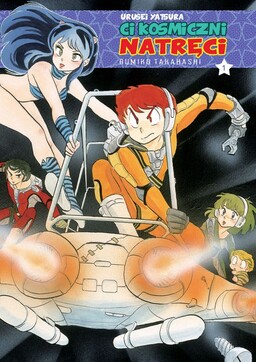
Urusei Yatsura
Yu's review of Urusei Yatsura — Earth is invaded by aliens; a random lottery selects Ataru Moroboshi to compete against the alien princess Lum in a game of tag; he wins by grabbing her horns; his victory declaration is mistaken for a marriage proposal; Lum moves into his house; Ataru continues to chase every other girl he sees while Lum insists on being his wife.

Romantic Comedy
Kaguya-sama: Love Is War
Yu's review of Kaguya-sama: Love Is War — 28 volumes about two geniuses who are in love but won't admit it. Funnier than it has any right to be, smarter than it looks, and one of the most satisfying romance arcs in manga history.
Romance / Comedy
Miyuki
Miyuki follows high school student Masato Wakamatsu who is secretly in love with his neighbor Miyuki Kashima, while also living with his quiet stepsister — who is also named Miyuki.
Romance / Comedy
Kaichou wa Maid-sama!
Yu's review of Kaichou wa Maid-sama! — Misaki Ayuzawa is the strict student council president of a recently co-ed school; she secretly works at a maid cafe to support her family; when the most popular boy at school, Usui Takumi, discovers her secret, he keeps it — and keeps showing up at her workplace across 18 volumes.
Written by
Yu
Manga Enthusiast from Japan
I grew up in Japan and manga literally saved me during a tough time in elementary school. My English isn't perfect, but my love for manga is real — and I want to share it with you.
Disclosure: This post contains affiliate links. As an Amazon Associate, I earn from qualifying purchases at no extra cost to you.