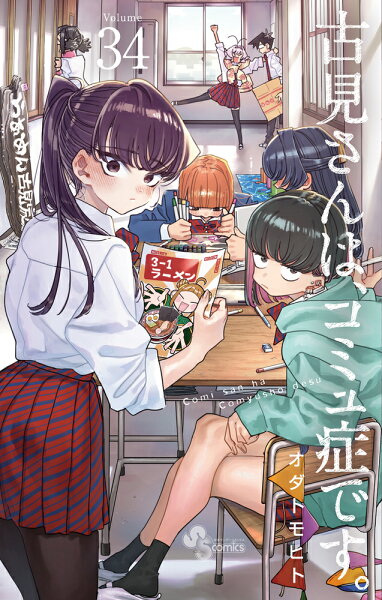
Komi Can't Communicate Review: The Coolest Girl in School Can Barely Say Hello
by Tomohito Oda
Read the first volume. If it doesn't hook you, put it down. It'll hook you.
Buy Komi Can't Communicate on Amazon →*Affiliate link — I earn a small commission at no extra cost to you.
In middle school I went a whole week once without saying a single word out loud to anyone. Not because I was angry. I just could not get the words out. People thought I was stuck up, or that I thought I was better than them. The truth was the opposite — I wanted to talk so badly it hurt, and the wanting froze my throat shut. So when I read the first chapter of Komi Can't Communicate and watched the whole class decide that the silent girl in the corner must be a cool, untouchable beauty, I felt something turn over in my chest. I knew that girl. I had been that girl.
This is the manga I wish someone had handed teenage me. It is funny, it is gentle, and it understands something a lot of school comedies get wrong: that being quiet is not the same as being calm.
Quick Take
- Shoko Komi is treated as the school's most elegant, intimidating beauty — but she has a communication disorder and can barely speak, and her dream is to make 100 friends
- A long, warm, low-stakes school comedy with a genuinely kind heart — 37 volumes, complete in English from VIZ Media
- Rated T (Teen); the humor is clean and never cruel, making it one of the most accessible manga on this whole site
Story Overview
On her first day at Itan Private High School, Shoko Komi is instantly crowned the class idol. She is tall, beautiful, and carries herself with a stillness everyone reads as effortless cool. Nobody dares approach her. What they cannot see is that her silence is panic — she has a severe communication disorder and can barely force out a word.
The turning point comes in the first chapter, when her ordinary classmate Hitohito Tadano ends up alone with her in the room and realizes the truth: she is not aloof, she is terrified, and she desperately wants friends. They start writing to each other on the classroom blackboard, and through that quiet exchange Komi tells him her dream — to make 100 friends. Tadano offers to be the first, and promises to help her reach the other 99.
From there the series follows that promise across three years of high school: the classmates who slowly become Komi's friends, the festivals and trips and ordinary days, and the careful, blushing romance that grows between Komi and Tadano. By the final chapter she does reach 100 friends, and the story closes on the two of them grown up and building a life together.
Characters
Shoko Komi — The heart of everything. Her great gift to the reader is her face: while the rest of the class sees a serene, perfect beauty, we see the storm underneath — the panic, the tiny victories, the overflowing happiness when someone is kind to her. Her arc is the slow, real work of learning to reach out, one terrifying word at a time, until the girl who could not say good morning is the girl with a hundred people who love her.
Hitohito Tadano — The self-described completely average boy whose actual talent is reading the room. He is the first person to see Komi as a person instead of a statue, and he becomes the quiet engine of her growth — not by fixing her, but by standing next to her while she does it herself. His own feelings for Komi deepen across the series until he finally confesses, and the two awkwardly, sweetly become a couple.
Najimi Osana — Tadano's childhood friend and Komi's complete opposite: a gender-fluid social genius who can befriend literally anyone within minutes (the series jokes that Najimi has millions of friends). Najimi is the chaos agent who keeps dragging Komi into situations that force her to grow, and is the source of a huge share of the comedy.
Ren Yamai — One of the first classmates to attach herself to Komi, with an obsessive, over-the-top devotion that the manga plays for big laughs. She is part of the ensemble of strange, lovable classmates who turn Komi's friend list into a parade of oddballs.
What I Love About It
The blackboard conversation in the first chapter is one of the most quietly perfect openings I have read in any manga. Tadano realizes Komi cannot speak, so he writes something on the chalkboard and steps back. She hesitates, then walks up and writes back. And then they just… keep going. Line after line, until the entire board is covered in their handwriting — a full conversation between two people who never said a word out loud. Somewhere in the middle of it, he asks if she has a dream, and she writes that she wants 100 friends. He writes that he will be the first one.
I had to put the book down after that. Because that scene is exactly how it feels to be the kid who cannot talk. You are not silent because you have nothing to say — you are silent because the channel everyone else uses is broken for you, and you spend your whole day looking for some other door. A blackboard. A note. A text message at 2am. When Tadano found Komi's door and just walked through it without making it a big dramatic thing, I felt seen in a way that surprised me. Oda does not turn it into a tragedy or a lecture. He just shows two awkward kids filling a chalkboard, and trusts you to feel the weight of it. That restraint is the whole reason I love this series.
Memorable Scene ⚠️ Spoiler Warning
After roughly 300 chapters of blushing and almost-moments, Tadano finally confesses to Komi (around chapter 302). It is not a grand rooftop speech — it is clumsy and nervous and completely in character. And Komi, who could not say good morning in chapter one, answers him. She gives a small, shaking nod. After everything she has fought through, this is the girl who once needed a chalkboard to communicate now saying yes to the person who first saw her.
What stays with me is the contrast the series sets up over hundreds of pages and then quietly pays off here. The manga remembers exactly how far she has come, and so do you, because you were there for every miserable, hopeful step. By the time the final chapter arrives and she befriends Hiki to complete her 100, then we see her and Tadano grown up and together, it does not feel like a fairy tale. It feels earned.
Pros & Cons
Pros
- Komi is one of the most lovable protagonists in manga, and the visible-internal-panic gag never stops being effective
- Genuinely kind — the humor is never at the expense of Komi's anxiety
- The Komi/Tadano romance pays off fully instead of stalling forever
- 37 volumes, completely available in English
Cons
- 37 volumes is a serious commitment for a low-stakes comedy
- The friend-of-the-chapter structure gets repetitive in the middle stretch
- Story depth is light — this is warmth and character, not plot. If you need tension and stakes, this gentle, slow-burn comedy won't work for everyone.
Is Komi Can't Communicate Worth Reading?
Yes — if you want a long, warm, funny comfort read with one of the kindest hearts in manga, and you do not mind a repetitive middle. It is light on plot and heavy on character, and Komi herself is worth the price of admission. If you need plot stakes and conflict, look elsewhere.
Where to Buy
Read the first volume. If it doesn't hook you, put it down. It'll hook you.
This post contains affiliate links. If you purchase through these links, I may earn a small commission at no extra cost to you. As an Amazon Associate, I earn from qualifying purchases.
*Affiliate link — I earn a small commission at no extra cost to you.
More Manga You Might Like

Slice of Life / Comedy
Hitoribocchi no Marumaru Seikatsu
A review of Katsuwo's Hitoribocchi no Marumaru Seikatsu — 9 volumes in Monthly Comic Alive. Bocchi Hitori starts middle school with a mission to make friends with everyone in her class; she is so socially anxious that she faints, vomits, and freezes up at the slightest interpersonal challenge. Yen Press's English edition is complete.
Slice of Life / Romance
Teasing Master Takagi-san
Yu's review of Teasing Master Takagi-san — Takagi teases her desk neighbor Nishikata every single day; he keeps making plans to get back at her; she always wins; the series is about two middle school students who are clearly in love with each other before either of them knows how to say it.

Slice of Life / Comedy
Nichijou: My Ordinary Life
Yu's review of Nichijou — a high school slice-of-life where ordinary situations escalate to catastrophic absurdity, a robot girl tries to hide what she is, and the Professor is an eight-year-old genius who made her.
Slice of Life / Comedy
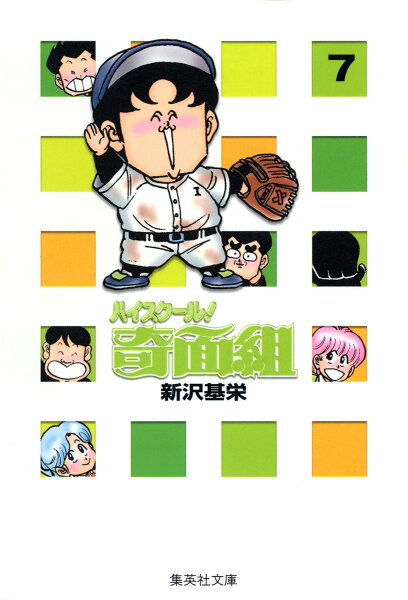
High School! Kimengumi
High School! Kimengumi follows five boys who turn their strange faces into a way of life, building one of the loudest, weirdest gag manga of 1980s Shonen Jump.
Slice of Life / Comedy
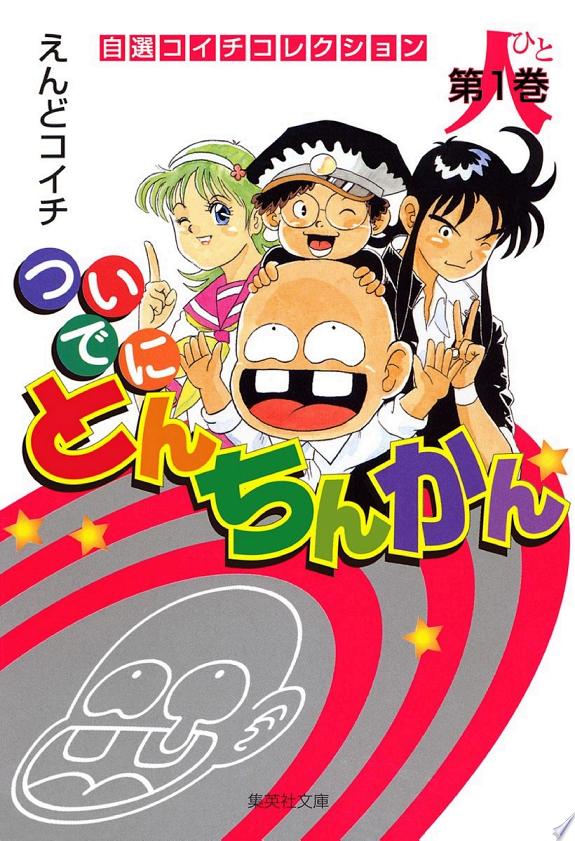
Tondemo-kun
Tondemo-kun follows a trio of delinquent students whose plans to cause trouble consistently backfire in ways that are so spectacularly wrong they accidentally create good outcomes — a comedy built entirely on the gap between intention and result.
Comedy / Slice of Life
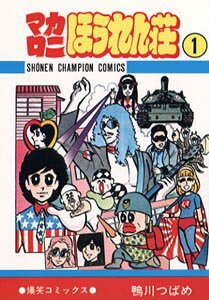
Macaroni Houren-sou
Macaroni Houren-sou follows three high school students living together in a boarding house — Toshio Shingami, the energetic straight man; Kinoshita, the eccentric wildcard; and Trapp, the cool foreigner — in a surreal comedy that uses the school-life setting as a launching pad for increasingly unhinged humor.
Written by
Yu
Manga Enthusiast from Japan
I grew up in Japan and manga literally saved me during a tough time in elementary school. My English isn't perfect, but my love for manga is real — and I want to share it with you.
Disclosure: This post contains affiliate links. As an Amazon Associate, I earn from qualifying purchases at no extra cost to you.