
Kaguya-sama: Love Is War Review — Two Geniuses Refuse to Confess First, and the Manga Spends 28 Volumes Showing Why
by Aka Akasaka
Read the first volume. If it doesn't hook you, put it down. It'll hook you.
Buy Kaguya-sama: Love Is War on Amazon →*Affiliate link — I earn a small commission at no extra cost to you.
The first girl I had a crush on in high school sat behind me in math class for two years. We talked every day. I never said anything. She graduated, moved to Sapporo, and the last time I heard from her was a New Year's postcard. I am thirty now and I still occasionally lie in bed at night and wonder what would have happened if I had just said one specific sentence one specific time.
Kaguya-sama is a manga about exactly that gap — the gap between knowing what you feel and being able to say it — and it spends 28 volumes refusing to let either of its protagonists shortcut their way across.
Quick Take
- A romantic comedy about two student council officers at Japan's most elite high school, both in love, both convinced that confessing first means losing. The premise sustains 28 volumes
- Aka Akasaka's structural trick: the comedy is precise, but the underlying psychology is real. The characters are protecting themselves from rejection, not just playing games
- Age rating: T (Teen) — clean throughout. No sexual content, no graphic violence, language mild
Who Is This Manga For?
- Romantic comedy readers who want the best version of the genre currently in print
- Anyone who has been the person who didn't say it when they should have
- Long-series committers — 28 volumes that pay off character-by-character
- Slow-burn romance fans who can sit with two characters being terrible at this for years of story time
Content Warnings & Age Rating
Age Rating: T (Teen) — 13+ Content Warnings: Mild romantic situations (kissing, embracing); comedic but real themes around emotional manipulation; class-disparity content (Kaguya's family is a real dynasty with real consequences); Ishigami's backstory involves bullying and depression handled with care; Miyuki's family economic struggles
The comedy keeps the surface light; underneath, the manga engages with real loneliness, real family pressure, and real social anxiety. The T rating is accurate for both visual content and thematic content.
Story Overview
Shuchiin Academy is Japan's most prestigious high school. Its student council officers come from elite families. The president, Shirogane Miyuki, is the exception — a brilliant student from a working-class family whose mother left when he was a child and whose father runs a struggling jewelry repair shop. He has earned his position by being the best at everything Shuchiin measures.
The vice president, Shinomiya Kaguya, is the heiress to the Shinomiya Conglomerate — one of Japan's most powerful business dynasties, the kind of family that has had political influence for generations. She is beautiful, technically gifted at virtually everything, and has been raised in a household where displays of emotion are considered weakness.
They have feelings for each other. Both of them know it. Both of them have decided, separately, that the first one to confess will have surrendered to the other — emotionally, socially, in the relationship dynamic that will define them going forward. So both of them refuse to confess. Instead, they engineer scenarios designed to make the other confess first.
The early volumes are chapter-of-the-week schemes. Kaguya wants to go to a movie with him without asking. Miyuki wants Kaguya to ask him for an umbrella. Each chapter is a self-contained battle, won or lost based on who maintained composure.
Across 28 volumes, Akasaka does something most comedic premises cannot survive: he keeps the comedy while adding real character to the people inside it.
The major arcs:
Volumes 1–7 — The classic battle structure. Self-contained chapters. The student council expands to include Fujiwara Chika (the secretary, third-year, terrifying in her chaotic obliviousness) and Ishigami Yu (the treasurer, withdrawn, sitting in a corner of the room hating most of what he sees). The Quartet is assembled. Battles continue.
Volumes 8–14 — The Cultural Festival arc and Ishigami's middle school backstory. Akasaka starts deepening the manga in two specific directions. First, Ishigami's backstory — what happened to him in middle school, why he hates most of his classmates, what it cost him to be falsely accused and abandoned by people he had thought were his friends — is delivered across several volumes. This is the manga's most acclaimed serious arc. Second, Miyuki finally confesses at the cultural festival. The "love war" premise resolves at the end of volume 14.
Volumes 15–22 — After the confession. The manga doesn't end at the confession. It becomes a different manga — the comedy of two people who are now actually dating but who have spent so long refusing to be honest that they are still genuinely bad at it. Iino Miko joins the cast (student council second-term, the new disciplinary committee head). Kaguya's family backstory deepens. The Shinomiya family is not a metaphor; it is a force that may, the manga gradually reveals, actively oppose Kaguya being a normal teenager.
Volumes 23–28 — The Shinomiya family endgame. Kaguya's older half-brothers and her grandfather emerge as the manga's actual antagonists. The question becomes whether Kaguya can leave the Shinomiya family at all, given what they have done to her mother and what they may try to do to her. Miyuki's role shifts from "the boy she's in love with" to "the person she may need help from to be a person." The series resolves with Kaguya and Miyuki choosing each other in a way that costs them both something — and the manga's last volume jumps forward to show what their adult lives look like.
Characters
Shirogane Miyuki — Class-disadvantaged genius. The manga's deepest moral character. He has earned everything by working harder than anyone else, but the manga refuses to let his work ethic become a personality trait — it shows him exhausted, embarrassed about his family's poverty, terrified about his sister, and constantly underestimating what he himself feels. His confession at the cultural festival is one of romance manga's most affecting scenes, and what makes it work is that Akasaka has spent fourteen volumes showing you the specific way Miyuki suppresses emotion before letting it out.
Shinomiya Kaguya — Heiress, technically gifted, raised to be cold. The manga's central revelation is that Kaguya is not actually cold. She is a person who has been taught that emotion is a vulnerability and who has been carefully observing other people her entire life to understand what they have that she doesn't get to have. Her arc is the slow process of accepting that she is allowed to want things. Her family — the Shinomiya patriarchy — is the manga's true antagonist, and what Kaguya does with that family in the later volumes is the manga's most morally serious thread.
Fujiwara Chika — Student council secretary, third-year, the chaos engine of the early volumes. Akasaka uses her as comedy until volume 12 or so, at which point the manga starts revealing how much she sees that she has been pretending not to. The Fujiwara character is one of the manga's quietly best decisions.
Ishigami Yu — Student council treasurer. Withdrawn. Initially comic relief. His middle school flashback arc (around volumes 11–14) is the manga's emotional pivot point and one of the most acclaimed individual subplots in modern romance manga. The reveal of what happened to him, who was responsible, and what he chose to do with the experience reframes the entire series. By the final volumes, Ishigami's adult arc is as important as the central couple's.
Hayasaka Ai — Kaguya's personal attendant. Knows everything Kaguya feels, says nothing, and exists in a service role the manga refuses to romanticize. Her conversations with Kaguya about what Kaguya is allowed to want are some of the manga's quietest writing.
Iino Miko — Second-term addition to the student council. Earnest, easily frustrated, eventually paired with Ishigami in one of the manga's most carefully built secondary romances.
The Shinomiya family — Kaguya's father (rarely seen), her grandfather (the patriarch), her three half-brothers (each with their own role in maintaining family control). The Shinomiya family treats people as assets. What they did to Kaguya's mother, and what they intend to do to Kaguya, is the manga's underlying horror.
Art Style
Aka Akasaka's art evolved substantially over the manga's seven-year run. Early chapters are clean but conventional; by the cultural festival arc, the art is doing real expressive work — Akasaka uses page layouts, panel sizing, and reaction shots as comedic tools that pay off in dramatic moments later.
The manga also uses a recurring narrator (voice in the captions) whose tone — superior, omniscient, occasionally wrong — is one of the manga's signature comedic devices. The narrator works in both the prose and in the way the panels are framed against what the narrator is saying.
The chapter title cards are also visually consistent jokes: each chapter is structured as a battle between Shirogane and Kaguya, and the title card tells you which one of them is positioned to win. The visual joke of seeing "Shirogane Won" as a chapter title in the early arcs is unique to the manga.
Cultural Context
The premise depends on the cultural specificity of kokuhaku — the Japanese formal romantic confession. In Japanese youth culture, the act of confessing romantic feelings is a discrete, formal moment with significant social weight. It is not the same as Western dating culture's gradual interest-signaling. The kokuhaku is, in a real sense, the agreement to begin a relationship; the response is yes or no.
Kaguya-sama takes this cultural construct and asks what happens between two people who both know they would say yes if asked, but both refuse to ask first. The manga's premise — "love is war, the first one to confess loses" — is a comedic exaggeration of an anxiety that is real in Japanese youth romantic culture.
The Shinomiya family is also culturally specific. The zaibatsu dynasty (powerful business families with political influence across generations) is a recognizable Japanese institution. The manga's depiction of the Shinomiya family as a force that controls its members through wealth and social positioning has real-world cultural referents.
The series ran in Miracle Jump (2015) before moving to Weekly Young Jump, completing in November 2022 at 281 chapters across 28 volumes. It won the 65th Shogakukan Manga Award (general category) in 2020.
What I Love About It
The cultural festival confession scene.
By volume 14, the manga has spent 13 volumes establishing the premise that whoever confesses first loses. Both characters have constructed elaborate scenarios to force the other to break first. Both have failed. Both have grown frustrated, exhausted, and increasingly aware that the scheme is no longer protecting them from anything — it is the thing keeping them apart.
The cultural festival happens. Miyuki — broke, exhausted, sleep-deprived from working his second-year council role on top of helping his struggling family — finds Kaguya at the end of the day. The series has been building toward this moment for over a year of real publication time and 13 volumes of fictional time.
What I love is what Akasaka does with the confession itself. It is not a triumphant moment. Miyuki is not posturing. He is not strategically positioned. He simply says, in the most unprotected way the manga has ever let him speak, that he loves her. He doesn't ask her to say it back. He doesn't ask her for anything. He says the thing he has been not-saying for years.
Kaguya, who has been waiting for this scene the same length of time, does not respond strategically either. She is, the manga shows, finally allowed to be a person who is loved out loud. The reaction Akasaka draws for her — relief, fear, and a specific kind of awe — is rendered in the small panels Akasaka reserves for the manga's most important moments.
That scene is what 28 volumes of Kaguya-sama are for. The "love war" was always going to end this way. Akasaka spent the volumes earning the right to deliver it without irony, without strategy, without the comedic distancing the manga had used to protect itself the whole time. The lovers were both right that confession is a surrender. They had to figure out, across an entire high school year of fictional time, that surrender was the thing they had wanted from each other all along.
What English-Speaking Fans Say
Kaguya-sama is one of the most acclaimed romantic comedies in English-language manga fandom. The 2019–2022 anime adaptation by A-1 Pictures brought a large international audience to the manga.
The Ishigami middle school flashback is the single most-discussed individual arc in English-language reviews. Readers who came for the comedy consistently report being broken by the Ishigami subplot in ways they didn't expect.
The cultural festival arc and Miyuki's confession in volume 14 is the second most-discussed sequence. Common comments: "I cried in the middle of laughing." "I didn't know this manga was allowed to do this." "It earned every page of the previous 13 volumes."
The Shinomiya family endgame divides readers — some find it the manga's best material; others find it tonally different from the earlier comedy. Both readings are legitimate. The manga changes registers; whether that change works is partly a question of how invested you are in Kaguya as a person.
Memorable Scene ⚠️ Spoiler Warning
Ishigami's middle school reveal.
Across the cultural festival arc, the manga delivers Ishigami's backstory in pieces. He was in middle school. He had a friend group he believed in. A girl in his class started dating a senior. Ishigami noticed something was wrong with the relationship — that the older boy was being controlling, that the girl was scared. He confronted the older boy and physically intervened to stop something he believed was about to happen.
The way the school chose to interpret the situation was that Ishigami had attacked an upperclassman without justification. The girl, terrified, did not corroborate his version. The "friends" Ishigami had trusted distanced themselves immediately. Ishigami was branded a violent troublemaker. He moved schools. He spent a year barely able to leave his room.
What makes this arc the manga's emotional peak is what Ishigami chooses to do with this history. He doesn't seek revenge. He doesn't seek vindication. He simply, slowly, decides to keep being the kind of person who would have done the same thing again — even knowing what it cost him. The arc ends with Ishigami winning a school relay race, and the cathartic image of him running with the friends he has finally chosen — the student council, the people who have actually shown up for him — is the manga's clearest argument that the Shuchiin Academy student council is, despite all the comedy and all the schemes, a real chosen family.
The cultural festival confession happens after this arc, and it lands harder because Akasaka has just shown you what it costs to be honest. Miyuki's confession is not strategy; it is the same kind of bravery Ishigami had to develop the hard way.
Similar Manga
| Title | Its Approach | How Kaguya-sama Differs |
|---|---|---|
| Ouran High School Host Club | Elite-school comedic romance with ensemble cast | Ouran is purer comedy; Kaguya goes darker and deeper |
| Monthly Girls' Nozaki-kun | Comedy-first romance, inverted dynamic | Nozaki-kun is closer to pure gag; Kaguya develops dramatic depth |
| Horimiya | High school romance with character ensemble | Horimiya is lower-stakes and softer; Kaguya is more structurally ambitious |
| Toradora! | Tsundere-pair romantic comedy with serious arcs | Toradora is more concentrated; Kaguya is broader |
Reading Order / Where to Start
Volume 1. The 28 volumes form one continuous arc. The early comedy-of-the-week structure is intentional setup for the later character work.
If you have read the volumes once and are deciding whether to reread: the cultural festival arc (volumes 12–14) and the Ishigami backstory (around volumes 11–13) are the manga at peak power. Rereading from volume 1 with the eventual confession in mind is one of the best rereading experiences in manga.
Official English Translation Status
VIZ Media published all 28 volumes in English between 2018 and 2024. The series is complete. Digital editions are available via VIZ's platform, Kindle, and the Shonen Jump app.
Pros & Cons
Pros
- One of the great modern romantic comedies, full stop
- The Ishigami subplot alone justifies the series
- The cultural festival confession (volume 14) is one of romance manga's best scenes
- The series-length tonal evolution — comedy to character drama to family tragedy and back — is masterfully handled
- Complete 28-volume series with a proper ending
Cons
- 28 volumes is a major commitment
- The early chapter-of-the-week comedy can feel formulaic if you don't trust the manga's payoff
- The Shinomiya family endgame is darker than the early volumes promise — it works, but tonally surprises some readers
- The pacing of the Shinomiya endgame is divisive. The shift from comedy to family-political-thriller is part of what the manga is doing; whether you go with it is personal.
Is Kaguya-sama Worth Reading?
Yes. Among the best long-form romantic comedies of the last decade. The cultural festival confession, the Ishigami arc, and the Shinomiya family endgame are all top-tier manga storytelling. The 28-volume commitment is real but rewards finishing.
Format Comparison
| Format | Notes |
|---|---|
| Physical (VIZ) | 28 single tankoubon volumes |
| Digital | Available via VIZ digital, Kindle, Shonen Jump app |
| Omnibus | Not available |
| Anime (A-1 Pictures) | 4 seasons + film (2019–2022); covers approximately volumes 1–22 |
Where to Buy
Read the first volume. If it doesn't hook you, put it down. It'll hook you.
This post contains affiliate links. If you purchase through these links, I may earn a small commission at no extra cost to you. As an Amazon Associate, I earn from qualifying purchases.
*Affiliate link — I earn a small commission at no extra cost to you.
More Manga You Might Like

Romantic Comedy
Kaguya-sama: Love Is War
Yu's review of Kaguya-sama: Love Is War — 28 volumes about two geniuses who are in love but won't admit it. Funnier than it has any right to be, smarter than it looks, and one of the most satisfying romance arcs in manga history.

Romance / Comedy
Toradora!
Yu's review of Toradora! — a delinquent-looking boy and a tiny, terrifying girl make a deal to help each other confess to the other's best friend, and discover they had the wrong target all along.
Romance
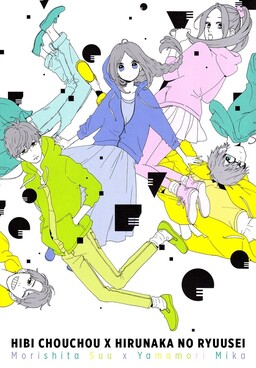
Hibi Chouchou: Everyday Butterflies
Yu's review of Hibi Chouchou: Everyday Butterflies — Suiren Shibazeki is so beautiful and quiet that people find her unapproachable; Kawasumi is so internally focused that he barely notices others; they notice each other, and what follows is one of the most unhurried and genuinely tender slow-burn romances in shojo manga.

Romance / Comedy
Kaichou wa Maid-sama!
Yu's review of Kaichou wa Maid-sama! — Misaki Ayuzawa is the strict student council president of a recently co-ed school; she secretly works at a maid cafe to support her family; when the most popular boy at school, Usui Takumi, discovers her secret, he keeps it — and keeps showing up at her workplace across 18 volumes.
Romance / Comedy
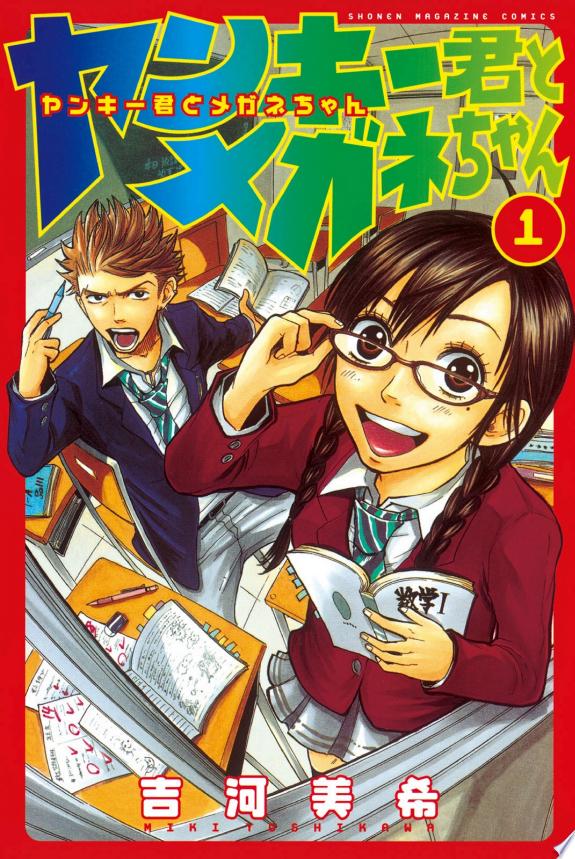
Yankee-kun to Megane-chan
Yankee-kun to Megane-chan follows Daichi Shinagawa, a delinquent who wants to be left alone, and Hana Adachi, the class representative with a secret — a comedy about two people who are both performing a role they didn't choose.
Romance / Comedy
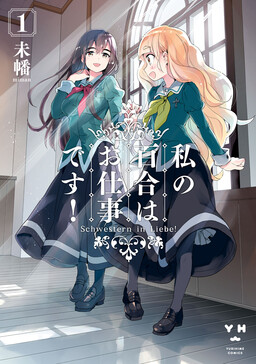
Yuri Is My Job!
Yu's review of Yuri Is My Job! — Hime Shiraki's entire identity is performing perfect femininity for public approval; working at Liebe Girls Academy café requires her to act out romantic yuri relationships with her coworkers for customers; her assigned partner Mitsuki hates her genuinely, and Hime begins to develop feelings that are not performance.
Written by
Yu
Manga Enthusiast from Japan
I grew up in Japan and manga literally saved me during a tough time in elementary school. My English isn't perfect, but my love for manga is real — and I want to share it with you.
Disclosure: This post contains affiliate links. As an Amazon Associate, I earn from qualifying purchases at no extra cost to you.