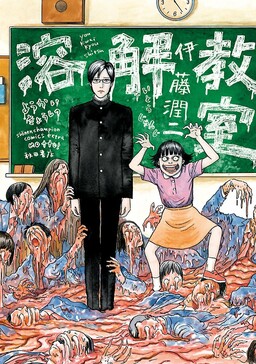
Dissolving Classroom Review: When 'I'm Sorry' Melts Your Brain Into Sludge
by Junji Ito
Read the first volume. If it doesn't hook you, put it down. It'll hook you.
Buy Dissolving Classroom on Amazon →*Affiliate link — I earn a small commission at no extra cost to you.
I grew up in Japan, so I have apologized maybe a million times in my life. "Sumimasen" when someone bumps into me. "Gomen ne" before I even finish the sentence. Apologizing is not really about being sorry here — it is a reflex, a social lubricant, something you do to keep the air smooth. So when I first read Dissolving Classroom on a quiet night with the lights off, I felt something cold crawl up my neck. Junji Ito took the most ordinary, harmless thing a Japanese person does — say sorry — and turned it into a weapon that melts your brain out of your skull. I had to put the book down twice. Not because of gore. Because it felt like he had found the rot underneath something I do every single day.
Quick Take
- A single-volume Ito collection built on one of his most original ideas: a boy whose constant apologies are secretly prayers to the Devil, and the prayers liquefy everyone nearby
- Chizumi, the little sister, is the real monster of the book — a grinning, bloodshot-eyed girl who slurps up the melted leftovers like soup
- Rated T+ (Older Teen): no sexual content, but heavy body horror, brain dissolution, and cannibalism imagery
Story Overview
The book opens with a new transfer student, Yuuma Azawa, who will not stop apologizing. He bows, he grovels, he says sorry over and over with a desperate sincerity that makes everyone uncomfortable. At first it just seems pathetic. Then people around him start collapsing — their brains literally melting inside their heads, their faces sliding off into liquid.
The turning point is when we learn why. Yuuma's apologies are not apologies at all. They are prayers to the Devil, and the Devil answers by dissolving the people he bows to. His little sister Chizumi follows him everywhere, fully aware of what he is, and she has her own appetite: she drinks the melted human sludge. The collection moves Yuuma and Chizumi from a high school to dating life to an apartment building, each new place ending in fresh disaster — the same horror escalating in new settings, with Chizumi narrating in her foul, gleeful little voice.
It ends huge. In the final chapter, cornered and exposed, Yuuma delivers one last apology — on a live television broadcast. Everyone watching melts. The last page is Tokyo flooded with liquefied people, a dripping sky, and the shadow of the Devil over the city. Several reviewers note the ending feels rushed, like Ito had to wrap it up before he was ready, and I agree — but the image still wrecked me.
Characters
Yuuma Azawa — On the surface he is the textbook Ito protagonist: meek, ordinary-looking, in over his head. But the twist is that he is not innocent. His humility is a performance, a devil-worship ritual disguised as good manners. He genuinely seems to want connection, yet everyone he gets close to ends up as a puddle. He is both victim and weapon, and Ito never lets you fully sympathize.
Chizumi Azawa — The standout. She is a small girl with wide, bloodshot eyes ringed in black, a permanent rictus grin stitched across her face, and heavy shadows under her eyes. She acts as the book's commentator — blunt, foul-mouthed, impish — and her one true motive is the "people-sludge" she gets to drink whenever her brother bows. She is the reason this collection sticks with people.
Keiko Arisu — A classmate in the first chapter who befriends Yuuma and even tries to befriend Chizumi. Her kindness is exactly what dooms her. By taking part in Yuuma's world, her brain gets partially melted, and when she reappears near the end she is paralyzed, nonverbal, and pushed around in a wheelchair — a quiet, devastating reminder of what proximity to these two costs.
What I Love About It
What I love is the concept itself, and how Ito refuses to let it be just a gross gimmick. The apology is the horror. In Japan, over-apologizing is a virtue — it is how you signal you are humble, considerate, not a burden. Ito looks at that and asks: what if all that bowing and scraping was hollow? What if "I'm so sorry, please forgive me" was actually a curse you were casting on the people you bow to? He literalizes the emptiness of performative apology and makes it dissolve human beings. As someone who says sorry on reflex twenty times a day, that idea got under my skin in a way no monster ever has.
And then there is the second layer: Chizumi drinking the sludge. The apology destroys, and someone profits from the destruction. That is the part that elevated the whole book for me. It is not just "boy melts people." It is a family unit where one member generates corpses-as-liquid and the other one consumes them, narrating the whole grotesque cycle with a grin. The first time I understood that loop — Yuuma bows, people melt, Chizumi slurps, repeat — I actually felt sick, and that is the highest compliment I can give a horror book. Ito built a self-sustaining little machine of cruelty and dressed it up as politeness.
Memorable Scene ⚠️ Spoiler Warning
The image I cannot shake is Keiko in the wheelchair. Earlier in the book she is just a normal, friendly girl — the only person who treats Yuuma and even Chizumi with any warmth. When she shows up again toward the end, her partially-melted brain has finally caught up with her: she is paralyzed, she cannot speak, and she is being wheeled around like an empty shell. After a whole book of spectacular, splashy melting, this is the quiet one. The kindest character in the story did not die in a dramatic puddle. She got hollowed out slowly and left alive to be looked at.
It hit harder than the Tokyo flood finale for me, because it is the consequence with a face still on it. The big ending is a spectacle — a whole city of sludge under a dripping sky. But Keiko is the human-sized version: the price of being decent to the wrong people, frozen in a wheelchair, unable to even tell anyone what happened to her. That contrast — one ruined girl versus a melted metropolis — is Ito at his most pointed.
Pros & Cons
Pros
- A genuinely original Ito premise — apology as a melting curse — with real cultural bite
- Chizumi is one of his most memorable monsters
- Single self-contained volume; easy entry point into Ito
- The art of dissolving flesh is rendered with disgusting, loving detail
Cons
- The ending is rushed and a bit abrupt
- Two unrelated bonus stories ("Children of the Earth" and "The Return") break the flow
- The "melting" concept is essentially the only trick in the main stories, so if that one image does not grab you, the book won't work for you.
Is Dissolving Classroom Worth Reading?
Yes, especially if you want Ito in a short, complete package built on one unforgettable idea. It is not his deepest or most polished work — the finale feels hurried and the bonus stories are filler — but the central concept and Chizumi alone justify the read. As a Japanese reader, the way it weaponizes apology made it land far harder than its page count suggests.
Similar Manga
| Title | Its Approach | How Dissolving Classroom Differs |
|---|---|---|
| Tomie | A single immortal girl who drives men to murder her, over and over | Trades obsession-horror for a sibling duo and one grotesque physical concept |
| Gyo | Body horror at full length — corpses and machines fused together | Keeps it short and concept-tight in one volume instead of a long arc |
| Fragments of Horror | An anthology of unrelated Ito short stories | Builds a connected through-line around Yuuma and Chizumi rather than standalone pieces |
Yu's Rating
| Category | Score |
|---|---|
| Story Depth | ★★★★☆ |
| Art Style | ★★★★★ |
| Character Development | ★★★★☆ |
| Accessibility for Non-Japanese Readers | ★★★★★ |
| Reread Value | ★★★★☆ |
Where to Buy
Read the first volume. If it doesn't hook you, put it down. It'll hook you.
This post contains affiliate links. If you purchase through these links, I may earn a small commission at no extra cost to you. As an Amazon Associate, I earn from qualifying purchases.
*Affiliate link — I earn a small commission at no extra cost to you.
Reading Guides
More Manga You Might Like
Horror
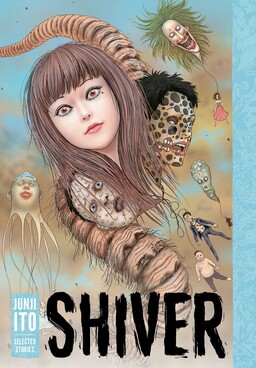
Shiver: Junji Ito Selected Stories
Yu's review of Shiver — nine stories personally selected by Junji Ito himself as representative of his best work; includes Greased, Painter, The Rib Woman, Fashion Model, Hanging Blimp, Marionette Mansion, Futon, Tomio Red Turtleneck, and Back Alley; each story demonstrates a different aspect of his approach to horror.
Horror
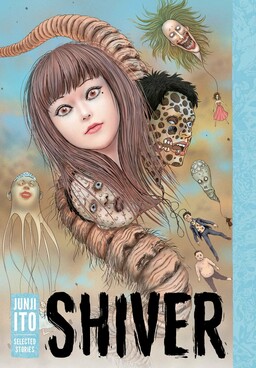
Sensor
Yu's review of Sensor — Kyoko Byakuya encounters a young man on the slope of Mt. Sengoku who leads her to a village where the inhabitants' hair has become golden threads connected to the volcano; the horror expands from local to cosmic as the story develops, becoming Ito's most ambitious statement about what lies beneath ordinary reality.
Horror
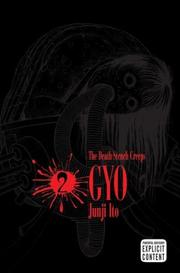
Gyo
Yu's review of Gyo — dead sea creatures with mechanical legs begin walking onto land; the smell is overwhelming; it escalates; Junji Ito's most viscerally disgusting work is also a meditation on what we find most fundamentally repellent about death and corruption.
Horror
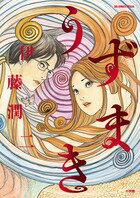
Uzumaki
Yu's review of Uzumaki by Junji Ito — a small town cursed by spirals, where the obsession spreads like a disease until the geometry itself becomes monstrous.
Horror / Supernatural
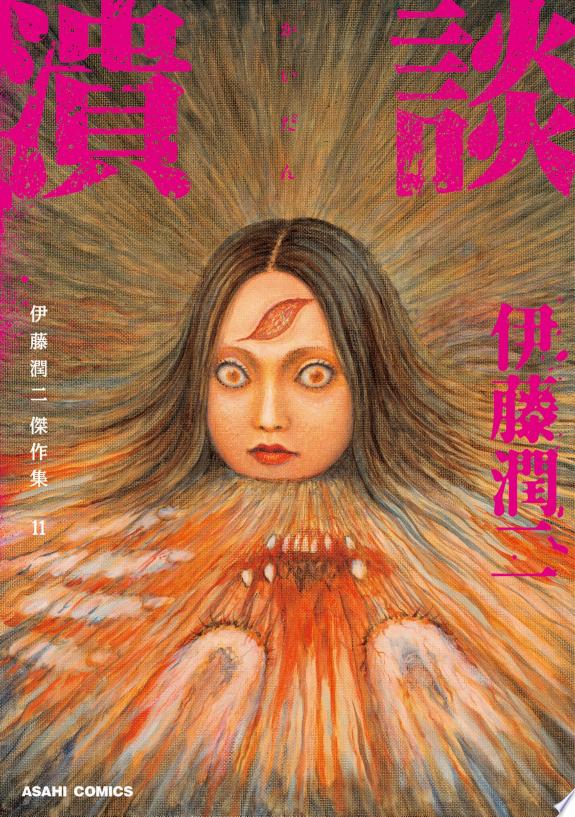
Smashed: Junji Ito Story Collection
A comprehensive review of Smashed: Junji Ito Story Collection — plot, characters, art style, and whether it's worth reading.
Horror
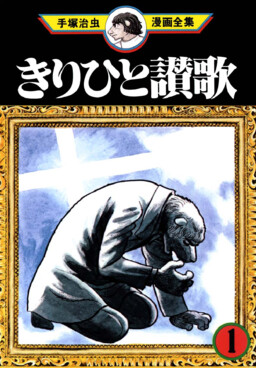
Ode to Kirihito
Yu's review of Ode to Kirihito — Dr. Osanai Kirihito investigates Monmow disease, a mysterious illness that transforms its victims into dog-like creatures; the medical establishment suppresses his findings; Osamu Tezuka's 1970 medical horror manga about a doctor reduced to subhuman status while searching for a scientific truth powerful people want hidden.
Written by
Yu
Manga Enthusiast from Japan
I grew up in Japan and manga literally saved me during a tough time in elementary school. My English isn't perfect, but my love for manga is real — and I want to share it with you.
Disclosure: This post contains affiliate links. As an Amazon Associate, I earn from qualifying purchases at no extra cost to you.