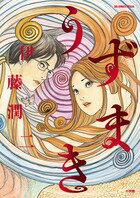
Uzumaki Review: The Manga That Turned Spirals Into Pure Terror
by Junji Ito
Read the first volume. If it doesn't hook you, put it down. It'll hook you.
Buy Uzumaki on Amazon →*Affiliate link — I earn a small commission at no extra cost to you.
Quick Take
- A small coastal town is cursed by spirals — not a monster, not a ghost, just a shape — and that concept alone is more terrifying than most horror manga combined
- Junji Ito's art transforms something you see every day into something you will never look at the same way again
- Three volumes, self-contained, one of the most acclaimed horror works in any medium
Who Is This Manga For?
- Readers who want horror that disturbs on a conceptual level, not just jump scares
- Fans of psychological and body horror who appreciate slow, creeping dread
- Anyone who has ever read something and had trouble sleeping after
- Readers who want to experience what "Junji Ito" means before going deeper into his catalog
Content Warnings & Age Rating
Age Rating: M (Mature) Content Warnings: Graphic body horror, disturbing imagery, themes of obsession and suicide, some violence
This is genuinely disturbing content. Junji Ito's drawings of human bodies warping into spiral shapes are not something you unsee. Do not read this if body horror is a hard line for you.
Yu's Rating
| Category | Score |
|---|---|
| Story Depth | ★★★★★ |
| Art Style | ★★★★★ |
| Character Development | ★★★☆☆ |
| Accessibility for Non-Japanese Readers | ★★★★★ |
| Reread Value | ★★★★☆ |
Story Overview
Kurouzu-cho is a small seaside town in Japan. Kirie Goshima is a high school girl who lives there. Her boyfriend Shuichi's father has developed an obsession — with spirals. He films them, photographs them, talks about nothing else, stares at the patterns in wood and shells for hours. And then things start to happen.
The spiral obsession spreads. It consumes people. It deforms bodies. The town itself seems to bend and warp. Kirie and Shuichi watch their home transform into something impossible, something geometric and wrong, something that follows its own rules and draws everything into itself.
Uzumaki is structured as interconnected chapters, each presenting a new manifestation of the spiral curse. Some chapters feel like standalone horror stories. Together, they build toward an ending that is strange and mythological and unforgettable.
Characters
Kirie Goshima — Our point-of-view character, grounded and practical even as everything around her becomes monstrous. She is not a hero who defeats the horror. She is a witness.
Shuichi Goshima — Kirie's boyfriend, who recognizes early that the town is cursed and wants desperately to leave. His helplessness in the face of something incomprehensible is one of the story's quiet tragedies.
Shuichi's Father — The first person to be consumed by the spiral obsession. His deterioration in the early chapters sets the tone for everything that follows.
The characters here are not the point. The point is the horror itself. But Kirie's perspective keeps the reader anchored through increasingly impossible events.
Art Style
Junji Ito draws in a realistic, almost clinical style — faces and bodies rendered in careful detail. This makes the moments when bodies begin to warp into spiral shapes genuinely nauseating in the best possible way. The contrast between ordinary-looking people and the impossible things happening to them is where Ito's horror lives.
His splash pages, where the spiral geometry is fully revealed in all its wrongness, are some of the most striking single images in manga history.
Cultural Context
Japanese horror (J-horror) has a particular tradition of finding terror in ordinary things — water, hair, videotapes, telephones. Uzumaki fits directly into this tradition, transforming a mathematical shape that exists in nature into something apocalyptic. The coastal town setting draws on a Japanese aesthetic of isolated communities with their own strange rules.
What I Love About It
I remember reading Uzumaki for the first time and having to put it down and look around my room, checking to make sure nothing was wrong. That is the measure of horror for me — not whether it scared me during reading, but whether it followed me after.
The genius is the concept. Spirals are everywhere. You cannot un-notice them. After Uzumaki, a snail shell, a whirlpool, a fingerprint — all of them carry a tiny residue of wrongness. Junji Ito has actually changed how I perceive the physical world, and I do not know whether to thank him or be angry.
What English-Speaking Fans Say
Western horror readers often approach Junji Ito with curiosity and leave as devoted fans. Uzumaki is frequently cited as the best entry point into his work because it has a coherent structure and a sustained single concept, unlike his shorter story collections. Readers on Reddit and Goodreads consistently call it one of the greatest horror manga ever made. The criticism, when it exists, is usually that the characters feel thin — but most readers accept this as a feature of a work where the horror, not the people, is the protagonist.
Memorable Scene ⚠️ Spoiler Warning
There is a chapter involving a lighthouse and people whose bodies have begun to spiral — their spines winding, their limbs curling. The image of them moving in their impossible corkscrewed shapes is the single most disturbing thing I have ever seen in manga. I cannot describe it better than that.
Similar Manga
- Tomie (Junji Ito) — Another Ito classic, about a girl who cannot die and drives men to violence
- Gyo (Junji Ito) — Fish walking on mechanical legs invade a coastal city
- Remina (Junji Ito) — A planet that eats other planets; cosmic horror on a massive scale
- Parasyte (Hitoshi Iwaaki) — Body horror with more plot and character depth
Reading Order / Where to Start
Uzumaki is a single complete work. Start at Volume 1. It is three volumes total, so you can commit the whole thing in a weekend.
If this is your first Junji Ito, it is the best starting point. It shows his strengths — the conceptual horror, the clinical art, the mounting dread — in their most sustained form.
Official English Translation Status
VIZ Media published a deluxe hardcover edition that is the definitive version for English readers. The binding, paper quality, and size of the deluxe edition make it the best way to experience Ito's art. Highly recommended over the older individual volume editions.
Pros & Cons
Pros
- One of the most original horror concepts ever put to paper
- Art that is impossible to forget
- Self-contained, complete story in three volumes
- The deluxe hardcover is a beautiful physical object
Cons
- Character development is minimal — this is horror as concept, not character drama
- Body horror is extreme — hard pass if that is a firm boundary
- Some chapters feel more like short story interludes than part of a cohesive narrative
Format Comparison
| Format | Notes |
|---|---|
| Deluxe Hardcover | Highly recommended — large format, excellent paper, all three volumes in one book |
| Individual Volumes | Older editions; the art loses some impact at smaller size |
| Digital | Available on Kindle; convenient but the full-page spreads work better in print |
Where to Buy
Read the first volume. If it doesn't hook you, put it down. It'll hook you.
This post contains affiliate links. If you purchase through these links, I may earn a small commission at no extra cost to you. As an Amazon Associate, I earn from qualifying purchases.
*Affiliate link — I earn a small commission at no extra cost to you.
Reading Guides
More Manga You Might Like
Horror / Sci-Fi
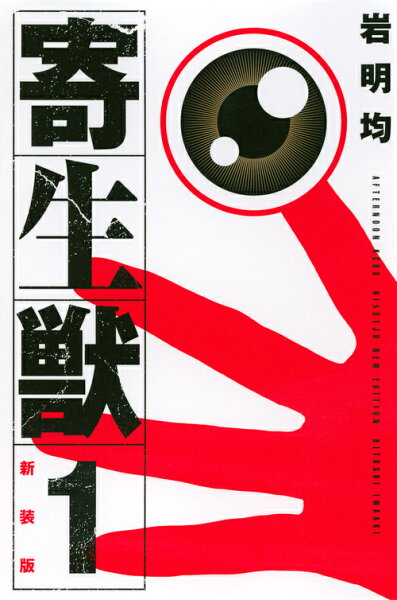
Parasyte
Yu's review of Parasyte — the manga where alien parasites invade human bodies and one boy must share his arm with the creature that failed to take his brain, raising questions about humanity, empathy, and what we owe each other.
Horror
Tomie
Yu's review of Tomie — a beautiful girl who drives men to murder her and then regenerates, again and again, in a horror anthology that is also a deeply uncomfortable portrait of obsession and violence against women.
Horror / Supernatural
Venus in the Blind Spot
A comprehensive review of Venus in the Blind Spot — plot, characters, art style, and whether it's worth reading.
Horror / Supernatural
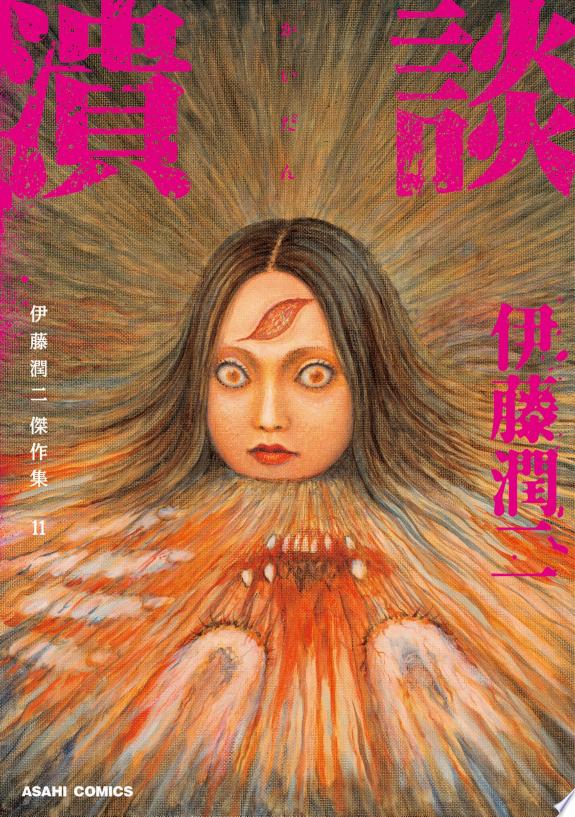
Smashed: Junji Ito Story Collection
A comprehensive review of Smashed: Junji Ito Story Collection — plot, characters, art style, and whether it's worth reading.

Horror
MW
Yu's review of MW — Yuki Michio is a beautiful, charming, amoral man who survived exposure to a chemical weapon as a child; the event destroyed his conscience; he works toward mass destruction while maintaining the appearance of a successful society member; a priest who loves him tries to hold him back; Osamu Tezuka's 1976 thriller about a man without conscience.
Horror
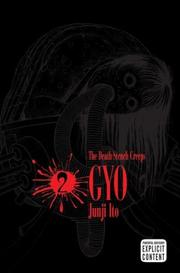
Gyo
Yu's review of Gyo — dead sea creatures with mechanical legs begin walking onto land; the smell is overwhelming; it escalates; Junji Ito's most viscerally disgusting work is also a meditation on what we find most fundamentally repellent about death and corruption.
Written by
Yu
Manga Enthusiast from Japan
I grew up in Japan and manga literally saved me during a tough time in elementary school. My English isn't perfect, but my love for manga is real — and I want to share it with you.
Disclosure: This post contains affiliate links. As an Amazon Associate, I earn from qualifying purchases at no extra cost to you.