Tomie Review: The Girl Who Cannot Die and the Men Who Cannot Stop Trying
by Junji Ito
Read the first volume. If it doesn't hook you, put it down. It'll hook you.
Buy Tomie on Amazon →*Affiliate link — I earn a small commission at no extra cost to you.
Quick Take
- A beautiful woman drives every man who meets her to obsessive violence, is killed repeatedly, and regenerates from even the smallest piece of herself
- Junji Ito's most disturbing and most read work — a horror anthology about beauty, obsession, and what men do to women they cannot control
- Three volumes, complete, and significantly more complex than its premise suggests
Who Is This Manga For?
- Readers who want horror that operates on multiple levels simultaneously
- Fans of anthology-format horror where each story approaches the same subject from a new angle
- Anyone interested in horror that engages, uncomfortably, with gender and power
- Readers who found Uzumaki too abstract and want more character-driven Ito
Content Warnings & Age Rating
Age Rating: M (Mature) Content Warnings: Graphic violence and dismemberment, implied sexual violence, extreme psychological horror. The violence against Tomie is very disturbing — though the manga frames it critically, it does not look away from what it depicts.
This is Ito at his most viscerally uncomfortable. Be warned.
Yu's Rating
| Category | Score |
|---|---|
| Story Depth | ★★★★☆ |
| Art Style | ★★★★★ |
| Character Development | ★★★☆☆ |
| Accessibility for Non-Japanese Readers | ★★★★☆ |
| Reread Value | ★★★★☆ |
Story Overview
Tomie Kawakami is a high school student who is impossibly beautiful. Every man who meets her becomes obsessed with her. That obsession curdles into something violent. They kill her. Sometimes alone, sometimes in groups. Sometimes her teachers. Sometimes her classmates. They cut her apart, trying to make sure she is gone.
She comes back. From a drop of blood. From a severed finger. Each piece of Tomie can regenerate into a complete Tomie. There are many Tomies. They hate each other.
Tomie is structured as a series of connected stories, each exploring a new encounter with Tomie and a new instance of the cycle. Some stories are told from the perspective of men who become obsessed. Some from women who know her and cannot understand why the men around them are losing their minds. A few, most disturbingly, from perspectives closer to Tomie herself.
What Ito is doing — examining the violence of male obsession through the lens of a supernatural horror figure who survives it and regenerates to face it again — is more pointed than a simple horror anthology.
Characters
Tomie — She is not a protagonist in the conventional sense. She is a force, a recurring figure seen from outside, monstrous and also victimized, inhuman and also very specifically a woman being treated as an object. The reader is never permitted to fully understand her.
Various men — Each story's male figures blur together deliberately: different faces, the same progression from admiration to obsession to violence.
Occasional women — The female characters who appear alongside Tomie are often more clear-eyed about what is happening — and powerless to stop it.
Art Style
Ito's depiction of Tomie is one of the most distinctive character designs in manga — a specific, memorable face that becomes progressively more wrong as the horror progresses. His rendering of the regeneration process is deeply disturbing. His horror art here is as strong as anything in Uzumaki, with the added discomfort of a recognizably human subject.
Cultural Context
Tomie emerged from Japanese horror traditions around the dangerous beautiful woman — a figure with deep roots in folklore (the yuki-onna, the rokurokubi) who is both alluring and lethal. Ito uses this archetype while inverting the usual moral: it is the men, not Tomie, whose behavior is presented as the real horror.
What I Love About It
The story where we see Tomie's perspective most directly — her contempt for the men who obsess over her, her boredom with the cycle, her own relationship with her regenerations — is where the anthology becomes something more interesting than horror. She is not a victim. She is not a monster. She is something genuinely beyond the categories the men around her try to impose.
That complexity, delivered through extremely disturbing horror imagery, is what makes Tomie worth reading despite how uncomfortable it is.
What English-Speaking Fans Say
Tomie is probably Junji Ito's most famous work globally, partly because of the film adaptations. Western readers approach it with a range of responses: some read it as straight horror, some as feminist horror, some as uncomfortable in ways they cannot fully articulate. The consensus is that it is essential Ito, and that it is more thought-provoking than a first read suggests. The content warnings here are serious and should be heeded.
Memorable Scene ⚠️ Spoiler Warning
The chapter "Photo" — where a photograph of Tomie spreads the obsession like a contagion, and the image itself becomes a kind of horror — is the most conceptually interesting story in the anthology and the one I think about most.
Similar Manga
- Uzumaki (Junji Ito) — More abstract horror, similarly sustained
- Gyo (Junji Ito) — More conventional horror structure
- Remina (Junji Ito) — Cosmic horror; shorter and more contained
- Parasyte — Body horror with more plot structure
Reading Order / Where to Start
The VIZ deluxe edition collects everything in one volume. Start there. The stories are loosely connected but can be read in any order — the anthology format means each story stands alone.
Official English Translation Status
VIZ Media published a complete deluxe edition containing all Tomie stories. This is the recommended format.
Pros & Cons
Pros
- Ito's most conceptually layered horror work
- The anthology format allows the premise to be explored from multiple angles
- Art that is extraordinary and disturbing in equal measure
- More thematically rich than its reputation suggests
Cons
- The violence against Tomie is genuinely very disturbing
- The anthology format means some stories are stronger than others
- Character development is deliberately minimal — this is a feature for some readers
Format Comparison
| Format | Notes |
|---|---|
| Deluxe Hardcover | Recommended — VIZ's complete edition in one book |
| Digital | Available; the large format of the hardcover is better for Ito's art |
Where to Buy
Read the first volume. If it doesn't hook you, put it down. It'll hook you.
This post contains affiliate links. If you purchase through these links, I may earn a small commission at no extra cost to you. As an Amazon Associate, I earn from qualifying purchases.
*Affiliate link — I earn a small commission at no extra cost to you.
Reading Guides
More Manga You Might Like
Horror / Supernatural
Venus in the Blind Spot
A comprehensive review of Venus in the Blind Spot — plot, characters, art style, and whether it's worth reading.
Horror
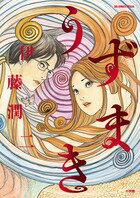
Uzumaki
Yu's review of Uzumaki by Junji Ito — a small town cursed by spirals, where the obsession spreads like a disease until the geometry itself becomes monstrous.
Horror / Supernatural
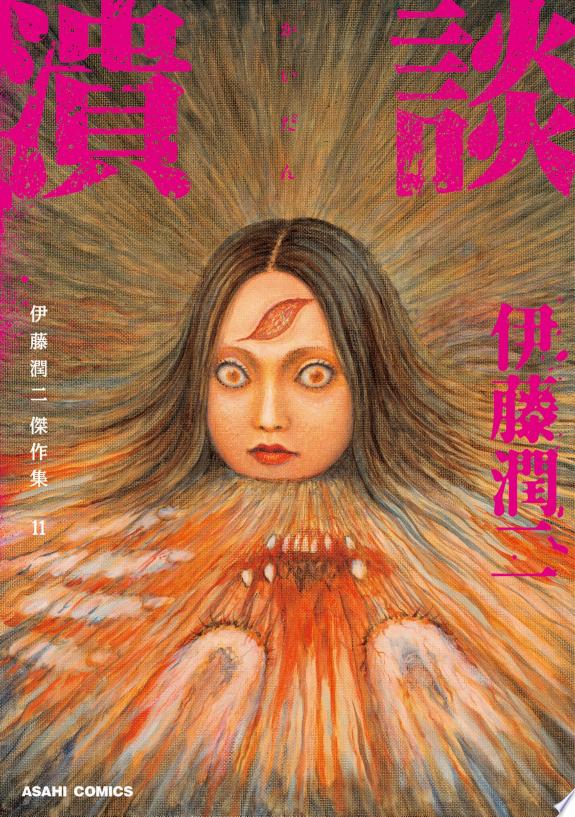
Smashed: Junji Ito Story Collection
A comprehensive review of Smashed: Junji Ito Story Collection — plot, characters, art style, and whether it's worth reading.
Horror / Sci-Fi
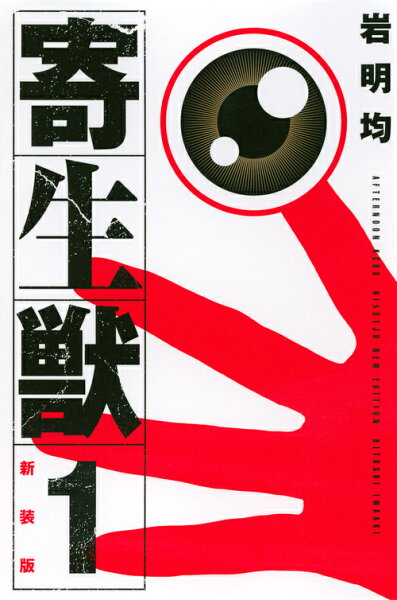
Parasyte
Yu's review of Parasyte — the manga where alien parasites invade human bodies and one boy must share his arm with the creature that failed to take his brain, raising questions about humanity, empathy, and what we owe each other.
Horror / Supernatural
Lovesickness: Junji Ito Story Collection
A comprehensive review of Lovesickness: Junji Ito Story Collection — plot, characters, art style, and whether it's worth reading.
Horror / Supernatural
The Liminal Zone
A comprehensive review of The Liminal Zone — plot, characters, art style, and whether it's worth reading.
Written by
Yu
Manga Enthusiast from Japan
I grew up in Japan and manga literally saved me during a tough time in elementary school. My English isn't perfect, but my love for manga is real — and I want to share it with you.
Disclosure: This post contains affiliate links. As an Amazon Associate, I earn from qualifying purchases at no extra cost to you.