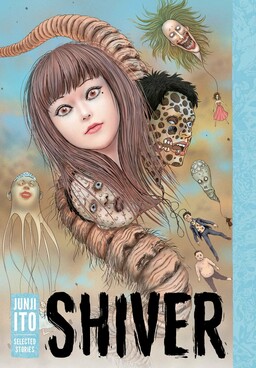
Sensor Review: A Village That Has Existed for a Thousand Years on the Slope of a Volcano Hides Something Vast
by Junji Ito
Read the first volume. If it doesn't hook you, put it down. It'll hook you.
Buy Sensor on Amazon →*Affiliate link — I earn a small commission at no extra cost to you.
Quick Take
- Ito's most ambitious long story — Sensor begins as a village mystery and expands into something that touches cosmic horror without losing its human center
- The volcanic setting is used with genuine creativity; the golden hair imagery is among his most striking visual inventions
- 1 volume complete; his most complete single-story work since Uzumaki and the best entry point for readers who want Ito at full ambition
Who Is This Manga For?
- Readers who want Junji Ito's work at extended length with a complete arc
- Anyone interested in cosmic horror — the horror of scales beyond human comprehension — in manga form
- Fans of his major works who want something with the ambition of Uzumaki in a single volume
- Readers who want horror that builds to something genuinely large
Content Warnings & Age Rating
Age Rating: T+ (Older Teen) Content Warnings: Cosmic horror that may be more disturbing to some readers than standard body horror; volcanic imagery; supernatural horror; existential dread as the sustained atmosphere; body horror in service of the larger premise
The T+ rating is accurate. The cosmic horror register may be more unsettling than standard Ito.
Yu's Rating
| Category | Score |
|---|---|
| Story Depth | ★★★★★ |
| Art Style | ★★★★★ |
| Character Development | ★★★★☆ |
| Accessibility for Non-Japanese Readers | ★★★★★ |
| Reread Value | ★★★★★ |
Story Overview
Kyoko Byakuya encounters Wataru Tsuchiyado on the slope of Mt. Sengoku. He leads her to Kiga Village, where the inhabitants' hair has grown into golden strands that connect to the volcano — not as metaphor but as literal physical connection. The village has maintained this relationship with the mountain for a thousand years.
The story develops the nature of the connection — what the volcano gives and what it takes — and the horror that erupts when the connection's true nature becomes apparent. Ito expands the story's scope deliberately, moving from the village to something much larger, and the expansion is earned rather than arbitrary.
The cosmic register of Sensor — the suggestion that what lies beneath ordinary geology is something that exceeds human conceptual frameworks — is Ito's most explicit engagement with Lovecraftian horror, filtered through his specific visual and narrative sensibility.
Characters
Kyoko Byakuya — Her quality is the specific Ito protagonist quality: she is observant, not unintelligent, and completely inadequate to what she encounters. Her presence gives the horror a human scale before the story expands beyond it.
Wataru Tsuchiyado — His relationship to the village and its practices is not what it initially appears. His development across the story is the book's central character movement.
Art Style
The golden hair imagery — the specific visual of hair becoming something that connects human bodies to volcanic rock — is developed with exceptional care. The cosmic horror sequences in Sensor are Ito's most visually ambitious work, and the contrast with the mundane village sequences makes them more effective.
Cultural Context
Sensor engages with Japanese concepts of sacred mountains, the relationship between communities and their local geology, and the specific horror of a practice that has been normalized over generations. The volcanic setting draws on Japan's actual relationship with active volcanoes as both threat and sacred space.
What I Love About It
The sequence where the story's scale expands and the reader understands what the village's practice has actually been connected to — what lies beneath Kiga Village's relationship with the mountain — is the most complete horror expansion I have read in manga. Ito earns the scale by building toward it patiently.
What English-Speaking Fans Say
Western readers describe Sensor as the Junji Ito work that changed their understanding of what he is capable of — the cosmic horror register is less comfortable than his standard body horror for many readers, which is the point. It is consistently cited as among his best complete works.
Memorable Scene ⚠️ Spoiler Warning
The visual revelation of what the golden hair is connected to — what the village has been tethered to for a thousand years — is the story's central horror image and Ito's most audacious single image. It arrives with enough preparation to be comprehensible and is still more than the preparation suggested.
Similar Manga
- Uzumaki — His most famous cosmic/environmental horror, longer form
- Remina — Cosmic horror, different approach
- Shiver — His author-selected short stories, less ambitious
- From the New World — Cosmic dread in a different genre
Reading Order / Where to Start
From the beginning — the story requires reading in order.
Official English Translation Status
VIZ Media published this single volume. Complete and available.
Pros & Cons
Pros
- His most ambitious complete work in a single volume
- The cosmic horror develops with genuine patience and pay-off
- The golden hair imagery is exceptional
- The ending is the only possible ending
Cons
- Readers who want his standard body horror may find the cosmic register different
- Single volume — shorter than his most famous works
- The cosmic horror may be more unsettling than expected
Format Comparison
| Format | Notes |
|---|---|
| Individual Volume | VIZ Media; single volume |
| Digital | Available |
Where to Buy
Read the first volume. If it doesn't hook you, put it down. It'll hook you.
This post contains affiliate links. If you purchase through these links, I may earn a small commission at no extra cost to you. As an Amazon Associate, I earn from qualifying purchases.
*Affiliate link — I earn a small commission at no extra cost to you.
Reading Guides
More Manga You Might Like
Horror
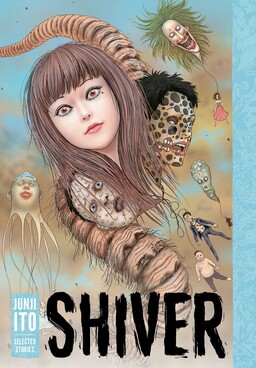
Shiver: Junji Ito Selected Stories
Yu's review of Shiver — nine stories personally selected by Junji Ito himself as representative of his best work; includes Greased, Painter, The Rib Woman, Fashion Model, Hanging Blimp, Marionette Mansion, Futon, Tomio Red Turtleneck, and Back Alley; each story demonstrates a different aspect of his approach to horror.
Horror / Sci-Fi
Remina
Yu's review of Remina — a scientist names a mysterious planet after his daughter, and when that planet turns out to be heading toward Earth to consume it, the terrified public turns on the girl.

Horror
Gyo
Yu's review of Gyo — dead sea creatures with mechanical legs begin walking onto land; the smell is overwhelming; it escalates; Junji Ito's most viscerally disgusting work is also a meditation on what we find most fundamentally repellent about death and corruption.
Horror
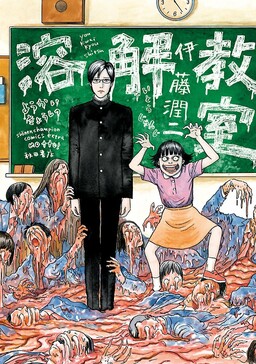
Dissolving Classroom
Yu's review of Dissolving Classroom — Yuuma Azawa apologizes so much that the people around him melt into sludge, because his apologies are prayers to the Devil. His little sister Chizumi drinks the leftovers. A single-volume Junji Ito horror collection from Vertical.
Horror / Literary
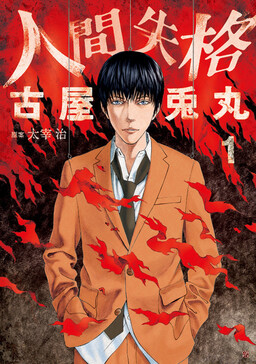
No Longer Human
Yu's review of No Longer Human manga adaptation — Usamaru Furuya adapts Osamu Dazai's 1948 autobiographical novel into a contemporary setting; the protagonist Yozo Oba is a young man who cannot believe himself to be a human being in the same sense as the people around him; the manga follows his descent through addiction, relationships, and the inability to exist in the world.

Horror / Action
Mermaid Saga
Yu's review of Mermaid Saga — Yuta ate mermaid flesh 500 years ago and became immortal; now he searches for a way to die; each arc is a horror story about what immortality actually looks like when the people around you keep dying and the mermaid flesh keeps producing monsters; Rumiko Takahashi's horror masterwork.
Written by
Yu
Manga Enthusiast from Japan
I grew up in Japan and manga literally saved me during a tough time in elementary school. My English isn't perfect, but my love for manga is real — and I want to share it with you.
Disclosure: This post contains affiliate links. As an Amazon Associate, I earn from qualifying purchases at no extra cost to you.