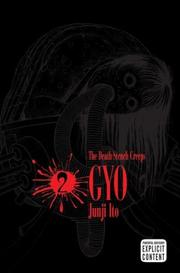
Gyo Review: Dead Fish With Mechanical Legs Are Coming Out of the Ocean and Nobody Knows Why
by Junji Ito
Read the first volume. If it doesn't hook you, put it down. It'll hook you.
Buy Gyo on Amazon →*Affiliate link — I earn a small commission at no extra cost to you.
Quick Take
- Junji Ito's most deliberately revolting work — Gyo commits fully to biological disgust as its primary horror register
- The walking dead fish are absurd, and Ito knows it; the work operates in the space between the absurdity of the premise and the genuine horror of what bodily corruption represents
- 2 volumes complete; one of Ito's most divisive works but also one of his most focused on a single, consistent horror mechanism
Who Is This Manga For?
- Readers who can engage with biological disgust as a horror mechanism rather than just atmosphere
- Anyone who has read other Junji Ito and wants to experience his most viscerally committed work
- Fans of body horror who want it sustained across a complete narrative
- Readers who understand that absurdist premises can generate genuine dread
Content Warnings & Age Rating
Age Rating: M (Mature) Content Warnings: Body horror involving death and decomposition is central and graphic; the biological imagery is deliberately revolting; some sexual content in the later stages of the horror's progression
The M rating is accurate. This is Ito's most physically disgusting work.
Yu's Rating
| Category | Score |
|---|---|
| Story Depth | ★★★☆☆ |
| Art Style | ★★★★★ |
| Character Development | ★★★☆☆ |
| Accessibility for Non-Japanese Readers | ★★★★★ |
| Reread Value | ★★★☆☆ |
Story Overview
Tadashi and Kaori are on vacation in Okinawa. Kaori notices a smell. A fish with mechanical legs walks into their room. This is the beginning. What follows is an escalation from a single impossible fish to a full-scale invasion of sea life with mechanical walking apparatus, spreading onto land with the stench of death preceding them.
The mechanism is eventually partly explained — a relic of wartime biological experimentation, a bacterium that animates dead flesh and powers the machines. The explanation is less important than what the invasion produces in the human characters who are exposed to it.
Characters
Tadashi and Kaori — Their relationship, already under pressure, deteriorates under the horror's specific demands. Kaori's phobia of unpleasant smells means she is maximally affected by the invasion's most consistent property. Their dynamic is the human frame through which the biological horror is experienced.
Art Style
Ito's art is at its most technically detailed in rendering the mechanical-biological hybrid creatures — the fish, the legs, the increasingly elaborate walking dead creatures. His linework conveys both the mechanical precision and the organic corruption simultaneously.
Cultural Context
Gyo engages with Japan's specific coastal and ocean-adjacent mythology — the sea as a source of horror, the creatures that emerge from water as threatening rather than nourishing. The wartime origin of the machines references real Japanese imperial biological experimentation programs, giving the horror historical grounding.
What I Love About It
The scene where the smell is first described — Ito's wordless demonstration of what the characters are experiencing through their physical reactions — is the series' most effective deployment of an unshowable horror quality. The smell is the dominant experience of Gyo, and Ito finds visual equivalents for it throughout.
What English-Speaking Fans Say
Western readers who have read multiple Junji Ito works describe Gyo as his most divisive — readers who can engage with biological disgust as a horror register consider it among his most effectively sustained work; readers who prefer his atmospheric or psychological horror often find it excessive. It is consistently described as the work that tests whether you can handle Ito at his most viscerally committed.
Memorable Scene ⚠️ Spoiler Warning
The escalation in volume 2 — when the biological mechanism spreads from sea creatures to humans, and what the death-walking apparatus does to human bodies — is Gyo's most disturbing sequence and the fullest development of its central horror logic.
Similar Manga
- Uzumaki — Ito's most acclaimed complete work
- Tomie — Ito's most sustained single-character horror
- The Drifting Classroom — Japanese horror with biological/survival elements
- Emerging — Biological horror with procedural realism
Reading Order / Where to Start
Volume 1 — the first fish, the escalation, and the beginning of the invasion.
Official English Translation Status
VIZ Media published both volumes in an omnibus deluxe edition. Complete and available.
Pros & Cons
Pros
- The most focused and sustained deployment of a single horror mechanism in Ito's catalog
- Ito's art renders the biological-mechanical hybrid with extraordinary detail
- The premise's absurdity is used productively rather than undermining the horror
- Two volumes is exactly the right length
Cons
- The M content is genuinely revolting — this is not ambient horror
- Character development is secondary to the horror mechanism
- Readers who can't engage with biological disgust as a horror register will find it tedious
Format Comparison
| Format | Notes |
|---|---|
| Deluxe Edition (Omnibus) | VIZ Media; recommended |
| Digital | Available |
Where to Buy
Read the first volume. If it doesn't hook you, put it down. It'll hook you.
This post contains affiliate links. If you purchase through these links, I may earn a small commission at no extra cost to you. As an Amazon Associate, I earn from qualifying purchases.
*Affiliate link — I earn a small commission at no extra cost to you.
Reading Guides
More Manga You Might Like
Horror
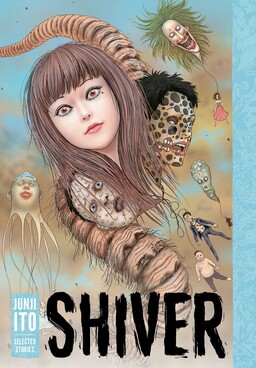
Shiver: Junji Ito Selected Stories
Yu's review of Shiver — nine stories personally selected by Junji Ito himself as representative of his best work; includes Greased, Painter, The Rib Woman, Fashion Model, Hanging Blimp, Marionette Mansion, Futon, Tomio Red Turtleneck, and Back Alley; each story demonstrates a different aspect of his approach to horror.
Horror
Sensor
Yu's review of Sensor — Kyoko Byakuya encounters a young man on the slope of Mt. Sengoku who leads her to a village where the inhabitants' hair has become golden threads connected to the volcano; the horror expands from local to cosmic as the story develops, becoming Ito's most ambitious statement about what lies beneath ordinary reality.
Horror / Literary
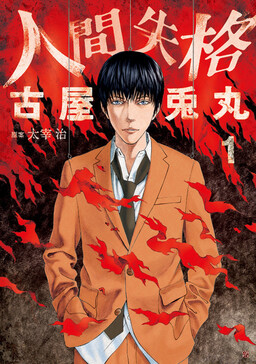
No Longer Human
Yu's review of No Longer Human manga adaptation — Usamaru Furuya adapts Osamu Dazai's 1948 autobiographical novel into a contemporary setting; the protagonist Yozo Oba is a young man who cannot believe himself to be a human being in the same sense as the people around him; the manga follows his descent through addiction, relationships, and the inability to exist in the world.

Horror / Historical
Innocent
Yu's review of Innocent — Charles-Henri Sanson is the son of France's royal executioner, raised with privilege and the assumption that he will inherit his father's role; his sensitive nature and artistic gifts make him unfit for execution, yet circumstances force him to become one of France's most famous executioners, operating during the period leading to the French Revolution.
Horror
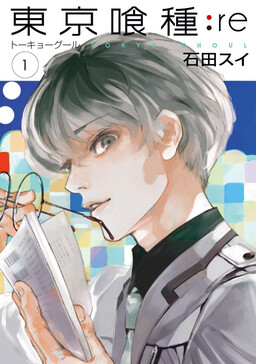
Tokyo Ghoul:re
Yu's review of Tokyo Ghoul:re — Haise Sasaki is a half-ghoul CCG investigator with no memory of his past; he is, in fact, Ken Kaneki — the protagonist of Tokyo Ghoul — with his identity surgically suppressed; Sui Ishida's continuation of Tokyo Ghoul follows Kaneki's reconstruction through Haise as the war between humans and ghouls reaches its final scale.

Horror
Orochi: Blood
Yu's review of Orochi — a beautiful immortal girl named Orochi drifts through human lives, observing and sometimes participating in the horror that emerges when human desires and jealousies reach extremes; Kazuo Umezu's anthology horror with a supernatural narrator defined by beauty and detachment.
Written by
Yu
Manga Enthusiast from Japan
I grew up in Japan and manga literally saved me during a tough time in elementary school. My English isn't perfect, but my love for manga is real — and I want to share it with you.
Disclosure: This post contains affiliate links. As an Amazon Associate, I earn from qualifying purchases at no extra cost to you.