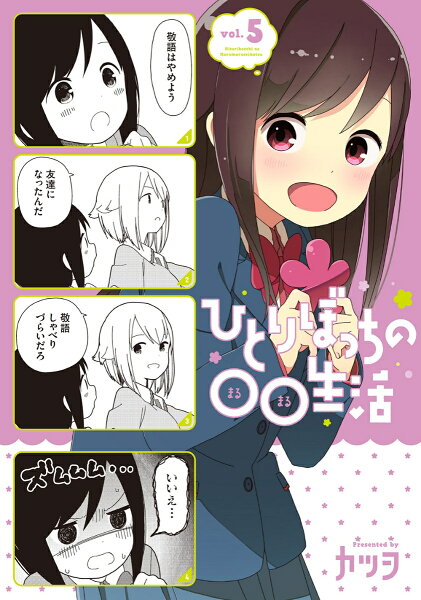
Hitoribocchi no Marumaru Seikatsu Review: The Most Charming Depiction of Social Anxiety in Manga
by Katsuwo
Read the first volume. If it doesn't hook you, put it down. It'll hook you.
Buy Hitoribocchi no Marumaru Seikatsu on Amazon →*Affiliate link — I earn a small commission at no extra cost to you.
Bocchi Hitori starts middle school with a mission: make friends with everyone in her class. Her childhood friend Kai gave her this mission before they enrolled in different schools, promising they could be friends again once Bocchi has made friends with everyone. The problem is that Bocchi is so socially anxious she faints at the slightest interpersonal challenge, loses the ability to speak when she plans what to say in advance, and vomits when someone is unexpectedly kind to her.
I'm Yu. I have social anxiety. Not as extreme as Bocchi's, but I recognized every moment.
Quick Take
- Katsuwo's Hitoribocchi no Marumaru Seikatsu (ひとりぼっちの○○生活) ran in Monthly Comic Alive — collected in 9 volumes.
- Yen Press published the complete 9-volume English edition.
- Rated T (Teen) — social anxiety themes; no heavy content.
Story Overview
Bocchi's approach to friendship is methodical because it has to be: she rehearses conversations in advance, plans her approach to individual classmates, and prepares for every interaction as though it is a formal negotiation she needs to win. Her preparations consistently fall apart in contact with actual human beings, who do not behave according to her scripts.
What follows is Bocchi's genuinely earnest, frequently disastrous, ultimately touching attempts to build friendships she desperately wants but doesn't know how to create. Her friends accumulate slowly and each one is earned rather than given.
Characters
Bocchi Hitori — Her anxiety is portrayed accurately and with compassion rather than mockingly. The planning-that-goes-wrong is funny because it is specific and real, not because she is foolish. She is trying very hard.
Nako — The first friend. She appears intimidating — she does not smile easily — and is deeply kind. Her blunt warmth is exactly what Bocchi's anxiety requires: someone who doesn't need Bocchi to perform normalcy.
Aru — Projects confidence and competence while quietly failing at both. Her arc is about letting someone see the gap between her self-presentation and her reality, which Bocchi accidentally creates the conditions for.
Sotoka — A transfer student convinced that Bocchi is a ninja master and that befriending her will unlock the ancient secrets. Her earnest misconception provides contrast with Bocchi's earnest anxiety.
What I Love About It
I recognized every moment: the planning conversations in advance, the rehearsed scripts that fall apart, the relief when someone is kind, the spiral when something goes wrong.
Hitoribocchi made me laugh at myself in the kindest possible way. It also made me feel less alone, which is exactly what it is about. The manga insists — not sentimentally but practically, through accumulated small victories — that anxiety is not a permanent bar to connection. You just have to keep trying differently.
Memorable Scene ⚠️ Spoiler Warning
Bocchi's first genuine conversation with Nako — the moment they both realize they might actually become friends — is handled with such tender precision that it moved me. Small victories feel enormous here. That is the correct calibration.
Pros & Cons
Pros:
- Accurate, compassionate portrayal of social anxiety — the funniest parts are the most recognizable.
- Genuinely funny without being mean-spirited.
- Complete at 9 volumes.
- Bocchi's friend group is charming and each character is distinctly drawn.
Cons:
- Low-stakes by design — not for readers who need narrative tension.
- Anxiety depiction may be too close to home for some readers.
Is Hitoribocchi Worth Reading?
Yes — for anyone who has ever struggled to say hello. This is what the iyashi-kei (healing) genre does when it is done with genuine emotional intelligence rather than generic comfort. The social anxiety portrayal is the most accurate in manga, and the comedy it generates is warm rather than cruel.
Who Is This Manga For?
- Anyone who has dealt with social anxiety and wants to see it depicted accurately.
- Fans of low-stakes slice-of-life comedy that celebrates awkward, earnest effort.
- Readers who want manga that makes you feel less alone.
- Anyone who wants a warm, complete series to read in one sitting.
Official English Translation Status
Yen Press published all 9 volumes in English. Complete and available in print and digital.
Where to Buy
Yen Press's complete 9-volume English edition.
Browse Hitoribocchi on Amazon →
This post contains affiliate links. If you purchase through these links, I may earn a small commission at no extra cost to you. As an Amazon Associate, I earn from qualifying purchases.
*Affiliate link — I earn a small commission at no extra cost to you.
More Manga You Might Like
Slice of Life
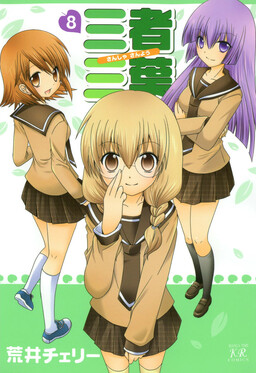
Sansha Sanyou
Yu's review of Sansha Sanyou — Youko Nishikawa (formerly wealthy), Futaba Odagiri (enthusiastic eater), and Teru Hayama (smiling sadist) are three incompatible high school girls who end up eating lunch together and become friends; Cherry Arai's gentle comedy about the friendships that form despite personality differences.
Slice of Life / Comedy
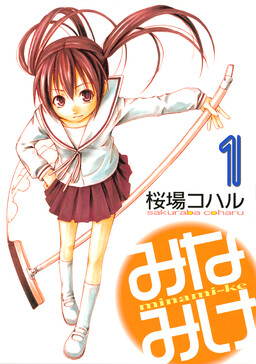
Minami-ke
Yu's review of Minami-ke — three sisters at different schools (eldest Haruka in high school, middle Kana in middle school, youngest Chiaki in elementary) share an apartment and their daily life generates endless comedy from their completely different personalities and the rotating cast of friends, admirers, and chaos that follows them home.
Slice of Life / Comedy
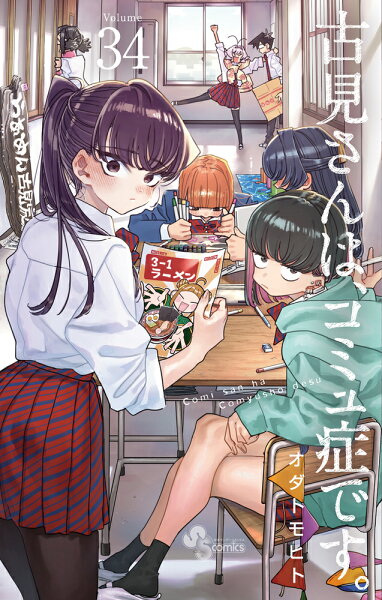
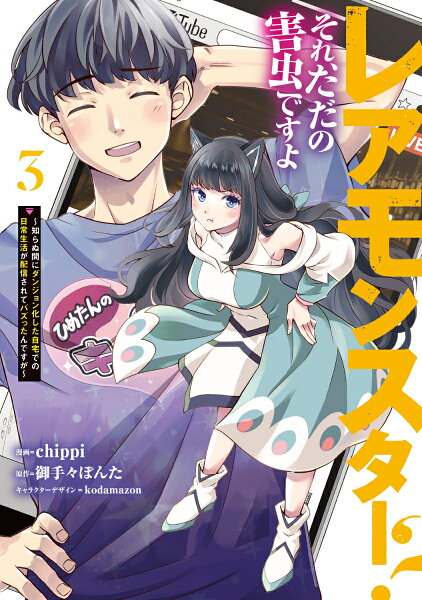
Komi Can't Communicate
Yu's review of Komi Can't Communicate — Shoko Komi is mistaken for the most aloof, intimidating beauty in school, but she actually has a communication disorder and can barely speak. Her ordinary classmate Tadano figures out the truth and promises to help her make 100 friends.
Slice of Life / Comedy
Nichijou: My Ordinary Life
Yu's review of Nichijou — a high school slice-of-life where ordinary situations escalate to catastrophic absurdity, a robot girl tries to hide what she is, and the Professor is an eight-year-old genius who made her.
Slice of Life / Comedy
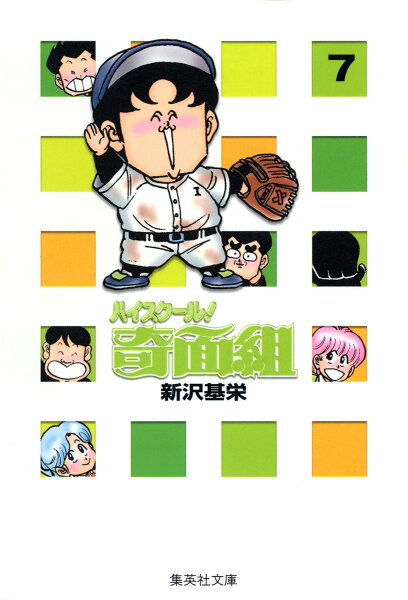
High School! Kimengumi
High School! Kimengumi follows five boys who turn their strange faces into a way of life, building one of the loudest, weirdest gag manga of 1980s Shonen Jump.
Slice of Life / Comedy
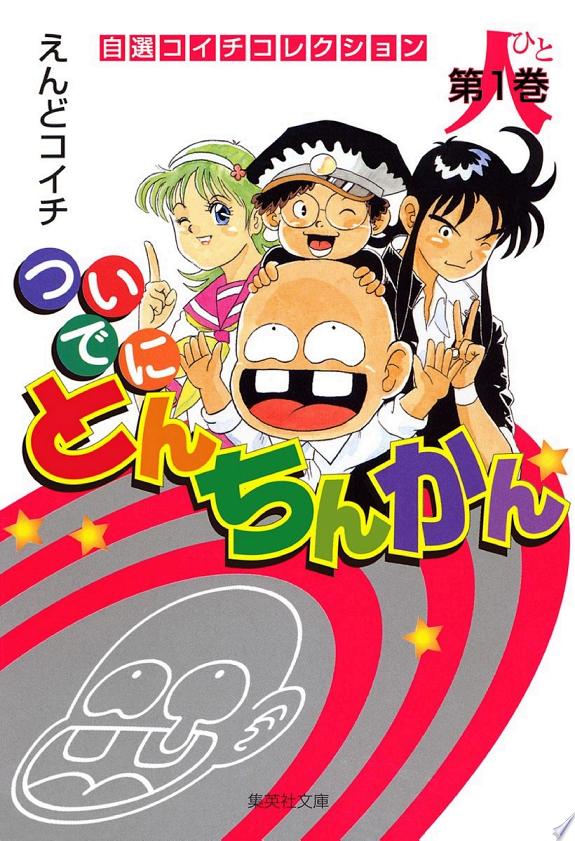
Tondemo-kun
Tondemo-kun follows a trio of delinquent students whose plans to cause trouble consistently backfire in ways that are so spectacularly wrong they accidentally create good outcomes — a comedy built entirely on the gap between intention and result.
Written by
Yu
Manga Enthusiast from Japan
I grew up in Japan and manga literally saved me during a tough time in elementary school. My English isn't perfect, but my love for manga is real — and I want to share it with you.
Disclosure: This post contains affiliate links. As an Amazon Associate, I earn from qualifying purchases at no extra cost to you.