
Haiyore! Nyaruko-san Review: A Lovecraft God Moves In, and All She Wants Is to Play Video Games
by Manta Aisora (original) / Kei Okazaki (art)
Read the first volume. If it doesn't hook you, put it down. It'll hook you.
Buy Haiyore! Nyaruko-san on Amazon →*Affiliate link — I earn a small commission at no extra cost to you.
When I was a kid hiding from the world in my room, I read a lot of scary stories. H.P. Lovecraft especially — gods with unpronounceable names, the universe not caring about you at all, the feeling that something enormous is just outside the door. So the first time I saw a manga where Nyarlathotep, one of those terrible cosmic gods, turns out to be a chirpy silver-haired girl who mostly wants to play video games and hug a boy, I laughed out loud. It is such a silly, warm idea. It takes the thing that scared me and makes it want to be my friend.
I should be honest with you from the start: this is a comedy, and it is a very specific kind of comedy. If you do not like jokes built on anime and game references, a lot of it will fly past you. But the core gag — cosmic horror landing on Earth and immediately becoming a goofy houseguest — made me happy.
Quick Take
- The premise inverts Lovecraft completely: the Crawling Chaos is now a cheerful alien girl obsessed with Earth's pop culture
- The humor leans hard on harem setups and rapid-fire anime/game references, and it knows it — it constantly points out how contrived everything is
- Age rating: T+ (Older Teen) — comedic violence, mild fanservice, harem situations
Story Overview
Mahiro Yasaka is an ordinary high school boy. One night he is chased by a frightening black alien, and a silver-haired girl shows up and saves him. She introduces herself as Nyaruko — and explains that she is Nyarlathotep, the formless Crawling Chaos. In this story, the creatures from Lovecraft's mythos are actually races of aliens, and Earth's entertainment is famous across the universe. Nyaruko has been sent by the Space Defense Agency to protect Mahiro from an alien trafficker who wants to kidnap him.
Protecting him quickly turns into moving in with him. Nyaruko becomes a freeloader at Mahiro's place, and she is soon joined by two more Lovecraftian aliens: Kūko, a red-haired Cthugha who is in love with Nyaruko, and Hasuta, a gentle Hastur. So the "cosmic horror" threat fades into the background, and the real story becomes a noisy household comedy — aliens fighting over Mahiro and over each other, with actual danger showing up now and then to remind you these are gods.
The manga is short. Kei Okazaki's adaptation ran in Shueisha's Miracle Jump and was collected in two volumes, so it is a compact, fast comedy rather than a long-running epic — the light novels by Manta Aisora are the much larger version of this story.
Characters
Nyaruko (Nyarlathotep) — A member of the alien Nyarlathotep race, sent to protect Mahiro, who takes the form of a cheerful silver-haired girl. She falls for Mahiro almost immediately and is relentlessly affectionate. The joke that defines her is that this supposedly terrifying cosmic deity is mostly a gamer and an otaku — she is "highly into gaming," and her power level is real, but her personality is pure energetic goofball. In a fight she does not hold back, using space-age close-combat weapons against hostile aliens.
Mahiro Yasaka — The ordinary human at the center of it all, reluctantly under Nyaruko's protection. His defining trait, and the series' best running gag, is that he defends himself from Nyaruko's advances with a fork — thrown or stabbed, and so fast that the joke is no alien has managed to dodge one yet. Over time he grows more tolerant of his alien houseguests and is clearly a little drawn to Nyaruko, even as her aggressiveness keeps him swinging the fork.
Kūko (Cthugha) — A red-haired Cthughan with fire-based powers. The twist with her is that, despite Cthughans and Nyarlathoteps being natural enemies, she is in love with Nyaruko, not Mahiro. She is clingy and starts out hostile to Mahiro before warming to him, and like Nyaruko she is obsessed with games and otaku culture.
Hasuta (Hastur) — A gentle male Hasturan with air-based powers, and a former space-elementary-school classmate of Nyaruko and Kūko. He is shy in his normal form. Notably, his feelings are for Mahiro, which adds another tangle to the household's already crossed romantic wires.
What I Love About It
The fork. I know it sounds like a small thing to build a review around, but Mahiro's fork is the single best decision in this whole series. Here is a boy living with literal cosmic deities — beings whose names humans were supposedly never meant to speak — and his entire defense system is a piece of cutlery he throws faster than an alien can dodge. It is such a perfect little symbol of how the manga works. It refuses to be impressed by the cosmic horror. It looks Nyarlathotep in the eye and pokes her with a fork.
What I love underneath the joke is the whole inversion the fork stands for. Lovecraft's stories are about humans being tiny and powerless in front of the universe. This story flips it: the universe shows up, and it is dorky and lovesick and wants to talk about anime. The scariest god in the mythos has been reduced to a girl who flinches at a fork. For a reader like me, who grew up actually scared by those old stories, there is something genuinely sweet about that. It is not making fun of Lovecraft so much as inviting him in for snacks. The comedy never works if you take it seriously — and the manga knows that, and keeps pointing out how contrived its own harem setup is, which is half the fun.
Memorable Scene ⚠️ Spoiler Warning
The scene that sticks with me is the very first meeting, because it sets the whole tone in one move. Mahiro is running for his life from a genuinely menacing black alien — this is played like a horror moment, the kind of opening a real cosmic-horror story would have. Then Nyaruko arrives, deals with the threat, and cheerfully announces that she is Nyarlathotep, the Crawling Chaos, and that all those Lovecraft monsters are just alien races, and that Earth's entertainment is beloved across the galaxy.
In a few panels the story tells you exactly what it is: the dread is bait, the real subject is a bright, talkative girl who is far more interested in him and in pop culture than in being a god. The horror beat exists only to be punctured. Once Nyaruko opens her mouth, the manga never goes back to being frightening — it commits fully to being a household comedy, and that pivot, right there on the first night, is the moment I knew what kind of book I was reading.
Pros & Cons
Pros
- The Lovecraft-as-goofy-aliens premise is committed and genuinely funny
- Mahiro's fork gag is a perfect, repeatable joke
- Short and breezy at two volumes — easy to finish
- Self-aware about its own harem clichés instead of playing them straight
Cons
- A lot of the humor is built on anime and game references; miss those and jokes fall flat
- The harem and fanservice elements are very much the genre
- It is a parody-comedy with little dramatic depth — that is either exactly what you want or not at all, and it won't work for everyone
Is Haiyore! Nyaruko-san Worth Reading?
If the idea of Nyarlathotep showing up as a video-game-obsessed girl who gets fended off with a fork makes you smile, yes — it is a short, committed, self-aware comedy that does its one joke well. If you need plot depth or you don't catch anime references, this probably isn't your book.
Content Warnings & Age Rating
Age Rating: T+ (Older Teen) Content Warnings: Lovecraft mythology parodied; comedic violence; mild fanservice; harem situations
Comedy with service elements and a lot of slapstick. Nothing graphic, but aimed at older teens and up.
Yu's Rating
| Category | Score |
|---|---|
| Story Depth | ★★☆☆☆ |
| Art Style | ★★★☆☆ |
| Character Development | ★★★☆☆ |
| Accessibility for Non-Japanese Readers | ★★★☆☆ |
| Reread Value | ★★★☆☆ |
Similar Manga
| Title | Its Approach | How Haiyore! Nyaruko-san Differs |
|---|---|---|
| Is This a Zombie? | Light-novel harem comedy with a supernatural cast | Nyaruko parodies cosmic horror specifically, not generic supernatural tropes |
| The Devil Is a Part-Timer! | Mighty supernatural beings stuck in a mundane modern life | Nyaruko's gods are obsessed with Earth pop culture rather than holding down jobs |
| Haganai | Club ensemble comedy with crossed romantic wires | Nyaruko's cast is literal aliens and leans on a single signature gag (the fork) |
Where to Buy
No English release yet. That just means you find it before everyone else does.
The manga has never been officially licensed in English — the Japanese print and digital editions from Shueisha are the only legitimate way to read it.
This post contains affiliate links. If you purchase through these links, I may earn a small commission at no extra cost to you. As an Amazon Associate, I earn from qualifying purchases.
*Affiliate link — I earn a small commission at no extra cost to you.
More Manga You Might Like
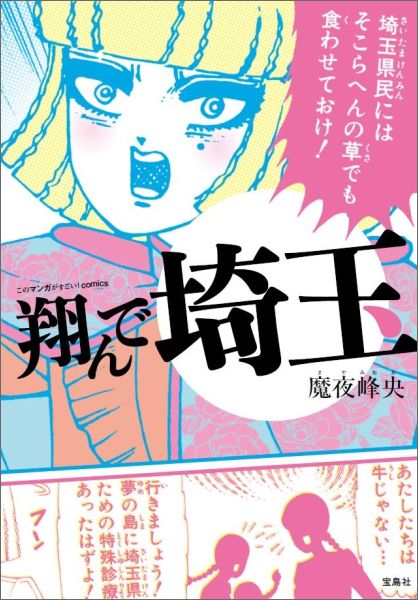
Comedy / Parody
Tonde Saitama
Tonde Saitama is a satirical comedy where Saitama Prefecture residents are treated as second-class citizens by Tokyo residents — forced to produce their Saitama identity card at the prefecture border, denied fine dining, and generally persecuted for the crime of not being from Tokyo — a 1982 parody that became a 2019 box office hit through sheer absurdist commitment.
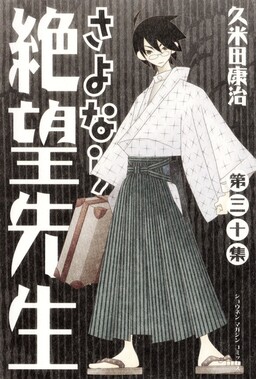
Slice of Life
Sayonara, Zetsubou-Sensei
Yu's review of Sayonara, Zetsubou-Sensei — Nozomu Itoshiki is a Japanese teacher whose name, written horizontally, reads 'despair'; his approach to life matches; he is constantly in despair about modern society; his student Kafuka Fuura is pathologically optimistic and refuses to accept any negative interpretation of anything.
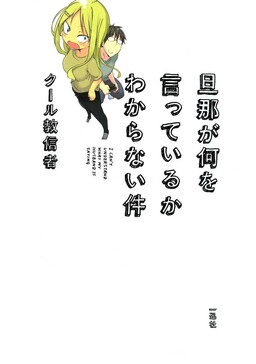
Comedy / Slice of Life
I Can't Understand What My Husband Is Saying
Yu's review of I Can't Understand What My Husband Is Saying (旦那が何を言っているかわからない件) — a 5-volume 4-koma comedy by Coolkyousinnjya about Kaoru, an ordinary office worker, and Hajime, her shut-in otaku-blogger husband. Their marriage works precisely because she doesn't always get the reference.
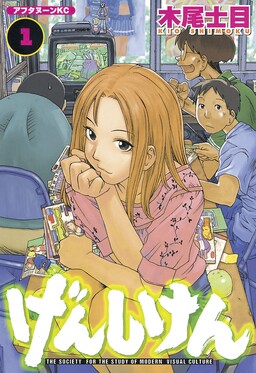
Slice of Life
Genshiken: Second Season
Yu's review of Genshiken: Second Season (Genshiken Nidaime) — the sequel that hands the otaku club to a new generation of fujoshi and one crossdressing fudanshi named Hato, then turns into one of the most surprising romance arcs in slice-of-life manga.
Comedy / Slice of Life
Detroit Metal City
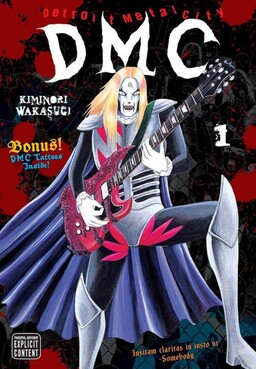
Yu's review of Detroit Metal City — Soichi Negishi moved to Tokyo to write gentle acoustic pop about kisses and raspberries, and ended up as Johannes Krauser II, the demonic frontman of a death metal band the fans believe murdered his own parents. He hates it. He is incredibly good at it. That gap is the whole joke, and it never stops being funny.

Slice of Life / Comedy
Dagashi Kashi
Yu's review of Dagashi Kashi by Kotoyama — Kokonotsu Shikada wants to draw manga, but his father runs a rural dagashi (cheap candy) shop and wants him to inherit it. Then Hotaru Shidare, the candy-obsessed heiress of a confectionery company, shows up to recruit his father and turns each cheap snack into a passionate lecture. A slice-of-life comedy about Japanese childhood candy culture.
Written by
Yu
Manga Enthusiast from Japan
I grew up in Japan and manga literally saved me during a tough time in elementary school. My English isn't perfect, but my love for manga is real — and I want to share it with you.
Disclosure: This post contains affiliate links. As an Amazon Associate, I earn from qualifying purchases at no extra cost to you.