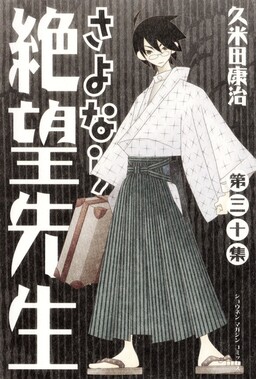
Sayonara, Zetsubou-Sensei Review: A Profoundly Pessimistic Teacher and His Pathologically Optimistic Student Navigate Modern Japan
by Koji Kumeta
Read the first volume. If it doesn't hook you, put it down. It'll hook you.
Buy Sayonara, Zetsubou-Sensei on Amazon →*Affiliate link — I earn a small commission at no extra cost to you.
Quick Take
- The best satirical manga of its era — every chapter takes a specific aspect of Japanese society and examines it from both maximum pessimism and maximum optimism
- The Zetsubou-sensei/Kafuka dynamic is the funniest teacher-student relationship in manga
- 14 volumes complete; dense cultural satire that rewards engagement
Who Is This Manga For?
- Readers who want dark comedy that takes social satire seriously
- Anyone interested in contemporary Japanese culture examined from an absurdist angle
- Fans of manga that prioritizes wit over warmth
- Readers who can engage with dark premises — suicide, despair — as comedy material
Content Warnings & Age Rating
Age Rating: T+ (Older Teen) Content Warnings: Suicide as recurring comedy premise; dark humor throughout; social satire with bite; references to specific Japanese cultural phenomena
T+ rating — the dark comedy is consistent and the satire has edges; not for all readers.
Yu's Rating
| Category | Score |
|---|---|
| Story Depth | ★★★★☆ |
| Art Style | ★★★★☆ |
| Character Development | ★★★☆☆ |
| Accessibility for Non-Japanese Readers | ★★★☆☆ |
| Reread Value | ★★★★☆ |
Story Overview
Nozomu Itoshiki, whose name written in full characters can be compressed to read "despair," is a high school teacher who lives in a state of constant despair about modern society. His student Kafuka Fuura — whose name references Kafka, which she interprets as connecting her to positive foreign things — refuses to accept any negative interpretation and finds optimistic readings for everything.
Each chapter takes a topic: specific social phenomena in Japan, cultural trends, behavioral patterns, social norms. The Zetsubou-sensei side produces a pessimistic analysis with examples. The Kafuka side produces an optimistic counter-reading with different examples. The comedy comes from both analyses being simultaneously accurate.
The classroom expands with increasingly specific character types — each student represents a particular social failure mode — and the satire accumulates.
Characters
Nozomu Itoshiki — A protagonist whose despair is not irrational; his analyses of Japanese society are often correct, which is part of why he is funny.
Kafuka Fuura — A character whose optimism is equally well-reasoned; the series maintains her as a genuine counterpoint rather than a simple opposite.
Art Style
Kumeta's art is distinctive — detailed in specific ways, with visual references to traditional Japanese aesthetics that reinforce the cultural commentary. The character designs are consistent and the visual comedy is precisely timed.
Cultural Context
Sayonara, Zetsubou-Sensei is dense with contemporary Japanese cultural references — specific social phenomena of the 2000s that will require notes for non-Japanese readers. Kodansha's translation includes extensive notes, and these are necessary reading.
What I Love About It
The simultaneous validity. The best Zetsubou-sensei chapters present both the pessimistic and optimistic readings of a social phenomenon with enough specificity that both are clearly true — the comedy emerges from reality being both simultaneously, not from either side being wrong.
What English-Speaking Fans Say
Western readers describe Sayonara, Zetsubou-Sensei as one of the best satirical manga available in English — specifically noted for the density and wit of the social commentary, for the cultural notes being essential to full appreciation, and for the comedy being genuinely dark in ways that manga rarely attempts. Recommended with the caveat that the cultural references require engagement.
Memorable Scene ⚠️ Spoiler Warning
The chapter that takes on a specific aspect of Japanese society you recognize from your own context — where Kumeta's analysis is clearly accurate about something you'd never thought to analyze — is the series' most effective moment, and it's different for every reader.
Similar Manga
- Azumanga Daioh — School comedy with similar episodic structure
- Excel Saga — Satirical comedy with similar density of cultural reference
- Detroit Metal City — Dark comedy with similar commitment to its premise
- Daily Lives of High School Boys — School comedy with similar observational wit
Reading Order / Where to Start
Volume 1 — the premise is established immediately and the cultural notes are essential.
Official English Translation Status
Kodansha published the complete English series with translation notes. All 14 volumes available.
Pros & Cons
Pros
- Best satirical manga of its era
- Translation notes make the cultural density accessible
- Both teacher and student are genuine characters
- Complete at 14 volumes
Cons
- Heavy cultural reference requires engagement with notes
- Dark comedy not for all readers
- Less accessible for non-Japanese cultural context
Format Comparison
| Format | Notes |
|---|---|
| Individual Volumes | Kodansha; complete series with notes |
| Digital | Available |
Where to Buy
Read the first volume. If it doesn't hook you, put it down. It'll hook you.
This post contains affiliate links. If you purchase through these links, I may earn a small commission at no extra cost to you. As an Amazon Associate, I earn from qualifying purchases.
*Affiliate link — I earn a small commission at no extra cost to you.
More Manga You Might Like
Slice of Life
Genshiken: Second Season
Yu's review of Genshiken: Second Season (Genshiken Nidaime) — the sequel that hands the otaku club to a new generation of fujoshi and one crossdressing fudanshi named Hato, then turns into one of the most surprising romance arcs in slice-of-life manga.
Slice of Life / Comedy
Nichijou: My Ordinary Life
Yu's review of Nichijou — a high school slice-of-life where ordinary situations escalate to catastrophic absurdity, a robot girl tries to hide what she is, and the Professor is an eight-year-old genius who made her.
Slice of Life / Comedy
High School! Kimengumi
High School! Kimengumi follows five boys who turn their strange faces into a way of life, building one of the loudest, weirdest gag manga of 1980s Shonen Jump.
Slice of Life / Comedy
Tondemo-kun
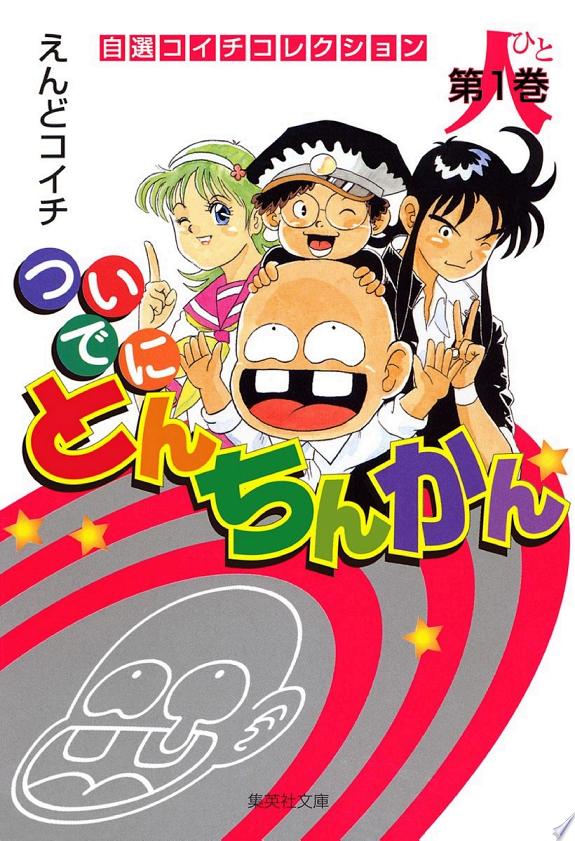
Tondemo-kun follows a trio of delinquent students whose plans to cause trouble consistently backfire in ways that are so spectacularly wrong they accidentally create good outcomes — a comedy built entirely on the gap between intention and result.
Comedy / Slice of Life
Macaroni Houren-sou
Macaroni Houren-sou follows three high school students living together in a boarding house — Toshio Shingami, the energetic straight man; Kinoshita, the eccentric wildcard; and Trapp, the cool foreigner — in a surreal comedy that uses the school-life setting as a launching pad for increasingly unhinged humor.
Slice of Life / Comedy
Yugami-kun ni wa Tomodachi ga Inai
Yugami-kun ni wa Tomodachi ga Inai (Yugami Has No Friends) follows Yugami Yuuichirou, a high schooler who has chosen — actively, deliberately — not to have friends, and Chihiro Otsuka, the transfer student determined to understand why. A 17-volume Sunday comedy about friendship's value examined through its absence.
Written by
Yu
Manga Enthusiast from Japan
I grew up in Japan and manga literally saved me during a tough time in elementary school. My English isn't perfect, but my love for manga is real — and I want to share it with you.
Disclosure: This post contains affiliate links. As an Amazon Associate, I earn from qualifying purchases at no extra cost to you.