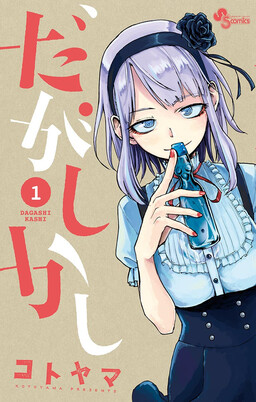
Dagashi Kashi Review: The Candy-Obsessed Girl Who Treats a Convenience-Store Snack Like Sacred Scripture
by Kotoyama
Read the first volume. If it doesn't hook you, put it down. It'll hook you.
Buy Dagashi Kashi on Amazon →*Affiliate link — I earn a small commission at no extra cost to you.
I grew up poor enough that the 10-yen and 30-yen snacks at the little shop near my elementary school were basically my whole world of "treats." Dagashi — those cheap, loud, slightly junky candies and snacks — were what a kid with no friends could afford with the coins in his pocket. So when I opened Dagashi Kashi for the first time, it hit a part of me I didn't expect a comedy manga to touch. Kotoyama made a whole series out of the exact snacks I used to buy alone, and then handed them to a girl who loves them more intensely than anyone has ever loved anything. I laughed, and then I got a little homesick for a shop that probably doesn't exist anymore.
Quick Take
- A slice-of-life comedy that doubles as a genuine love letter to Japanese dagashi — almost every chapter is built around one specific cheap snack, its history, and why it mattered to kids who grew up with it
- Hotaru Shidare is the engine of the whole thing: her over-the-top, encyclopedic candy obsession is both the comedy and the heart, and the candy trivia she spouts is actually real
- Age rating: T (Teen) — light content, with some mild fan service around Hotaru and nothing graphic
Who Is This Manga For?
- Readers curious about Japanese food culture, especially the childhood nostalgia of cheap convenience snacks
- Anyone who wants low-stakes comedy that also teaches you something real
- Fans of the "one character is unreasonably passionate and everyone else just deals with it" comedy style
- Readers who like a small, fixed cast — a shop, a couple of regulars, endless candy
Content Warnings & Age Rating
Age Rating: T (Teen) Content Warnings: Mild fan service involving Hotaru; heavy candy-obsession content that may make you want to order Japanese snacks online
The Teen rating fits. This is gentle, episodic stuff — the worst it does is make you hungry.
Yu's Rating
| Category | Score |
|---|---|
| Story Depth | ★★★☆☆ |
| Art Style | ★★★★☆ |
| Character Development | ★★★☆☆ |
| Accessibility for Non-Japanese Readers | ★★★★☆ |
| Reread Value | ★★★★☆ |
Story Overview
Kokonotsu Shikada — everyone calls him "Coconuts" — is a country teenager who dreams of becoming a manga artist. The problem is his family. His father, Yo, runs Shikada Dagashi, a small rural shop selling cheap candy and snacks, and Yo desperately wants Kokonotsu to inherit it as the ninth-generation owner. Kokonotsu has zero interest. He wants to draw, not sell penny candy in the middle of nowhere.
The turning point is the arrival of Hotaru Shidare, the eccentric daughter of a major confectionery corporation. She's come to the countryside to recruit Yo — who is apparently a legend in the dagashi world — into her family's company. Yo refuses to leave unless Kokonotsu agrees to take over the shop. So Hotaru, who is obsessed with dagashi to a frankly alarming degree, makes it her personal mission to convert Kokonotsu, one snack at a time.
From there the series settles into its episodic rhythm: Hotaru, Kokonotsu, his childhood friend Saya Endo, and Saya's brother Tō hang around the shop and Café Endō while Hotaru turns each cheap candy into a passionate lecture. The manga ran in Weekly Shonen Sunday from 2014 to 2018 and ends after 11 volumes, with Kokonotsu's relationship to the shop, and to the people around him, having quietly shifted by the close.
Characters
Hotaru Shidare — The series' whole personality. She is the heiress of a confectionery giant, but her love is reserved for cheap dagashi, which she treats with absolute reverence. Her intensity is the joke and the heart at the same time: she'll deliver a straight-faced, encyclopedic history of a 30-yen snack as if it were sacred scripture. The manga never asks her to "calm down" — it lets her obsession stand as a genuine, valid way to love something.
Kokonotsu "Coconuts" Shikada — The ninth-generation heir who doesn't want the job. His resistance isn't bratty; he honestly wants to draw manga, and that's a reasonable goal. He's also famously dense, completely oblivious to the people around him. His slow, reluctant warming toward the candy he grew up around is the series' quiet undercurrent.
Saya Endo — Kokonotsu's childhood friend, who works as a barista at her family's Café Endō. She's had a crush on him since they were little, and he has absolutely no idea. Hotaru's flirtatious closeness with Kokonotsu makes her awkward and jealous, and over time her arc is about gaining a little confidence in her own feelings — even as she and Hotaru shift from rivals to actual friends.
Tō Endo — Saya's laid-back older twin, usually in a Hawaiian shirt and sunglasses, running Café Endō. He's well aware of his sister's crush and teases her about it constantly, which Saya has to keep shutting down.
Art Style
Kotoyama's art carries a lot of the comedy through faces. Hotaru's expressions — the wide-eyed rapture when she talks candy, the disturbing intensity when someone disrespects a snack — do as much work as the dialogue. The dagashi themselves are drawn with real care and accuracy, which matters: when the chapter is literally about a specific candy, you need to actually recognize it on the page.
Cultural Context
Dagashi are cheap, cheerful snacks historically sold at small neighborhood shops, deeply tied to Japanese childhood. The kind of tiny shop Shikada Dagashi represents has mostly been replaced by convenience stores, so the series carries a layer of nostalgia for a vanishing place. That's part of why it lands so hard for Japanese readers of a certain age — and why I felt it personally.
What I Love About It
What I love is that the comedy is built on real, specific things. Take the early chapter about Fue Ramune — the little ring-shaped ramune candy with a hole in the middle that you can blow through like a whistle. Hotaru doesn't just eat it; she explains it, demonstrates it, treats this 20-yen toy-candy like it's a precious instrument. It's the kind of snack every Japanese kid has actually blown into until it got too wet to make a sound, and seeing it elevated to this level of devotion is both ridiculous and weirdly moving.
The Kinako-bou bit in the same stretch is the one that made me grin the widest. Hotaru praises Kinako-bou — a plain, unglamorous skewered soybean-flour stick — specifically because its packaging is so bare, with no mascot character on it, and frames it as a kind of lone "desert warrior" that doesn't need cute branding to survive. It's an absurd amount of romance to project onto a snack, and that's exactly the point. Kotoyama found the comedy in taking something genuinely beneath notice and loving it with your whole chest. As a kid who clung to small, cheap things because they were all I had, that lands.
Memorable Scene ⚠️ Spoiler Warning
The Fue Ramune whistle-candy scene early in the series is the one that crystallizes what Dagashi Kashi is. Hotaru produces the candy and treats blowing through it like a serious skill, while Saya thinks the whole thing is nonsense and Kokonotsu — almost against his will — catches that there's actually an allegory buried in Hotaru's candy babble. The page is just a few teenagers standing around a dumb whistle candy, and yet Kotoyama stages it as a kind of revelation. It stuck with me because it's the moment you realize the manga is never going to be about big plot beats. It's going to be about taking something tiny and worthless and finding, with total sincerity, the meaning hidden inside it. That's the whole show, right there in a piece of candy you can buy for pocket change.
Pros & Cons
Pros
- Genuine, accurate education about Japanese dagashi culture, baked into the comedy
- Hotaru is an outstanding comic character — her sincerity makes the obsession sing
- A complete 11-volume run with a small, lovable cast
- Strong nostalgia value, especially if you grew up with these snacks
Cons
- There's barely an overarching plot; the appeal is episodic character comedy
- Mild fan service around Hotaru won't be for everyone
- A lot of the jokes assume some familiarity with Japanese candy and small-shop culture — that's either a charming education or a barrier, depending on you
Is Dagashi Kashi Worth Reading?
Yes, if you want a warm, low-stakes comedy that genuinely teaches you about Japanese snack culture and gives you one of the most lovable obsessive characters in slice-of-life manga. No, if you need a driving plot — this is a hang-out series about candy, and it's completely happy being exactly that.
Where to Buy
No English release yet. That just means you find it before everyone else does.
There's no licensed English edition of Dagashi Kashi — the Japanese print and digital release is the only legitimate way to read it. If you read Japanese (or just want the originals), you can find the volumes here:
Find Dagashi Kashi on Amazon.co.jp →
This post contains affiliate links. If you purchase through these links, I may earn a small commission at no extra cost to you. As an Amazon Associate, I earn from qualifying purchases.
*Affiliate link — I earn a small commission at no extra cost to you.
More Manga You Might Like
Comedy / Slice of Life
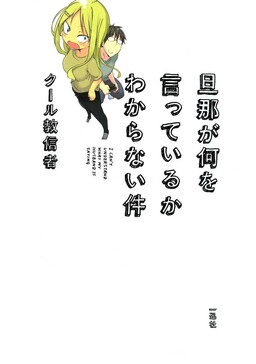
I Can't Understand What My Husband Is Saying
Yu's review of I Can't Understand What My Husband Is Saying (旦那が何を言っているかわからない件) — a 5-volume 4-koma comedy by Coolkyousinnjya about Kaoru, an ordinary office worker, and Hajime, her shut-in otaku-blogger husband. Their marriage works precisely because she doesn't always get the reference.
Slice of Life
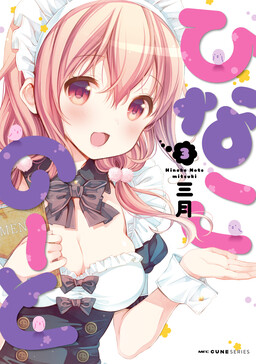
Hinako Note
Yu's review of Hinako Note — Hinako Sakuragi is so shy she freezes into a scarecrow pose and attracts birds, so she moves to Tokyo to join a theater club and learn to speak. Mitsuki's four-panel slice-of-life from Comic Cune. No official English edition yet.
Slice of Life / Drama
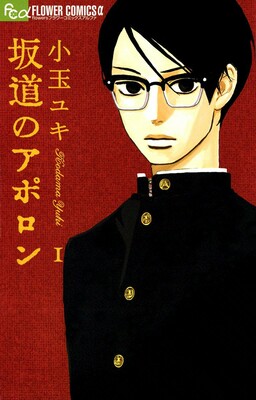
Kids on the Slope
Yu's review of Kids on the Slope (Sakamichi no Apollon) — 1966 Sasebo, Kyushu. Kaoru is a lonely classical pianist; Sentaro is a half-American delinquent who plays jazz drums in the basement of a record shop. Their friendship grows through music, the school festival, and a reunion years later at a church.
Slice of Life / Drama
Drops of God
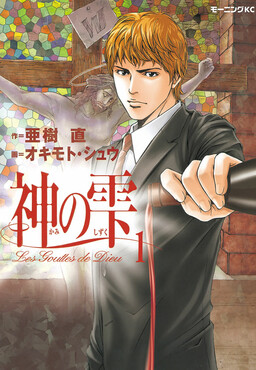
Yu's review of Drops of God — Shizuku Kanzaki, a young beer-company salesman who hates wine, has to identify the twelve 'Apostles' and a final wine called the Drops of God from his late father's will to inherit a legendary cellar, racing the adopted wine prodigy Issei Tomine. Written by Tadashi Agi, drawn by Shu Okimoto, complete in English from Kodansha.

Slice of Life
Blue Giant Supreme
Yu's review of Blue Giant Supreme — Dai Miyamoto leaves Japan with his tenor sax, lands alone in Munich, and builds a band across Europe. The Europe arc of Shinichi Ishizuka's jazz manga. No English release yet, but the Japanese volumes are out there.

Slice of Life
Blue Giant Explorer
Yu's review of Blue Giant Explorer — Dai Miyamoto lands in Seattle with a tenor sax and a thousand dollars, buys a used Honda, and drives across America building a band from strangers. The third chapter of the Blue Giant saga, complete in 9 volumes, only in Japanese.
Written by
Yu
Manga Enthusiast from Japan
I grew up in Japan and manga literally saved me during a tough time in elementary school. My English isn't perfect, but my love for manga is real — and I want to share it with you.
Disclosure: This post contains affiliate links. As an Amazon Associate, I earn from qualifying purchases at no extra cost to you.