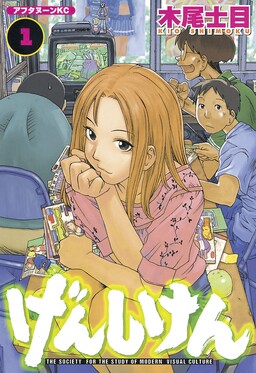
Genshiken: Second Season Review: When the Otaku Club Grows Up and Falls in Love
by Shimoku Kio
Read the first volume. If it doesn't hook you, put it down. It'll hook you.
Buy Genshiken: Second Season on Amazon →*Affiliate link — I earn a small commission at no extra cost to you.
When I was a kid hiding from the world, I always thought a club room would save me. A place with a door I could close, people who liked the weird things I liked, nobody asking why I was alone. I never got one. So when I read the original Genshiken in my twenties, the clubroom hit me hard — that was the room I wanted at twelve.
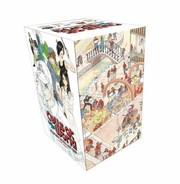
What I did not expect was for the sequel to be better. Genshiken: Second Season — Genshiken Nidaime in Japanese — takes the same room, empties out most of the old faces, and fills it with a new generation that is mostly female, mostly fujoshi, and includes a boy named Hato who shows up in a dress. And somehow it becomes a love story I still think about.
Quick Take
- The sequel out-reaches the original — it keeps Kio's documentary eye for fan culture, but adds a real romance arc and a genuinely new character in Hato
- This is the same warm, funny clubroom comedy, just with a sharper heart and an older cast figuring out adulthood
- 12 volumes, complete in English from Kodansha Comics; rated T+ (Older Teen) for crude otaku humor, some sexual jokes, and gender-identity themes
Story Overview
Genshiken: Second Season picks up after most of the original cast has graduated. The Society for the Study of Modern Visual Culture — "Genshiken" — now runs on a new generation that is, to the old members' shock, almost entirely women, most of them fujoshi who came in through BL fandom. Into this club walks Kenjirou Hato, a male first-year who crossdresses, partly to fit in with the girls and partly because the clubroom is the one place he can.
The early volumes are pure club comedy — Comic Fest trips, cosplay, the new members feeling each other out. But across the run the series quietly reorganizes itself around a single thread: Madarame, the awkward former president who never quite left, finally confessing his years-long crush on Saki Kasukabe and getting rejected — and then, almost against his will, becoming the center of a "harem" he is far too socially clueless to notice. The back half of the series is basically four people (Sue, Keiko, Angela, and Hato) orbiting one oblivious otaku, and the club gently — sometimes not so gently — forcing him to choose.
It ends. It actually resolves. That is rare for a slice-of-life series, and it is part of why this one stuck with me.
Characters
Kenjirou Hato — The heart of the sequel. A fudanshi who crossdresses, Hato passes well enough that new members assume he's a girl. His arc is the careful, un-tidy one: his relationship to crossdressing, to BL, and to his own feelings is never reduced to a single label, and the series refuses to "solve" him quickly. He becomes one of the four people drawn to Madarame.
Madarame — The returning anchor. A former club president who graduated but kept hanging around because his job and apartment were nearby, Madarame spends the series trying to grow up and let go of his college crush. His confession, rejection, and accidental harem are the spine of the second half.
Saki Kasukabe — Madarame's old unrequited crush, now an outsider-adult who keeps drifting back to the club. After rejecting him, she becomes the unlikely director of his love life, determined that he land somewhere good.
Yajima and Yoshitake — The two other key new members. Yajima is self-conscious and grounded, often the reader's stand-in; Yoshitake is the loud, gleeful agent of chaos. Their dynamic with Hato carries a lot of the comedy.
What I Love About It
What I love is that this series treats its clubroom as a place where people are allowed to be works in progress. The original Genshiken was mostly about belonging — finding the room. The sequel is about what happens after you belong: you still have to grow up, you still get your heart broken, you still don't know who you are.
Hato is the clearest example. There's a stretch early on where Yajima genuinely cannot square the friend she likes with the fact that Hato is a guy. After a sleepover, she gets so tangled up in doubt that she ends up checking — and Yoshitake, waking up, just flips Hato's skirt to settle the argument. It should be a cheap gag, and on the surface it is. But what I love is what the series does around it: it never lets Hato become a punchline. The crossdressing isn't a costume the story is laughing at; it's a real thing Hato needs, and the people who love him slowly figure out how to hold that without demanding he explain it. For a comedy from a mainstream seinen magazine, that patience felt genuinely kind to me.
And the romance. I came to Genshiken for fan-culture comedy and stayed for a love triangle that turned into a love pentagon. Watching the club essentially conspire to get the most hopeless guy in the room to finally choose a future — that is funny and tender in a way I did not see coming from a clubroom comedy.
Memorable Scene ⚠️ Spoiler Warning
Chapter 80. Madarame finally confesses to Saki — and he can't even say it straight. Instead of "I love you," he blurts out a callback to the day they met years earlier: that she'd had a nose hair sticking out. She understands exactly what he means. And she turns him down — gently, honestly, telling him that maybe, in another life, if Kohsaka had never been there, it could have happened.
What makes it unforgettable is her face afterward. Saki, who spent the whole original series being the sharp, untouchable outsider, ends up in tears — not for herself, but because she finally grasps how much she'd hurt him by leaving it unspoken for so long. It's the moment the sequel earns its emotional weight. Madarame's college-long crush dies on that page, and instead of breaking him, it sets him free to actually live. I closed the volume and just sat there. That's the scene that turned this from "a fun sequel" into one of my favorite slice-of-life endings.
Pros & Cons
Pros
- A worthy sequel that genuinely goes somewhere new — fujoshi perspective and a real romance arc
- Hato is one of the most carefully drawn characters in the whole franchise
- It actually resolves, with a satisfying ending across 12 volumes
- Same sharp, affectionate eye for fan culture as the original
Cons
- You'll get far more out of it after reading the original Genshiken first
- The crude humor and skirt-flipping gags land harder than some readers will want
- It's a slow-building club comedy that turns into a long romance — if you wanted only the otaku-documentary vibe of the original, the love-pentagon focus won't work for everyone
Is Genshiken: Second Season Worth Reading?
Yes — especially if you read the original. It keeps everything that made Genshiken warm and funny, then adds a new lead worth caring about and a romance that actually pays off. Start with the original Genshiken, then come here; you'll get a sequel that grows up alongside its characters.
Where to Buy
Read the first volume. If it doesn't hook you, put it down. It'll hook you.
This post contains affiliate links. If you purchase through these links, I may earn a small commission at no extra cost to you. As an Amazon Associate, I earn from qualifying purchases.
*Affiliate link — I earn a small commission at no extra cost to you.
More Manga You Might Like
Slice of Life
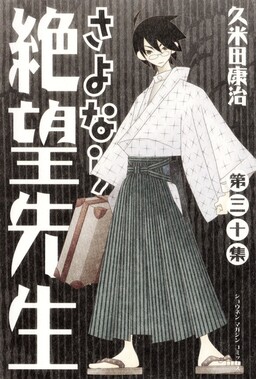
Sayonara, Zetsubou-Sensei
Yu's review of Sayonara, Zetsubou-Sensei — Nozomu Itoshiki is a Japanese teacher whose name, written horizontally, reads 'despair'; his approach to life matches; he is constantly in despair about modern society; his student Kafuka Fuura is pathologically optimistic and refuses to accept any negative interpretation of anything.

Slice of Life / Comedy
Phantom of the Idol
Yu's review of Phantom of the Idol — Yuuya Niyodo is an idol who hates performing and tries to be fired; Asahi Mogami is the ghost of an idol who died before she could reach her dreams; when she possesses Yuuya during a performance, they strike a deal — she performs through his body, he reaps the rewards.

Slice of Life / Romance
It's Not Meguro-san's First Time
Yu's review of It's Not Meguro-san's First Time — Seiya Furutachi confesses to Ryo Meguro, an unusual woman at his workplace who doesn't fit the typical romance heroine template; both of them are adults who have had previous relationships, which makes their developing relationship proceed differently than the typical manga romance.
Slice of Life
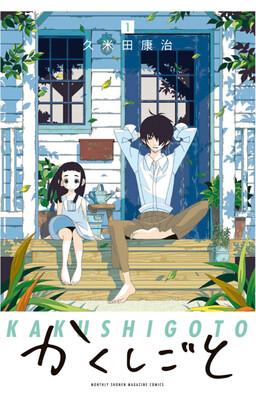
Kakushigoto
Yu's review of Kakushigoto by Koji Kumeta — an ecchi manga artist hides his job from his daughter Hime, and a daily gag comedy slowly reveals itself as a father-daughter love story across ten years.
Comedy / Slice of Life
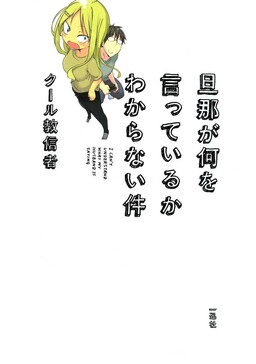
I Can't Understand What My Husband Is Saying
Yu's review of I Can't Understand What My Husband Is Saying (旦那が何を言っているかわからない件) — a 5-volume 4-koma comedy by Coolkyousinnjya about Kaoru, an ordinary office worker, and Hajime, her shut-in otaku-blogger husband. Their marriage works precisely because she doesn't always get the reference.
Slice of Life / Comedy
Cells at Work!
Yu's review of Cells at Work! — the cells of a human body are personified as workers in a city. Red Blood Cell AE3803 delivers oxygen, White Blood Cell U-1146 kills pathogens, and a cancer cell asks why he has to die. Educational comedy that quietly breaks your heart.
Written by
Yu
Manga Enthusiast from Japan
I grew up in Japan and manga literally saved me during a tough time in elementary school. My English isn't perfect, but my love for manga is real — and I want to share it with you.
Disclosure: This post contains affiliate links. As an Amazon Associate, I earn from qualifying purchases at no extra cost to you.