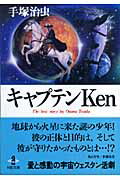
Captain Ken Review: Tezuka's Space Western With a Twist Nobody Saw Coming
by Osamu Tezuka
Read the first volume. If it doesn't hook you, put it down. It'll hook you.
Buy Captain Ken on Amazon →*Affiliate link — I earn a small commission at no extra cost to you.
I read a lot of Tezuka before I ever read this one. Astro Boy, Black Jack, Phoenix — the famous ones. So when I finally tracked down Captain Ken, I expected something minor, a little curiosity from 1960. What I did not expect was to spend the whole first volume arguing with myself about who the masked cowboy actually was, and then to get the answer completely wrong. I was so sure. Almost everyone who read it back then was sure too — and they were wrong as well. That feeling of being gently outsmarted by a manga that is older than my parents is exactly why I keep coming back to old Tezuka.
Quick Take
- Osamu Tezuka's 1960 sci-fi western, set on a colonized Mars where human settlers persecute the native Martians.
- A clever identity mystery wrapped around a surprisingly sharp allegory about the American West.
- Rated T (Teen) — gunfights and heavy themes of persecution, but nothing graphic.
Story Overview
Humanity has migrated to Mars, and the first settlers were Americans who looked at the red terrain and saw the Wild West all over again. With that frame, the old patterns repeat: the human colonists push the indigenous Martians off their land, break their agreements, and corner them into the worst territory while calling it progress.
Into Heden City rides a young masked gunslinger called Captain Ken, with his robot horse Arrow. Unlike the settlers, Ken sides with the Martians, breaking up the cruelty of the men exploiting them. Around the same time, a girl named Kenn Minakami arrives from Earth to visit the Hoshino family's ranch — and she looks exactly like Captain Ken. Mamoru Hoshino, the boy who is saved by Ken early on, becomes convinced the two are the same person. The turning point is when that easy theory collapses: Ken and Kenn appear as two separate people, and the real answer turns out to be far stranger.
The ending arrives fast. The Martians, who have quietly stockpiled weapons for years, finally rise up to drive the settlers off the planet, and the story closes on a bittersweet note — the truth of Captain Ken laid bare, with a final exchange about who Ken's father really is. It is abrupt, but it goes out swinging.
Characters
Captain Ken — A masked young gunfighter who appears out of nowhere to defend the Martians. He is faster and more capable than any settler, and his identity is the engine of the whole story. The Shonen Sunday serialization quietly establishes that he was born in the year 2252 — a detail that reframes everything once you notice it. He is not just hiding a face; he is hiding when he comes from.
Kenn Minakami — A girl from Earth, a relative of the Hoshino family, who arrives looking identical to Captain Ken. Tezuka deliberately keeps Ken and Kenn from ever being seen together for most of volume one, daring you to assume the obvious. She is the key the reader keeps trying the wrong lock with.
Mamoru Hoshino — The Hoshino family's son, and our way into the story. He starts as a settler kid who has absorbed his world's contempt for Martians, and watching Captain Ken changes how he sees the people his neighbors are crushing. His arc is the moral spine of the book, and the final lines belong to him.
Arrow — Captain Ken's robot horse, built because wheeled vehicles do not work on most of the Martian terrain. He is more than a gimmick; he is part of how Tezuka makes this western feel genuinely alien.
What I Love About It
What I love is how Tezuka refuses to let the western fantasy stay comfortable. The settlers literally arrive saying Mars "looks just like the Wild West," and Tezuka takes that line seriously and follows it to its ugly conclusion. The Martians get pushed onto worse and worse land. Agreements get broken. The word "civilization" keeps getting used to justify the next cruelty. In 1960, in a weekly boys' magazine, in a story with a robot horse and laser pistols, he is drawing a clear line from the cowboy myth to the genocide that myth papers over. That honesty is what lifts this above being just a fun curiosity.
And the worldbuilding sells it. The sky over Mars is violet. The sun looks smaller than it does from Earth. The gravity is lighter. The Martians eat only the peels of fruit and throw the insides away. These tiny, almost throwaway details do something important — they make the Martians feel like a real people with their own logic, not just stand-ins. So when the settlers treat them as obstacles, you feel the wrongness of it in your gut, not just in the theme. That is the trick Tezuka pulls again and again: he makes you care first, and only then makes his point.
Memorable Scene ⚠️ Spoiler Warning
The thing I cannot forget is the resolution of the identity mystery, because of how thoroughly it beat its own readers. During serialization, Shonen Sunday ran a prize contest — "Guess Who Captain Ken Is!" — and got close to 40,000 entries. The vast majority, around 98 percent, guessed that Captain Ken and Kenn Minakami were simply the same person, a girl disguised as a boy, exactly like Tezuka's earlier Princess Knight. By Tezuka's own account, only a handful — he says about two — got it right.
The reason almost everyone failed is that Tezuka had originally planned that obvious answer, then changed it precisely because his sharp-eyed readers had already spotted the Princess Knight trick coming. So instead of a disguise, the real key is buried in that quiet line of setup: a boy born in 2252, appearing in a story set well before that. The mystery is not "which one is the girl" — it is tangled up with time itself, and the truth lands in those final pages along with the question of who Ken's father is. Knowing that I would have written my own losing entry into that contest is exactly why the reveal stuck with me. It is a magic trick where the magician shows you he changed the trick because you were watching too closely.
Pros & Cons
Pros:
- A genuinely clever identity mystery that outsmarted nearly 40,000 of its original readers.
- A sharp, surprisingly unflinching allegory about colonization and the myth of the American West.
- Inventive Martian worldbuilding that makes the setting feel alien instead of decorative.
Cons:
- The ending is abrupt — it races to its conclusion and resolves the uprising very quickly.
- The cartoony 1960 art and shonen-magazine pacing feel dated, and it is, by Tezuka's own standards, minor work rather than a masterpiece — so this won't work for everyone.
Is Captain Ken Worth Reading?
Yes, if you go in with the right expectations. This is not peak Tezuka like Phoenix or Buddha, and the art and pacing show their age. But it is a smart, big-hearted space western with a mystery that genuinely fools you and a colonization allegory that was brave for 1960. For Tezuka fans and anyone curious about the roots of manga science fiction, it is very much worth the two volumes.
Where to Buy
Read the first volume. If it doesn't hook you, put it down. It'll hook you.
This post contains affiliate links. If you purchase through these links, I may earn a small commission at no extra cost to you. As an Amazon Associate, I earn from qualifying purchases.
*Affiliate link — I earn a small commission at no extra cost to you.
More Manga You Might Like
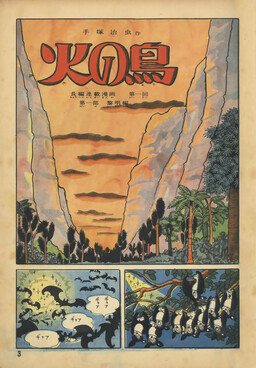
Sci-Fi / Historical
Phoenix
Yu's review of Phoenix — Tezuka Osamu's incomplete masterwork — a series of stories set throughout Japanese and universal history, connected by the Phoenix, a bird whose blood grants immortality; the Phoenix appears in each arc but cannot be caught; the arcs range from ancient Japan to the far future and examine what it means to be human across all of time.
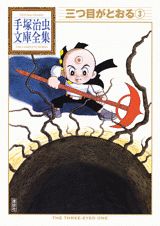
Sci-Fi / Adventure
The Three-Eyed One
The Three-Eyed One follows Sharaku Hosuke, a seemingly simple-minded boy who conceals a third eye beneath a bandage — when uncovered, the third eye reveals his true identity as a descendant of a lost civilization with extraordinary mental powers and a ruthless intelligence.
Sci-Fi / Adventure
Ginga no Sannin
Ginga no Sannin is one of Osamu Tezuka's compact science fiction works — a single-volume story about three people across the galaxy whose lives intersect at a critical historical moment, demonstrating Tezuka's ability to compress epic into modest space.
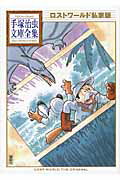
Sci-Fi / Adventure
Lost World
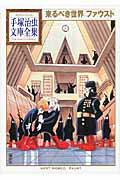
Earth scientists travel to a planet of plant people and prehistoric beasts in Tezuka's foundational early sci-fi.
Sci-Fi / Drama
Nextworld
Two superpowers test bombs that mutate animals into intelligent beings — Tezuka's Cold War allegory drawn in 1951.
Sci-Fi / Drama
Metropolis
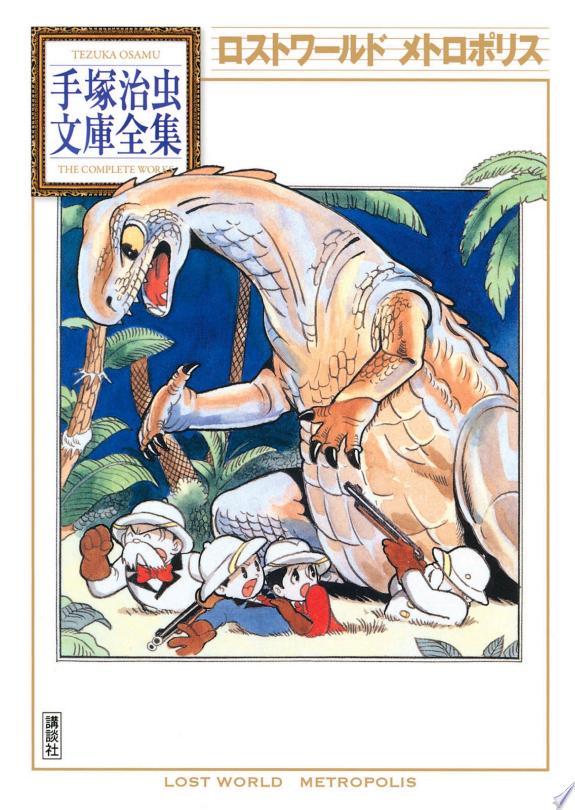
A review of Osamu Tezuka's Metropolis — serialized in Manga Shōnen in 1949, complete in one volume. A loose adaptation of Fritz Lang's film about a stratified city, an android child named Mitchi, and the question of what makes someone human. VIZ Media's English edition is complete.
Written by
Yu
Manga Enthusiast from Japan
I grew up in Japan and manga literally saved me during a tough time in elementary school. My English isn't perfect, but my love for manga is real — and I want to share it with you.
Disclosure: This post contains affiliate links. As an Amazon Associate, I earn from qualifying purchases at no extra cost to you.