Ginga no Sannin Review: The Tezuka Sci-Fi Manga Where Three People Held a Galaxy Together
by Osamu Tezuka
Read the first volume. If it doesn't hook you, put it down. It'll hook you.
Buy Ginga no Sannin on Amazon →*Affiliate link — I earn a small commission at no extra cost to you.
Tezuka could write epics in a thousand pages. He could also write epics in a hundred and fifty. The compression was the gift, not the limitation.
Quick Take
- Osamu Tezuka's compact science-fiction work — a single volume of galactic-scale storytelling
- Demonstrates Tezuka's range outside his famous longer works (Phoenix, Black Jack, Buddha)
- Compact, satisfying, and part of the deep Tezuka catalog worth exploring
Who Is This Manga For?
- Tezuka completists who want his lesser-known compact works
- Classic sci-fi fans who want short-form Japanese sci-fi from the medium's master
- Tezuka entry-point seekers who want a short work to test their interest
- Anyone curious about how compression shapes Tezuka's storytelling
Content Warnings & Age Rating
Age Rating: All Ages Content Warnings: Mild adventure intensity, classical-Tezuka stylized violence. Generally accessible.
Suitable for most readers.
Yu's Rating
| Category | Score |
|---|---|
| Story Depth | ★★★★☆ |
| Art Style | ★★★★☆ |
| Character Development | ★★★☆☆ |
| Accessibility for Non-Japanese Readers | ★★★★☆ |
| Reread Value | ★★★☆☆ |
Story Overview
The story follows three characters across galactic distances whose lives, although separated, are connected by a single historical situation that requires their combined contributions to resolve. Tezuka uses science-fiction setting to compress what could be a much longer narrative into focused storytelling: each character gets enough space to register, the historical situation gets enough development to feel real, and the resolution arrives without unnecessary expansion.
The form is short by Tezuka's standards — a single volume rather than the multi-volume epics he became famous for. The compression demonstrates his range: he could deliver epic resonance in modest space, with the same craft that defined his longer work.
The science-fiction worldbuilding is light by genre conventions — Tezuka treats the sci-fi setting as backdrop for human story rather than as subject in itself. Readers who come for hard SF will find soft SF; readers who come for character drama will find that delivered with Tezuka's signature precision.
Characters
The three: Each given enough characterization to register, with their contributions to the central situation each meaningful in different ways.
Art Style
Tezuka's art is the master form of mid-Showa manga — his line, his pacing, his ability to balance comic and serious registers within single panels are all on display. The science-fiction settings are rendered with the kind of stylized confidence that defines his SF work generally.
Cultural Context
Ginga no Sannin sits in Tezuka's vast catalog as one of many compact works that demonstrate his ability to deliver complete stories in limited space. His longer works (Phoenix, Black Jack, Buddha) get most attention, but the compact works are part of the same craft and reveal different aspects of his approach.
Tezuka's science-fiction generally treats SF tropes as vehicles for examining human concerns rather than as ends in themselves — a tradition he helped establish for manga SF that subsequent generations continued.
What I Love About It
I love that Tezuka could compress.
A different Tezuka work could have made this premise into a multi-volume epic. The compactness is a creative choice, not a limitation. Tezuka understood that some stories want concentration, others want expansion, and the artist's task is recognizing which the current story wants. Ginga no Sannin's compactness serves its themes; the work would be lesser at greater length. The discipline behind that recognition is part of his mastery.
What English-Speaking Fans Say
Limited international awareness as it falls within the deep Tezuka catalog rather than his famous works. Among Tezuka completists, regarded as a worthy compact work.
Memorable Scene ⚠️ Spoiler Warning
The convergence moment where the three characters' separate threads meet — Tezuka's gift for braided storytelling concentrated into a single climactic page sequence. The scene exemplifies why his compact works can match his longer ones in impact.
Similar Manga
| Title | Its Approach | How Ginga no Sannin Differs |
|---|---|---|
| Phoenix | Tezuka's epic SF cycle | Different scale — Phoenix is multi-volume across multiple settings |
| Lost World | Tezuka's early SF | Ginga no Sannin is more mature in narrative compression |
| Nextworld | Tezuka's other compact SF | Companion-piece in the compact-Tezuka-SF subset |
Reading Order / Where to Start
The single volume is self-contained.
Official English Translation Status
Ginga no Sannin has no official English translation.
Pros & Cons
Pros
- Tezuka's compression on display
- Compact at single volume — minimal commitment
- Demonstrates range within his catalog
- Classic-era Tezuka craft throughout
Cons
- No English translation
- Single-volume length limits sustained engagement
- Lesser-known compared to Tezuka's famous works
- Soft-SF approach won't satisfy hard-SF readers
Is Ginga no Sannin Worth Reading?
For Tezuka completists and classic sci-fi enthusiasts who want short-form work from the medium's master, yes — this is a worthy entry in the deep catalog. For readers wanting the famous Tezuka or extensive SF worldbuilding, this is supplementary rather than essential. As compact Tezuka, it earns its place.
Format Comparison
| Format | Notes |
|---|---|
| Physical | Japanese editions available |
| Digital | Available in Japanese |
| Omnibus | Collected in various Tezuka complete editions |
Where to Buy
No English release yet. That just means you find it before everyone else does.
*Affiliate link — I earn a small commission at no extra cost to you.
More Manga You Might Like
Sci-Fi / Adventure
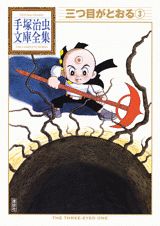
The Three-Eyed One
The Three-Eyed One follows Sharaku Hosuke, a seemingly simple-minded boy who conceals a third eye beneath a bandage — when uncovered, the third eye reveals his true identity as a descendant of a lost civilization with extraordinary mental powers and a ruthless intelligence.
Sci-Fi / Historical
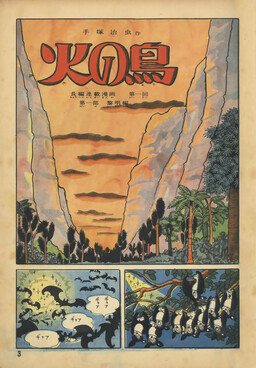
Phoenix
Yu's review of Phoenix — Tezuka Osamu's incomplete masterwork — a series of stories set throughout Japanese and universal history, connected by the Phoenix, a bird whose blood grants immortality; the Phoenix appears in each arc but cannot be caught; the arcs range from ancient Japan to the far future and examine what it means to be human across all of time.
Sci-Fi / Adventure
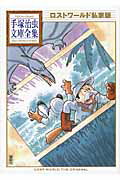
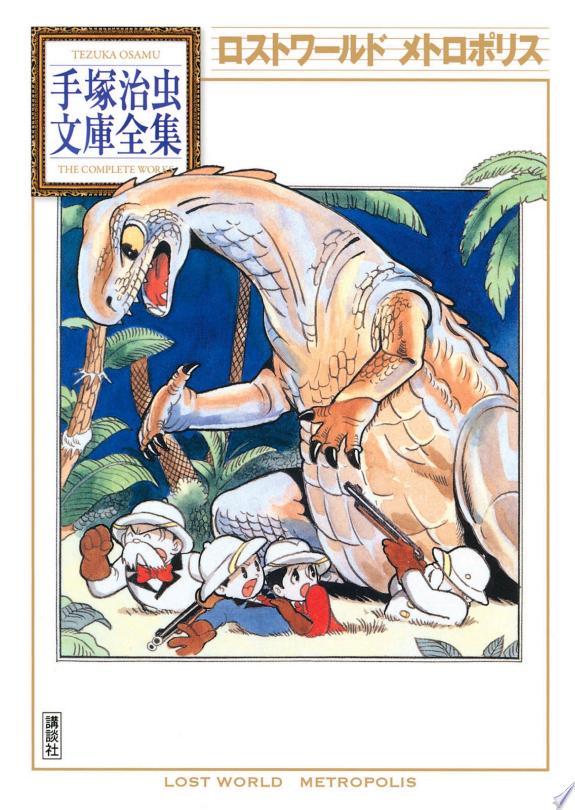
Lost World
Earth scientists travel to a planet of plant people and prehistoric beasts in Tezuka's foundational early sci-fi.
Sci-Fi / Adventure
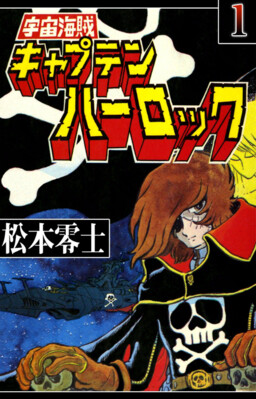
Captain Harlock
Yu's review of Captain Harlock — in 2977, humanity has grown comfortable and given up. Harlock is the one man who still fights. Aboard the Arcadia he stands against the Mazone, alien women who came back to reclaim the Earth they once seeded.
Sci-Fi / Drama
Metropolis
A review of Osamu Tezuka's Metropolis — serialized in Manga Shōnen in 1949, complete in one volume. A loose adaptation of Fritz Lang's film about a stratified city, an android child named Mitchi, and the question of what makes someone human. VIZ Media's English edition is complete.
Sci-Fi / Drama
Galaxy Express 999
Galaxy Express 999 follows Tetsuro Hoshino, a young boy who boards the legendary space train 999 toward a planet where he can receive a free mechanical body — accompanied by the mysterious Maetel — and encounters, on each planet the train stops at, a different meditation on what it means to be human and whether eternity is worth what it costs.
Written by
Yu
Manga Enthusiast from Japan
I grew up in Japan and manga literally saved me during a tough time in elementary school. My English isn't perfect, but my love for manga is real — and I want to share it with you.