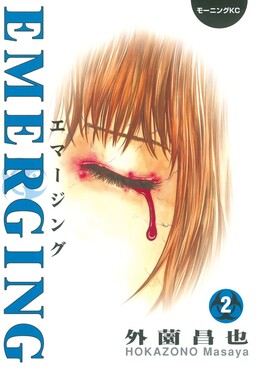
Emerging Review: A Hemorrhagic Virus Tears Through Shinjuku and No One Is Ready
by Masaya Hokazono
Read the first volume. If it doesn't hook you, put it down. It'll hook you.
Buy Emerging on Amazon →*Affiliate link — I earn a small commission at no extra cost to you.
I read a lot of horror manga to feel scared in a safe way — monsters, ghosts, things that can't actually reach me. Emerging is the one that did the opposite. I read it on a crowded train, on my way through Shinjuku of all places, and when I got off and walked through that exact crosswalk the manga opens on, I felt sick. There is no demon in this book. There is a man who coughs blood at a pedestrian crossing, and a whole city that does not understand yet what it has just stood next to. I grew up hiding inside fantasy stories, but this one took the most ordinary place I know and made it the scariest thing I had ever read.
What stayed with me is that Masaya Hokazono drew this in 2004. Years before any of us learned words like "airborne" and "containment" the hard way. Reading it now, after everything, is almost unbearable in how much it got right.
Quick Take
- A short, brutal pandemic horror where the monster is a virus and the real villain is how slowly and dishonestly the people in charge respond
- Hokazono treats the outbreak like a procedure — autopsy, blood samples, ELISA tests, mouse experiments — so the dread builds from cold accuracy, not jump scares
- Originally 2 volumes (later reissued in a 3-volume digital edition); the M (Mature) rating is fully earned by the graphic hemorrhagic-fever deaths
Story Overview
It starts at a crosswalk in Shinjuku. A salaryman named Yamada suddenly collapses, blood pouring from him, and dies in front of a crowd of strangers — including a high school girl, Misaki Akari, who happens to be standing right there. Pathologists Sekiguchi and Onodera are called to perform the autopsy, and what they find under the microscope is a spherical virus multiplying in his blood that matches nothing known. Antibody testing comes back completely negative; mouse experiments confirm it causes lethal hemorrhagic fever. They are looking at an unknown pathogen — Japan's first "emerging" virus.
The turning point is when the doctors realize the timeline is already lost. Roughly a hundred people were near Yamada or splashed by his blood, and reports of early symptoms start coming in. Akari herself sickens. The disease they name "Japanese hemorrhagic fever" runs its course in days: eyes flooding red, veins standing out, the body swelling until it ruptures. Then the second horror arrives — the health ministry quietly buries the possibility that the virus is airborne and issues a premature "all clear" declaration to avoid panic, only for an internal whistleblower to leak the airborne suspicion. The truth coming out the wrong way detonates exactly the panic they were trying to prevent.
The ending pulls back from pure despair. Forced isolation rounds up over 150 infected into a field-hospital nightmare, and Akari is slated for transfer to the United States. The break comes from Akari's boyfriend, Oshima, who tests positive yet stays healthy — an antibody carrier. Doctors build a serum from his immune antibodies, and it works dramatically on the severely ill. After about three months, containment is declared, more carriers are found among latent cases so serum treatment can scale, and the source is traced back to a biological vector in the Japan Alps where Yamada had been on a survey.
Characters
Sekiguchi — The pathologist who performs Yamada's autopsy and is the first to suspect hemorrhagic fever. He is the one staring down the microscope while everyone above him wants a simpler answer. His arc is the quiet competence that keeps insisting on the truth even when the truth is institutionally inconvenient.
Onodera — The clinical physician, drawn as the strongly justice-minded one of the pair, and the doctor who actually knows Akari. He carries the human cost of the outbreak because for him it has a face — a patient he cares about, not a case number.
Misaki Akari — The high schooler who was simply in the wrong place at the wrong time, splashed with Yamada's blood at the crosswalk. She becomes one of the most severe cases, the body that the disease's progression is shown through, and the patient the whole back half of the story is racing to save before her time runs out.
Oshima — Akari's boyfriend, and the unexpected key to everything. He tests positive for the virus but never gets sick — an antibody carrier whose blood becomes the basis for the serum that finally turns the tide.
What I Love About It
The thing I love is also the thing that disturbed me most: Hokazono refuses to make the virus the bad guy. The virus is just biology doing what biology does. The horror he is actually pointing at is the decision — made in an office, by people in suits — to hide the possibility of airborne transmission and declare the outbreak over early so nobody panics. I have read a hundred horror manga where evil has fangs. This one made evil look like a press conference.
What makes that hit so hard is the contrast with the doctors. Sekiguchi at the microscope, Onodera at the bedside — these people are doing everything right, working with real tools (the ELISA tests, the mouse trials, the contact math), and it still isn't enough, because the system above them is optimizing for the wrong thing. The first time I understood what the manga was building toward — that the worst damage would come not from the disease but from the cover-up and the way the truth finally escaped — I had to put it down for a minute. It reframed the whole genre for me. Real horror, the kind that actually happens, isn't a creature in the dark. It's a delay. It's a number someone decided not to say out loud.
Memorable Scene ⚠️ Spoiler Warning
The image I cannot shake is the moment the airborne suspicion gets out. The health ministry has already declared the outbreak contained — they made the political call to keep the airborne possibility quiet. Then an internal whistleblower leaks it, and the news breaks the wrong way, all at once, to a public that was just told everything was fine. The panic that follows is drawn as a consequence of dishonesty, not of the disease. Watching the spread of fear track exactly back to that one suppressed fact is, to me, the most precise thing the book says: pandemic horror is born in the gap between what authorities know and what they're willing to admit. The bodies are horrifying. The decision is worse.
Pros & Cons
Pros
- The procedural realism — autopsies, antibody tests, the slow correct science — makes the dread feel earned and genuinely upsetting
- The institutional cover-up adds a layer of moral horror that lands even harder after 2020
- At its original 2-volume length it never sags; it's lean and relentless
- Eerily prophetic for a 2004 manga, which gives it a second, colder life on a reread
Cons
- The hemorrhagic-fever deaths are graphic and clinical; the body horror is not stylized away
- The fast pacing means characters are defined more by their role in the outbreak than by deep personal backstory
- It ends on a procedural rescue (the serum) rather than emotional catharsis — that combination of grim science and very fast resolution won't work for everyone
Is Emerging Worth Reading?
Yes — if you want horror that comes from plausible reality rather than monsters. It's short, scientifically grounded, and its real subject is how institutions fail during an outbreak, which makes it more unsettling now than when it was drawn. Just know going in that the gore is real and the comfort is minimal.
Where to Buy
No English release yet. That just means you find it before everyone else does.
The Japanese print and digital editions are the legitimate way to read it for now:
Search Emerging (エマージング) on Amazon.co.jp →
This post contains affiliate links. If you purchase through these links, I may earn a small commission at no extra cost to you. As an Amazon Associate, I earn from qualifying purchases.
*Affiliate link — I earn a small commission at no extra cost to you.
Reading Guides
More Manga You Might Like
Horror
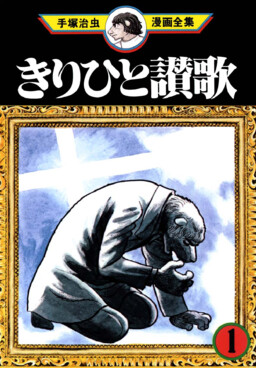
Ode to Kirihito
Yu's review of Ode to Kirihito — Dr. Osanai Kirihito investigates Monmow disease, a mysterious illness that transforms its victims into dog-like creatures; the medical establishment suppresses his findings; Osamu Tezuka's 1970 medical horror manga about a doctor reduced to subhuman status while searching for a scientific truth powerful people want hidden.

Horror
MW
Yu's review of MW — Yuki Michio is a beautiful, charming, amoral man who survived exposure to a chemical weapon as a child; the event destroyed his conscience; he works toward mass destruction while maintaining the appearance of a successful society member; a priest who loves him tries to hold him back; Osamu Tezuka's 1976 thriller about a man without conscience.
Horror / Psychological Thriller
Monster
Yu's review of Monster — a brilliant surgeon saves a boy's life over a hospital director's, ruins his career, and ten years later discovers the boy he saved has become a serial killer who is now hunting him.
Horror / Thriller
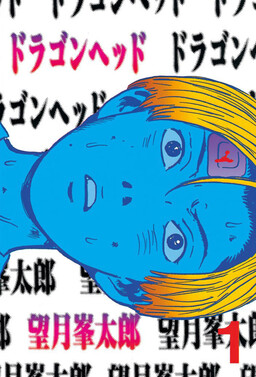
Dragon Head
Yu's review of Dragon Head — a school-trip train derails inside a mountain tunnel and three classmates crawl out into a Japan destroyed by an unexplained cataclysm. Minetaro Mochizuki's 10-volume survival horror about fear itself, the thing that breaks people faster than the disaster does.
Horror / Thriller
Life Is Money
Yu's review of Life Is Money — ten strangers agree to participate in a locked-room psychological game for a prize of 100 million yen; the rule is simple but brutal: they must maintain their sanity across ten days of engineered terror; those who break lose everything.
Horror / Thriller
Hideout
Yu's review of Hideout — Seiichi Kirishima takes his wife to a deserted island intending to kill her and stage it as an accident; before he can act, they encounter something on the island that alters the situation entirely; what follows is survival horror with a protagonist whose hands are already guilty.
Written by
Yu
Manga Enthusiast from Japan
I grew up in Japan and manga literally saved me during a tough time in elementary school. My English isn't perfect, but my love for manga is real — and I want to share it with you.
Disclosure: This post contains affiliate links. As an Amazon Associate, I earn from qualifying purchases at no extra cost to you.