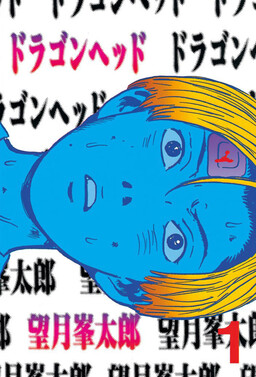
Dragon Head Review: The Train Came Out of the Tunnel Into a World That Was Already Over
by Minetaro Mochizuki
Read the first volume. If it doesn't hook you, put it down. It'll hook you.
Buy Dragon Head on Amazon →*Affiliate link — I earn a small commission at no extra cost to you.
I grew up in Japan, which means I grew up with the drills. The desk you climb under. The hallway you line up in. The cushion-hood thing you put over your head when the floor starts moving. Earthquakes were never abstract to me — they were a sound the building made and a thing your stomach did. So when I first read Dragon Head as a teenager, the opening hit me in a place that no zombie or monster ever reached. A train full of kids on a school trip goes into a mountain tunnel. There's a roar, a derailment, and then darkness. And the boy who wakes up is just a normal kid, surrounded by the dead, in a black tube with no light and no way out. I remember reading that first volume and feeling the temperature in my own room drop.
Minetaro Mochizuki didn't write a manga about a disaster. He wrote a manga about what happens to your mind when the explanations stop coming. That's the part that stayed with me for years.
Quick Take
- The post-apocalyptic horror that refuses to explain itself — the cataclysm that wrecks Japan is never given a tidy cause, and the horror is built out of that not-knowing rather than out of any monster
- Mochizuki's real subject is fear as a force that deforms people; the survivors who break do more damage than the ash and the lava ever do
- 10 volumes, complete, rated M (Mature) — graphic death, psychological breakdown, suicide, and disaster imagery throughout
Who Is This Manga For?
- Readers who want survival horror that treats psychological collapse as the actual threat
- Anyone who prefers apocalypse fiction where the cause is withheld and the dread is the silence
- Fans of horror that builds through accumulation rather than jump scares
- Readers who want a complete, award-winning 90s manga with serious artistic ambition
Content Warnings & Age Rating
Age Rating: M (Mature) Content Warnings: Extreme disaster imagery; graphic death, including the bodies of classmates; a survivor's descent into violent madness; a group planning mass suicide; psychological deterioration throughout.
The Mature rating is accurate. The Kodansha digital edition is rated 16+. This is demanding, bleak horror, and the early tunnel chapters alone are heavier than a lot of "horror" manga get across their whole run.
Story Overview
Teru Aoki is on a school trip when, just before his train enters a mountain tunnel, he sees something strange outside. Then an earthquake derails the train deep inside the tunnel. He wakes in the wreckage to find nearly everyone dead — the only other survivors are an injured girl, Ako Seto, and a classmate, Nobuo Takahashi.
The first act is the tunnel itself. There is no light, no food, and the smell of decay grows. Nobuo, who was a quiet, bullied kid, is the one who cracks: his terror of the dark curdles into something violent and ritualistic, and he becomes a danger to the two of them. Teru and Ako finally escape through ventilation shafts as lava begins to engulf the tunnel — and emerge into a Japan that is already gone. The sky is choked with ash, cities are abandoned, there's no clean water, no signal, no rescue.
From there it becomes a journey. They meet a military helicopter pilot, Iwada, and an unstable officer, Captain Nimura. They cross paths with a group of survivors at Izu preparing for mass suicide and rescue a strange boy, Kikuchi. They fly over where Mount Fuji should be and find a crater instead. The back half takes Teru into the ruins of Tokyo, searching for his family, through encounters with a scientist-led cult that doses people with fear-suppressing drugs. Nimura returns to tell Teru his family died in the disaster. In the end, foreign soldiers finally arrive — just as a new volcano erupts in Tokyo. The world doesn't get saved. The survivors are left clinging to the bare idea of hope.
Characters
Teru Aoki — The one who refuses to accept that this is permanent. His drive to reach Tokyo and find his family gives him direction in a world that has none, and the spine of the whole series is watching him hold that thread without letting fear hollow him out the way it hollows out everyone around him.
Ako Seto — Injured in the crash, she comes out of the tunnel half-shut-down and slowly re-enters the world over the course of the journey. She and Teru get separated and reunite in Tokyo's ruins, and her steadiness becomes the thing that keeps both of them human.
Nobuo Takahashi — The most frightening figure in the early volumes, and the key to the whole book. A timid, bullied boy whose fear of the dark in the tunnel turns him into a violent madman. He's not a villain so much as a demonstration: this is what the absence of light and meaning does to a person, fast.
Captain Nimura — A military officer the survivors meet on the journey, unstable and dangerous, embodying how authority itself comes apart under the disaster. He's the one who eventually delivers the news that Teru's family is dead.
Art Style
Mochizuki's art is the reason Dragon Head feels less like fiction and more like footage. The destroyed landscapes — collapsed cities, ash falling like snow, the crater where a mountain used to be — are drawn with a documentary specificity that gives them real weight. And the human faces are where he's quietly genius: he conveys terror, dissociation, and the slow loss of self through how he draws eyes and posture, not through dialogue. The tunnel chapters are almost entirely black, and he makes the darkness itself feel like a character pressing in.
What I Love About It
It's the tunnel. The entire opening stretch, before they ever see daylight, is the best thing in the book, and it's the part I think about most. Most disaster stories treat "the train crashed" as setup — a thirty-second prologue before the real story. Mochizuki refuses. He stays in the dark with these three kids for a long, long time, and he lets the horror be the small things: the smell, the hunger, the fact that the bodies of your classmates are right there, the way a single match becomes the most precious thing in the universe. There's no creature in the tunnel. The threat is the dark, and what the dark does to Nobuo.
What got me, and still gets me, is that Nobuo isn't a monster who was always a monster. He was the bullied kid, the one everyone ignored. And in that tunnel, with no light and no rules and no adults coming, the fear cracks him open and something terrible climbs out. Reading it as a teenager who knew exactly what it felt like to be the ignored kid, that terrified me more than any ghost — because it wasn't asking "what if a monster comes." It was asking "what's actually inside a scared person when you take everything else away." Mochizuki spends those chapters proving that the apocalypse outside the tunnel is almost an afterthought. The real disaster already happened, in the dark, to a boy.
What English-Speaking Fans Say
In the English-language manga community, Dragon Head has a reputation as a deeply underrated horror work, with reviewers repeatedly singling out the psychological realism — the way fear, isolation, and helplessness drive people to mass violence and suicide — as more effective than most horror manga's gore. The deliberate refusal to explain the cataclysm is the most debated choice: readers who go with it find the ambiguity far more unsettling than any explanation could be, while others come away frustrated by it.
Memorable Scene ⚠️ Spoiler Warning
The image that stays burned in is the crater. After everything — the tunnel, the helicopter, the ash — Teru and the others fly over the place where Mount Fuji should be. Fuji is the most fixed, most permanent thing in the entire Japanese landscape; it's on money, on calendars, on the inside of every Japanese person's idea of "home." And it's simply gone, replaced by a massive crater. Mochizuki draws it at full scale, and the disaster finally has a number you can't argue with. Up to that point you could half-pretend the destruction was local. Seeing Fuji erased is the moment the book tells you, plainly, that there is no normal left to return to. It's the single most devastating panel in the series, and he absolutely earns it.
Pros & Cons
Pros
- The art is among manga horror's best — the dead cities and ash-choked skies have genuine documentary weight
- The tunnel opening is a self-contained masterpiece of psychological horror
- The refusal to explain the disaster is, for many readers, more frightening than any explanation
- A complete, award-winning landmark (Kodansha Manga Award 1997; Tezuka Osamu Cultural Prize Excellence Award 2000)
Cons
- The ending stays ambiguous — no rescue, no answers — which frustrates readers who want resolution
- The horror works by slow accumulation, so the pacing demands patience
- It is relentlessly bleak, with mass suicide and a kid's mental collapse front and center — that unbroken darkness won't work for everyone
Is Dragon Head Worth Reading?
Yes — if you want horror that's about the mind rather than the monster. It's a complete, prize-winning 10-volume series with extraordinary art, anchored by one of the most unnerving openings in manga. Just go in knowing it's bleak, it's slow-burning, and it never hands you the comfort of an explanation. If those are dealbreakers, it'll wear you down. If they're the appeal, almost nothing else in the genre touches it.
Where to Buy
Read the first volume. If it doesn't hook you, put it down. It'll hook you.
This post contains affiliate links. If you purchase through these links, I may earn a small commission at no extra cost to you. As an Amazon Associate, I earn from qualifying purchases.
*Affiliate link — I earn a small commission at no extra cost to you.
Reading Guides
More Manga You Might Like
Horror / Thriller
Hideout
Yu's review of Hideout — Seiichi Kirishima takes his wife to a deserted island intending to kill her and stage it as an accident; before he can act, they encounter something on the island that alters the situation entirely; what follows is survival horror with a protagonist whose hands are already guilty.

Horror
MW
Yu's review of MW — Yuki Michio is a beautiful, charming, amoral man who survived exposure to a chemical weapon as a child; the event destroyed his conscience; he works toward mass destruction while maintaining the appearance of a successful society member; a priest who loves him tries to hold him back; Osamu Tezuka's 1976 thriller about a man without conscience.
Horror / Psychological Thriller
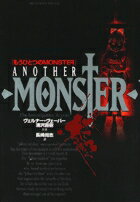
Monster
Yu's review of Monster — a brilliant surgeon saves a boy's life over a hospital director's, ruins his career, and ten years later discovers the boy he saved has become a serial killer who is now hunting him.
Horror / Thriller
Life Is Money
Yu's review of Life Is Money — ten strangers agree to participate in a locked-room psychological game for a prize of 100 million yen; the rule is simple but brutal: they must maintain their sanity across ten days of engineered terror; those who break lose everything.
Horror / Mystery
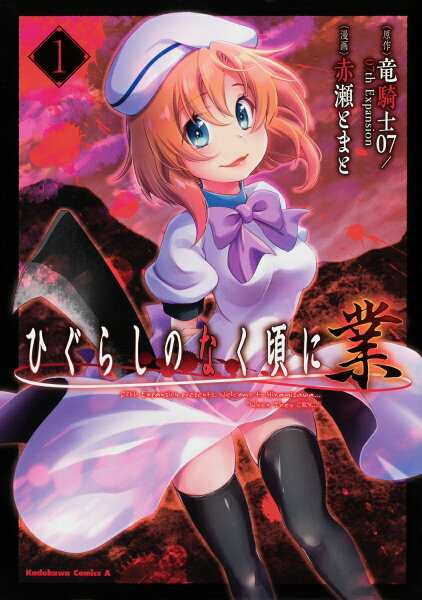
Higurashi When They Cry
Yu's review of Higurashi When They Cry — Keiichi Maebara moves to the rural village of Hinamizawa and discovers that every year, during the village festival, someone dies and someone disappears; the story resets across multiple arcs, each showing different versions of the same events as Keiichi and his friends try to understand and survive what the village is doing to them.
Horror / Literary
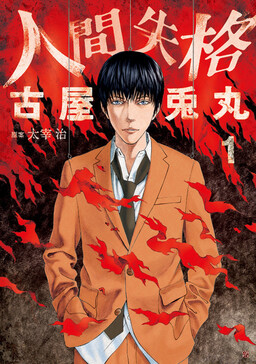
No Longer Human
Yu's review of No Longer Human manga adaptation — Usamaru Furuya adapts Osamu Dazai's 1948 autobiographical novel into a contemporary setting; the protagonist Yozo Oba is a young man who cannot believe himself to be a human being in the same sense as the people around him; the manga follows his descent through addiction, relationships, and the inability to exist in the world.
Written by
Yu
Manga Enthusiast from Japan
I grew up in Japan and manga literally saved me during a tough time in elementary school. My English isn't perfect, but my love for manga is real — and I want to share it with you.
Disclosure: This post contains affiliate links. As an Amazon Associate, I earn from qualifying purchases at no extra cost to you.