Life Is Money Review: Ten Strangers Locked in a Terror Game Where Losing Your Mind Means Losing Everything
by Tekka Yaguruma / Toshiya Higashino
Read the first volume. If it doesn't hook you, put it down. It'll hook you.
Buy Life Is Money on Amazon →*Affiliate link — I earn a small commission at no extra cost to you.
Quick Take
- A compact, efficient psychological death-game horror — Life Is Money commits to its premise and delivers genuine tension across 4 volumes without padding or wheel-spinning
- The sanity mechanic (breaking psychologically = elimination, not death) creates a different kind of horror than typical death games — watching characters deteriorate mentally is more unsettling than watching them die
- 4 volumes complete; one of the most efficient short-form horror thrillers Seven Seas has published
Who Is This Manga For?
- Readers who enjoy psychological horror over pure gore
- Fans of death-game manga who want something compact and focused
- Anyone who finds mental deterioration scarier than physical violence
- Readers who want complete horror thrillers they can finish in a single sitting
Content Warnings & Age Rating
Age Rating: M (Mature) Content Warnings: Psychological horror with genuine intensity; graphic violence when it occurs; depictions of mental breakdown and psychological deterioration; death-game structure with character mortality; mature themes throughout
An M rating that reflects both the psychological content and the violence — not appropriate for younger readers.
Yu's Rating
| Category | Score |
|---|---|
| Story Depth | ★★★☆☆ |
| Art Style | ★★★★☆ |
| Character Development | ★★★★☆ |
| Accessibility for Non-Japanese Readers | ★★★★★ |
| Reread Value | ★★★☆☆ |
Story Overview
Ten people, each with their own reasons for needing money, agree to participate in an experiment: they will be locked together in a facility for ten days. The prize is 100 million yen — life-changing for any of them.
The rule: maintain your sanity. The facility will subject them to engineered psychological terror — sensory manipulation, hallucinations, social pressure, manufactured paranoia. Anyone whose sanity meter drops to zero is eliminated and forfeits their prize.
The series follows the group as the designed terror dismantles their psychological defenses one by one, the alliances they form and break, and the protagonist Keiji's attempt to endure for the sake of his sister's medical bills.
Characters
Keiji Nakaoka — The protagonist whose motivation (money for his sister's treatment) gives him a specific reason to endure — watching him protect not just his life but his mental stability for a concrete goal creates a different kind of tension than simple survival instinct.
The nine other participants — Each with their own backstory and reason for needing the prize money, each with their own psychological weak point that the game probes. The series is efficient about establishing who matters and why.
The game architects — Present primarily through the designed terror rather than direct intervention — the cruelty is systematic rather than personal, which makes it more disturbing.
Art Style
Higashino's art handles the psychological deterioration sequences with effective visual language — the hallucination sequences use distortion and visual noise to communicate unreliable perception without simply being incoherent. The character expressions carrying the sanity meter's movement are the art's most important achievement.
Cultural Context
The death-game genre in manga (Liar Game, Gantz, Battle Royale, Danganronpa as a related medium) often uses competition to explore what people sacrifice under pressure. Life Is Money's specific focus on psychological endurance rather than physical competition reflects an understanding that mental strength is the more interesting question.
What I Love About It
The sanity mechanic changes the stakes in a way that makes the horror more personal — watching a character you've come to understand lose their grip on reality is genuinely more difficult than watching them be threatened physically. The series exploits this specific discomfort efficiently.
What English-Speaking Fans Say
Western readers describe Life Is Money as one of the most efficient short horror series available — the 4-volume length means it never outstays its welcome, and the psychological focus distinguishes it from the many similar-premise series that rely primarily on violence. The ending is consistently cited as satisfying given the setup.
Memorable Scene ⚠️ Spoiler Warning
The night sequence where one of the seemingly most stable participants breaks — the specific trigger and the specific way the deterioration manifests — is the series' most effective horror moment and the point where readers understand what the game is actually capable of.
Similar Manga
- Liar Game — Psychological game, strategic focus, similar intelligent tension
- Imawa no Kuni no Alice — Death game in alternate world, similar survival focus
- Doubt — Locked-room psychological horror, similar compact format
- As the Gods Will — Death game with psychological elements
Reading Order / Where to Start
Volume 1 — The premise is established immediately and the game begins quickly.
Official English Translation Status
Seven Seas Entertainment published all 4 volumes. Complete and available.
Pros & Cons
Pros
- Psychological sanity mechanic creates distinctive horror
- Compact 4-volume format without padding
- Efficient character establishment within the game structure
- Genuinely unsettling rather than simply violent
Cons
- Short length means limited character depth outside the game context
- Death-game genre familiarity may reduce surprise for genre veterans
- M rating content limits the audience
Format Comparison
| Format | Notes |
|---|---|
| Individual Volumes | Seven Seas; complete 4-volume set |
| Digital | Available |
Where to Buy
Read the first volume. If it doesn't hook you, put it down. It'll hook you.
This post contains affiliate links. If you purchase through these links, I may earn a small commission at no extra cost to you. As an Amazon Associate, I earn from qualifying purchases.
*Affiliate link — I earn a small commission at no extra cost to you.
Reading Guides
More Manga You Might Like

Horror
King's Game (Ousama Game)
Yu's review of King's Game — Nobuaki transfers to a new school hoping to escape his past; his entire previous class was killed when they received orders from 'the King' via text message and anyone who disobeyed died; the new class receives the same messages; Nobuaki must watch the same horror unfold again; Renda's adaptation of Kanazawa's horror novel about a game where the King's orders must be obeyed.
Horror
MW
Yu's review of MW — Yuki Michio is a beautiful, charming, amoral man who survived exposure to a chemical weapon as a child; the event destroyed his conscience; he works toward mass destruction while maintaining the appearance of a successful society member; a priest who loves him tries to hold him back; Osamu Tezuka's 1976 thriller about a man without conscience.
Horror / Psychological Thriller
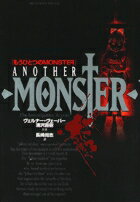
Monster
Yu's review of Monster — a brilliant surgeon saves a boy's life over a hospital director's, ruins his career, and ten years later discovers the boy he saved has become a serial killer who is now hunting him.
Horror / Thriller
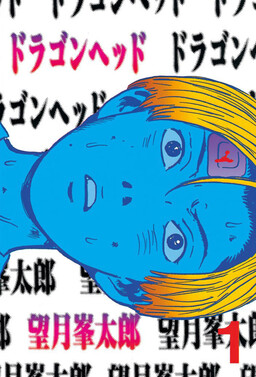
Dragon Head
Yu's review of Dragon Head — a school-trip train derails inside a mountain tunnel and three classmates crawl out into a Japan destroyed by an unexplained cataclysm. Minetaro Mochizuki's 10-volume survival horror about fear itself, the thing that breaks people faster than the disaster does.
Horror / Thriller
Hideout
Yu's review of Hideout — Seiichi Kirishima takes his wife to a deserted island intending to kill her and stage it as an accident; before he can act, they encounter something on the island that alters the situation entirely; what follows is survival horror with a protagonist whose hands are already guilty.
Horror / Mystery
Higurashi When They Cry
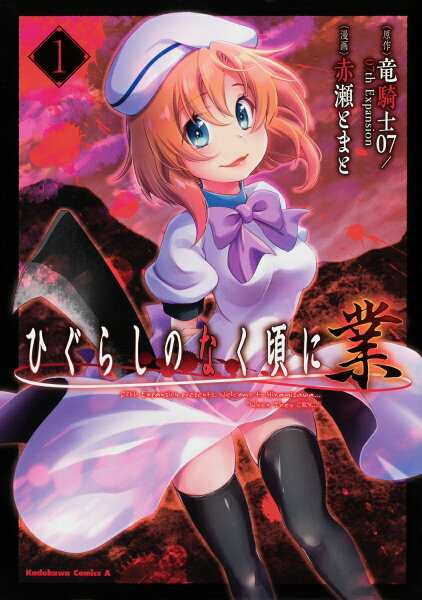
Yu's review of Higurashi When They Cry — Keiichi Maebara moves to the rural village of Hinamizawa and discovers that every year, during the village festival, someone dies and someone disappears; the story resets across multiple arcs, each showing different versions of the same events as Keiichi and his friends try to understand and survive what the village is doing to them.
Written by
Yu
Manga Enthusiast from Japan
I grew up in Japan and manga literally saved me during a tough time in elementary school. My English isn't perfect, but my love for manga is real — and I want to share it with you.
Disclosure: This post contains affiliate links. As an Amazon Associate, I earn from qualifying purchases at no extra cost to you.