Devilman Grimoire Review: The One Devilman That Lets You Keep Breathing
by Go Nagai / Rui Takato
Read the first volume. If it doesn't hook you, put it down. It'll hook you.
Buy Devilman Grimoire on Amazon →*Affiliate link — I earn a small commission at no extra cost to you.
I read the original Devilman when I was a teenager, alone in my room, and it left a hole in me that never fully closed. That ending — I won't say what happens, but if you've read it you know — broke something. For years afterward, whenever I picked up another Devilman version, I braced myself. I read them the way you'd touch a bruise. So when I started Devilman Grimoire, I was already flinching, waiting for the floor to fall out. And it never did. That surprised me more than any of the gore ever could.
Quick Take
- Go Nagai's classic, re-drawn by Rui Takato, moved into a high school where a girl's failed summoning ritual unleashes hell
- The Devilman concept stays intact — a human carrying a demon inside him — but the tone bends toward survival instead of total annihilation
- Rated M (Mature): heavy gore, nudity, and sexual violence run through the whole series, true to Nagai's transgressive roots
Story Overview
The story opens with Makimura Miki, a self-styled high school witch, talking her foster brother Akira Fudo into helping with a summoning ritual on the school rooftop. The spell goes wrong. The ritual tears something open, demons pour through, and Akira — left on the brink of death — has his body taken over by the ancient demon Amon.
The turning point is what makes Grimoire its own thing. Akira doesn't simply die and vanish the way he does elsewhere. His will and his memories stay inside the body as a kind of latent presence, and because of that, Amon physically cannot bring himself to harm humans — least of all Miki. So this version of Devilman fights the demon war from inside that strange shared body, protecting people while wearing a monster's face. Along the way more Devilmen appear, including the Devilman Corps, an organization led by a famous actor and theater director the story calls "the Modern Day Dante."
And then there's the ending, which is the real heresy. Devilman stories almost always end in ruin. Grimoire doesn't. After everything burns, humans and Devilmen actually manage to coexist and rebuild — and both Akira and Miki are still standing. In a franchise built on doom, that triumphant note is genuinely strange to read.
Characters
Akira Fudo / Amon — the heart of the book. What I find compelling is the split: Amon is a destroyer of his own kind, but Akira's lingering will keeps the demon leashed to humanity. He's a monster who can't fully be a monster, and that internal restraint is the engine of the whole series.
Miki Makimura — she's the one who started all of it, the witch whose botched ritual let Amon in. She's not just a victim or a love interest here; she carries the guilt of the opening, and later she becomes a Devilman herself, stepping into the fight she accidentally began rather than being protected from it.
Sirene — the series' first major antagonist, the bird-winged demon any Devilman fan recognizes. Her arc twists in a way I didn't expect: instead of the clean death the original story gives her, she ends up fusing with Todaiji and surviving, which is very in keeping with Grimoire's whole "fusion over annihilation" logic.
The Devilman Corps — the human-side response to the demon war, fronted by the theatrical "Modern Day Dante." They give the back half of the series its larger scale, turning a school nightmare into an actual war for the world.
What I Love About It
The thing that stuck with me isn't a fight. It's the basic premise of Akira and Amon sharing one body — the idea that the demon can't hurt Miki because the boy is still in there, refusing. I've read a lot of "human and monster in one skin" stories, but most of them treat the human half as a fading ember. Grimoire makes it structural. Akira's will is literally why the bodies pile up everywhere except around the people he loves. That detail reframed the whole series for me.
Why it hit me: the original Devilman destroyed me precisely because Akira's humanity loses. Here, his humanity is the thing holding the line. Reading it after the original felt like watching the same tragedy run backwards — like Nagai's universe was finally letting one Akira keep the part of himself that the 1972 version had to give up. I didn't expect to feel relief inside a Devilman manga. I felt it here, and I think that's the most interesting thing this book does.
Memorable Scene ⚠️ Spoiler Warning
Spoiler Warning. Grimoire wants you to understand early that this is still Nagai's world, and it makes that point with raw cruelty. One of the demon attacks that reviewers single out involves a turtle-like demon (Jinmen) that tears apart a demoness and then violates and devours her. It is grotesque, sexual, and deliberately unbearable, and it lands in the first volume before you've had time to get comfortable.
What makes it stay with me isn't shock for its own sake. It's the contrast. This is the same manga that ends in coexistence and survival — and yet it refuses to let you forget what these demons actually are. That single page is the price of admission Nagai charges so the hopeful ending later doesn't feel cheap. You earn the relief by first staring directly at the horror.
Pros & Cons
Pros:
- A real entry point into Devilman mythology that doesn't require reading 1972 first
- Rui Takato's art keeps Nagai's pulpy, grotesque demon designs while feeling cleaner to a modern eye
- All 5 volumes are completely available in English from Seven Seas
- The rare Devilman ending that chooses survival and coexistence
Cons:
- It can't match the original's gut-punch finality — the doom is what made classic Devilman immortal
- The extreme gore and sexual violence are baked into the source DNA and never let up
- It carries the retrograde, often misogynistic edge of 1970s Nagai, which for some readers is a deal-breaker, not flavor — this one genuinely won't work for everyone.
Is Devilman Grimoire Worth Reading?
Yes, with caveats. It's a strong, ultraviolent action-horror that finally gives a Devilman story a survivable ending, and it stands fine on its own. But it can't replicate the original's devastation, and its old-school gore and sexual violence will turn off as many readers as it draws in. Come for the demon war; know what you're signing up for.
Similar Manga
| Title | Its Approach | How Devilman Grimoire Differs |
|---|---|---|
| Devilman (1972) | The original — apocalyptic tragedy that ends in total ruin | Grimoire keeps the horror but lets its Akira and Miki survive |
| Chainsaw Man | Modern human-merged-with-devil action, irreverent and stylish | Grimoire is rooted in classic Nagai grotesquerie and mythology |
| Violence Jack | Nagai's brutal post-apocalyptic continuation of his own universe | Grimoire is a tighter 5-volume retelling rather than a sprawl |
Where to Buy
Read the first volume. If it doesn't hook you, put it down. It'll hook you.
This post contains affiliate links. If you purchase through these links, I may earn a small commission at no extra cost to you. As an Amazon Associate, I earn from qualifying purchases.
*Affiliate link — I earn a small commission at no extra cost to you.
Reading Guides
More Manga You Might Like

Dark Fantasy / Horror
Berserk
Yu's review of Berserk — the story of Guts, a mercenary born from a hanged corpse, who fights demons and corrupted gods with a sword the size of a door in a world where the divine is real and malevolent. The most influential dark fantasy manga ever made.
Horror / Action
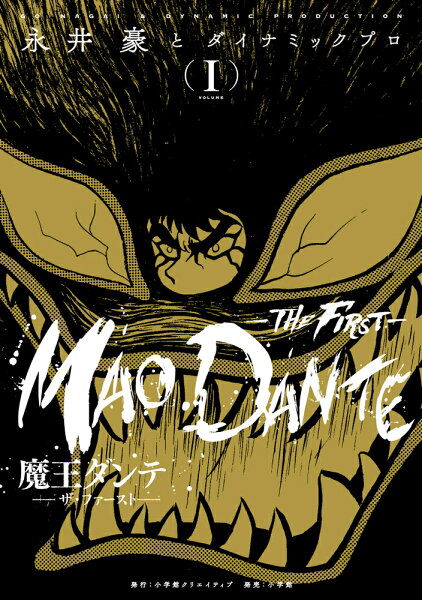
Mao Dante
The unfinished demon king manga that became Devilman — Go Nagai's first attempt at his lifetime obsession.
Horror / Supernatural
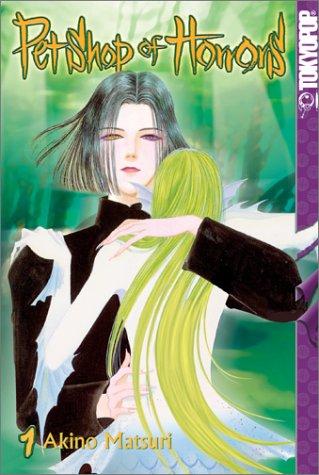
Petshop of Horrors
Count D sells exotic pets in Chinatown — each one perfect, each one with a contract that the buyer always breaks.

Horror / Action
Devilman Lady
Devilman's apocalypse retold through Jun Fudo, a P.E. teacher who turns demon — Go Nagai going even darker than the original.
Horror / Action
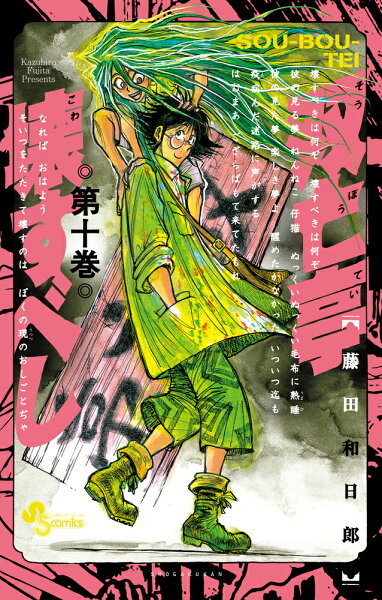
Souboutei Kowasu Beshi
Ushio and Tora's creator returns with his bleakest, most ambitious horror — a haunted mansion that swallows everyone who enters.

Horror
Uzumaki
Yu's review of Uzumaki by Junji Ito — a small town cursed by spirals, where the obsession spreads like a disease until the geometry itself becomes monstrous.
Written by
Yu
Manga Enthusiast from Japan
I grew up in Japan and manga literally saved me during a tough time in elementary school. My English isn't perfect, but my love for manga is real — and I want to share it with you.
Disclosure: This post contains affiliate links. As an Amazon Associate, I earn from qualifying purchases at no extra cost to you.