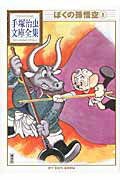
Boku no Son-Goku Review: Tezuka's Monkey King Wanted to Be Human
by Osamu Tezuka
Read the first volume. If it doesn't hook you, put it down. It'll hook you.
Buy Boku no Son-Goku on Amazon →*Affiliate link — I earn a small commission at no extra cost to you.
I grew up reading Tezuka the way some kids grow up with Dr. Seuss. My grandmother had a shelf of his paperbacks, yellowed and soft at the corners, and I'd pull them down on rainy afternoons when I had no friends to call. Boku no Son-Goku — "My Son-Goku" — was the one I came back to most. It's old. It was running in a kids' magazine before my parents were even born. But there's a sadness underneath the slapstick that I didn't understand as a child and couldn't stop thinking about as an adult: this all-powerful monkey, who can level a mountain with one staff, spends the whole story wishing he were an ordinary human being.
That contradiction is the whole manga for me. Everyone remembers Son-Goku as the cocky superhero who Dragon Ball later borrowed his name from. Tezuka drew him as something quieter and lonelier.
Quick Take
- Osamu Tezuka's free, comedic reworking of the Chinese classic Journey to the West, serialized 1952–1959
- A Monkey King with an inferiority complex who genuinely wants to stop being a monkey and become human
- Rated All Ages — slapstick cartoon violence, gags, and a surprisingly gentle ending; safe for kids
Story Overview
The bones are the same ones every East Asian kid knows. Two thousand years ago, a golden monkey is born from a stone on the summit of Mt. Kakazan. He's clever and brave, becomes a hermit's pupil, learns magic — and then gets so full of himself that he rampages through Heaven and gets sealed inside a rock prison by the Buddha for five hundred years.
Five centuries later, a Tang-dynasty monk named Sanzo passes the prison on his way to India to retrieve sacred sutras. He frees the monkey, names him Son-Goku, and the two set out west together. Along the road Goku fights and then recruits the pig-faced glutton Cho Hakkai and the river-kappa Sa Gojo, plus Tatsuko, the Dragon King's daughter, who eats Sanzo's horse and ends up serving as the replacement horse herself.
Where Tezuka breaks from the original is in tone and texture. He treats the source as a playground. Sanzo is drawn as a bit of a coward — a "hetare" who keeps getting himself captured so Goku has to bail him out. The supernatural army of Heaven marches under what look like UN flags, a direct nod to the Korean War raging while Tezuka was drawing this. Firearms and even nuclear weapons turn up in a tale that's nominally set in ancient China. It's a 16th-century legend filtered through a 1950s kid's imagination, and the seams are part of the charm.
The journey ends the way the legend does, but Tezuka makes the landing personal. The group reaches India, the sutras are won — and Goku finally gets the one thing he wanted the whole time.
Characters
Son-Goku is the heart of Tezuka's version and the reason it lingers. He's powerful enough to fight Heaven, but he carries an inferiority complex toward humans and openly longs to become one. After he takes Buddhist vows he settles into a justice-loving, fiercely loyal sidekick who respects Sanzo even when Sanzo doesn't deserve it. The arc isn't "monkey learns humility" so much as "monkey learns he was already worthy."
Sanzo (Genjo Sanzo) is the priest leading the pilgrimage, and Tezuka has fun deflating him. He's well-meaning but timid, forever getting kidnapped by the monsters of the week, and he controls Goku's temper through the golden ring around the monkey's head that tightens on command. The compassion underneath the cowardice is real, though — he's the one who keeps insisting their enemies can be redeemed.
Cho Hakkai and Sa Gojo start as the gluttonous pig-monster and the sand-river kappa who attack the travelers, get beaten, and then convert into devoted, comic members of the group. They're the slapstick engine of the road sections.
Tatsuko, the Dragon King's daughter, is the quiet emotional thread. She begins as an enemy who devours Sanzo's horse, is spared, and travels the entire journey in horse form because she dreams of seeing India. Her presence is what turns the finale from a checklist into a goodbye.
What I Love About It
What I love is that Tezuka refuses to make omnipotence the point. Goku can do anything — and the manga keeps reminding you that the one thing he can't do is be normal. As a kid who ate lunch alone, that landed in a place I didn't have words for yet. The strongest character in the story is the one who feels least like he belongs, and the whole quest doubles as his slow, unspoken hope that finishing it might finally make him human.
The other thing I love is how unguarded the comedy is. This was Tezuka working on a magazine editor's request for something funny, and you can feel him cutting loose. The anachronisms aren't mistakes — the UN flags over Heaven's army, the guns, the Tarzan-styled celestial general — they're a young artist showing off how far he can bend a sacred old story before it breaks. It never breaks. It just gets warmer and weirder. Reading it now, you're watching the "god of manga" figure out, in real time and in front of a kids' audience, that you could smuggle real feeling inside a gag strip.
Memorable Scene ⚠️ Spoiler Warning
The ending is the part I can't shake. The pilgrims finally reach Tenjiku and the sutras are secured — and then Tezuka pays everyone off at once. Sanzo, revealed as a being of Heaven, sprouts wings on his back. Goku, Hakkai, and Gojo are granted the thing the monkey wished for from page one: they become human. And Tatsuko, the dragon princess who carried them the whole way as a horse because she longed to see India, parts from the group as they turn back toward the Tang lands.
It's the parting that gets me. After hundreds of installments of pratfalls and monster fights, Tezuka lets the laughter drain out and just sits in the quiet of a goodbye. The wish Goku spent the entire story chasing is granted in the same breath as the loss of someone who walked every mile with them. That double note — you finally got what you wanted, and it costs you someone — is pure Tezuka, and he was doing it in a comedy gag manga in 1959.
Pros & Cons
Pros:
- One of the foundational Tezuka works, with a genuinely poignant emotional core under the gags
- A loose, playful adaptation that's funnier and stranger than most Journey to the West retellings
- Short and self-contained — it actually ends, and ends well
Cons:
- 1950s art and pacing; the cartoon style and rapid-fire gags read as old-fashioned today
- No official English edition exists, so you'll need Japanese to read it legitimately
- The episodic monster-of-the-week middle can feel repetitive — that's either nostalgic charm or a slog, depending on you
Is Boku no Son-Goku Worth Reading?
Yes, if you want to see where modern manga's emotional instincts came from. It's a slapstick kids' comic on the surface, but underneath it's a melancholy story about a superhuman who only wanted to be ordinary, capped by an ending that trades a granted wish for a goodbye. The dated art and Japanese-only availability are the real barriers — not the story.
Cultural Context
This ran in Manga-Oh from 1952 to 1959, right as Tezuka was reinventing what comics could do in Japan. He's been open that the Chinese animated film Princess Iron Fan lit the spark for adapting Journey to the West, and the Cold-War texture — UN flags, nuclear weapons — is the post-war moment bleeding straight onto the page. It later became Tezuka's gateway into animation. Reading it is less like reading one manga and more like watching the medium's grammar get invented.
Official English Translation Status
There is no licensed English edition of Boku no Son-Goku. It has never been officially published in English in print or digital form. The legitimate way to read it is the Japanese release — the Kodansha complete-works editions collect the full run.
Where to Buy
No English release yet. That just means you find it before everyone else does.
If you read Japanese, the print and digital editions are available from Amazon Japan:
Find Boku no Son-Goku on Amazon.co.jp →
There's no licensed English edition yet — the Japanese print/digital release is the only legitimate way to read it.
This post contains affiliate links. If you purchase through these links, I may earn a small commission at no extra cost to you. As an Amazon Associate, I earn from qualifying purchases.
*Affiliate link — I earn a small commission at no extra cost to you.
More Manga You Might Like
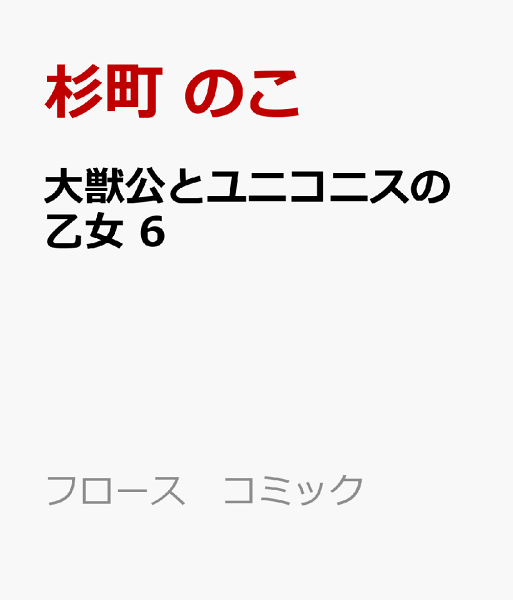
Fantasy
Unico
Unico is a small unicorn with the power to make anyone who meets him happy — which is why the gods condemn him to be carried across time by the West Wind, stripped of all memories and relationships, forbidden to stay anywhere long enough to be loved.
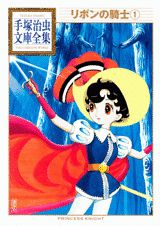
Fantasy / Action
Princess Knight
Tezuka's foundational work that gave shojo manga its template — a princess raised as a prince, fighting for her kingdom and her heart.
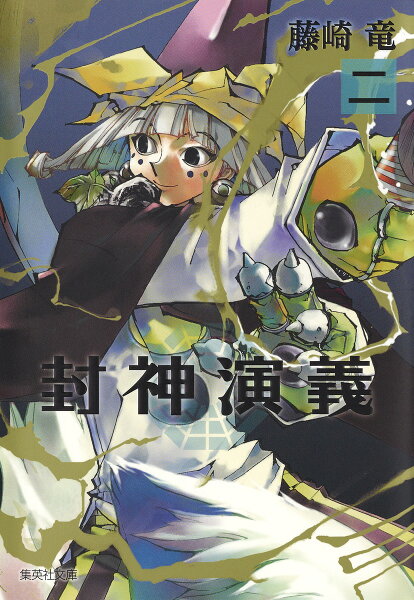
Fantasy / Action
Soul Hunter
Based on the Chinese classic 'Investiture of the Gods,' Soul Hunter follows Taikoubou — a lazy, brilliant immortal sent to overthrow a corrupt dynasty — and the impossible task he's been given by the heavens themselves.
Fantasy / Adventure
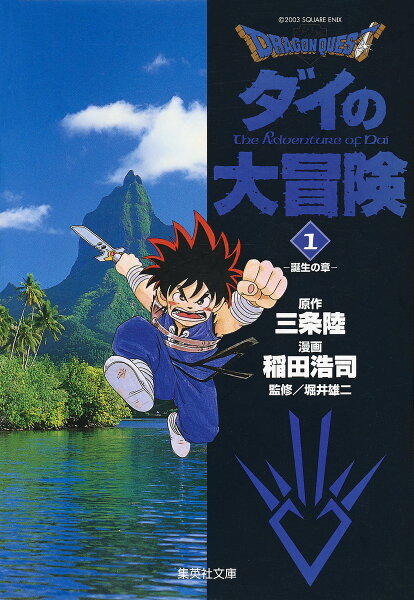
Dragon Quest: The Adventure of Dai
Yu's review of Dragon Quest: The Adventure of Dai — a boy raised on a monster island who always dreamed of being a hero discovers he may be the descendant of a legendary warrior, and sets out to defeat the demon lord threatening the world.
Fantasy / Adventure
Dragon Knights
A review of Dragon Knights by Mineko Ohkami — a long-running 1990s fantasy manga about three knights serving a dragon lord, blending adventure with comedy and genuine emotional development.
Fantasy / Adventure
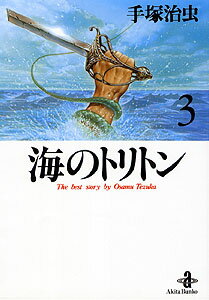
Triton of the Sea
A boy raised on land discovers he's the last prince of an ancient sea kingdom — Tezuka's lost-mythology epic.
Written by
Yu
Manga Enthusiast from Japan
I grew up in Japan and manga literally saved me during a tough time in elementary school. My English isn't perfect, but my love for manga is real — and I want to share it with you.
Disclosure: This post contains affiliate links. As an Amazon Associate, I earn from qualifying purchases at no extra cost to you.