Unico Review: Tezuka's Tenderest Fantasy and His Saddest Premise
by Osamu Tezuka
Read the first volume. If it doesn't hook you, put it down. It'll hook you.
Buy Unico on Amazon →*Affiliate link — I earn a small commission at no extra cost to you.
What if the kindest creature in the world was cursed to lose everyone it loved?
Quick Take
- The gentlest and most heartbreaking thing Tezuka ever drew — a children's fantasy with genuine emotional depth
- Each chapter is a complete story of Unico forming a bond and then being taken away before it can last
- Available in English — one of the most accessible Tezuka works for readers new to his output
Who Is This Manga For?
- Readers of all ages who want fantasy with genuine emotional weight
- Tezuka readers discovering the full range of his work — this shows his tenderness
- Fans of episodic fantasy in the style of Natsume's Book of Friends or Mushishi, done for younger readers
- Parents looking for manga to read with children that doesn't condescend to either generation
Content Warnings & Age Rating
Age Rating: All Ages Content Warnings: Themes of memory loss and the pain of forgetting. Bittersweet endings in multiple chapters. Emotionally affecting for sensitive readers.
Appropriate for all ages; some content may affect younger readers.
Yu's Rating
| Category | Score |
|---|---|
| Story Depth | ★★★★★ |
| Art Style | ★★★★★ |
| Character Development | ★★★★☆ |
| Accessibility for Non-Japanese Readers | ★★★★★ |
| Reread Value | ★★★★★ |
Story Overview
Unico is a small unicorn who makes people happy simply by being near them. This power, the gods of Olympus decide, is dangerous — happiness should not be distributed so freely. They order Unico destroyed.
The West Wind cannot bring herself to kill him. Instead she carries him through time and space, depositing him in different places and eras, with his memory wiped each time so he cannot accumulate enough belonging to threaten the divine order.
Each chapter of Unico is a complete story: Unico arrives somewhere with no memory of what came before, forms a connection with the people or creatures there, and then — just as the connection becomes real — is taken away again. The West Wind watches, helpless and guilty.
The premise is genuinely sad. The execution is genuinely warm. Tezuka manages to write for children without lying to them about what the premise means.
Characters
Unico: A protagonist who is innocent in the specific sense of being incapable of cruelty — not naive but genuinely good in a way that the story treats as real rather than foolish. Each iteration of Unico, having lost all previous memories, is complete in himself.
The West Wind: Perhaps the most morally complex character in a children's manga — she defies the gods' order out of mercy and then cannot protect Unico from the consequences of that mercy. Her helplessness is the series' emotional engine.
Art Style
Tezuka's art for Unico is among the most purely beautiful of his career — the character design is immediately lovable, and the environments of each chapter's world are rendered with a warmth that matches the emotional content. The sad moments are as carefully drawn as the joyful ones.
Cultural Context
Unico was published in Ribon Original — a shojo manga magazine — and later as a Sanrio property, which placed it in the context of cute character merchandise. Tezuka subverted this commercial context by giving the cute character a genuinely melancholy premise, which is characteristic of his willingness to complicate whatever form he worked in.
The two anime films based on Unico (1981 and 1983) have cult status internationally, and the manga can be found in English through Drawn & Quarterly.
What I Love About It
I love that the series trusts children with sadness.
Unico's premise is fundamentally sad — a creature condemned to form bonds and lose them, again and again, with no memory of what came before. Tezuka doesn't soften this. Each chapter ends with a genuine loss. The series is warm and joyful in the moment, and sad in the structure, and it treats its child readers as capable of holding both.
What English-Speaking Fans Say
The English edition has been received with genuine appreciation — readers describe being surprised by the emotional depth in what appears to be a simple children's fantasy. The premise generates responses of recognition: many readers feel they understand something about impermanence that the series articulated for them.
Memorable Scene ⚠️ Spoiler Warning
The West Wind carrying Unico away from a connection that has just become complete — Unico's happy face as he is lifted, not understanding what is happening, and the West Wind's expression as she does what she cannot stop doing. The image summarizes the series.
Similar Manga
- Natsume's Book of Friends: Older protagonist, similar episodic connection-and-loss structure
- Mushishi: Adult version of the "gentle supernatural visitor" premise
- Princess Knight: Tezuka's other all-ages fantasy — lighter, more adventure-focused
Reading Order / Where to Start
The complete collected volume — Unico is a single book and should be read in one sitting if possible.
Official English Translation Status
Unico is available in English from Drawn & Quarterly as a single collected volume.
Pros & Cons
Pros
- Available in English
- Tezuka at his most emotionally direct
- Works for all ages without condescending to any
- Complete in a single volume
Cons
- The episodic structure means no cumulative resolution
- The premise's sadness is real and sustained
- Very short — leaves readers wanting more
Format Comparison
| Format | Notes |
|---|---|
| Physical | Drawn & Quarterly collected edition (English) |
| Digital | Available in English |
| Omnibus | Single collected volume |
Where to Buy
Read the first volume. If it doesn't hook you, put it down. It'll hook you.
*Affiliate link — I earn a small commission at no extra cost to you.
More Manga You Might Like
Fantasy
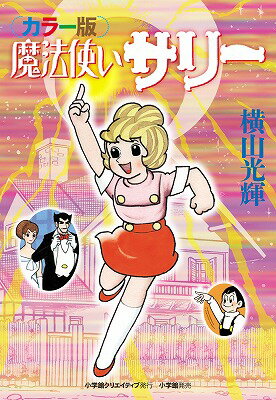
Sally the Witch
Sally the Witch is a princess from the magical world who chooses to live among ordinary humans — a manga that invented the magical girl genre and established every template that followed.

Sci-Fi / Mystery
11 Robots
11 Robots follows a group of ten students who enter the final examination of a prestigious space academy — only to find that they are eleven when they should be ten, and that one of them may be there to make sure none of them pass.
Fantasy / Slice of Life
The Star of Cottonland
The Star of Cottonland follows Chi, a small stray kitten who believes with complete sincerity that she is a human child temporarily in cat form — Yumiko Oshima's beloved shojo classic about identity, belonging, and the particular consciousness of cats.
Fantasy / Action
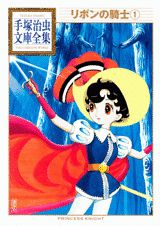
Princess Knight
Tezuka's foundational work that gave shojo manga its template — a princess raised as a prince, fighting for her kingdom and her heart.
Fantasy / Shoujo
Revolutionary Girl Utena
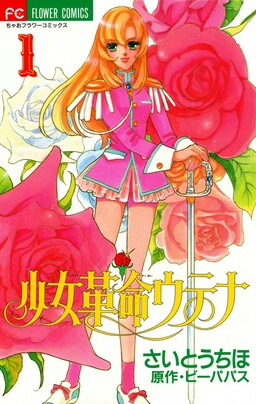
Yu's review of Revolutionary Girl Utena — Utena Tenjou, who decided as a child to become a prince rather than a princess, attends Ohtori Academy and becomes drawn into its secret dueling system; the winner of the duels wins possession of Anthy Himemiya, the Rose Bride; a surrealist fairy tale manga about power, freedom, and who gets to be the subject of a story.
Fantasy
Poe Clan
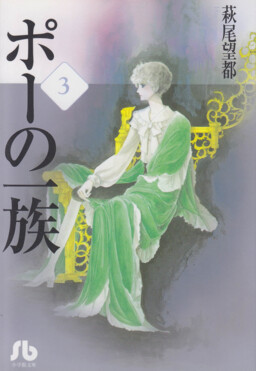
Yu's review of Poe Clan — Edgar is a vampire child, eternally young, moving through European history across several centuries; his vampire existence means watching everyone he cares for age and die while he remains unchanged; Moto Hagio's foundational vampire manga, originally published in 1972.
Written by
Yu
Manga Enthusiast from Japan
I grew up in Japan and manga literally saved me during a tough time in elementary school. My English isn't perfect, but my love for manga is real — and I want to share it with you.