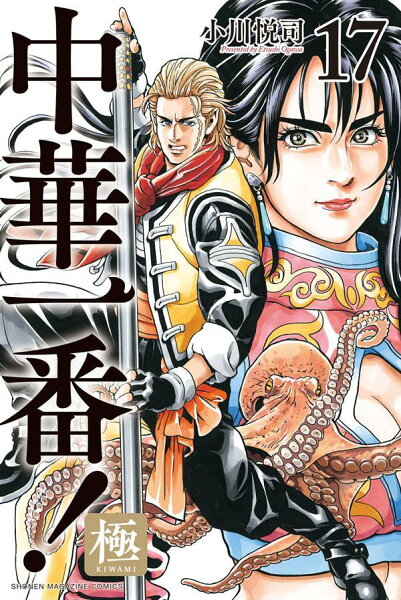
Cooking Master Boy Review: Tournament Cooking Before It Was a Genre
by Etsushi Ogawa
Read the first volume. If it doesn't hook you, put it down. It'll hook you.
Buy Cooking Master Boy on Amazon →*Affiliate link — I earn a small commission at no extra cost to you.
I came to Chuuka Ichiban! (中華一番!) — known to English-speaking fans as Cooking Master Boy — the way a lot of people my age in Japan did: backwards, through the 1997 anime, and then chasing down Etsushi Ogawa's manga because I wanted the version where the food felt even crazier. I'll be honest with you about my English up front. I am not a perfect writer. But I love this series, and I want to explain why a cooking manga from 1995, set in Qing-dynasty China, still beats most modern ones for me.
This is the manga that made me realize food battles could be as exciting as fistfights. Mao doesn't punch anyone. He marinates soybeans. And somehow that's thrilling.
Quick Take
- Tournament cooking manga from 1995-99 — it walked so Food Wars could run
- Set in 19th-century Qing-dynasty China, "The Era of the Cooking Wars" — a setting almost no other cooking manga uses
- Age rating: All Ages — mild action-style tension, no graphic content; safe for younger readers
Story Overview
The story begins with Liu Mao Xing (Mao), a 13-year-old whose mother, Pai, was a legendary chef in Sichuan. After her death, Mao inherits her kitchen but loses the right to it in a cooking duel against his mother's former apprentice. To win it back — and to honor her — he sets out to become a Super Chef, the highest official cooking rank in the country.
The turning point comes when Mao passes the brutal Super Chef Exam and earns the title at an unheard-of young age. That success doesn't end his journey; it pulls him into a much darker conflict. He discovers the Underground Cooking Society (the Dark Cooking Society), a criminal organization that weaponizes cuisine for power and control, and that has corrupted or coerced chefs across China — including some of Mao's own rivals.
The back half of the series — collected in the sequel Shin Chuuka Ichiban! — becomes a quest involving the Legendary Cooking Utensils, sacred tools the Underground Society wants to seize. Mao gathers allies, frees chefs the organization has manipulated, and works toward dismantling it. Across both halves, the structure stays consistent: a high-stakes challenge, a seemingly impossible dish, and a solution rooted in a real culinary insight.
Characters
Mao (Liu Mao Xing) — The 13-year-old protagonist, the youngest Super Chef in history. His defining trait is an extraordinary palate: he can recall every dish he has ever tasted and reverse-engineer it. His arc is about living up to his late mother while learning that skill alone isn't enough — he keeps winning by understanding why people eat, not just how to cook.
Mei Li — A 16-year-old who joins Mao's journey and develops feelings for him. She isn't a master chef herself, which makes her the reader's eyes — she reacts to the impossible dishes the way we would, and grounds Mao's genius in something human.
Shirou (Si Lang) — A mischievous 12-year-old of mixed heritage who first shows up pretending to be a Super Chef. Once Mao exposes him, Shirou becomes his apprentice. His arc is going from a con artist who fakes ability to a kid who actually earns it.
Lan Fei Hong (Fei) — Mao's most skilled rival, a 16-year-old culinary prodigy. He earns the Super Chef title alongside Mao in the exam. Later, the Underground Cooking Society manipulates him, and a major emotional thread is Mao trying to win him back as an ally rather than just beating him.
Leon (Lei En) — A seafood specialist and knife master who starts as an opponent and ends as one of Mao's allies in the fight against the Dark Cooking Society.
What I Love About It
The thing I love most about Cooking Master Boy is that the battles are won by ideas, not just by raw talent. Take the Mapo Tofu duel. Mapo tofu is a famous Sichuan dish, and the challenge is to make the definitive version. Mao's breakthrough is adding a crispy textural contrast everyone else ignored — he marinates and fries soybeans and folds them into the dish, so the soft tofu suddenly has bite. When I first read it, I actually wanted to go try it. That's the magic: the food is exaggerated and theatrical, but the reasoning feels real enough that you trust it.
The second reason is the setting. So many cooking manga that came later lean on French and Italian and high-end Japanese cuisine. Ogawa set his whole series inside Qing-dynasty Chinese cooking, with regional Sichuan dishes, traveling chefs, and an empire-wide ranking system. It feels specific and lived-in. And because it predates the modern wave of "foodie battle" manga, it gets to invent a lot of the genre's grammar — the dramatic tasting reactions, the dish reveals, the rival-becomes-ally structure — without it feeling like a copy of anything. Reading it now, you can see the DNA of an entire genre forming in real time.
Memorable Scene ⚠️ Spoiler Warning
The scene that stuck with me is the Dumpling Festival battle against the Dumpling Brothers. Mao is up against specialists whose entire identity is dumplings, on their home turf, and he has to out-dumpling them. His answer is the Flying Dragon Dumpling — a dumpling wrapped in two different kinds of dough so that, when the steam hits it, the two layers expand at different rates and the whole thing literally lifts off the plate and flies into the air. It's pure spectacle, but it's built on a real idea: that two doughs with different properties will behave differently under heat.
What makes it land isn't the gimmick; it's that the reveal recontextualizes everything. You watch Mao lose ground, you assume he's outmatched on the one thing his opponents do best, and then the dumpling quite literally takes flight and the logic clicks into place. It's the series in miniature — patience, a real culinary principle, and a payoff that's both absurd and oddly convincing.
Pros & Cons
Pros:
- Battles solved by genuine culinary insight, not just power-ups
- A Qing-dynasty Chinese setting almost nobody else uses
- Foundational to the cooking-battle genre — you can see Food Wars and Toriko downstream of it
- Mao is an earnest, easy-to-root-for lead
Cons:
- No official English manga release — you're reading the Japanese edition or watching the anime
- It's a product of the mid-90s; some art and pacing feel dated next to modern series
- It's a tournament-structure series at heart — if you don't enjoy the "challenge → dish → reveal" loop repeating, this style won't work for everyone.
Is Cooking Master Boy Worth Reading?
Yes — especially if you love cooking manga and want to see where the genre's playbook came from. The dishes are inventive, the Chinese setting is refreshing, and Mao is a likable lead whose wins feel earned. The catch is the repetitive tournament rhythm and the lack of an official English edition. If you enjoy the format and don't mind the Japanese release (or the anime), it's a genuine classic.
Similar Manga
| Title | Its Approach | How Cooking Master Boy Differs |
|---|---|---|
| Food Wars! (Shokugeki no Soma) | Modern culinary school, flashy "foodgasm" reactions | Cooking Master Boy is older, Chinese-cuisine focused, and built the tournament-cooking template Food Wars expands on |
| Toriko | Cooking fused with shonen battle and monster-hunting | Cooking Master Boy keeps the cooking grounded in real(ish) technique rather than fantasy ingredients |
| Yakitate!! Japan | Comedy-driven bread-making battles | Cooking Master Boy plays its food battles straighter, with a darker overarching villain plot |
Where to Buy
No English release yet. That just means you find it before everyone else does.
This post contains affiliate links. If you purchase through these links, I may earn a small commission at no extra cost to you. As an Amazon Associate, I earn from qualifying purchases.
*Affiliate link — I earn a small commission at no extra cost to you.
More Manga You Might Like
Slice of Life
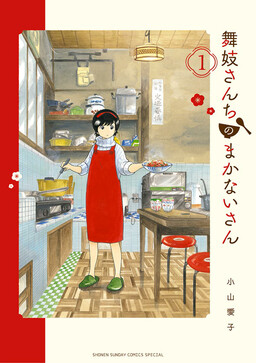
The Makanai: Cooking for the Maiko House
Yu's review of The Makanai: Cooking for the Maiko House — Kiyo comes to Kyoto with her best friend Sumire to train as maiko, but lacks the aptitude; instead of giving up, she becomes the house's makanai — the cook who feeds the maiko — and finds that her real gift was always in the kitchen.
Slice of Life / Drama
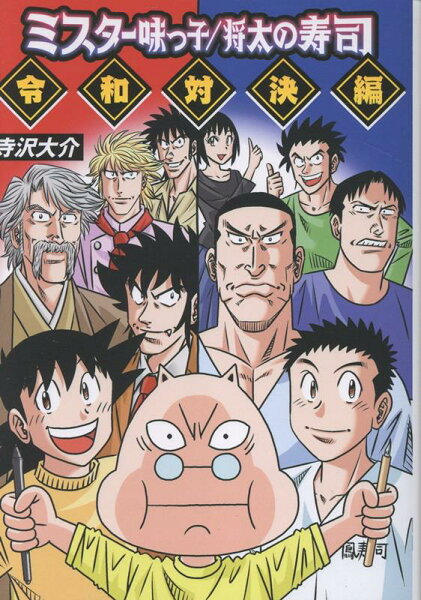
Shota no Sushi
A review of Daisuke Terasawa's Shota no Sushi (将太の寿司) — 27 volumes in Weekly Shōnen Magazine from 1992 to 1997. A Hokkaido boy trains at Tokyo's finest sushi restaurant, learns from masters, and competes at the highest levels of Japanese culinary craft.
Cooking / Action
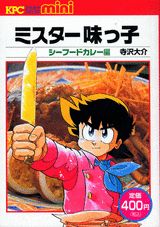
Mister Ajikko
A schoolboy with a magic palate takes on Japan's culinary establishment — the manga that defined cooking competition tropes.
Slice of Life
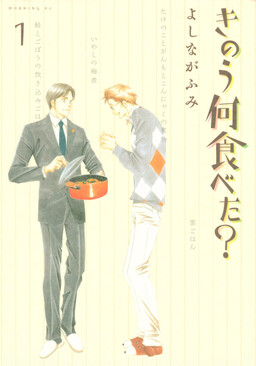
What Did You Eat Yesterday?
Yu's review of What Did You Eat Yesterday? — Shiro and Kenji are a gay couple in Tokyo; Shiro is a lawyer who cooks dinner every night; the manga follows their domestic life through the meals Shiro prepares, with complete recipes; a quiet, adult slice of life about partnership and food.
Slice of Life / Romance
Teasing Master Takagi-san
Yu's review of Teasing Master Takagi-san — Takagi teases her desk neighbor Nishikata every single day; he keeps making plans to get back at her; she always wins; the series is about two middle school students who are clearly in love with each other before either of them knows how to say it.
Slice of Life / Heartwarming
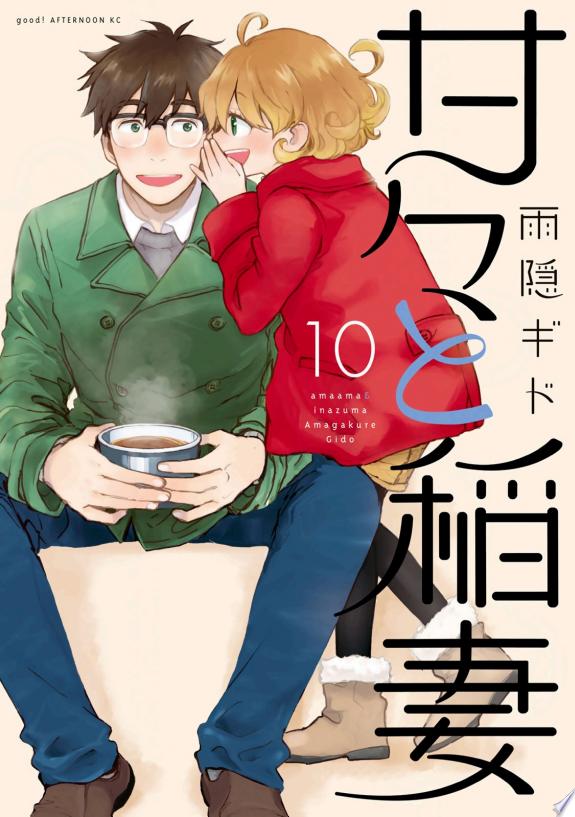
Sweetness and Lightning
Yu's review of Sweetness and Lightning — Kouhei Inuzuka is a teacher and single father whose wife recently died; he cannot cook and his daughter Tsumugi eats convenience store food; a student named Kotori invites them to her family's empty restaurant and teaches him to cook for his daughter.
Written by
Yu
Manga Enthusiast from Japan
I grew up in Japan and manga literally saved me during a tough time in elementary school. My English isn't perfect, but my love for manga is real — and I want to share it with you.
Disclosure: This post contains affiliate links. As an Amazon Associate, I earn from qualifying purchases at no extra cost to you.