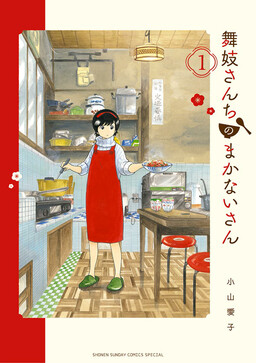
The Makanai: Cooking for the Maiko House Review: A Girl Who Cannot Become a Maiko Finds Her Place in the Kitchen
by Aiko Koyama
Read the first volume. If it doesn't hook you, put it down. It'll hook you.
Buy The Makanai: Cooking for the Maiko House on Amazon →*Affiliate link — I earn a small commission at no extra cost to you.
Quick Take
- One of the most quietly beautiful manga currently running — a story about finding where you belong when where you thought you were going doesn't work out
- The food and cooking are rendered with care that makes the reader want to eat every meal Kiyo makes; the Kyoto maiko world is depicted with specific cultural detail
- 15+ volumes ongoing; one of the most recommended slice-of-life series for readers who want warmth without drama
Who Is This Manga For?
- Readers who enjoy cooking manga with genuine emotional depth
- Anyone interested in traditional Japanese culture — specifically the maiko and geiko world of Kyoto
- Fans of quiet, character-driven slice-of-life without conflict-driven plots
- Readers who want ongoing series with guaranteed emotional satisfaction per volume
Content Warnings & Age Rating
Age Rating: T (Teen) Content Warnings: Traditional Japanese cultural content including the maiko apprenticeship system; coming-of-age themes; no significant violence or mature content — this is a very gentle series throughout
A T rating that is on the gentler end — this is warm, quiet slice-of-life.
Yu's Rating
| Category | Score |
|---|---|
| Story Depth | ★★★★☆ |
| Art Style | ★★★★★ |
| Character Development | ★★★★★ |
| Accessibility for Non-Japanese Readers | ★★★★☆ |
| Reread Value | ★★★★★ |
Story Overview
Kiyo and Sumire come to Kyoto together to train as maiko — apprentice geisha. Sumire has the natural grace and aptitude for the role; Kiyo discovers she does not. Rather than go home, Kiyo finds another way to stay close to the world she came for: she becomes the house's makanai, the cook responsible for feeding the young women training there.
The series follows Kiyo as she feeds the people around her — each meal a small act of care, each recipe a response to what someone needs rather than what they ask for. And it follows Sumire as she advances through the maiko world, the two friends' lives parallel and intertwined even as they diverge.
Characters
Kiyo — A protagonist whose strength is in her specific attentiveness to the people around her — she understands what they need and expresses it through food. Her failure to become a maiko is not treated as tragedy but as redirection toward something that suits her better.
Sumire — Her contrast with Kiyo is the series' structural spine — a natural maiko where Kiyo is not, her success is not a rebuke to Kiyo but a different path. Their friendship across that difference is the series' warmest relationship.
The maiko house residents — The various young women training as maiko, each with her own personality and struggles, whose meals Kiyo prepares and whose lives the series observes with quiet detail.
Art Style
Koyama's art is soft and detailed — the Kyoto settings, the traditional kimono, the food — rendered with the specific care of someone who loves what they're drawing. The meals Kiyo prepares are drawn to look genuinely delicious, and the characters' reactions to food are expressive without being theatrical.
Cultural Context
The maiko and geiko world of Kyoto's Gion district is a specific and traditional Japanese cultural institution with its own hierarchy, vocabulary, and customs. The Makanai depicts it with accuracy and warmth — the training, the relationships between okasan (house mother) and apprentices, the seasonal rhythms that structure the year.
The makanai role — feeding the people in the house — is itself culturally specific: an important position that is often overlooked because it isn't the visible, prestigious one. The series' choice to center this role is a quiet statement about what kinds of work matter.
What I Love About It
There is a specific kind of manga that trusts the reader to find meaning in small things — a meal prepared carefully for someone who needs it, a conversation between friends that doesn't resolve into drama, a moment of autumn light in a Kyoto garden. The Makanai is that kind of manga, and it is rare. Kiyo's cooking is an act of love that she cannot always express in words, and the series understands that.
What English-Speaking Fans Say
Western readers describe The Makanai as one of the most calming and beautiful manga currently running — specifically praised for its food depiction, its cultural detail, and its refusal to generate artificial drama. The Netflix live-action adaptation (directed by Hirokazu Kore-eda) introduced many international readers to the manga and is consistently praised as well.
Memorable Scene ⚠️ Spoiler Warning
The chapter where Kiyo prepares a meal specifically for someone who is homesick — adapting a recipe to taste like the food someone grew up with rather than Kyoto cuisine — and the recipient's reaction, is the series' most affecting single demonstration of what Kiyo's cooking actually is.
Similar Manga
- Oishinbo — Japanese food culture manga, longer and more encyclopedic
- Sweetness & Lightning — Cooking as emotional care, different setting
- Dungeon Meshi — Food as central subject, very different tone
- Miss Kobayashi's Dragon Maid — Warm found-family in an unusual setting
Reading Order / Where to Start
Volume 1 — Kiyo and Sumire's arrival in Kyoto and Kiyo's discovery of her role are established immediately.
Official English Translation Status
VIZ Media publishes the ongoing English series. 15+ volumes currently available.
Pros & Cons
Pros
- Quietly beautiful art with exceptional food depiction
- Maiko world cultural detail is specific and warm
- Found-purpose story is more resonant than found-talent stories
- Consistently emotionally satisfying per volume
Cons
- Ongoing with no resolution yet
- Deliberately slow-paced — readers wanting plot momentum will be impatient
- Cultural context of the maiko world benefits from some prior familiarity
Format Comparison
| Format | Notes |
|---|---|
| Individual Volumes | VIZ Media; ongoing in English |
| Digital | Available |
Where to Buy
Read the first volume. If it doesn't hook you, put it down. It'll hook you.
This post contains affiliate links. If you purchase through these links, I may earn a small commission at no extra cost to you. As an Amazon Associate, I earn from qualifying purchases.
*Affiliate link — I earn a small commission at no extra cost to you.
More Manga You Might Like

Slice of Life
What Did You Eat Yesterday?
Yu's review of What Did You Eat Yesterday? — Shiro and Kenji are a gay couple in Tokyo; Shiro is a lawyer who cooks dinner every night; the manga follows their domestic life through the meals Shiro prepares, with complete recipes; a quiet, adult slice of life about partnership and food.

Slice of Life / Fantasy
Konohana Kitan
Yu's review of Konohana Kitan — Yuzu is a young fox girl who begins working at Konohanatei, a hot spring inn that welcomes both humans and gods. Staffed entirely by fox-girl attendants, the inn becomes the setting for gentle, self-contained stories about hospitality, connection, and letting go.
Slice of Life / Drama
Deaimon
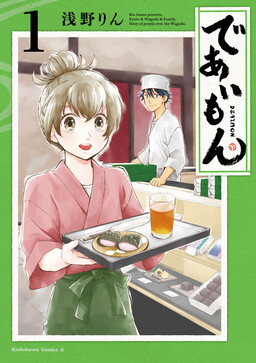
Yu's review of Deaimon (であいもん) by Rin Asano — Nagomu Irino comes home to his family's Kyoto wagashi shop after ten failed years chasing music, and finds a ten-year-old girl named Itsuka already living there, already learning the craft, already named his rival for the shop he walked out on.

Slice of Life / Drama
Shota no Sushi
A review of Daisuke Terasawa's Shota no Sushi (将太の寿司) — 27 volumes in Weekly Shōnen Magazine from 1992 to 1997. A Hokkaido boy trains at Tokyo's finest sushi restaurant, learns from masters, and competes at the highest levels of Japanese culinary craft.

Slice of Life / Comedy
Slow Start
Yu's review of Slow Start — Hana Ichinose started high school a year late due to illness, making her a year older than her classmates; the series follows her trying to fit in with her new friends while carrying the secret that she is different, in Tokumi Yuiko's characteristic warm and gentle 4-koma style.

Slice of Life
Smile Down the Runway
Yu's review of Smile Down the Runway — Chiyuki Fujito dreams of being a Paris Collection runway model but is told she's too short at 158cm; Ikuto Tsumura dreams of being a fashion designer but can't afford design school; they push each other toward impossible goals; Kotoba Inoya's fashion manga about the gap between dreams and physical reality.
Written by
Yu
Manga Enthusiast from Japan
I grew up in Japan and manga literally saved me during a tough time in elementary school. My English isn't perfect, but my love for manga is real — and I want to share it with you.
Disclosure: This post contains affiliate links. As an Amazon Associate, I earn from qualifying purchases at no extra cost to you.