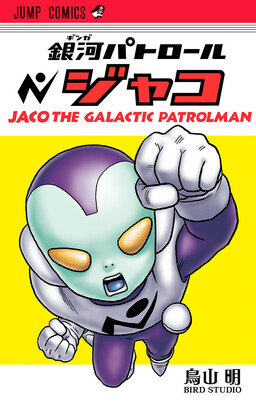
Jaco the Galactic Patrolman Review: Toriyama's Eleven-Chapter Detour That Quietly Rewrites Dragon Ball's First Page
by Akira Toriyama
Read the first volume. If it doesn't hook you, put it down. It'll hook you.
Buy Jaco the Galactic Patrolman on Amazon →*Affiliate link — I earn a small commission at no extra cost to you.
I read Jaco the week it concluded in Weekly Shōnen Jump in 2013. I was in a coffee shop in Shinjuku, half a coffee in, no idea what I was about to read. By the time I closed the magazine I had spent the last chapter staring at a single page for longer than is socially normal. Toriyama had quietly written a Dragon Ball prequel, and the prequel's last chapter rewrote a scene I had read as a kid in a way I was not prepared for.
I'm Yu, and I am here to tell you that the one-volume manga about a goofy alien cop is, in fact, also the most affecting single piece of Toriyama writing I have read.
Quick Take
- Akira Toriyama's Jaco the Galactic Patrolman ran in Weekly Shōnen Jump from July to October 2013 — 11 chapters, collected as a single volume. VIZ Media's English edition was released January 6, 2015, including the Dragon Ball Minus bonus chapter.
- Reads as a complete standalone comedy. Is also, by design, a Dragon Ball prequel that connects to the original series's first scene in the bonus chapter.
- Rated All Ages — slapstick comedy, mild peril, nothing rougher than mid-period Toriyama gags.
Story Overview
A retired scientist named Omori lives alone on a small island off the coast of Japan. He has built a private rocket. He won't say why.
Jaco — a Galactic Patrolman from a multi-planetary law enforcement agency — crash-lands on Omori's island while attempting to investigate the planet from orbit. Jaco is loud, arrogant, slightly ridiculous, and accustomed to being the smartest person in any room he enters. Omori is none of those things; he's quiet, methodical, and not particularly impressed.
The unlikely partnership recruits a third member: Tights, seventeen years old, daughter of a distant family member of Omori's, an aspiring science-fiction novelist whose habit of asking too many questions accidentally pulls the story forward.
Across eleven chapters, Jaco tries to fix his ship, Omori works on his rocket, Tights writes her novel, and a corrupt branch of the Japanese military gradually becomes the antagonist. Each chapter is a small comic episode about people taking each other seriously who really shouldn't. The story is funny, then sweet, then — in the final pages — something larger.
The Dragon Ball Minus bonus chapter, included in the collected volume, completes the connection. The mission Jaco was sent to Earth to perform — assess this planet's threat level — is the same window in time during which Bardock and Gine, on a Saiyan colony far away, sent their infant son Kakarrot off-planet to escape the destruction of their home. The two stories meet in the sky over Earth, and the second-to-last panel of Dragon Ball Minus is the first panel of Dragon Ball, redrawn after thirty-five years by an older Toriyama who has remembered what was happening on the other side of the camera.
Characters
Jaco — The lead. A Galactic Patrolman whose self-importance vastly exceeds his actual competence in any specific task. Toriyama draws him as an unbroken streak of confident wrongness, and the manga's affection for him is real. He is also, structurally, the first time Toriyama wrote a clearly alien comedic protagonist after Dragon Ball ended; in retrospect he is the manga's bridge between Dr. Slump's gag energy and Dragon Ball's space-empire cast.
Omori — The retired scientist. The quiet center of the cast. A man whose private project on the island is, eventually, revealed to be a personal mission tied to a daughter he lost; the manga handles the reveal with the lightest hand and it lands all the harder for it.
Tights — Seventeen, mouthy, aspiring sci-fi writer. Her name is the giveaway for Dragon Ball readers: she's the older sister of Bulma. The series doesn't lean on this; the connection is delivered as a quiet line, almost a footnote. Toriyama lets it do its work without flagging it.
General "Don't-Care-Who-He-Is" — The corrupt military faction's most prominent face. A reminder that Toriyama could still write a perfectly punchable authority figure twenty years after the Red Ribbon Army.
What I Love About It
What I love about Jaco is that it is the closest thing Akira Toriyama wrote to a goodbye letter to Dragon Ball, except he wrote it before he came back to Dragon Ball, and that means the goodbye-letter quality is structural rather than emotional.
The bonus chapter — Dragon Ball Minus — is twelve pages long and it is, with no exaggeration, my favorite twelve pages of Toriyama's career. It depicts the mother and father of Goku as they are about to send their infant son away from a planet that is going to be destroyed in the next hour, and it does this without sentimentality, without speeches, without underlining any of it. Bardock buys his son time. Gine — Goku's mother, who Toriyama invented in 2014 for this chapter, retroactively — looks at her infant son one last time and says she hopes he grows up strong. Their last panel together is a single small image of two adults watching a pod disappear into the sky.
The original Dragon Ball opens with that same pod arriving on Earth. The opening scene of every Goku story we have ever read was drawn in 1984, before this chapter existed. Jaco is what Toriyama wrote three decades later to make the first panel of his most famous series mean something different.
I read both works again afterward. They are different works now. That is a kind of authorial achievement I don't think I have seen anywhere else in manga.
Memorable Scene ⚠️ Spoiler Warning
The single page of Goku's pod leaving the Saiyan home colony, in Dragon Ball Minus. There is no dialogue. Toriyama's older art is loose, less crisp than 1984. The composition is two adults watching a tiny dot move upward. The frame matches, almost exactly, the frame on the first page of Dragon Ball chapter 1 — the same dot, traveling the other direction, about to land on Earth.
I have been looking at this image for ten years and I cannot get past it. It is the most quietly devastating thing Toriyama drew. It cost him eleven chapters of comedy to set it up.
Pros & Cons
Pros:
- A complete, one-volume Toriyama work — short enough to finish in an afternoon, dense enough to revisit.
- The Dragon Ball connection lands cleanly for fans and is invisible to newcomers; both reads work.
- VIZ's English edition includes Dragon Ball Minus.
Cons:
- The story's emotional payoff depends partly on Dragon Ball context; without it, Jaco is good but smaller.
- 11 chapters is genuinely short; if you wanted a longer Toriyama project, look elsewhere.
- The villain plot in the middle chapters is functional rather than memorable; Toriyama is more interested in the leads.
Is Jaco Worth Reading?
Yes — particularly if you've read Dragon Ball. Even if you haven't, it works as a charming standalone. Skip only if you have no patience for Toriyama's gag-comedy rhythm at all.
Who Is This Manga For?
- Dragon Ball fans who haven't read this yet — this is mandatory reading.
- Dr. Slump readers who want the late-period version of that energy.
- People who want a one-volume Toriyama project to introduce a friend.
- Anyone who likes a quiet authorial revisit to a long-finished work.
Official English Translation Status
VIZ Media published the single-volume English edition on January 6, 2015, with the Dragon Ball Minus bonus chapter appended. Available in print and digitally on the VIZ Shonen Jump platform. The English edition is the recommended one for international readers; the bonus chapter is what makes the collected volume a permanent piece of the Dragon Ball canon.
Where to Buy
VIZ's single English volume is the practical and complete way to read this. Available in print at major bookstores and digitally through the VIZ Shonen Jump app.
Browse Jaco the Galactic Patrolman on Amazon →
This post contains affiliate links. If you purchase through these links, I may earn a small commission at no extra cost to you. As an Amazon Associate, I earn from qualifying purchases.
*Affiliate link — I earn a small commission at no extra cost to you.
More Manga You Might Like
Sci-Fi / Political
Sanctuary
Yu's review of Sanctuary — two survivors of the Cambodian killing fields make a pact to change Japan from the inside: one through legitimate politics, one through the yakuza; a politically serious manga by the creators of Crying Freeman and Mai the Psychic Girl about power, ambition, and what it costs to change a corrupt system.
Sci-Fi / Historical
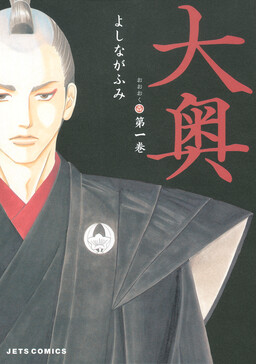
Ōoku: The Inner Chambers
Yu's review of Ōoku: The Inner Chambers — an alternate Japan where a mysterious plague killed 75% of men over a century, women rose to political power, and the Shogunate is run by women while men are rare and precious; a historical alternate-universe manga that examines power, gender, and what history would look like if it went differently.
Sci-Fi / Comedy
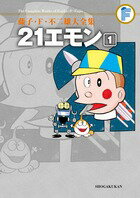
21 Emon
21 Emon is Fujiko F. Fujio's late-1960s sci-fi comedy about the 21st heir to a centuries-old Tokyo hotel who dreams of becoming a space pilot instead of running the family inn — and the robot, alien, and rival-hotel girl who keep his ordinary future tangled up with the extraordinary universe outside.
Sci-Fi / Comedy
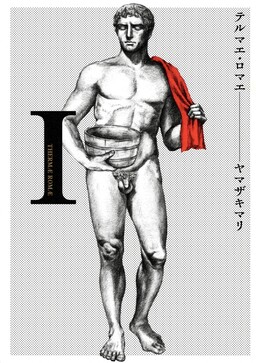
Thermae Romae
Yu's review of Thermae Romae — Lucius Modestus is a Roman bath architect in the 2nd century CE who keeps accidentally slipping through drain holes and emerging in modern Japanese public baths; he returns to Rome with innovations borrowed from Japanese bath culture that make him the most sought-after bath designer in the Empire.
Sci-Fi / Action
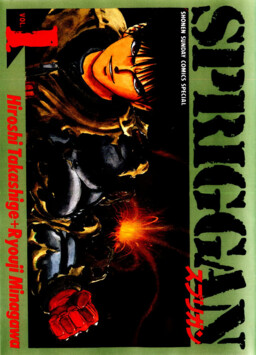
Spriggan
Yu's review of Spriggan — Yu Ominae is a Spriggan agent for ARCAM, a secret organization that locates ancient artifacts of catastrophic power and prevents governments and criminal organizations from weaponizing them; a 90s action sci-fi manga with excellent set-piece design and geopolitical scope.
Sci-Fi / Comedy
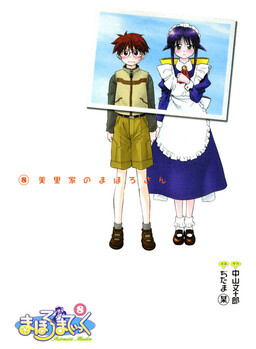
Mahoromatic: Automatic Maiden
Yu's review of Mahoromatic — Mahoro is the most powerful combat android in existence, but when she chooses to retire and work as a maid for a teenage boy rather than fight on, the series becomes a comedy about domesticity mixed with action sequences and an unexpectedly moving meditation on limited time.
Written by
Yu
Manga Enthusiast from Japan
I grew up in Japan and manga literally saved me during a tough time in elementary school. My English isn't perfect, but my love for manga is real — and I want to share it with you.
Disclosure: This post contains affiliate links. As an Amazon Associate, I earn from qualifying purchases at no extra cost to you.